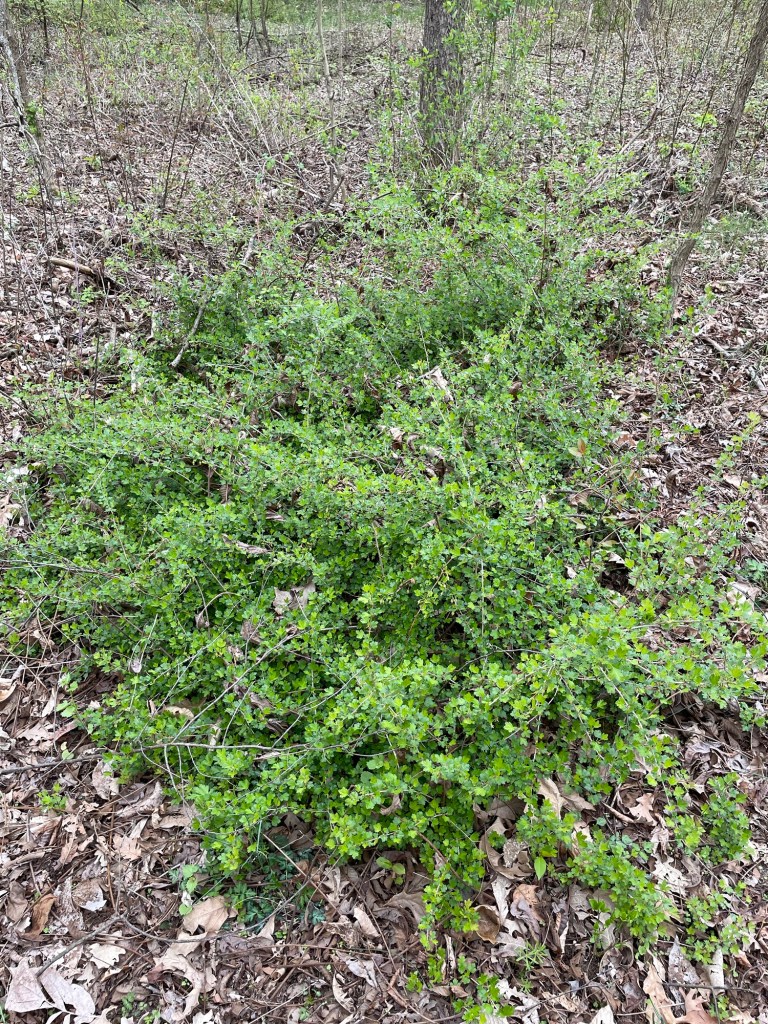
Look up. The canopy is filled with fruits and nuts. Look down. Do you see anything? This was my beginning of finding and developing shade loving fruit crops. There are many plants that will tolerate shade but few that will relish it and produce lots of delicious fruits. Shade is a great equalizer. Some species will produce a light sprinkling of fruit and others are prolific. Even the raspberry will sneak in but robust in the open does not mean robust in shade. Shade itself is subjective depending on the canopy too.
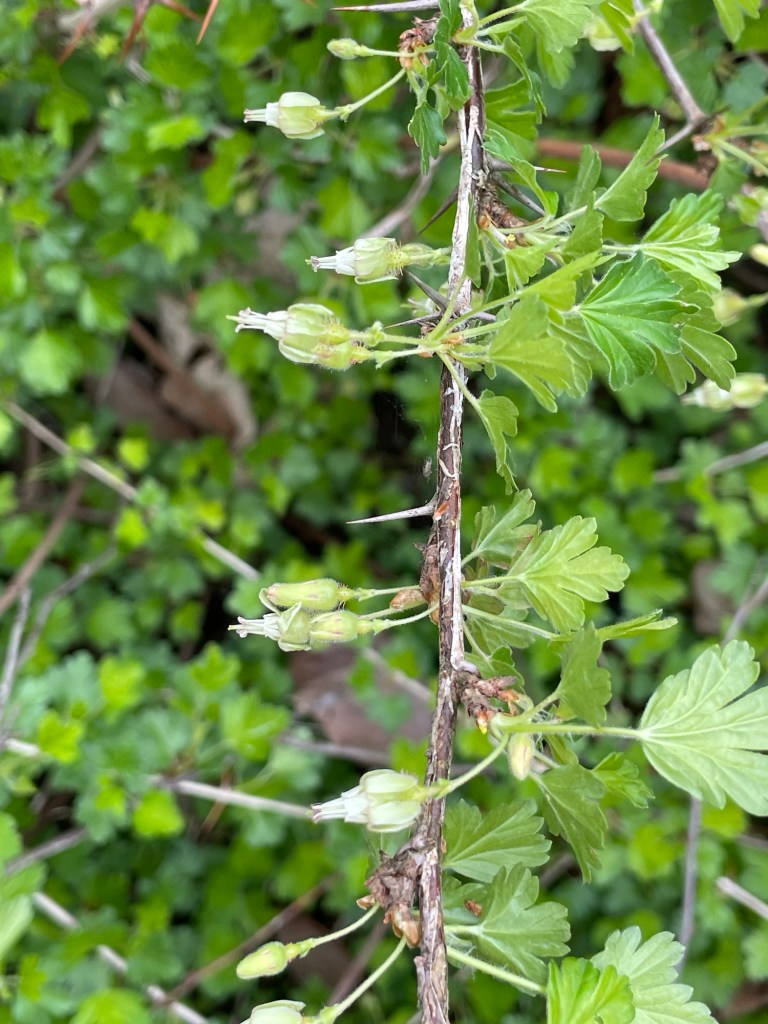
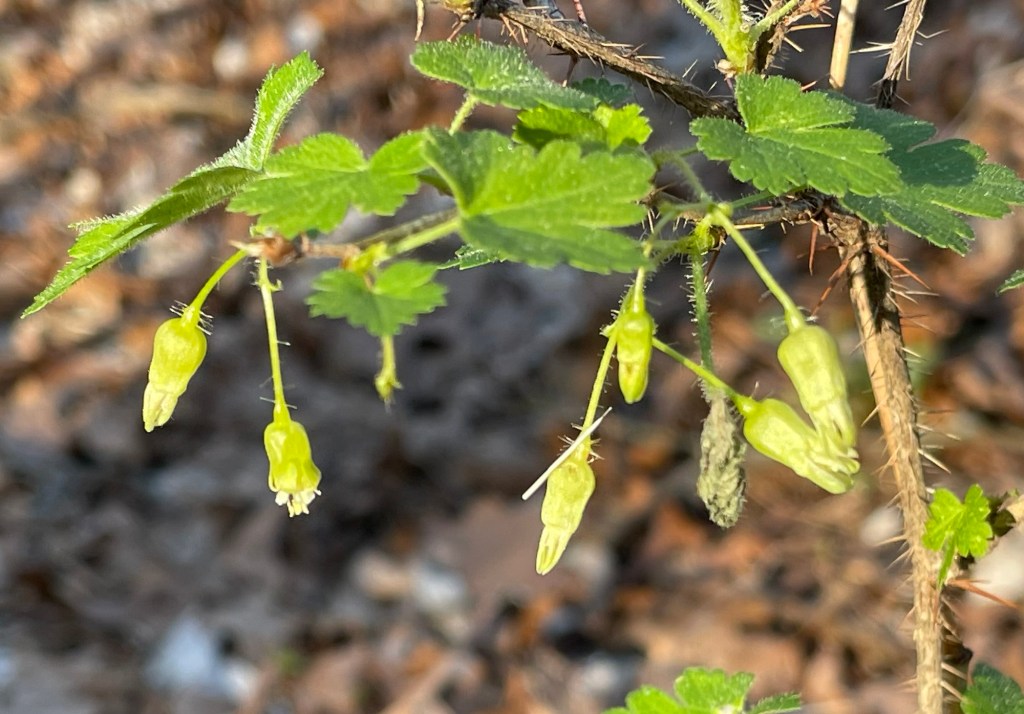
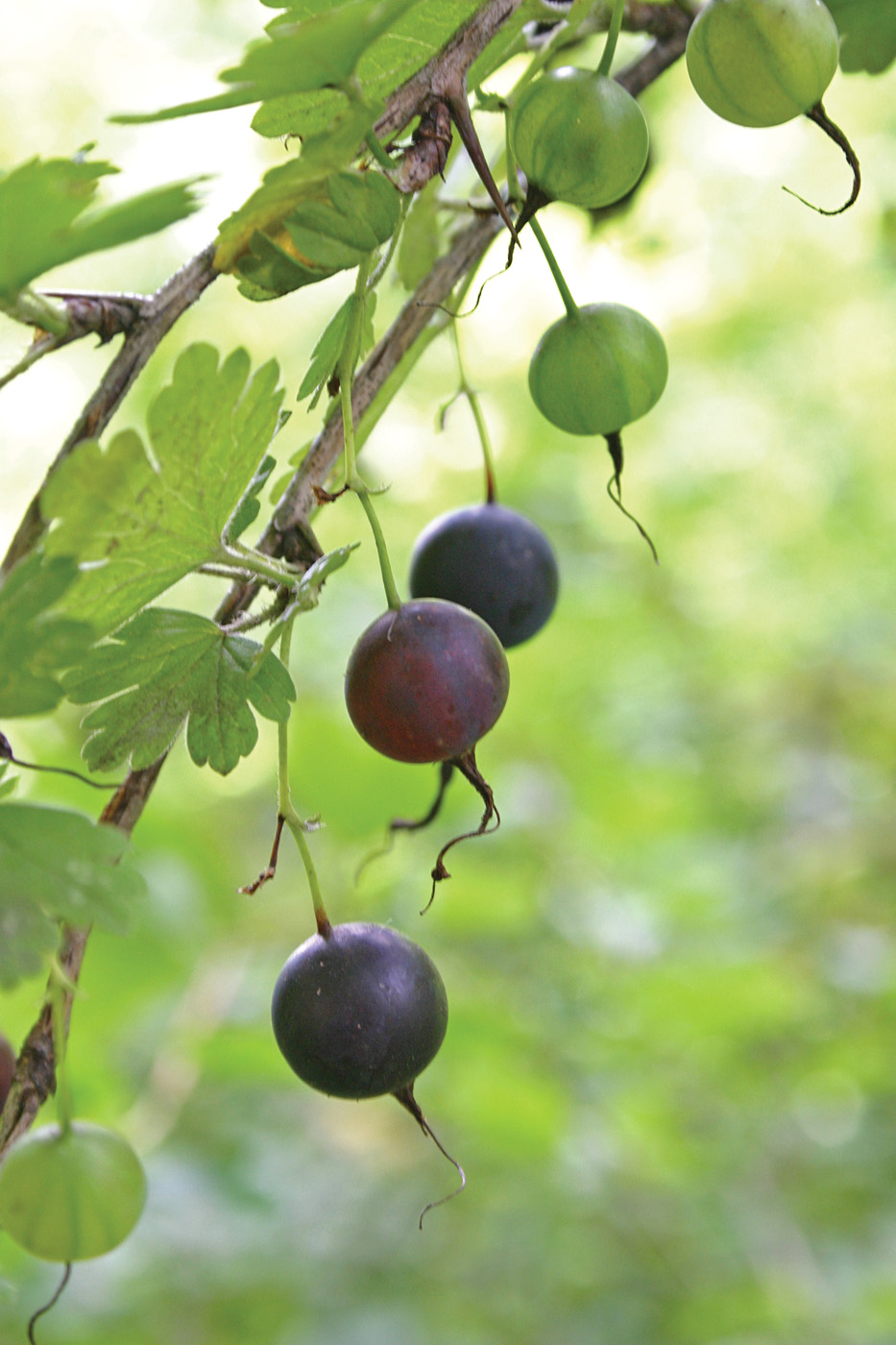
The image above shows my attempt to capture the gooseberry in the shade of my forest plantings. Here the canopy is shellbark hickory, pecan, heartnut and a few American persimmons. In this same spot existed over twenty types of cultivar gooseberries and currants. They are all gone. One seedling of ‘Red Jacket or Welcome ‘did flourish and eventually I named it Red Tart and began to root it and grow it from seed. It had the advantage of rooting as it grew plus produce lots of fruit. The caveat was the fruit itself is the opposite of all gooseberry cultivars. Prickly with spikes, the delicious fruit is covered in them. It is not a smooth gooseberry. To top it off the stems are super armed with thorns. This is not your grandmother’s gooseberry. Yet the insane yield, the immunity to all foliar diseases and the fact that the animals love this fruit makes me take notice. People were on board with this plant, and I sold out when I grew it. This reinforced my gooseberry belief system of good fruit and high nutrition all in the shade. But here the real estate market is tough to get into, so it was accepted as a possibility in my forest. Now the possibility is a reality. Every homeowner wants to live there.
There are lots of shade loving native gooseberries, but their yields are generally low. Missouri gooseberry is the most productive in the species realm, but it too languishes in deep shade often losing its leaves to mildew. This is normal and desirable for the gooseberry. Is it possible to find a more fruitful gooseberry? You do this the same way nature does it. You grow and wait. Unfortunately, the cultivated gooseberry is so far off the beaten track of its wild counterpart and it is exceedingly rare to find and maintain healthy plants for long. Red Tart taught me how turkeys, songbirds and chipmunks love this fruit. It was difficult to collect on time. This pointed me to its value for me to eat as well. The Ribes genus is filled with possibilities for health. It is the North American equivalent of the amla fruit and likely has the same health-giving properties. When I went shopping for gooseberries years ago, I found the most confusing information about the plant as well as the legislation governing distribution. The cultivars available were weak. I had over 30 cultivars at one time. I have several spots around my farm devoted to their breeding and selection but it was very difficult to select as individual plants and small populations of species and/or hybrids. I never told anyone because I could never tell if I was making progress or not. Red Tart begins this process of finding and producing a population of Ribes that contain health giving properties that combine the long history of the gooseberry in today’s modern world of agriculture. It fuses native and exotic. It is more than the sum of its parts. You need to find the selections that bring the greatest adaptability to the climate we live in today first. Ribes rises above.



 biologicalenrichment
You must be logged in to post a comment.