I got a call a few years ago from someone working on biofuel production. I think he lived in Spain if I remember correctly. He was doing a research project specifically related to Aesculus, the horsechestnut genus, and its possibility of growing it as a source for the production of biofuels. After my mental confusion settled, I was not quite sure how that would work in the world of corn. Is that practical? Why buckeyes of all things? Since that call, I began to think of ways that could make that work. It kind of drove me nuts in a conker sort of way. I had this childhood memory of throwing buckeye nuts great distances. The conkers would fit perfectly in our hands and we would throw them as far and as high as we could. In my particular geographical location, there was no natural rock in the fields so they had the perfect size and weight ratio. I was having flashbacks of these two polar opposite experiences every time I saw a buckeye tree.

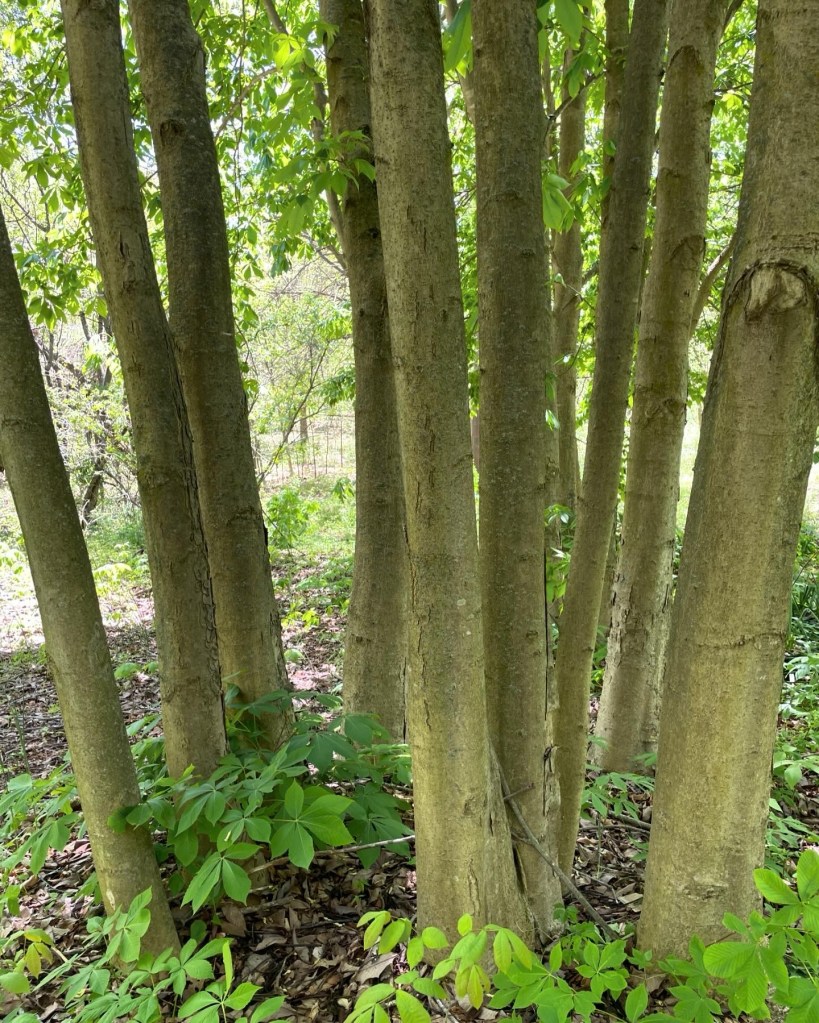
From a selection standpoint, the first thing I thought about was yields and breeding. For a while, I would go around and look at my plantings or street trees and go, ‘oh, that’s a gassy one.’ The whole thing was based on what I saw in nature thinking I could do better. Somehow I would find a magic buckeye with major gas. That was my secret goal. However, I really loved the genus and its rich diversity. I grew as many as I could find including the massive California and the fast growing Japanese species. There were many hybrids and soon I began to see a pattern. All those flowers you see on a buckeye tree do not produce nuts. It is a very small part of the raceme that actually fruits and produces nuts. It made me wonder why. Another aspect of it came to mind when I visited towns throughout Michigan on my vacations and would spot some very nice trees growing in the northern portions of the state with excellent health. Not so much in the southern part as a foliar disease called leaf scorch would weaken the trees and drop the leaves in August. For the buckeye just getting and maintaining leaves is critical if its going to be a good nut producer for gas.
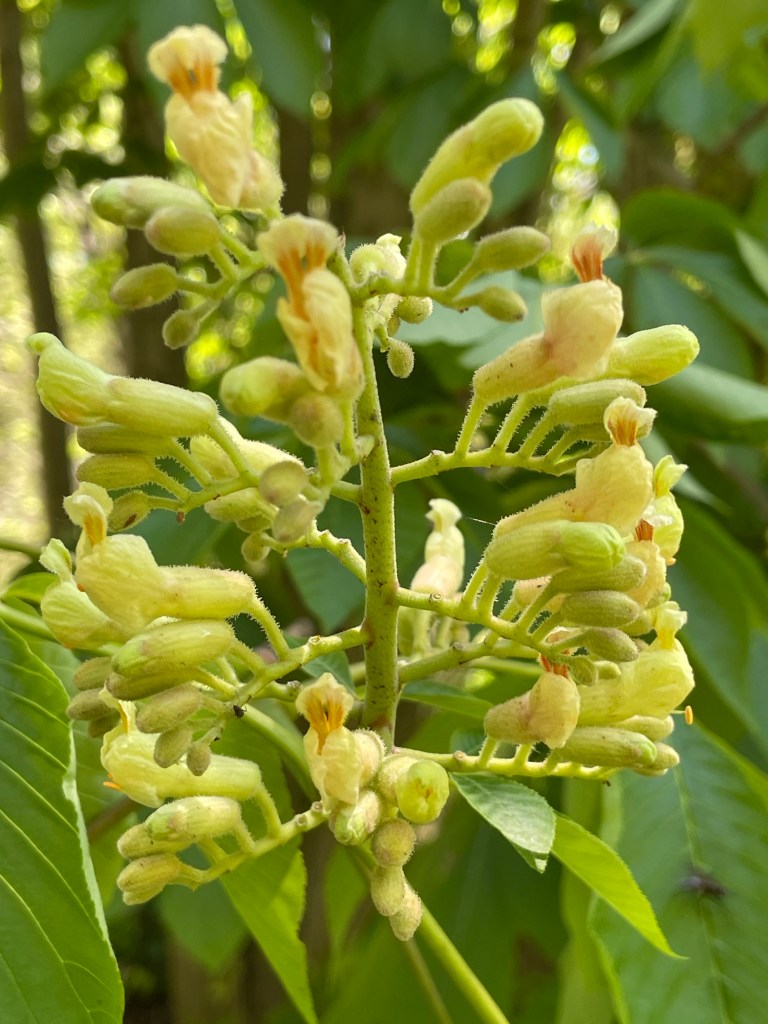
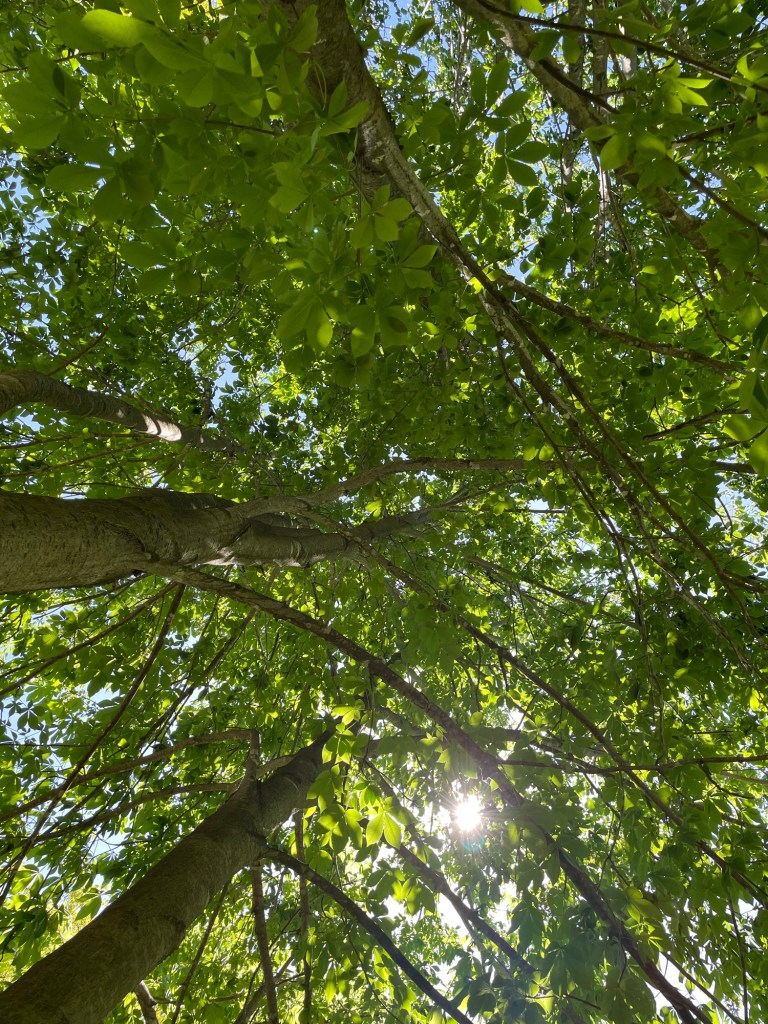
I kind of forgot about this biofuel possibility until a few years ago while doing a sort of look see at one of my seedling plantings and discovered some amazing trees with heavy production like I have never seen before. This particular planting was done by luck. While shipping some packages at a local post office I noticed a very straight tall buckeye tree in the back of the building. The folks at the post office let me harvest them which I planted at my farm. In general, buckeyes are rarely planted as ornamental trees today. There are some very nice selections of them from a floral standpoint. But the species types are not considered something people desire from a horticultural standpoint. As a result I ended up with a lot of trees no one wanted. I did notice some growth rate differences and kept the most vigorous trees with strong growth with no leaf scorch.
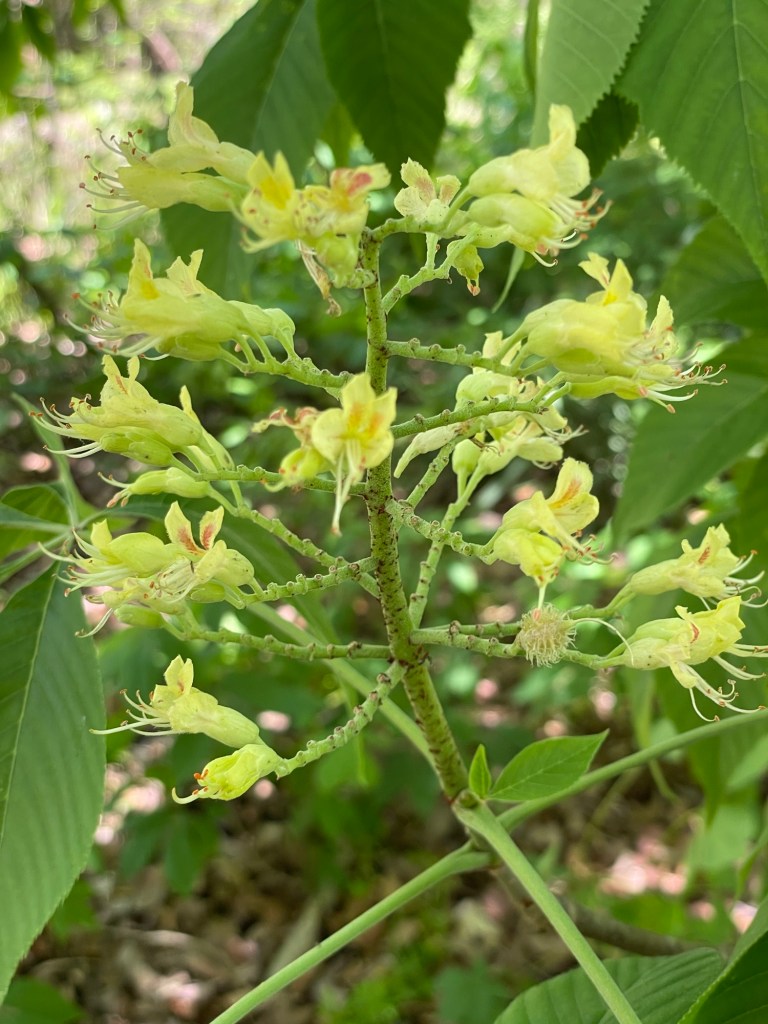
I was shocked at the yields from the seedlings of the postal tree. One of the trees now 20 ft. tall bent to the ground with its yields of nuts. Maybe that is truly a gassy one. Today it does not matter if buckeyes or any other perennial crop produces biofuels because priorities have shifted as other forms of energy have come into play. The corn thing is tight making conkers impractical. But it does pave a way to a future for trees as a perennial crop useful for a sort of above ground petroleum derivative. This tree has a resource that may contain something that will diminish our need for fossil fuels or we could use them for medicine or for the manufacture of biodegradeable products of some type. This is the point. What is the potential end use of that resource? Is is something practical and if put into production how would that roll out from a financial standpoint. Could a farmer actually have a buckeye orchard? Can you make a sweater from it? Can you produce a cup or toothbrush? Is there such thing as a conker laden cell phone protective cover or a bumper on a truck? Does it cure cancer? Is it gassy? I don’t know but I like to think about it. I would hurl that idea like a conker a great distance just as someone did for me from Spain which hit me right in the noggin. I’ve never been the same since.
Enjoy. Kenneth Asmus


 biologicalenrichment
You must be logged in to post a comment.