When I was teenager my first job was a janitor. My postal career dad took on a second job at our church of which I helped every weekend on Saturday. When you got there in the morning, you always checked the list of the daily chores. The list sat on a desk in the boiler room in the church basement illuminated by a single lamp. It was like it was a precious document in a museum. Amongst the parts of the boiler, tools and bottles, the list spoke to you and told you what was needed to be done in the church. The list was in all caps written in pencil. The list was based on the current use of the building plus what could happen at any moment in the life of the congregation. Since my dad was the creator of the list as the maintainer of the building, people came to him with all types of requests. Since he had the keys he had to ‘open up’ and ‘close’, he needed a second car which is why I always thought he purchased this used sports car. Because lets face it nothing says church janitor like Triumph Spitfire.

Sometimes I wish we had multi-generational lists. A list that propels us through the improvements in technology and science would be nice. In the environmental sciences, it seems hit or miss to me. We are constantly cleaning up after ourselves but we cannot seem to plan or plant long term. Tree crops take time and space to work. Some ideas are only effective if done on a larger scale. This is needed for many tree crops. It is not just another apple orchard. You need long term solutions with a type of stick-to-it mentality so a whole system of connections between plants, people and industry are forged. For the person growing and tending the system, it needs to be profitable. Pecans are probably one of the few tree crops like this today where from seedling to selection to orchard can take decades.
Bamboo is one of those crops that could usher in a new tree crop era. It could solve a huge number of environmental problems all at once addressing carbon sequestration, food, plastics and building materials. Once established the plantations could last generations while growing on marginal farmland. Yet why are we so timid on bamboo? Fear. Its a powerful plant with huge potential. We really have no clue how to manage and use it. Today we only know bamboo as an ornamental plant. People use them as a screen plant or a clumping grass plant for its foliage. There are grasses too that fit into the bamboo category but the true bamboo is like no other in terms of its growth and power. Ironically this is what concerns people when you mention bamboo. They freak.
In tune with my nursery goals, my interest in bamboo was to develop the edible sprout bamboo for a zone 6 location. I wanted to use a runner type bamboo and work with seedlings all genetically different. I assembled two types of native bamboo to North America as well. When winter came and went several times, I was surprised at the variation as well as the unfortunate loss of most of my collection. It was a good loss as now I had a practical application to my germplasm. You see all the different root structures, the ability to spread laterally, the hardiness as well as the ability to regrow after a tough winter. This all plays into growing bamboo. You have to treat it like grass. And wow what a grass it is. It’s easy to get lost in bamboo. You need to know how fast does it regenerate after cutting just like a hay field. What is the yield? How does it compare to other grasses?
Bamboo is a tree crop and one likely will come into play once we learn how to tend it and make friends with other cultures who understand its importance and use. That in itself is multi-generational so it is good we are starting now. The end goal is how can we make a resource rich environment filled with new plants and new plans for the future. In the end, we can live a little and buy a sportscar of sorts to get us to and from opening and closing.
Bamboo-Phyllostachys edulis

Towards Selecting Bamboo as a Tree Crop
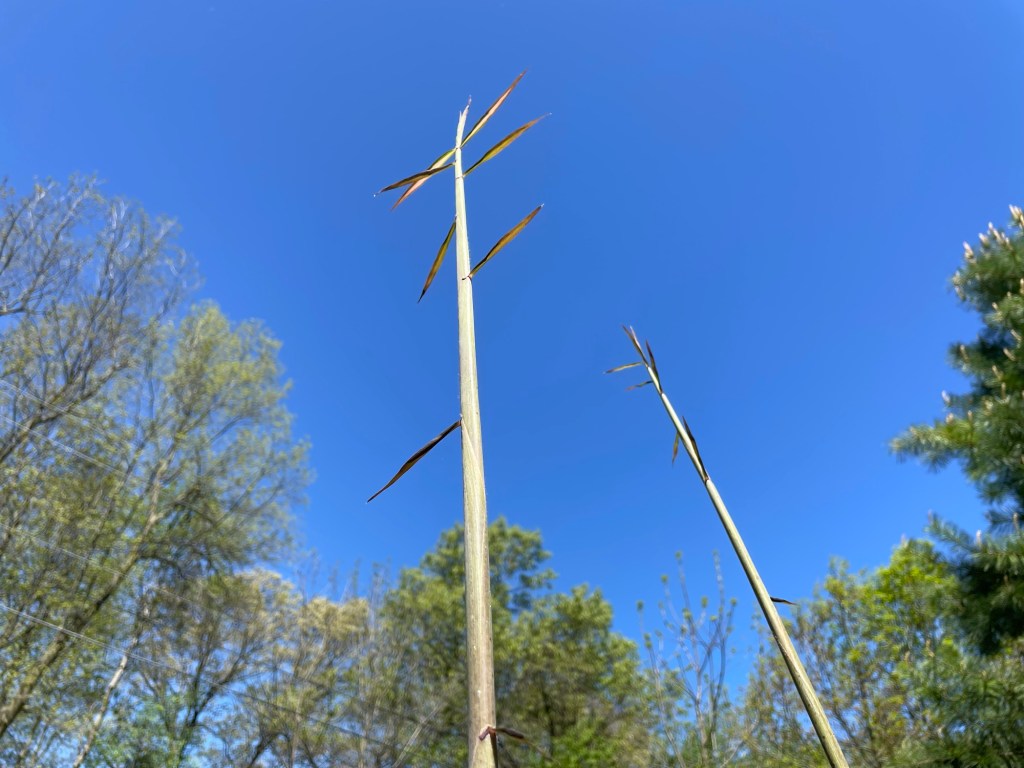
There is nothing new under the sun in bamboo. When I started selecting and growing seedlings of bamboo I was surprised of the genetic variation in terms of hardiness and fast growth. If you listen to those who are experts in bamboo, they will tell you over and over that only the runner types are worth growing for their vigor and health for this purpose. This species edulis produces a delicious sprout. Another species, I was able to grow was called Vivax or Chinese timber bamboo. It produced some hardy seedlings but most were not acclimated to Michigan’s winters compared to edulis. If you grow a lot of seedlings, it is difficult to see the variability in the progeny until the third or fourth year. From there you can then make plantings to test further for hardiness and of course fast growth. Fast growth may not be apparent until the root is well established after eight years or more. This year the sprouts have grown to ten feet in less than a months time.
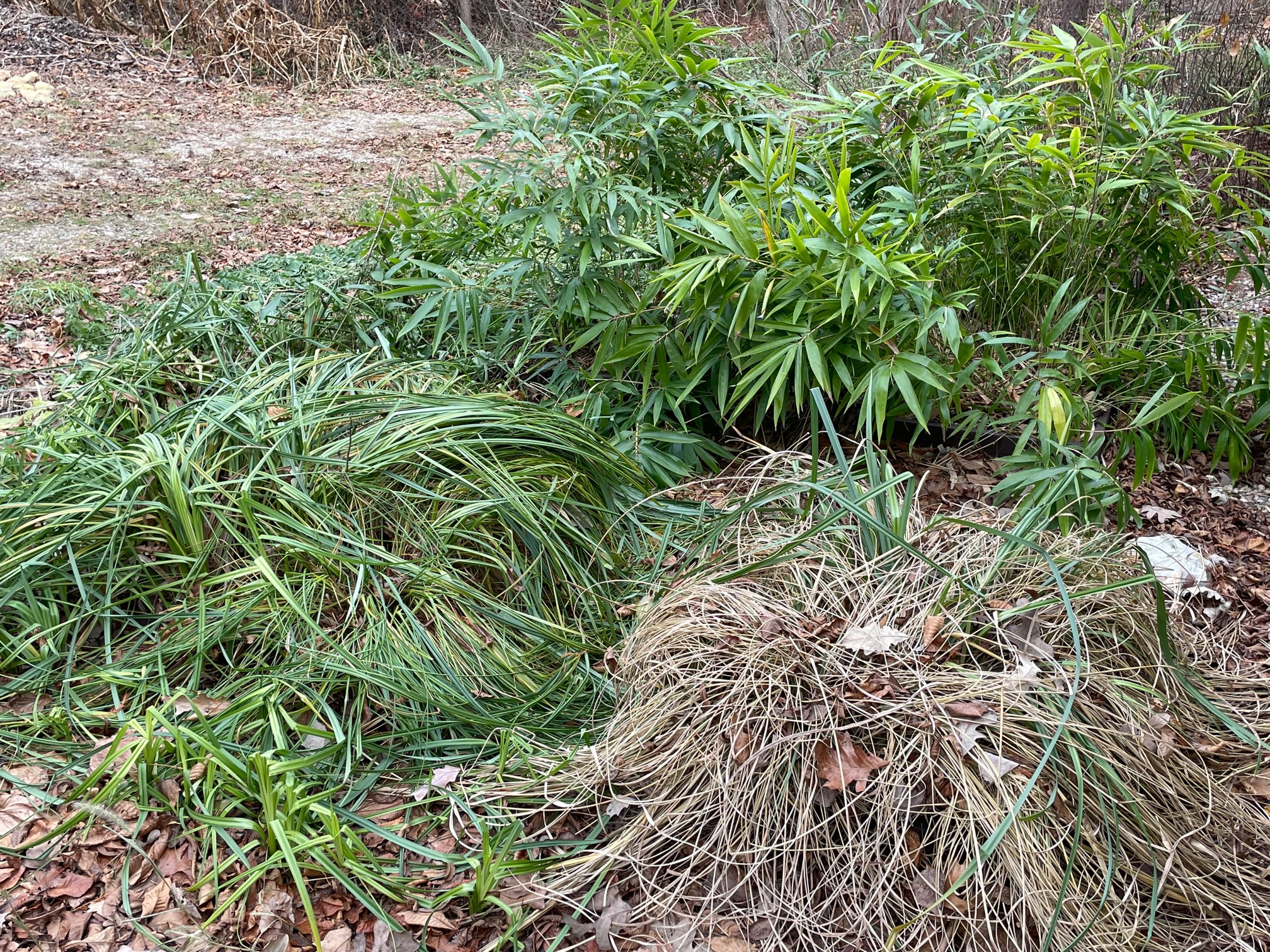
The indigenous North American species are the greatest spreaders here growing a shallow rhizome outward usually in a single line before branching. Over a 20 year period the plants have moved away from their original planting averaging a foot a year in an omni-directional pattern. They have also remained the most evergreen in the foliage department. One selection seems to spread more than the other and one flowers consistently producing mostly blank seeds. It does not die after flowering.
Bamboo selections need further evaluation in a larger area to really put them to the test. I would say this is on par with black locust in many ways. You really are creating a giant colony that could live for hundreds of years. That is the bamboo. Put it on the list.


 biologicalenrichment
You must be logged in to post a comment.