What would happen to the apple if we decide collectively not to spray anymore? Every good experience that we have with the apple would change for the worst. The flavors we know and appreciate would disappear. To create a new variety of a no-spray apple is the moon shot of fruit farming. The apple industry does not care. Everyone knows this. It is infatuated with itself focusing on narrow profiles of apple and apple flavors. It has a completely different trajectory. Apple enthusiasts including scientists have looked into this no spray or low spray in various ways. Personally, I have no idea what I am doing in this arena. Yet I did find a sort of cold fusion back door method that could play a role in weening us off the pesticides so luxuriantly used in apple production. At the very least, it would create many new apple flavors. The problem is I need 100 acres to make it happen in force. You need a large sample size of diverse genetics and a means to explore that diversity free of spray. No one would do that. The conservation industry is so mired in native only that it would never be applied on public land. A private land owner would need some serious cash to set aside that much land for thirty years. It’s a whacky idea to most. Meanwhile we continue to snack on apples sprayed sixteen times a year. That in itself I find very whacky. The goal would be find a way out of this complexity of environmental and ecological mess we are in and the ability to produce a clean fruit without insects and disease. This would be one giant apple forest in the end. You are creating something that would only exists in one place in the world. Russia. The home of the Eden apple forest. Certainly we can go organic and find varieties suited for organic production. That is one very good step in the right direction. But can we go one step further? That is the issue with this most wonderful tree crop and its importance to human health. We need apples more than ever. If we take a sneak peek of possibilities, it lies within the wild apples already in existence in North America. It already has been bred by nature for the most part and is in existence right now. It doesn’t have to be a moon shot in many ways.
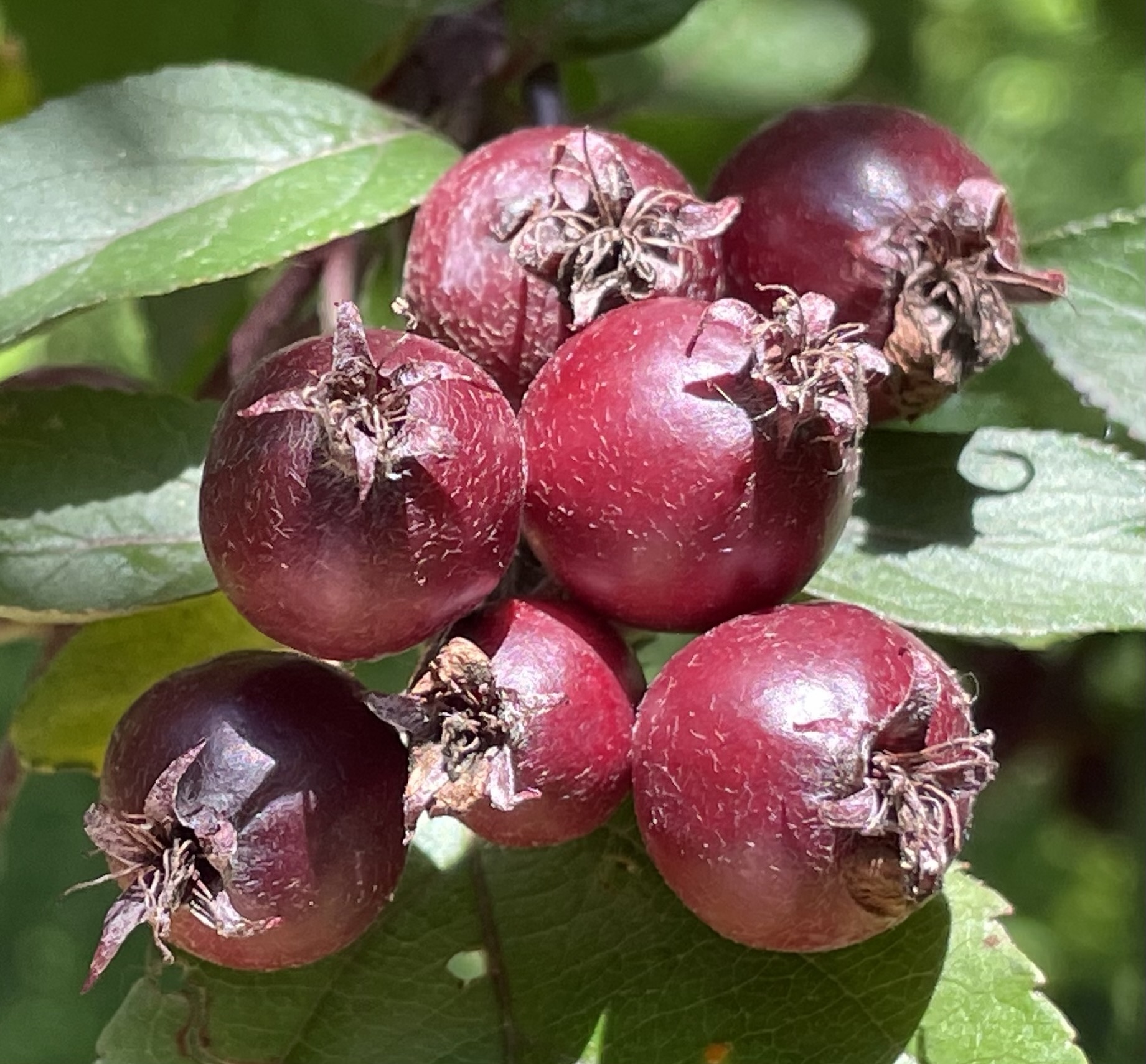
When I began collecting seed for my farm and nursery, I was always on the lookout for apples. I tried to find clean fruit from trees growing untended. One species type that was consistently good was Malus coronaria or Sweet Crab. It is a native North American species and is found here frequently in southwestern Michigan. It is inedible in the fresh state because of the high amounts of astringency and tartness. Yet here was an apple completely free of bugs and disease. The hard green one inch size apples were always pristine no matter where I found them. Small size aside, you have to admire its cleanliness. The foliage on the other hand was very prone to disease and usually by August the tree had lost a good portion of its leaves due to rust, scab and mildew. This was it’s normal condition and it always happened every year. Some years are worst than others. This species is biennial in bearing. Every now and then you will find a particularly good seedling with heavy yields. I found a couple of trees with massive yields in a park and another in a curb lawn near a parking lot. One was in a yard along a Michigan highway. The owner was happy I was cleaning up the fruit off his beautiful lawn. Sometimes this species is used as a rootstock. My guess is the crabapple production folks will use anything for rootstock.
At one point, I had to get to the bottom of the coronaria flavor department and decided to make jelly from it. When I went to the store to purchase massive amounts of organic sugar, I met up with a colleague who worked at a local nature center as a botanist-environmental science teacher. I told him I was making jam out of the Malus coronaria to see what it tasted like. He asked, “What’s that for?” while pointing to a bag of Almond Joy minis that I had in my hand. I said, “Back up.”
It turned out that even with massive amounts of sugar you end up with a green hard jelly you could easily bounce a bowling ball off of. I am not sure why I added Sure-Gel pectin to it. It still was tart and astringent. No one ate it at my house. Seeing a jar of green jelly light up when you open up the refrigerator is not particularly appealing either. Probably storing the apples in their green state for a month or two would have decreased this effect.
It was from this species level, I had the thought you could find a clean apple somewhere. I found larger fruited Malus coronaria and ioenensis as well as several hybrids called heterophylla apple. I found and grew one selection at my farm with relatively decent flavor and juiciness. People began sending me seed of certain selections of wild apples. I collected a few scions off trees here and there too and some people sent me what they thought was good. But the grafting was very limited. I mostly wanted to see what the seed would do and not the cultivar. In a certain twist of fate, Malus coronaria rarely overlaps its pollination with normal apples, Malus domestica. It is often two weeks later in flowering. That is a good thing in terms of frost avoidance. But unfortunate if you want hybrid seed. It is an uncommon cross.
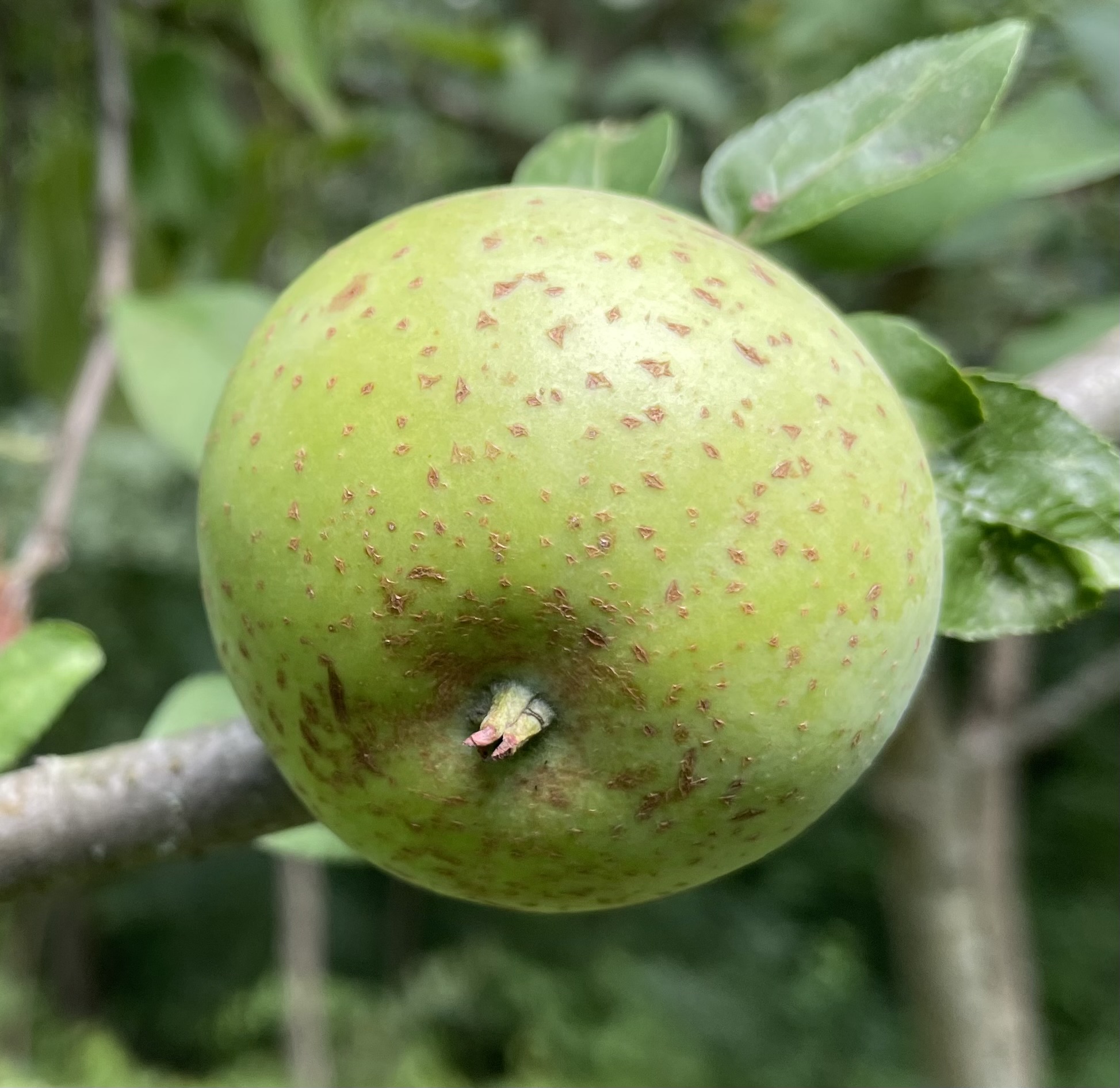
Wild apples show a huge array of variation from year to year with appearance changing radically depending on insect and disease pressure. There were many good crabapples but for some reason the size of the fruit was a road block. The cider folks have found that the russet apples (the ones that look like baked potatoes in a tree) produce seedlings that are valuable in terms of flavor and bug proofiness. They tend to have impermeable skins. I have found the seedling russet apples that I grew from the gift box of heirloom apples did produce fairly clean apples with minimal damage from insects and disease.
The Waterfall Moment
It was a December morning and I was having my catalog worked on by a designer. On my way to his studio, there out in an open grassy park was the tree I was searching for. I saw a huge volume of yellowish green apples that looked like they were dumped under a tree. I decided to go back later to harvest the fruit. It snowed the night before and I froze my fingers digging them out of the crusted snow and thick grass. I took them back to my farm, processed the seeds and grew out many seedlings from this batch but kept one tree that had clean foliage without rust spots on the leaves. This tree grew very fast and began fruiting so heavy that the weight of the branches made the tree bend over to the ground making it look like a waterfall of fruit. Nature has its little surprises. The fruits quality was very similar to coronaria being high in astringency and barely edible in the fresh state locking up all other flavors in your mouth making it impossible to taste anything else. It was a Eureka moment in my land of seedling apples. Today more seedling trees are waiting to fruit and new seed has arrived this last year. I think I am going cold fusion on the apple. I have to figure out this dynamic tree crop and force of energy we call the apple.

Much like the apple you need to cross pollinate your ideas to find the combinations of flavor while creating ways to use the fruit. We can get a clean apple full of wonder and health. We can continue spread that message of “one a day” and to keep the doctor away. And if we have to, we can call for back up and pick up a bag of Almond Joy minis.


 biologicalenrichment
You must be logged in to post a comment.