
Every now and then people will discover wild colonies of domesticated food plants like tomatoes. Some are accidental pitches by motorists but some have been around for many generations and have adapted to their new homes self seeding and creating vibrant colonies of delicious fruit. There are several varieties of them I have found in the seed trade that I grew at my farm. It is a good representation of integration ecology and biological enrichment.
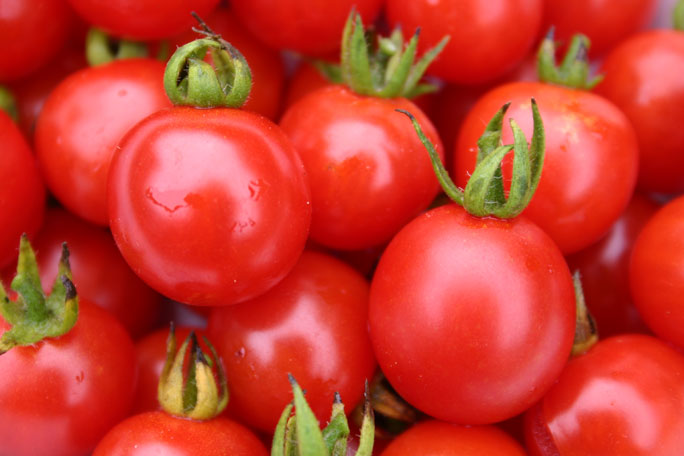
The first one was “Texas” as pictured above. What made it wild? Essentially this was a find where many generations of this cherry tomato were growing untended in a extremely hot and dry location in southern Texas. The vines were very long and had developed the ability to root as it grew along the ground. To further help itself in this endeavor, the plant had these larger than average joints on the stems to a degree where their weight would bring it down to ground contact. This would further strengthen the plant in its ability to capture water whether that was dew in the morning or a brief rain shower. The plant itself was quite hairy and it was not very full of foliage which aided in its ability to survive drought and still fruit. It did not have massive yields like most cherry tomatoes either. When we grew it at my farm, the plant was under some oak trees and did fairly well even in the shade. Each plant grew up to 20 feet long as it skipped along the ground. It also self seeded the following two years. It is critical for an annual plant to establish in the untended world of no till. I like this ability of the tomato to reproduce on its own and create new populations in other locations all of which are not hybrid plants. That is wild.
It turns out there are several types of wild tomatoes world wide and a few species that also grow throughout the world in some very isolated areas. One I experimented with a little bit in 2019 was the Galapagos tomato. The Galapagos produces a green or yellow tomato. I kept the seeds separate and hope to produce a population of them again. The groundhogs loved the foliage too much last year so there were no Galapagos tomatoes. Just using the name ‘Galapagos” is magical to me. That might be the only reason to grow it. “Oh, your tomatoes are from the Galapagos?,” people will ask. The tomatoes were rock solid roughly an inch or more in size. It has a certain fern like foliage and seemed quite vigorous at my farm. You can imagine some of these species types would be good to use as is and not hybridize them just to see what sort of nutrition they contain and what new flavor profiles are possible. It would be ideal if they could be established as a wild plant growing untended in North America.
A new one this year is the Everglades tomato. It is interesting in that the Everglades tomato has an industrial looking seed coat with all sorts of barbs over it. I am guessing it developed this as a survival mechanism but I have no idea why. I purchased both of these species from J.L. Hudson Seedsman. Joseph Lofthouse, a prominent land race plant breeder, also grows many of these wild tomatoes and is actively searching for the perfect tomato by crossing tomatoes of many species. That too is wild.
Creating populations of common food plants in untended or lightly tended areas could create a form of foraging where the cultivation is only dropping off a few seeds here and there to come back to harvest later. It’s a food opportunity waiting to be developed further. Will we take the first step of planting a seed of an idea and bring it to fruition? It’s totally Galapagos and part of our evolutionary nature.


 biologicalenrichment
You must be logged in to post a comment.