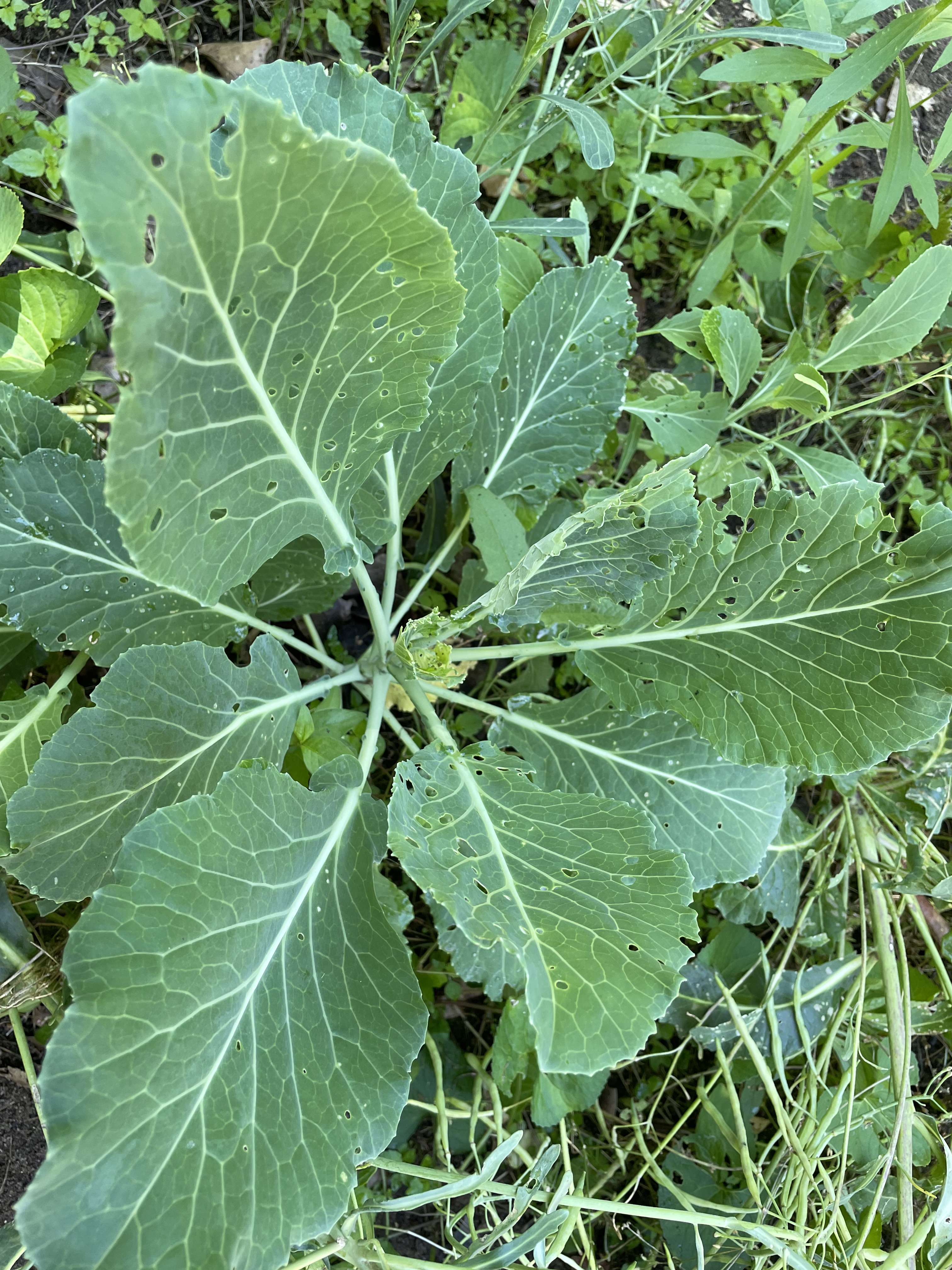

About a decade ago, I began growing tree collards from cuttings and seeds from The Tree Collard Project in California. I also purchased seeds of other types of brassica from Chris Homanics, Joseph Lofthouse and Southern Seed as well as J.L. Hudson, Seedsman. I found one company to ship me tree collard cuttings to and rooted those in my garden at home. These seed sources allowed me to peek into the window of what is called land races or grex. I was not aware of this type of breeding at all. It was very similar to my means of selecting woody plants and creating populations. The tree collard group has an interesting history only because it is normally clonally propagated and came from the slave ships from Africa. As time went on, the plants continued to flourish in the African American communities and spread from there. I had very little knowledge of collard but I had a great way to test for hardiness. I would grow the plants in pots in one of my polyhouses and then leave the end open for wind to penetrate it. This would reduce populations of many tender plants very quickly. Michigan is a good testing ground. I would still water the plants in December and again as early as possible in March. I did not sell collard plants for very long but eventually after a particularly brutal winter, sorted out the remaining plants after three years. There were not many left. One plant from the Tree Collard Project looked spectacular. I decided to keep one individual that had grown two leads over six feet long and was not bothered by the minus 27F that winter. As I cut it up using my hand pruners, I was surprised how hard the stems were. I put the cuttings into a large 30 gallon grow bag and moved it to a permanent polyhouse. When it would flower, I would move it outside in the open to get the pollination it needed. This was ideal and the plant did produce some seeds but not many. I took a few other plants and moved them outdoors under a chicken wire mesh to protect against deer and groundhogs from foraging. Those plants also produced some seeds, but they too were low producing. It appeared the perennial nature of the plant that I was selecting for was reducing the seed yield. I know that is some instances after flowering with kale, the plants will die. They are biennial in nature. This is an issue of selecting the right balance of vigorous growth as well as heavy seed production. Seed production for most vegetable crops is a must for diversity sake. But for the tree collard, it is not necessary as it can be easily rooted by sticking the plant in a jar of water or even directly into the soil. So why is this important?

Now instead of one in five hundred, you may find all of the seeds produce winter hardy plants. Certainly there would be variations of flavor and texture but now you have a robust population to choose from. Whether the seeds are used for sprouting, an oil crop, or an organic form of a ‘green’ drink , the perennial genetic diversity is off the charts in terms of its nutritional composition. It is not a cultivar. Praise the brassicas for that. You can harness the full range of benefits. This is the age of the tree collard. A brassica forest is now a reality. Only new seed can create that and nothing else.


 biologicalenrichment
You must be logged in to post a comment.