I’ve always like the description of the oak genus as young as evolving. When horticulturists make selections from oak trees they are strictly ornamental in nature and usually columnar in shape. It is old and devolving in terms of our use of the oak tree as a crop tree. No one is considering creating an orchard of oaks for acorn production. I am sure there are a few brave individuals out there doing that. Meanwhile, the use of the acorn has taken on a new life as people begin to discover its use from wild trees. This has proven to be beneficial in terms of acorn awareness for human food. The selections I have ‘bred’ and selected over the last forty years are very good in terms of yields and improvements for the edible acorn. Yet on applying them on a broad scale in some way has not come to fruition. Why is that? The whole thing really revolves around experimentation and not implementation. I mean what are you going to do with an acorn? This is a bigger question than you might think. The acorn is widely available as wild trees and there is a whole market available in terms of woody plant seeds. But there is no market for orchard grown acorns because there are no orchards. I had developed very good cultivars for orchard production. What was needed next was specific processing techniques for larger volumes of acorns from specific varieties. As time went on I began to see a light into this production scenario. To explain it to others was equally frustrating. There was the native only philosophy and then there were the feed and hunt the deer philosophy and finally the feed the hog philosophy. Each of these ideas on their own are weak and to me are a waste of time. I am focused on feed the human philosophy with acorns as a source of healthy food directly to Homo sapiens. Yes. Acorn pancakes. To me this is the future of the acorn with no intermediate steps.
For many years, I grafted some of my selections and was excited to offer them in my nursery. They were expensive and difficult to produce so I contacted another nursery on the west coast who had the resources and expertise to do the grafted oak trees. My rate of success was low rarely exceeding 30 percent takes. It turned out that all Quercus scions or trees are prohibited to export out of Michigan to the west coast due to oak wilt disease. I had the thought that I could have my nursery and land inspected for the disease. I asked the state and they told me I would need to have the whole county inspected. It was very expensive and time consuming and no guarantee that it would be allowed by other state officials in other states. One told me that oak firewood is likely the main vector from mature trees not little twigs like my scionwood but because it is live wood it too is banned. Between the condescending attitude of the other nursery owner and the state officials I bailed. I have hopes, I have dreams.
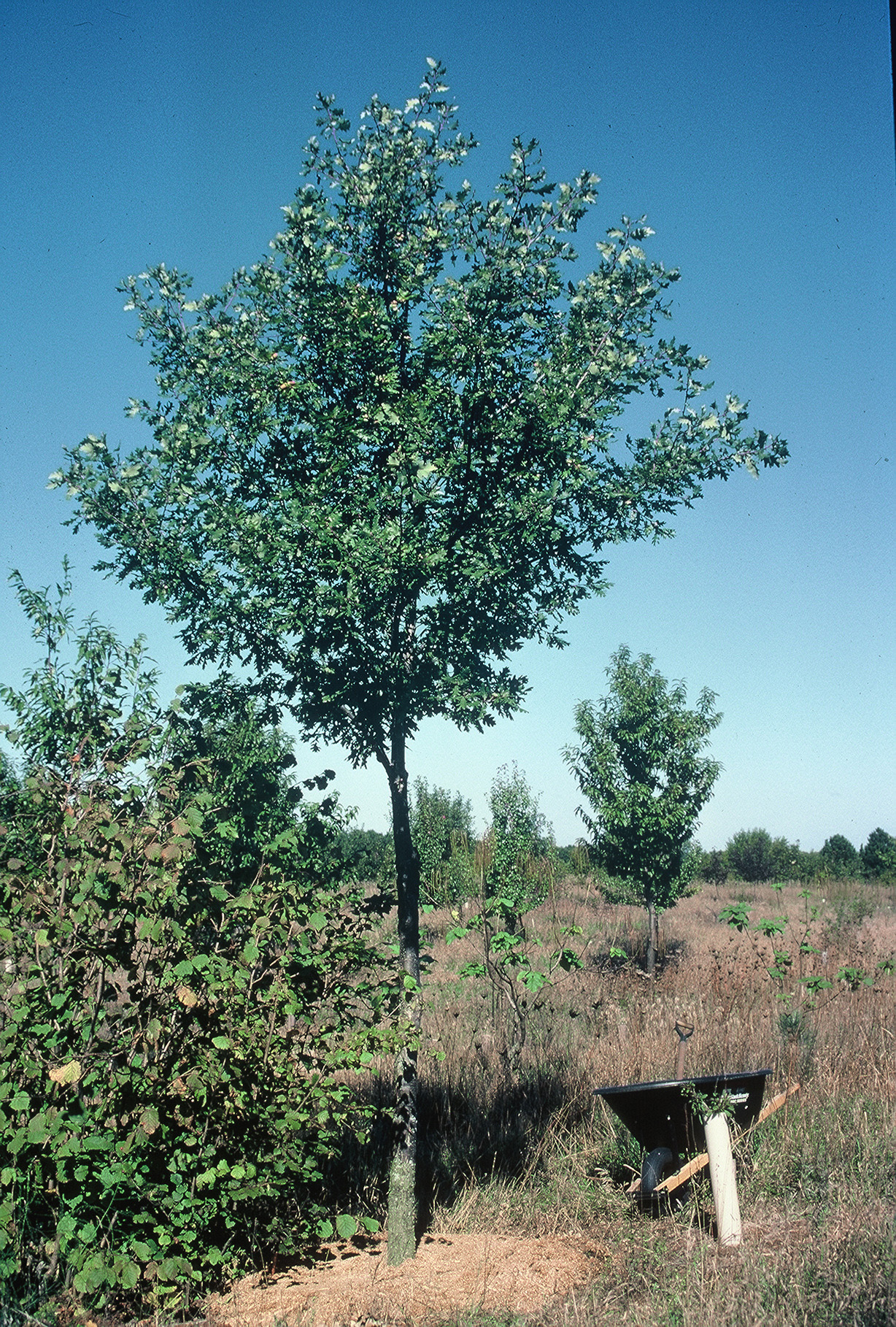
For me this image of my empty wheelbarrow reminds me of hauling the sawdust up to the top of the hill and spreading it under this wonderful English and white oak tree. It brings back memories of hard work along with how much there was to gain and learn from the world of oak trees. This image tells a story of an oak as a crop tree. The wheelbarrow is empty. The tree is full. I am going to harvest the acorns now and place them in my empty bucket. The harvest can only bring benefits of which go directly to you and hopefully future generations yet to come.


 biologicalenrichment
You must be logged in to post a comment.