
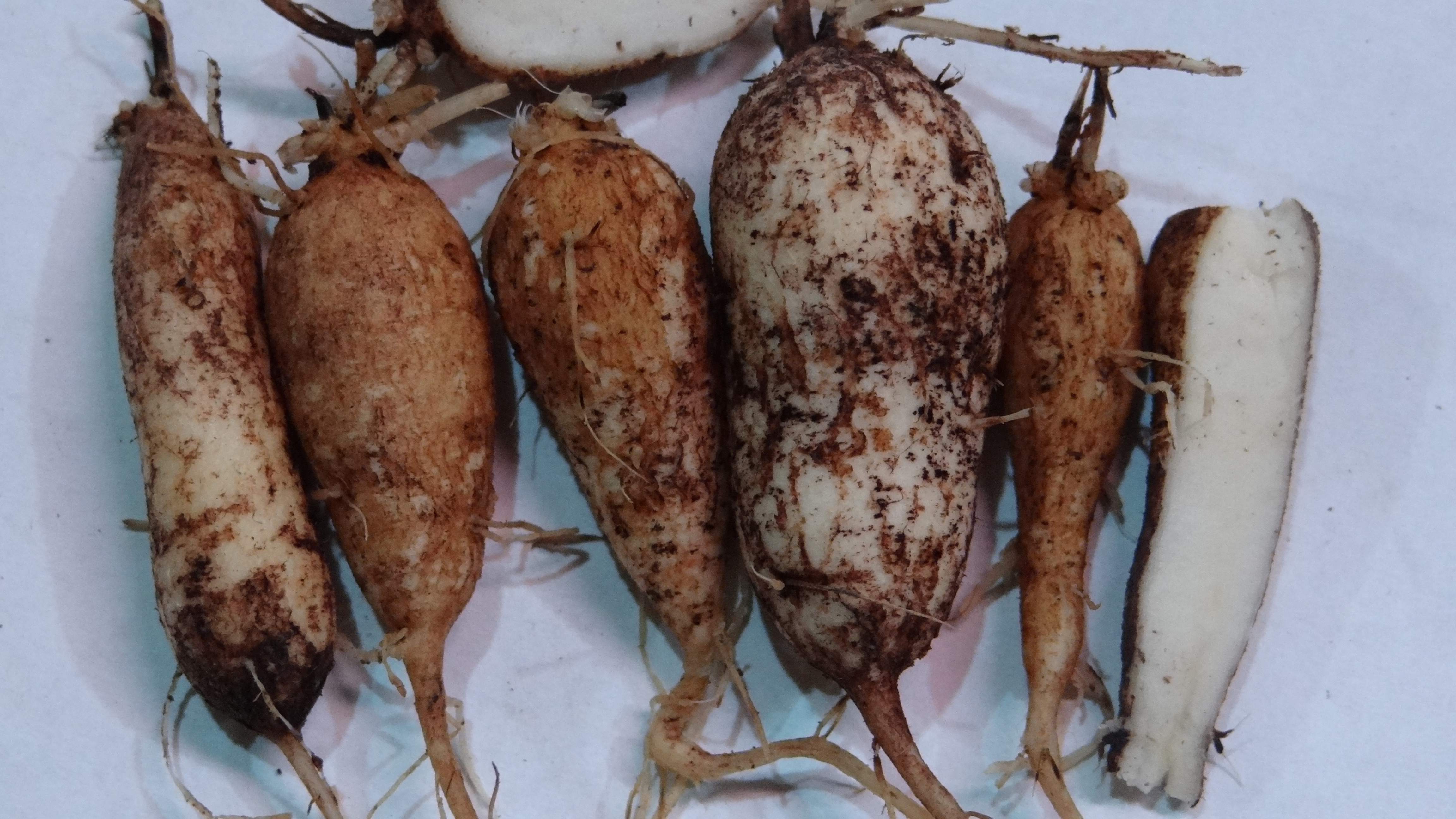
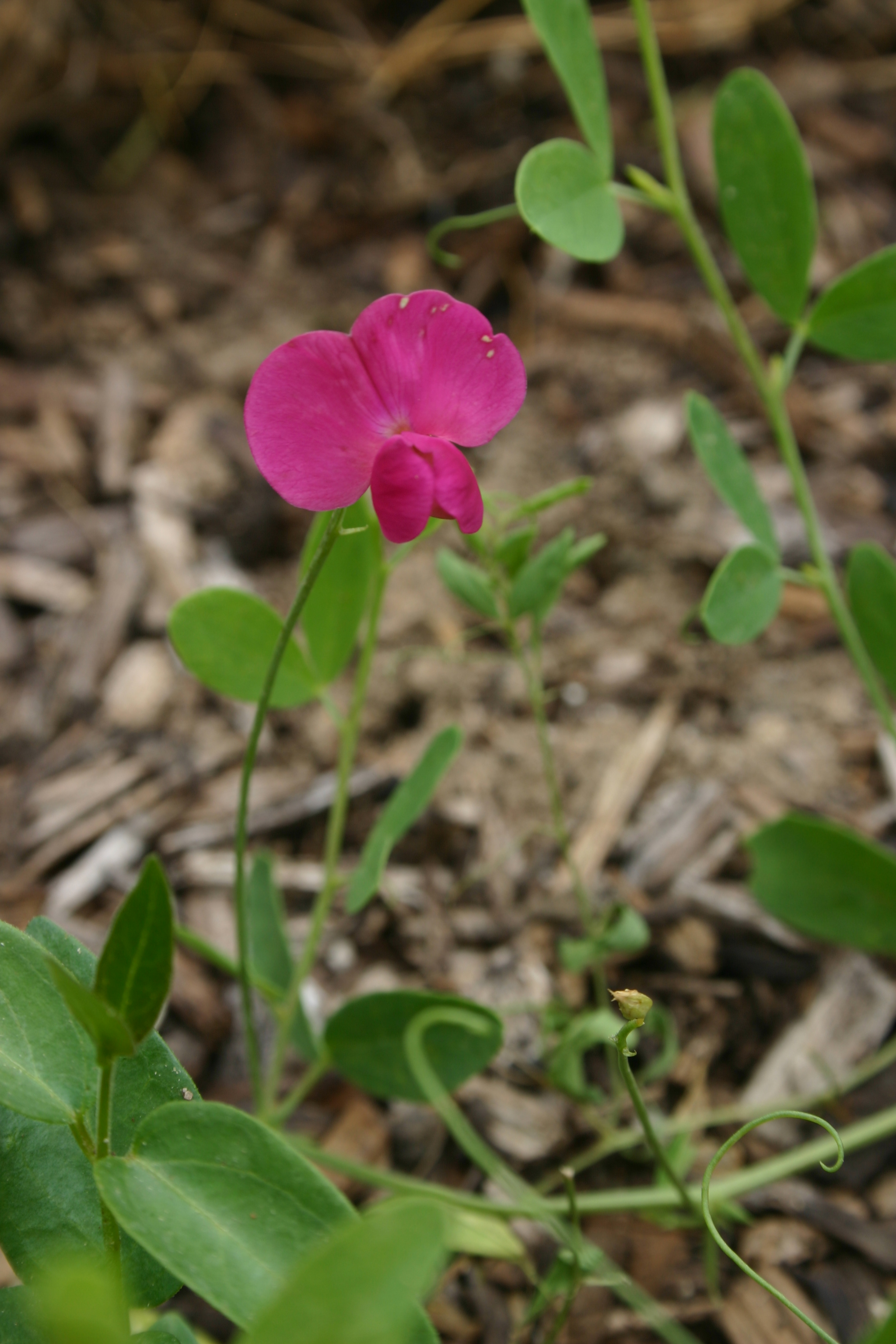
One of the most interesting perennial crops I grow is the earth pea, Lathyrus tuberosus. It reminds me in many ways of the highway pea that is so common along roadways used as a soil stabilizer and nitrogen fixer. As a cultivated perennial vegetable, the earth pea was low yielding but had delicious crispy pea tasting tubers. Definitely worth growing for the flavor. It was not a colonizer like the highway pea and needed a bit of care to establish. Once established it came back every year despite temperatures below minus 20F and me tilling it under several times in an area that I was planting new things in. It never took over an area unfortunately as I wished it would. Today it resides on a trellis as I continue to plant its seeds again and try to establish it by planting a few seeds every year.
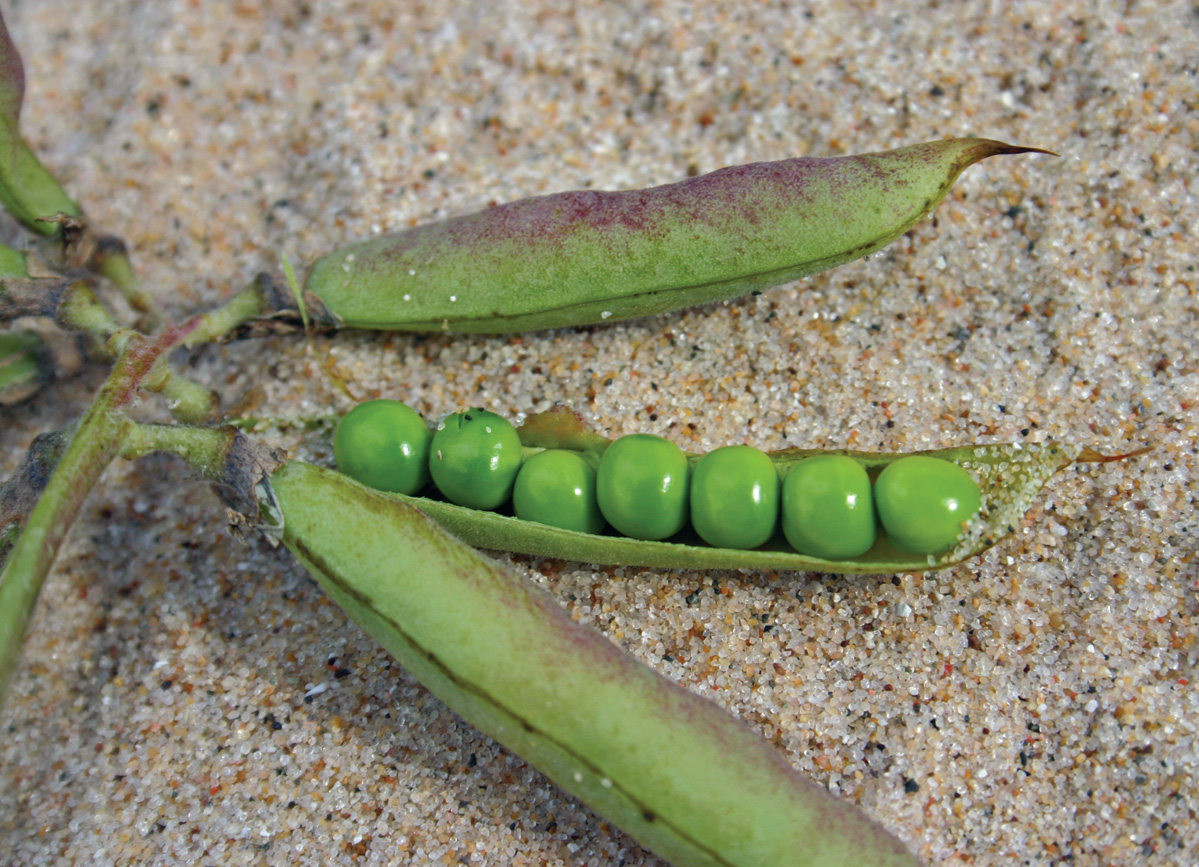
The earth pea is a nitrogen fixer and this is an advantage if you wanted to combine it with other woody plants in a landscape. On its own it could likely be developed as an agricultural crop in the same way radishes are grown and used. It doesn’t necessarily need a trellis and it will sprawl along the ground and branch outwards like the highway pea. I grew several North American pea species including the prairie and beach peas from the Great Lakes region and Washington state. These species usually produce poisonous seeds each to a different degree and long thin rhizome roots. They were short lived in my location likely because of their specific soil conditions which were not met at my farm. The perennial beach peas on the Great Lakes are edible and can be snacked on. But there is some concern eating a lot of them could be a problem. Beach peas do have a good flavor. There is a larvae of a moth that drills into them turning the peas into frass. This is a common occurrence if you decide to collect or eat the peas. The earth pea does not have much of a pea seed crop and it could be possible the seeds are not safe to eat anyway. When in doubt, leave it out is a good philosophy for some types of wild foods.
The heat tends to diminish the earth pea’s growth and by August and September it pretty much goes dormant here in southwestern Michigan. This is probably related to its alpine genetics and adaptation to cooler locations. It produces a few seed pods every year with very small peas about the size of a BB. I can easily see the earth pea being used in orchards and permaculture plantings. The tuberous pea is long lived, delicious raw and easily digestible. There is a question still that some want to know more on the compounds within the tubers to be sure the selection process makes it safe to eat in large quantities. There is no evidence of toxins found in its chemistry but it should be looked at if you plan to feed it to everybody and not just anecdotal evidence. Another aspect that is being considered is increasing its yields. There is at least one company breeding it hoping to release a new patented selection of it. I purchased my seeds from J.L.Hudson, Seedsman. This particular species is not easy to get seeds like normal peas. There is some genetic variation in the progeny. Ideally you would like a thousand seedlings to see its range of diversity. A thousand plants paints a picture with lots of details. However, my guess is even a few seedlings are uniform enough to cultivate without selection. It would be ideal if you could buy a fifty pound sack of seeds and field plant them just like…….PEAS! Yes. Hard to believe I know. The image of my tubers above show the largest ones I have found. In the meantime, I will snack from time to time on my crispy tuberous peas and wonder if I am the only one tasting this delicacy and how I can share this crop. One seed at a time would be ideal.
Safety First On Wild Foods and Plants That Look Similar
Many years ago a neighbor farmer of mine who raised beef cattle and was a strong vegetarian and Seventh Day Adventist told me a story of his family reunion and the highway peas. He and his ‘Uncle Bob’ were checking out his garden and near the fence line he had a nice planting of highway pea. His uncle started snacking on them in great abundance. He consumed a few but told Bob that it was probably not a good idea to eat them at all as he had heard they were poisonous. In the meantime, his uncle ignored his warning and told him how could anything taste so good be bad and likely many animals consume them too with no apparent effect. This of course was a huge problem filled with deep potholes of ignorance. After calling the ambulance and having his stomach pumped he did bounce back from his poisoning. It was fortunate he didn’t decide to tough it out and got treatment. I used to jog by his garden and perennial hedgerow of peas and every time I thought of their beauty and fragrance. I was never tempted to snack on a few. I am sure on future family reunions someone brought up the “Uncle Bob Moment” of the past. Maybe someone with a sense of humor layered a whole bunch of shucked peas on top of the salad as a reminder. Well I guess that is just me thinking aloud.

Enjoy. Kenneth Asmus


 biologicalenrichment
You must be logged in to post a comment.