
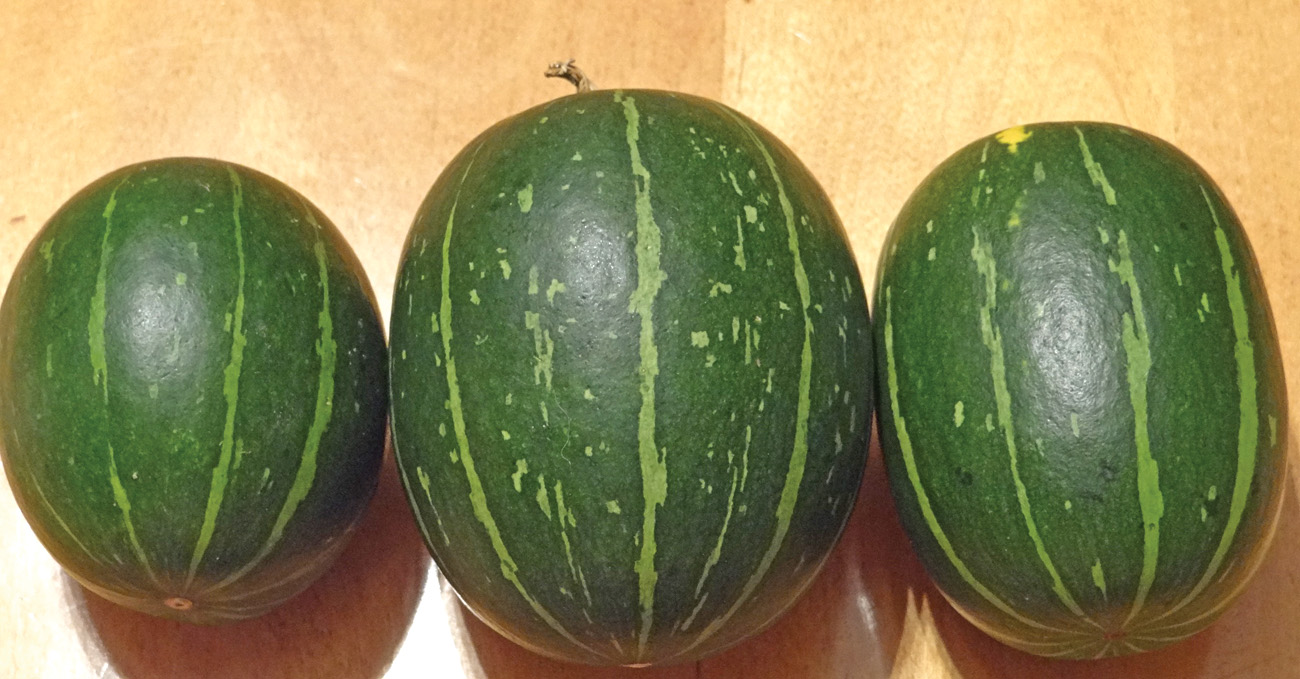
I have always enjoyed finding and growing the ancestors of crop plants. Unlike what would be called scientific breeding or selection I have a different motive. I want to see the plant that began it all. I want to time travel back to the origin of the cultivated plant and take a look around and see what’s doing. I want to leave with knowledge of the plant and what it was that civilization needed from this plant at the time and the culture that initially found it growing in its wild habitat. Then I want to share that experience with the rest of the world in forms of knowledge and seeds. It’s the straight arrow of experience plus knowledge equals enlightenment.
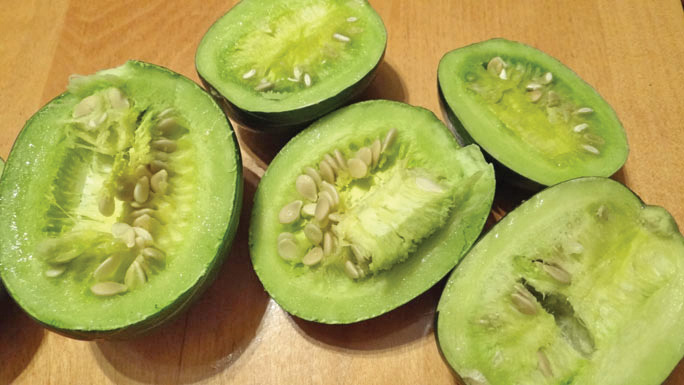
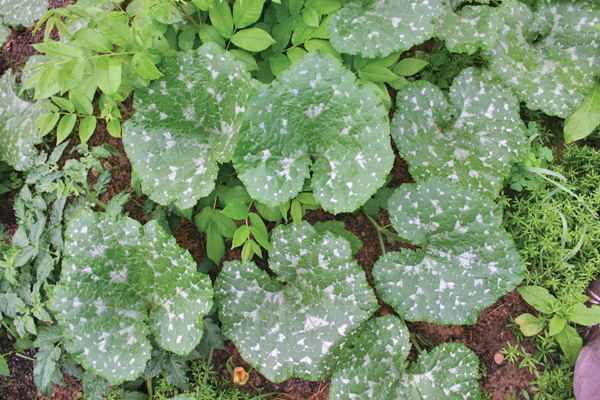
I found a seed source through a now out of business seed company that had managed to find the wild pumpkin in Peru. This is a certain subspecies that is considered not edible and poisonous to consume. I was doing a small planting in an area that was recently cleaned of nursery stock and was awaiting a new polyhouse. In this area I was attempting to grow both wild forms of watermelon and pumpkin in this wide open sandy area wedged into between the northern pecans, wild pears and persimmons. It was a good location with sandy low organic well drained soil. The pumpkin vines grew luxuriantly and tapped into the soil at each node growing up to 100 foot long. There were no insects, no deer damage and great competitive leaf canopy unphased by drought and weeds. As the vines grew, I was excited to harvest the little green balls and see what the flavor was like. As I cut open the fruit, I realized this might not be the same as the pumpkin I know. It wasn’t. The bitter alkaloids flooded my mouth numbing my tongue for a good three minutes. Water only seemed to make it worse. Yet, there was this aroma in the background that was very pumpkin like. You could smell it, but not taste it. One fruit had a tiny orange sliver of a speck on it. “There you are my little pumpkin”, I thought. The orange speck said it all. The orange portion made up less than one percent of the fruit, yet this one percent was the future pumpkin. How did someone even know this? My guess is pumpkin consciousness. Someone had knowledge of this plant at its very source and as unusual as this sounds, the pumpkin told him or her in some way either through cognition or a ‘medicine man’ as a intermediary where to look and made changes to help the farmer, the curator of its knowledge. Life is mutual. Otherwise the pumpkin from the wild form would have never arisen. You have to know a direction to follow otherwise it would take too long to develop and actually use and eat. Whole civilizations would crash and burn if they were forced to eat this fruit I just tasted.
One year on the way home from my farm, I noticed a great deal of smashed pumpkins on one particular country road from Halloween night. Pieces of pumpkin littered the road as cars crushed the remaining pieces into an orange paste. The following year in the same area I began to notice a few ‘wild pumpkins’ making their way to the gravel shoulder of the road. It had turned out that these teenage planted pumpkins were making a go of establishing under the sugar maples and black walnuts along the road. One vine in particular was working its way into the road and was loving the open pavement. It appeared for a brief moment that teenage pumpkins were being purposedly being avoided by traffic too. I know. The vine inched out more and more everyday. I swerved around them. Don’t hit the pumpkin vines. Like a late night possum, teenage pumpkins are worthy of living a life uninterrupted. Everything was looking spectacular until the county road crew and their mowers showed up. At that point I had visions what the end of the world would look like when the streets were filled with pumpkins rich in fruit. Imagine a pumpkin laced roadside rich in nutrition. Now I was onto something. My dreams were the same as the pumpkins. Pumpkin consciousness was here to stay as long as I kept the thought alive in my mind.
Today this is my new life with the pumpkin. My hats off to the angst ridden teenagers and the wild Peruvian pumpkins. Eventually they will meet and find a solution for all of humanity. It can happen. I saw it. It is true.


 biologicalenrichment
You must be logged in to post a comment.