It is very interesting to learn about relationships people have with plants and animals. When people visit my farm, they always have some thoughts on what they do and why and while offering me advice. No one was really strict or hard core on their plans. They were open to new ideas. It was their recreation or as I like to say re-creation. If you look at the surrounding land next to my farm, it has changed over time based on who owned the land as well as what they wanted to do. I have one neighbor that is a commercial grape grower. Two neighbors have created huge yards of several acres of grass. One of the grassy neighbors built a stream and waterfall in his yard. One neighbor has a scrap yard filled with metal, old boats and abandoned cars. Another has a small lawn and has done essentially nothing other than plant some of the conservation district plants over fifty years ago. One neighbor has created a gun range amidst an ever expanding sassafras colony. I would say the landscape that has changed the least is the grape vineyard with the exception of seedless grapes.
I am a bit surprised when I look out past my fence line because my farm is so radically different in vegetation than the surrounding homes and farms. Initially it was wide open grass and pasture. My farm was managed as a hayfield prior to me purchasing it and planting trees. Even today, it is a good canvas for my plantings as I add to it as well as a means to experiment and harvest many types of fruits, nuts and seeds. It is unique in that aspect. I do as little as possible and to gain the greatest amount in terms of yields of fruit and knowledge of future crops for use on a broader scale. Its one solution of many that could be applied to help future generations in the rough and tumble world of climate change by making resilient crops and orchards. This is me tooting my horn!

Land use revolves around what the owner wants or doesn’t want. I have no idea why someone needs a massive lawn but it does not matter. The owners like it. Recently one of my neighbors has begun to mow in a huge sweeping robust fashion. He has dropped the deck of his mower as low as it goes scalping the soil as he goes into his mow state of mind. I know at one point he had a burn mentality which put him in the hospital due to smoke inhalation of which he stills suffers from today. It brought in the local fire department and destroyed over fifty persimmon trees on my farm along the border. It killed most of the trees and melted the tree tubes into a pile of goo. He had this idea of creating biodiversity in its wake. Instead it brought him sickness. As you can imagine, biodiversity did not arrive. I keep thinking that this canvas he creates by mega mowing is magnificently clean and wonder what he plans to ‘paint’ to put on his canvas. It will likely remain blank but a future owner would likely see some possibilities and add to it. Or maybe when he eventually stops, a huge array of plants will now have the chance to seed in and grow like crazy. Nature will go now, now, now with huge brushstrokes using all available seed resources within the soil and the plants surrounding his yard.
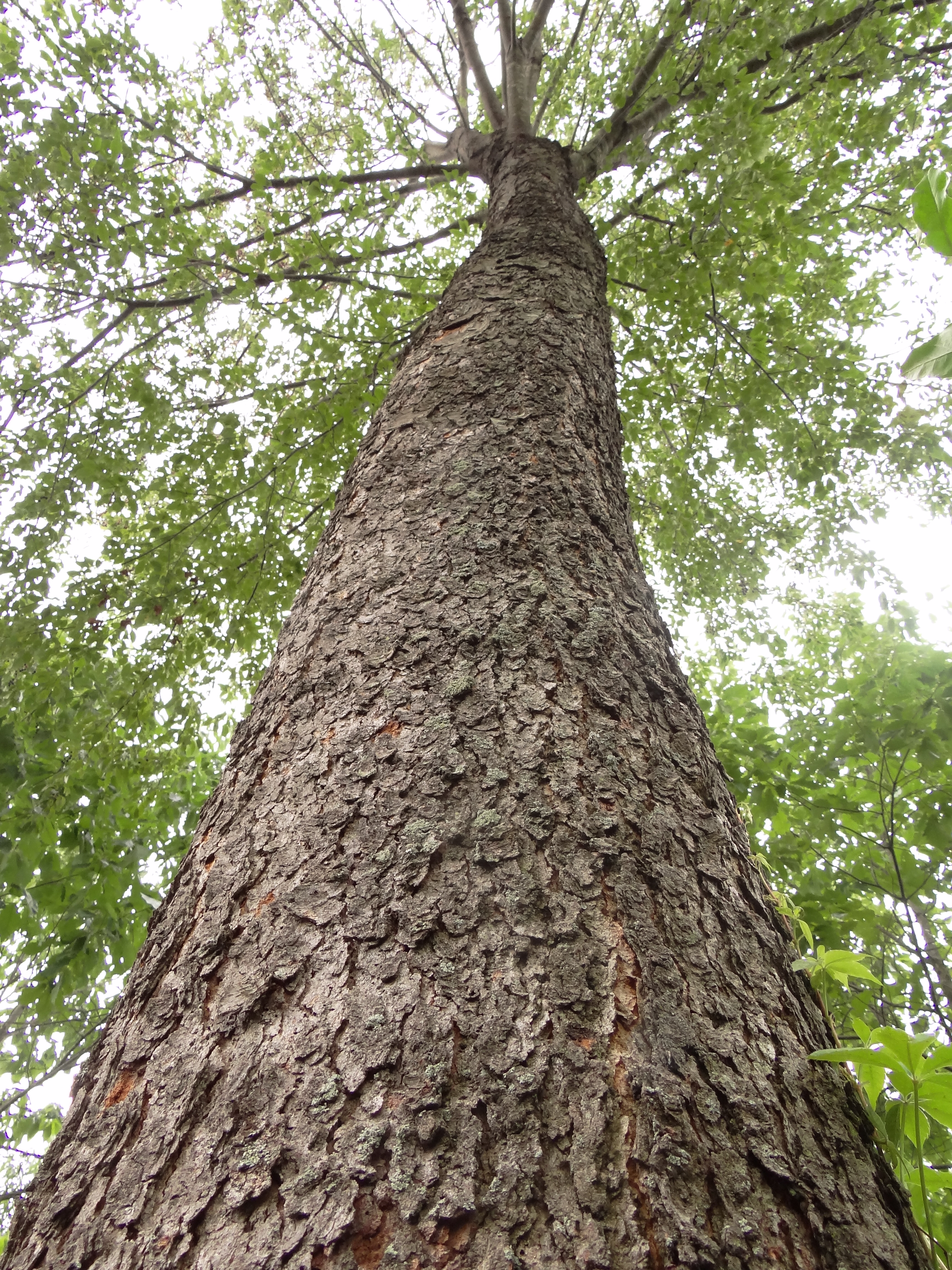
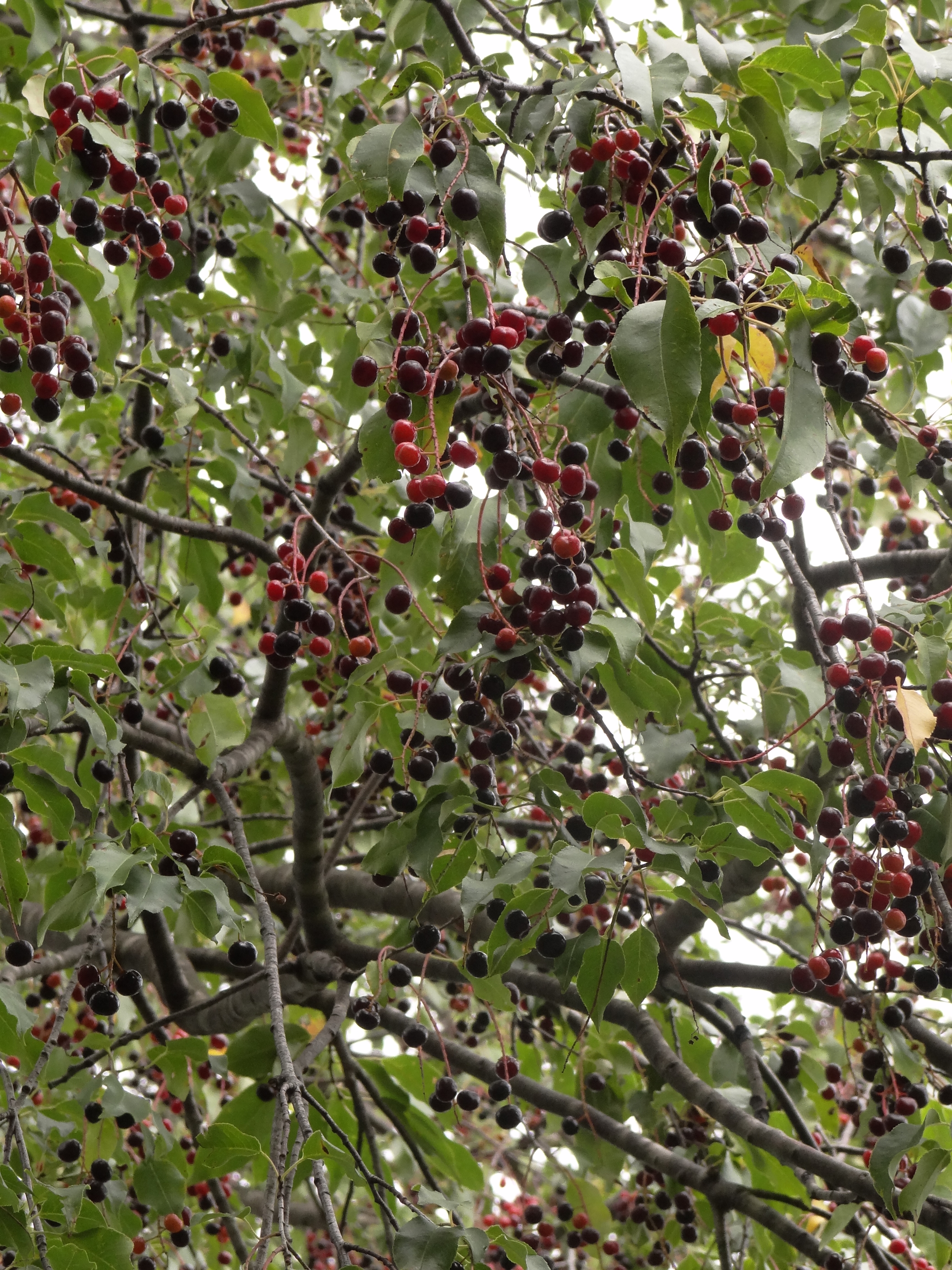
Many times the existing landscape contains some great jewels that you might not be aware of. Such is the case of the wild black cherries, Prunus serotina. It is the paint that drops from the sky as birds often carry the pits in their beaks as they strip off the fruit. It is one of the most common understory plants at my farm. Early in 1980 in my pasture were four nicely established black cherry trees. I limbed them upwards as they grew. They were in the middle of the field on the hills isolated from one another. As time went on I could no longer climb or prune them. I put owl and kestrel boxes in them for some time too. After talking with another tree friend down the road, he commented that many of the black cherries in the area had fantastic strong upright growth with excellent branching. He too was using pole pruners and eliminating the often found narrow crotch angles so common with this species. He had found some of them had strong apical dominance and were easy to guide upwards. He kept those and removed other trees competing with his new idea of cherry woodlot. None of the trees he planted. Some were growing in an abandoned vineyard. This inspired me. As a result, I began to take notice of one tree in particular and found the fruit to be delicious and possible to eat fresh off the tree without wincing. It had none of the astringency in the fruit so common with wild black cherry. Eventually I made a delicious jam from it. It was like a black cherry concentrate. Because of my voracious pruning, it became difficult to pick the fruit so now I have a way to shake certain branches to drop the fruit when it is ripe. As time went on, I kept other black cherries that showed this strong growth habit. One is a new selection which I haven’t named yet or made available. It was found as a seedling near a planting of pears I had. It was so fast growing that it was almost like it appeared out of nowhere to me. I could not cut that down. The pears can tolerate its shade easily. I have found other individuals I have kept. Once I grew the South American subspecies “Capuli” . Winter froze them to the ground every year. They have large fruit and are harvested for preserves.
We cannot paint like nature can but you and I can add to the portrait of this wonderfully diverse world we live in and share our contribution to others to also become good artists. Tooting that horn again. Toot toot my friends.


 biologicalenrichment
You must be logged in to post a comment.