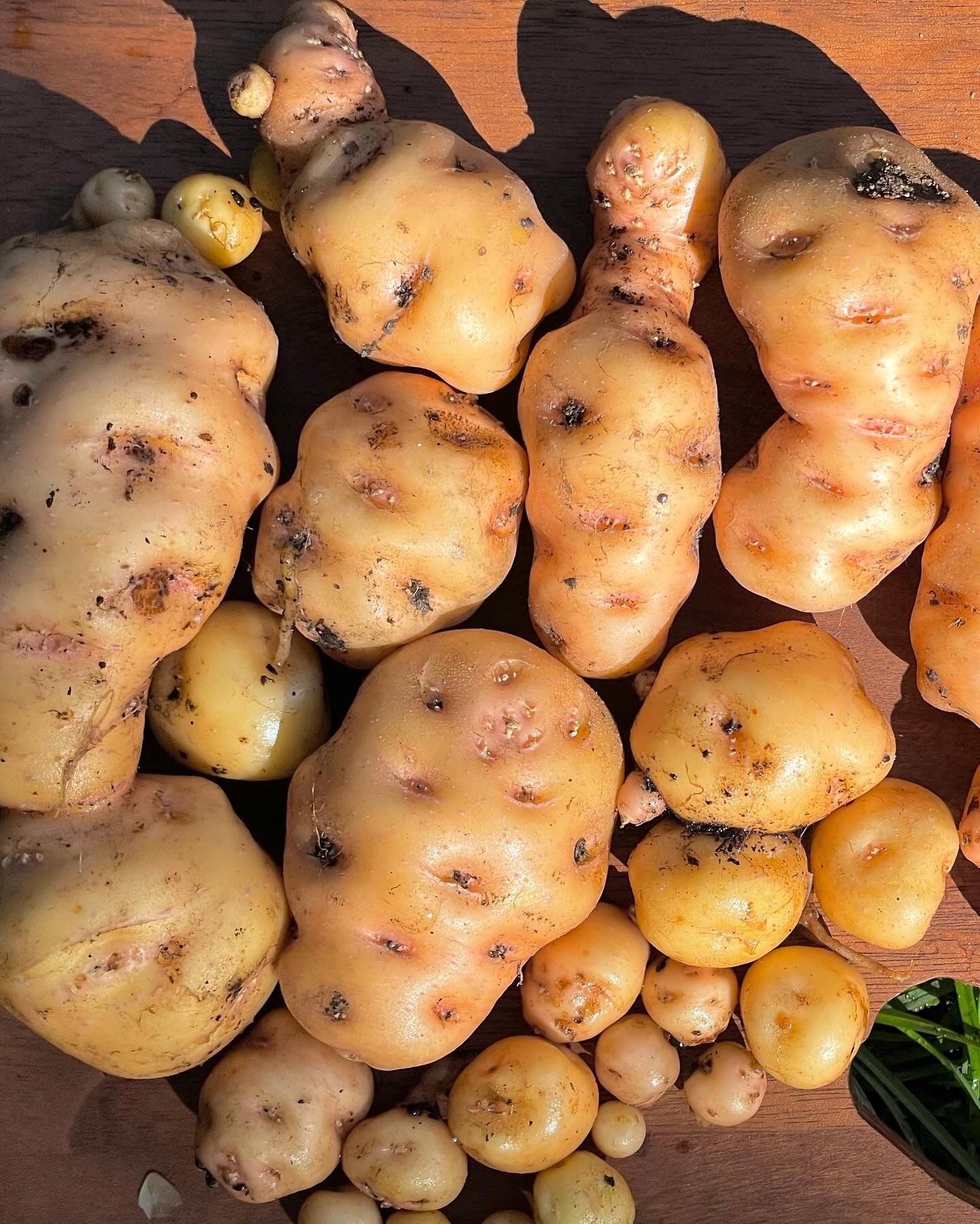
Let’s suppose you wake up one morning and announce to the world you are going to create a new potato far greater than anything that has existed before. You do a sort of Stuart Smalley daily affirmation, “I’m good enough, I’m smart enough and dog gone it, people like me” and head out the door to potato land. The first thing you might notice is the huge variety of potatoes already. It’s a crowded field. If you take a look at real life potato research and variety development you soon realize that breeding potatoes is very specific in terms of its goals and outcome. It is estimated that at least 80,000 controlled crosses are needed to find the perfect seedling potato. There is just no way for the average grower to match those numbers. People may like you but you might not be potato smart enough dog gone it. But in the eyes of Stuart Smalley, “we are worthy human beings”. So lets begin.
My solution was simple. I read nothing. I know nothing. I am nothing. I want pure subjective experience not objective knowledge of the potato, Solanum tuberosus. When I start, I am not really looking for a specific outcome. I want to look at all the wonderful treasures of diversity when I get there. So whether it is teeny or a pound each, dark purple or white, it does not matter much. I am not going to pick the brightest or biggest jewel and run off with my find. I am trying to create a population not a variety. If one comes along, that is fine but it is less important to me. Last year, I relinquished and released one I named Tranquility. It takes a population that expands and flourish over time free of disease, insects and virus in a less than perfect potato world where spray is not used to buffer the countless things that also love the potato plant. Only a population can do that. In this way, generations get stronger over time by creating progeny that expand the potato’s adaptation to your environment. For me the population is the individual. It is potato consciousness reflecting the full range of the potato.
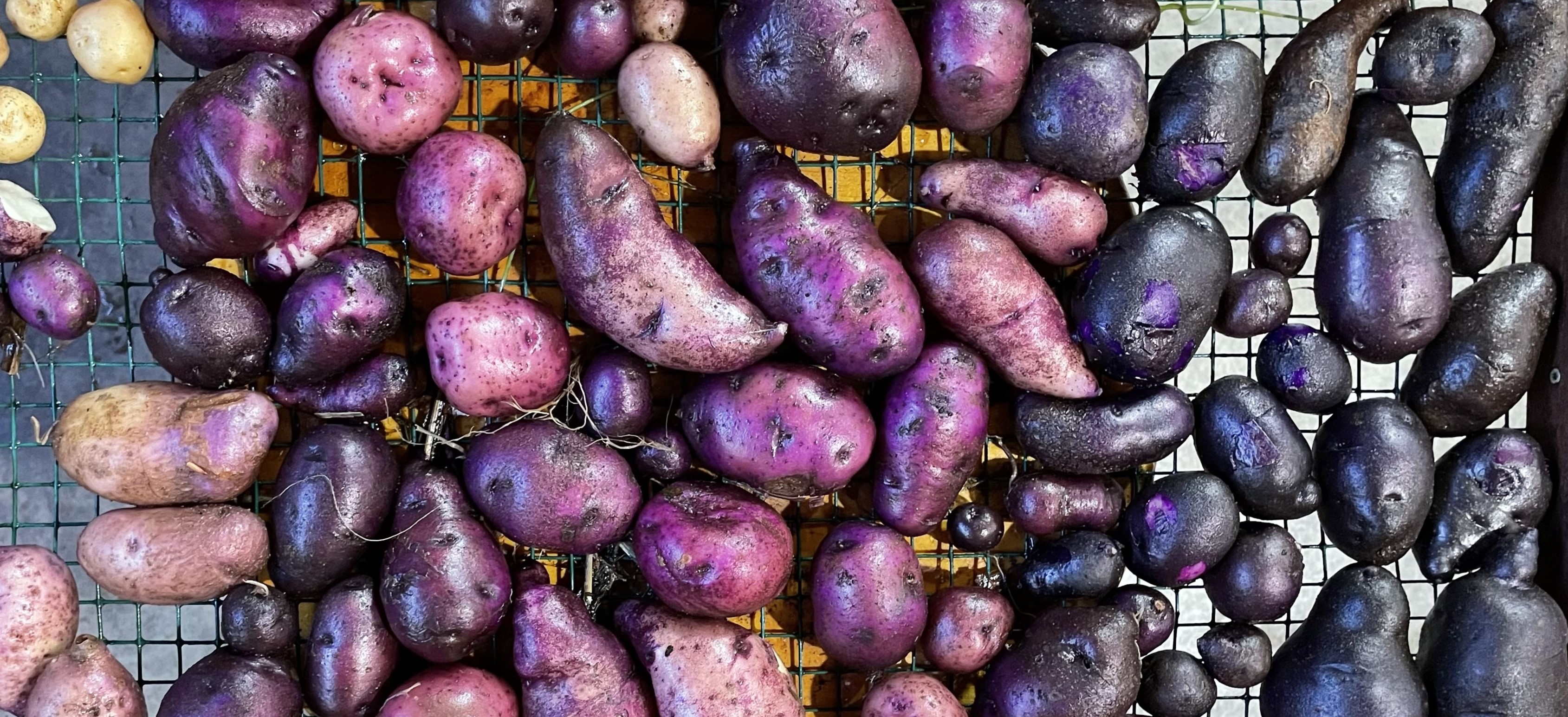
Just prior to the pandemic, I was trying to find a greenhouse in my area that would grow upwards to 50,000 seedling plants in blow molded trays just like marigolds. The idea was I could make available in bulk the seedling potatoes I developed as Perennial Perpetual Diversity Potato. You grow and sell it from true seed in a similar way slips of sweet potatoes are sold. It was my go big or go home moment. To do this I contacted several greenhouse operators. I did find one smaller producer that would grow them given enough lead time. Because of the premium greenhouse space for other crops like pansy’s and petunias it was difficult to get my foot in the door. The potato seed would be best pelletized because it is so small. Most greenhouse companies in my area near Kalamazoo, Michigan are massive bedding plant operations and locked into one or two seed companies. They view my seed as potentially hazardous in that it has never been tested or used to any degree. It would be better to have another seed company set it up as pelletized and screened for virus.
Park Seed company offered Clancy and won an All American Vegetable in 2019. They also offered Zolushka, a true seed potato, that produced massive tubers in my plantings one year. A company called Cultivariable has some of the most diverse seed and tuber offerings I have ever seen. I think he grew out the whole USDA potato seed repository! I grew the indigenous North American species called Four Corners potato. It was not adapted in Michigan. This was a common occurrence to me. The numerous related species potatoes did not survive long.
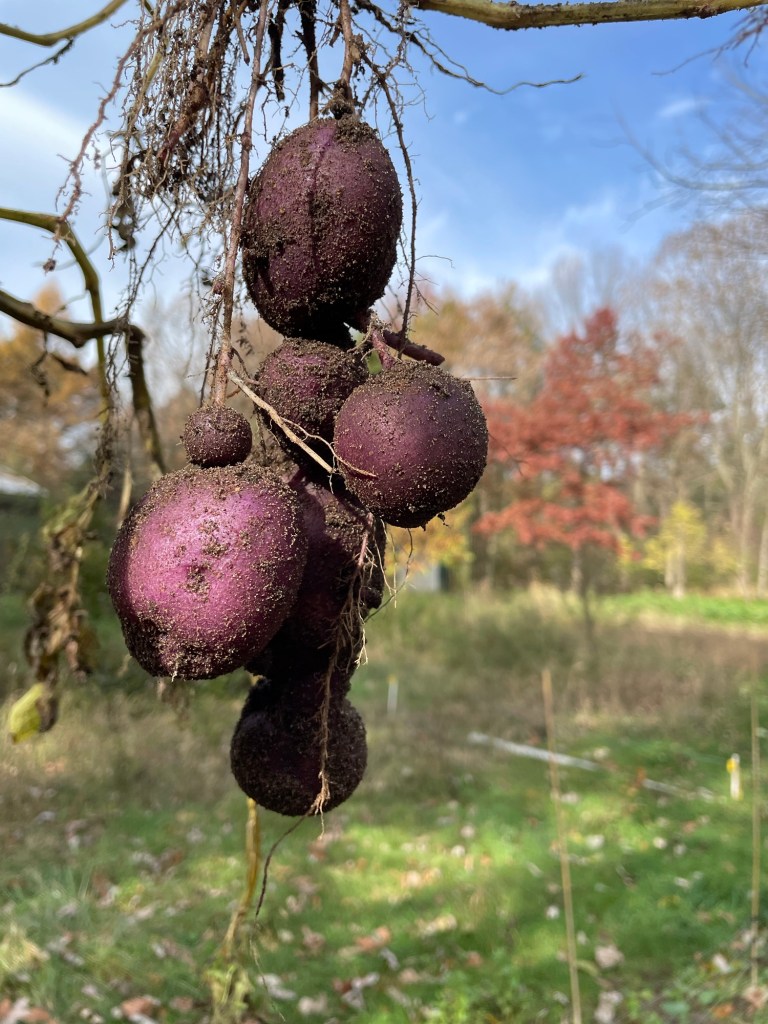
When potatoes fly is the only way to see the root strength and structure found within the soil.



 biologicalenrichment
You must be logged in to post a comment.