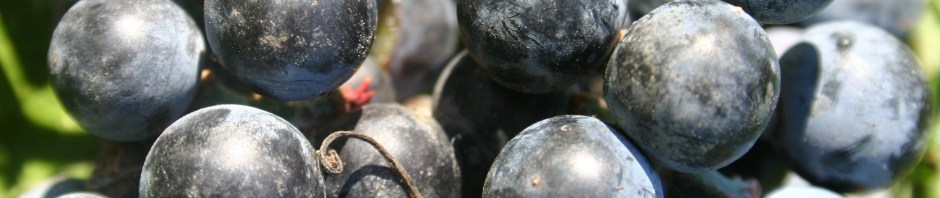
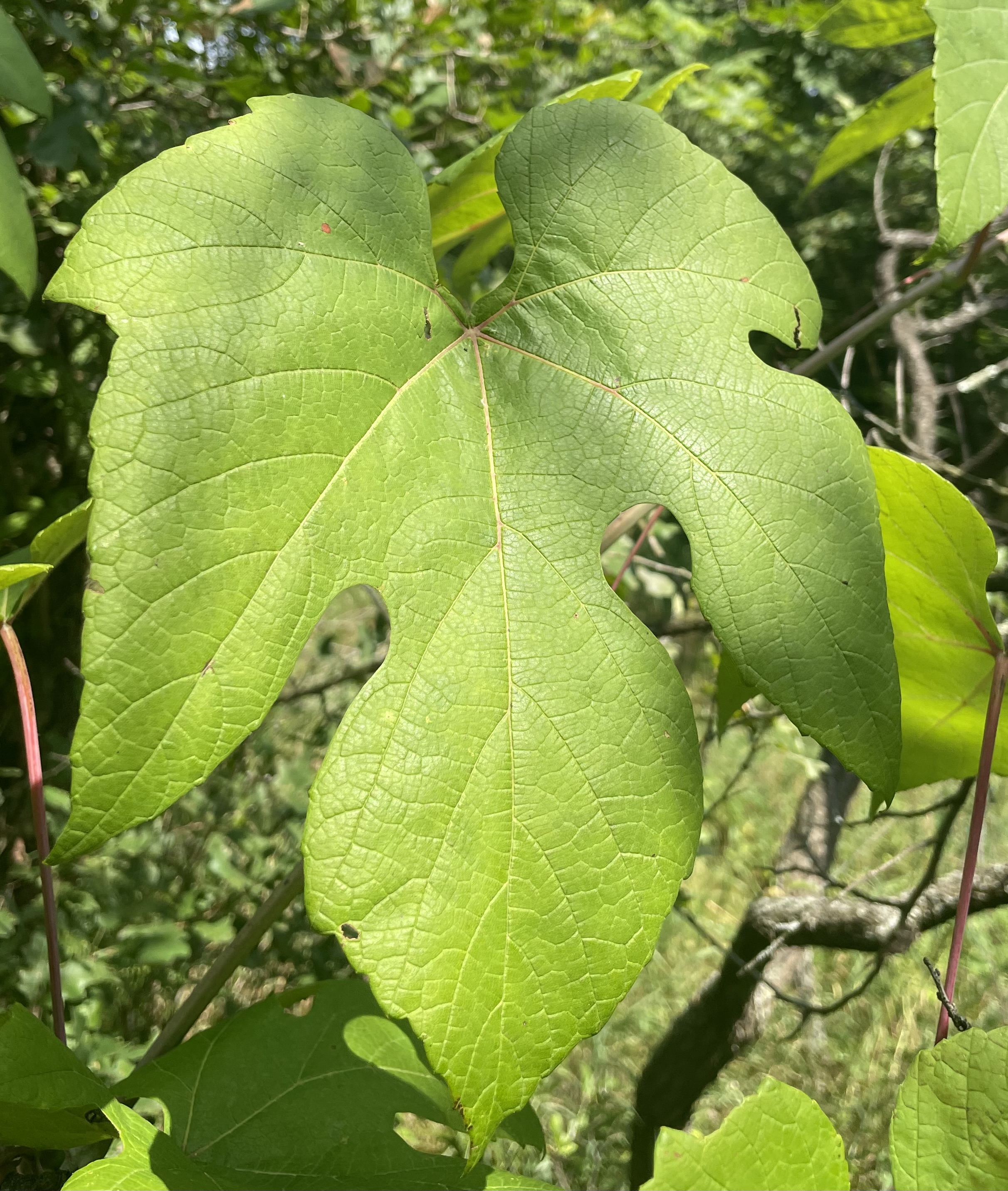
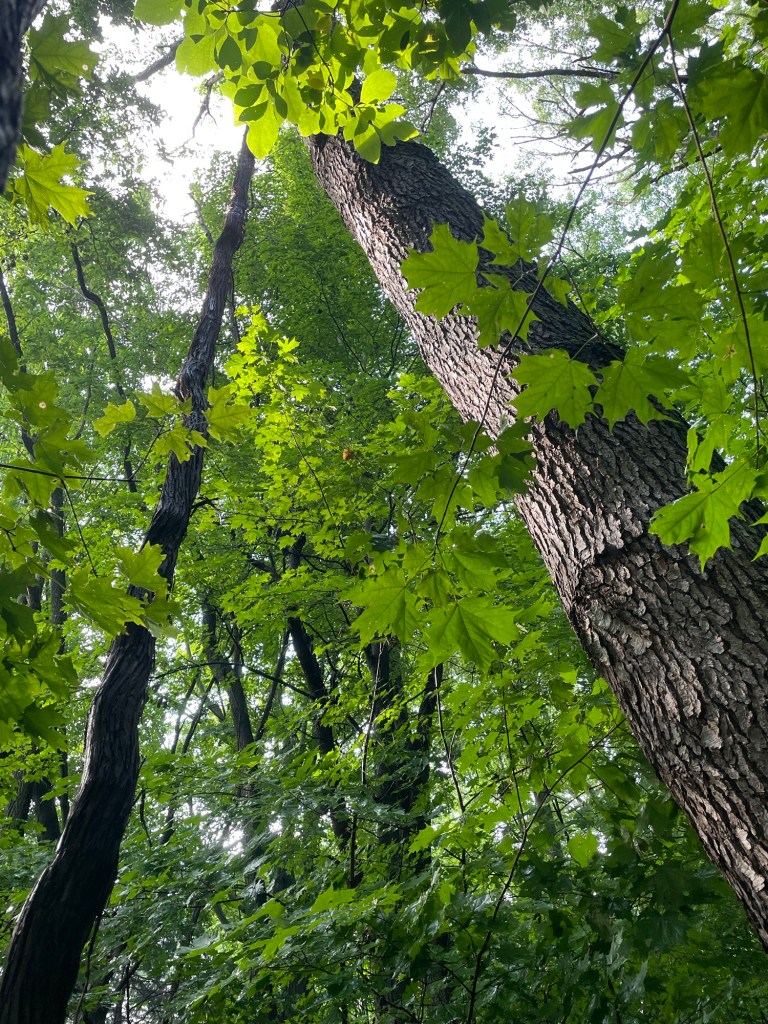
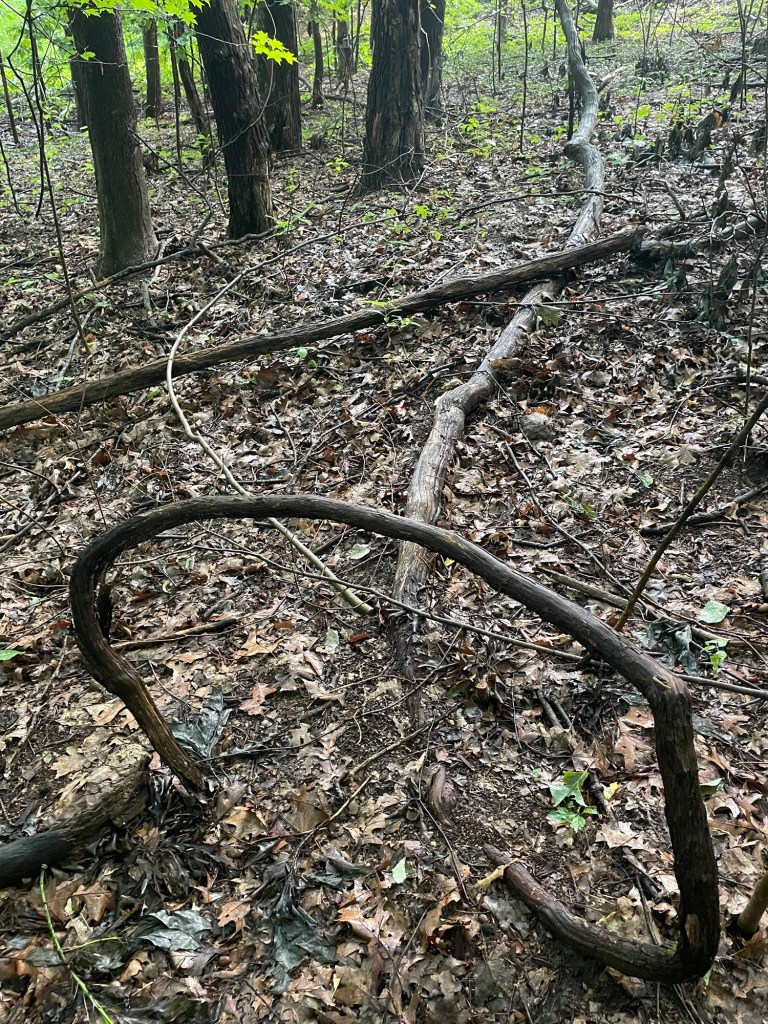
Its interesting in that grapes are so widely consumed in so many forms, yet if you mention woody agriculture or tree crops, they are not considered in the same life saving way as a tree. Vitis is vine in Latin. You just can’t plant grape vines as is and wait for miracles to happen. Its a whole system called a vineyard and apparently that is what you need. Yet non-vineyard grapes are common as grass and that is what exactly happens in nature. Huge vines reaching 100 feet or more make it to the tops of trees of which we tend to think of them as pests to the trees. They cover other trees as well as untended fences.

All it takes is a few seeds distributed by birds. They are a very common plant at my farm and have increased only because I have trees as the overstory of which they rest on during the cycle of cosumption and elimination. It is thought the scarring action of birds stomach aids in grape seed germination. Often the seeds remain dormant for two or three years before sprouting. This is a common experience of those who dare try to grow grapes from seeds. How dare thou? Well for one reason diversity in the genus Vitis. All these grape regions in the world are undergoing huge climatic fluctuations and many wine grapes are sensitive little creatures not able to take the 120 F that they are getting nailed with let alone the insects and diseases that follow soon afterwards to finish off the job. Yikes.
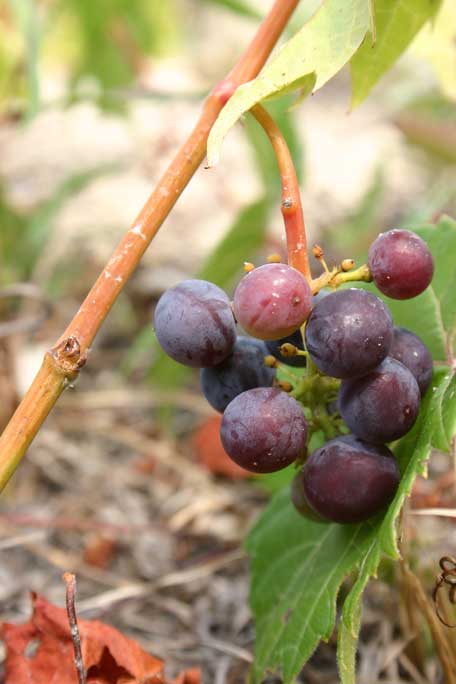
Once I hiked out on a long thin peninsula with my family in Lake Michigan that jutted out way into the lake. It was a calm day and this particular spot was part of a shallow bay area west of Mackinaw City. They were like little islands. Like clouds in the sky separated by shallow water you could wade through and cool your feet as you hiked along. At the time, the lake was at a historic low and we were able to walk all the way to the end of the ‘trail’ as we island hopped our way along. We stopped and had lunch on a tiny sliver of land at the end. As I sat down I realized we were surrounded by grapes on the shoreline. There were no trees just grapes, bearberry and a few willows and grass plants of various species. A form of ground hugging juniper was common there. A viceroy butterfly blew in and landed on the flowers of a single phragmites clump which was in bloom. Covered with sand the grapes were quite fruitful and growing flattened out on the shore. The tiny clusters had delicious grapes which were very tart yet good to eat even though not fully ripe yet in late August. The bright sun, water and sand helped shape the flavor as well as the structure of this natural vineyard. Who knows how old those vines were? I collected some seeds and grew them on my trellis in southern Michigan where they are fruiting now. Since that vacation time, I began to take notice of wild grapes and look at the immense variations found within them. Some had huge yields and others very light. The different species were not as clear to me as I began looking at the leaf and vine I realized later that I was looking at several species as well as possible varietal selections I could make too. The whole world of grapes is still calling me and there are several out of the way places I want ot get cuttings from along the highway fences put up by the state of Michigan. In general, this is not a particularly safe spot to bontanize let along clip a few cuttings. I did find one particular clone along a Michigan highway which would be more tourist friendly if I stopped there to evaluate the grapes. I know there is a lot of grapes along the railroad lines too as I use to jog on the right of ways. My understanding is I could get arrested for such behavior. So for now, I haven’t explored that in many years plus I stopped jogging! After leaf fall you can really see the yields and variations.
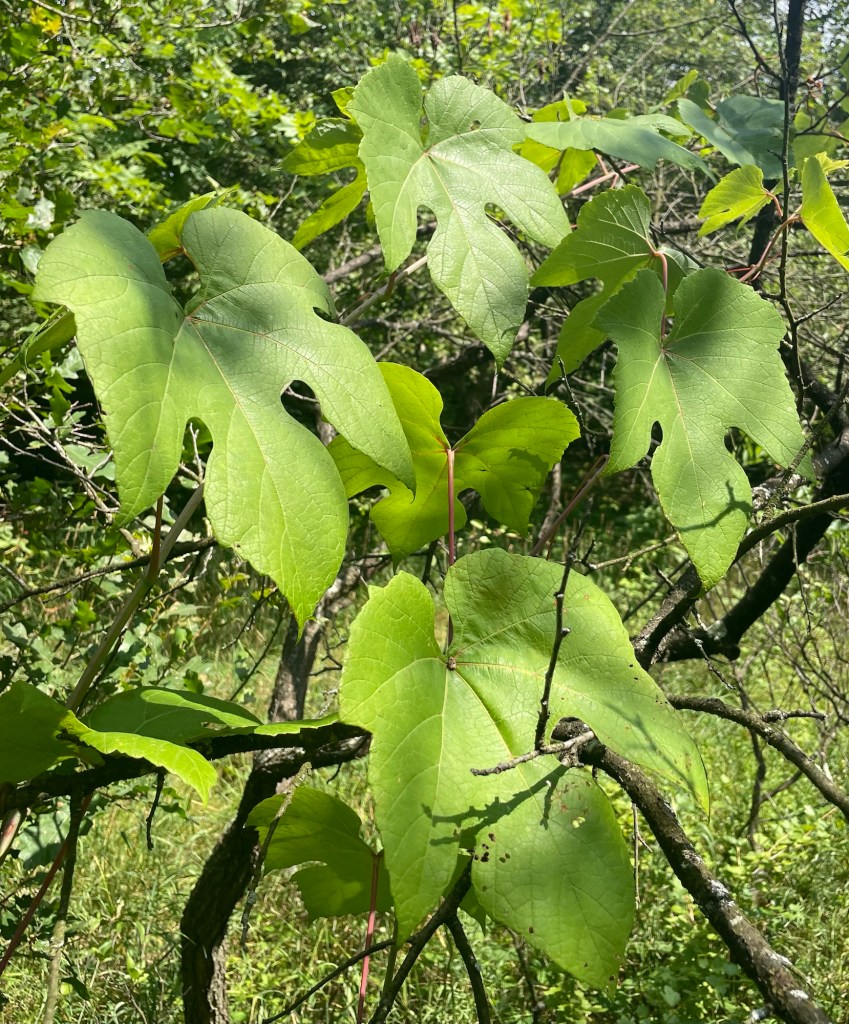
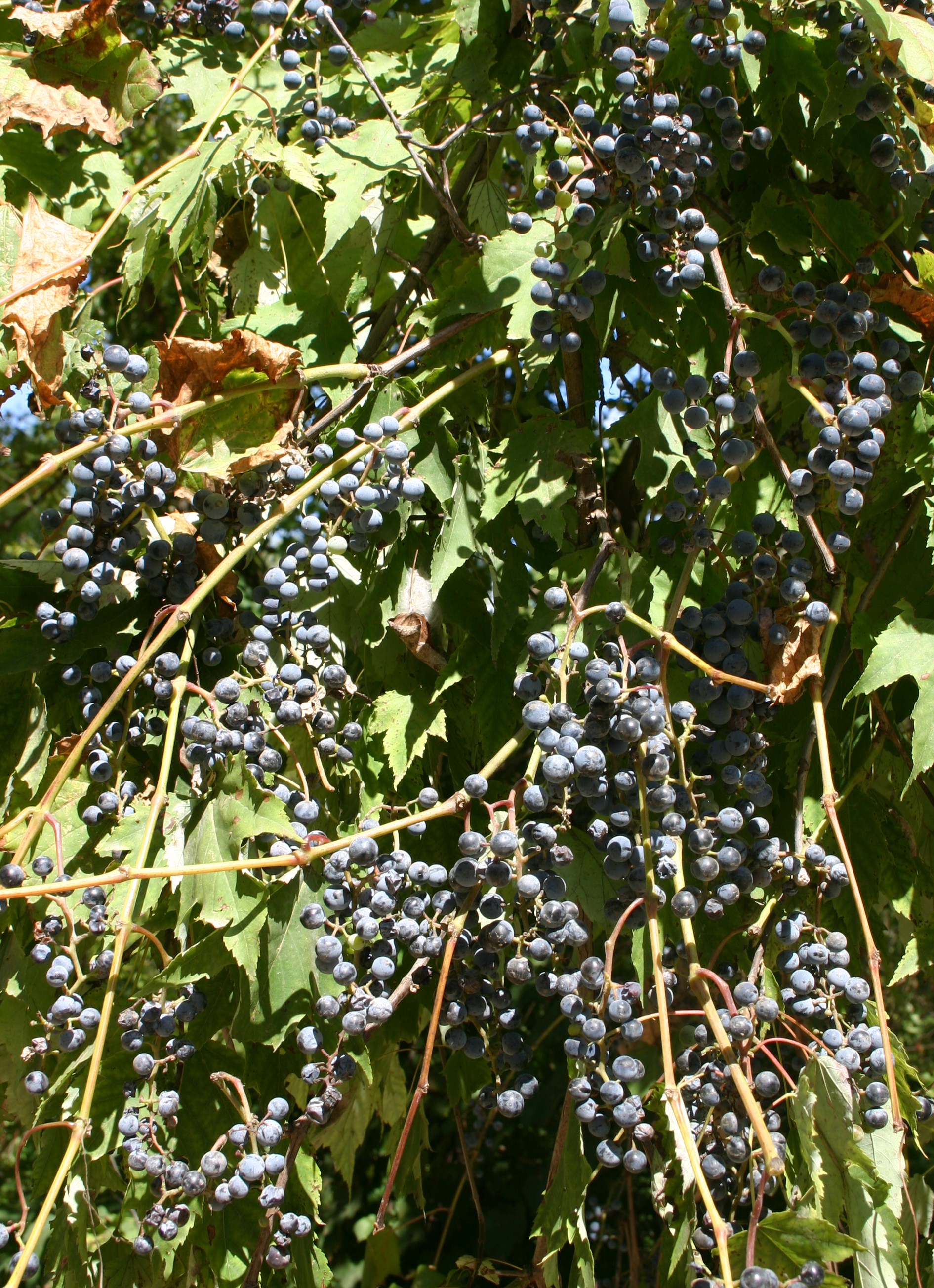
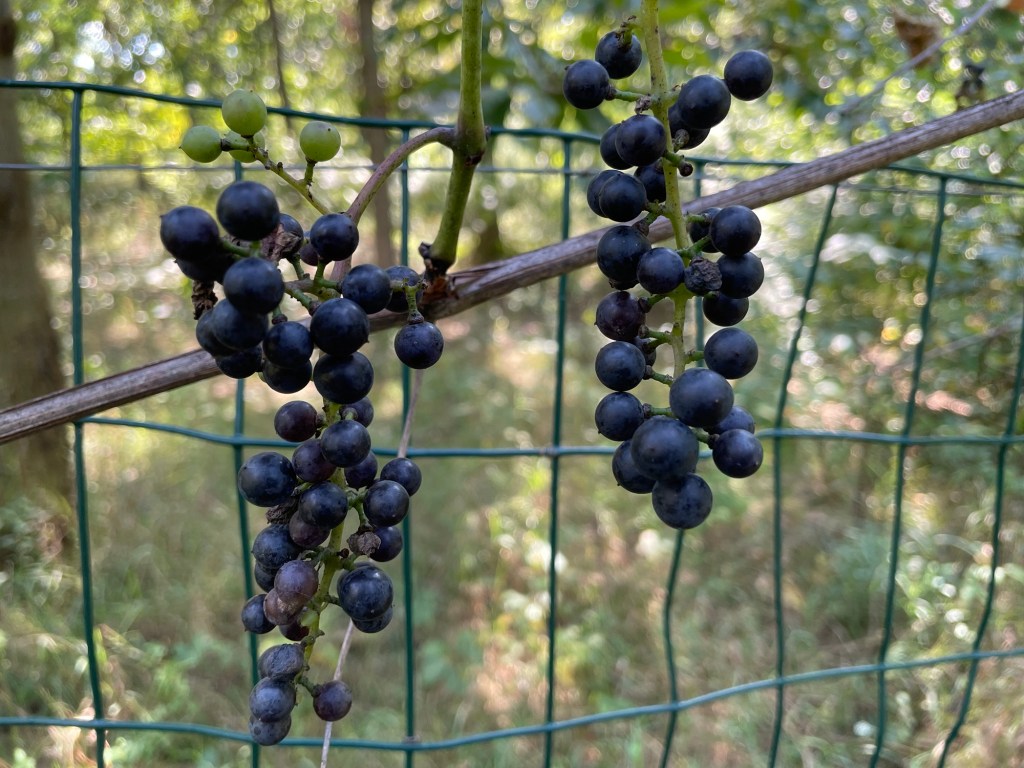
The Summer grape seems to have huge possibilities to me. First it has a strong branching habit. Second it is not overly vigorous and grows very stout. It would be a simple thing to trellis much easier than the River grape which tends to consume a trellis very quickly. Pruning is necessary and the Summer grape would be easier to manage. The question still remains, how does it taste. Well, finally after learning my lesson and cutting it down several times, I am going to find out. This is a kind of unknown in all things Vitis. Being the oldest cultivated grape, doesn’t necessarily bring you notoriety.




 biologicalenrichment
You must be logged in to post a comment.