
One of easiest ways to increase plant diversity in the natural world is to look for potential species that can reproduce and increase on their own without burning, mowing or herbiciding everything to near death. The same can be said for breeding. If its too elaborate, forget it. We do not have he luxury of resources to fulfill some lofty goal that always appears just out of reach. There is already a huge library of potentialities so it is hard to choose the right plants for the right spot. A truck drives off the highway and plows the sod. The next year there is a huge diversity of annuals growing to more or less mend what has happened. You could call that a successful strategy. It is because the decades old seeds within the soil kick start a series of events to stabilize the damaged area. There is one plant called toadflax which is one of the few species of any plant in the world that can tolerate diesel and other petrochemicals. You will see it often along the highway damage as well as roalroad right of ways where only horsetail survives due to its silica based herbicide proof covering. But of course you do not design management plans based on damage to the natural world. Instead you look for species of plants that can grow in the existing cover crops that will create the greatest possible spectrum of possibilities. That is where you should start. Ironically it is almost the opposite today with huge loss of carbon in burning and herbicide damage and sickness to those who apply the chemicals and the non-target plants and animals in the way of the fake sacred purity of native only philosophy. What can you do? Lead by example. Show the benefits of these wonderful food plants from around the globe and demonstrate their health values to those who will listen is my solution. Ecology could be so much more in terms of its application to a healthy food and fiber world far outside the native realm. Never let anyone speak for you in terms of your own experience. That is something I forgot to do in the past and know it was my lack of courage in this realm that created confusion in my own thinking.
This was a revelation for me that I learned early on in terms of using prairie species. I did not want to create a pseudo prairie based on yesteryears ecological plant surveys. However, I did want to tap into some of those wonderful plants as a means to fulfill an idea I learned from Buckminister Fuller’s discoveries as an ‘all-space-filling’ of the green ‘fabric’ we call vegetation which always has the potential to change based on real world climatic energy events. I viewed it as overlapping spheres of influence created by plants and the animals that used the plants. It was my food web Biology 101 only four dimensional. The DNA of the animals and the DNA of the plants are also woven together. That part we do not see. We pretend we know what we are doing in terms of ecological thinking and tell people we are bringing balance even though there is no scientific definition to that. Every moment is balancing. Even new plants are physiologically integrated into the animals life and that is now the new ‘native’. It does not matter of the plants origin, abundance or lack of abundance. Even within the ‘failing-no-maintenance’ prairie plantings in Michigan you really begin to see the strength and weakness of many of these native plants and how each of those could be used on a broader scale very inexpensively. The plantings are also filled with the existing vegetation as well. This is the new ecological integration.

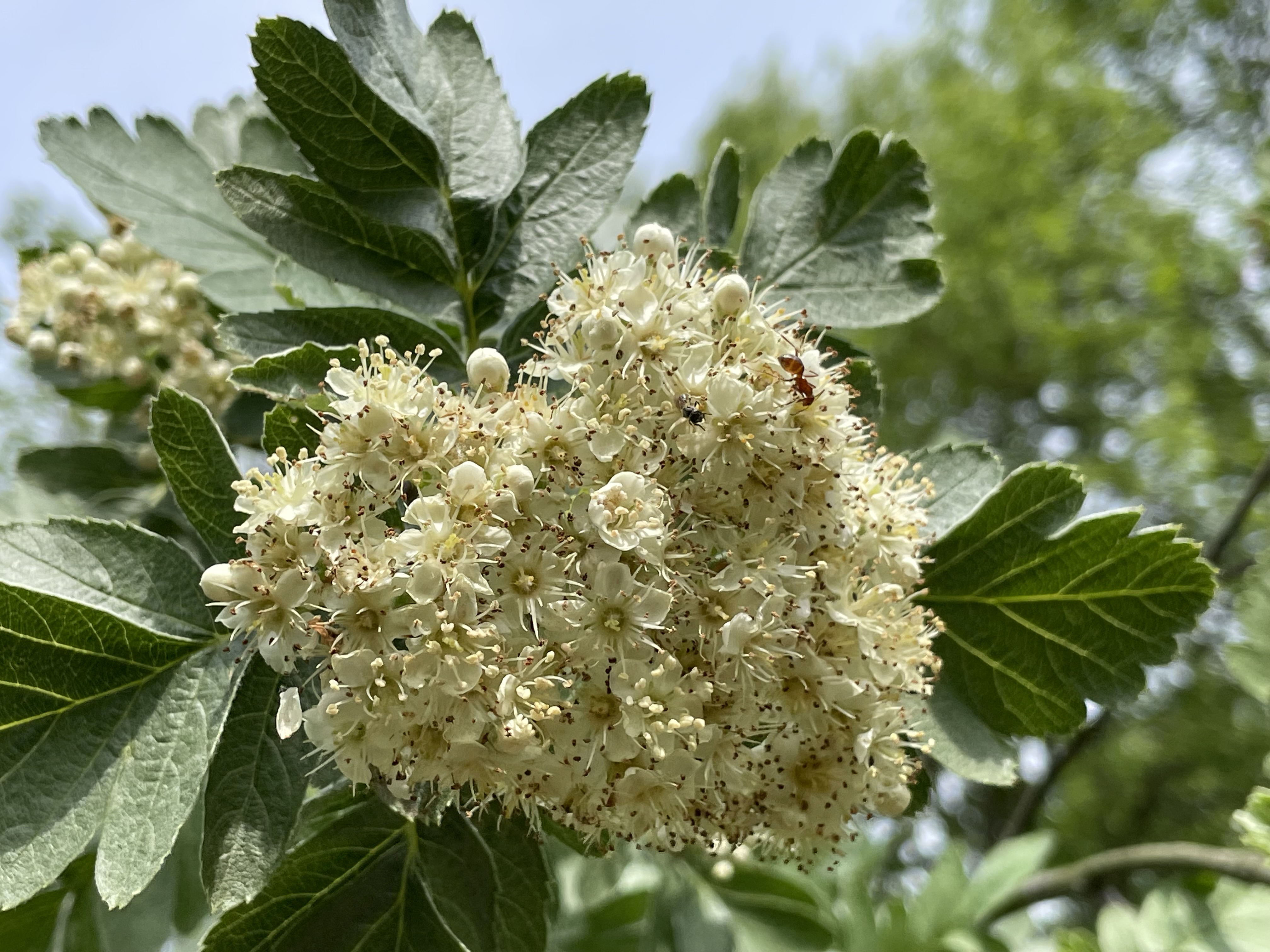
The Bergamot and Mountain Mint Arrive: Tubular flowers combines with minty freshness
Along with my ever expanding plant universe, I began to use two species of this bergamot relative from an Illinois prairie collection and a mint relative. I used it in an area of grass where I mulched it for several months with my old shag living room carpet to take out the quack grass a bit. It worked. Every now and then late at night I hear Grand Funk Railroad out there. Just kidding. I planted a lot of prairie plants in thie small area along with gooseberries and rose species filling in as a small hedge along one edge. Over time most of the prairie species faded away and did not self seed much. During this discovery, two of the most powerful and dynamic species came to light. The first was the Virginia mountain mint. I remember walking out to this top of the hill location and discovering huge amounts of blue mud dauber wasps all over them. I was shocked because that is not a normal species you would see in abundance in an open field far from any wetlands. I found that it was a species that did reproduce a little by seeds on its own but mostly it was a runner induced spread. It tolerated drought and competition from other grasses. It was as plants go, a permanent addition to my tree crop farm. The second species, Clinopodium or wild bergamot now covers roughly two acres all started by four plants. It followed the break up of my pasture grass system along with the introduction of star thistle near a damaged Christmas tree planting near my northern border. The quack grass began to thin due to drought in 1988. It was the star thistle that created the gaps for the bergamot to self seed. It is a bit shade tolerant too and that helps in terms of its growth under my crop trees. Both of these species are off the charts in terms of its use by butterflies, bees and moths. I often see hummingbird moths in this area now. Both are very good spreaders and hold their own within the existing timothy and orchard grass system. The bergamot could likely take mowing to a certain degree and continue its journey. It does self seed so this is another great advantage. It is readily available by many native seed companies. I have never collected it, but plan to in 2024. After all, it is the year of all possibilities.



 biologicalenrichment
You must be logged in to post a comment.