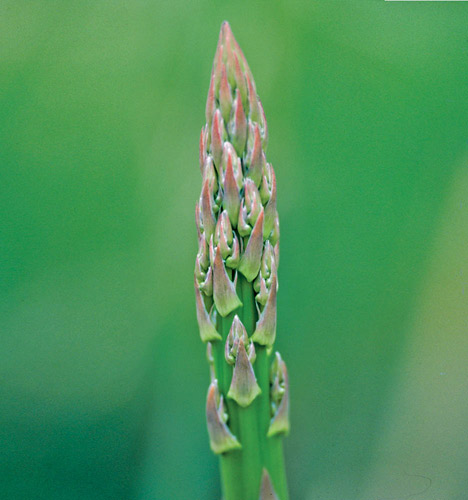
It’s not pretty but it’s asparagus. You may not have eaten it when you were a child. Here was this quasi-gelatinous long green alien stalk of unknown origin. “Who would eat this?”, you would ask yourself? If you did dare to take a few bites, and then went to urinate, the smell said you were going to die soon. It was a confusing vegetable. Yet today the asparagus has quietly undergone a revolution becoming blander with time to the point it has turned white and is grown in dark tunnels. Note to self: how to ruin a good vegetable filled with nutrition: grow it devoid of light. I see the rhubarb is headed in the same direction. Good God Man, what’s next?
For a while I was wheeling and dealing in asparagus seeds for my nursery. Like an addict, I needed asparagii seeds bad. I was on the horn making calls. I wrote letters that required stamps. Asparagus seeds were actually hard to come by on a commercial scale. Few companies offered them. Everything was cloned and grown from roots. In the meantime, I went Euell Gibbons and collected wild seed in my area. I live in a district that produces commercial quantities of asparagus. Every now and then you would find wild asparagus along the roadsides. I had several very nice bird plantings at my farm and I collected the seed from the best selections that appeared to be very clumpy in nature with good yields. I sold the plants as ‘Very Wild’ asparagus and propagated it only from seed. One of my farmer friends down the road brought me some magnificient stalks of berries too. There was a fairly large repository near a highway off ramp that I was eyeing but the plants were mowed several times and looked herbicide damaged to me so I gave up that location. They still persist today. I heard a story of a truck driver getting a fine for stopping along the highway to pick wild asparagus. He too went Euell Gibbons and paid a price for his love of asparagus. It was a sad day for stalking the wild asparagus.
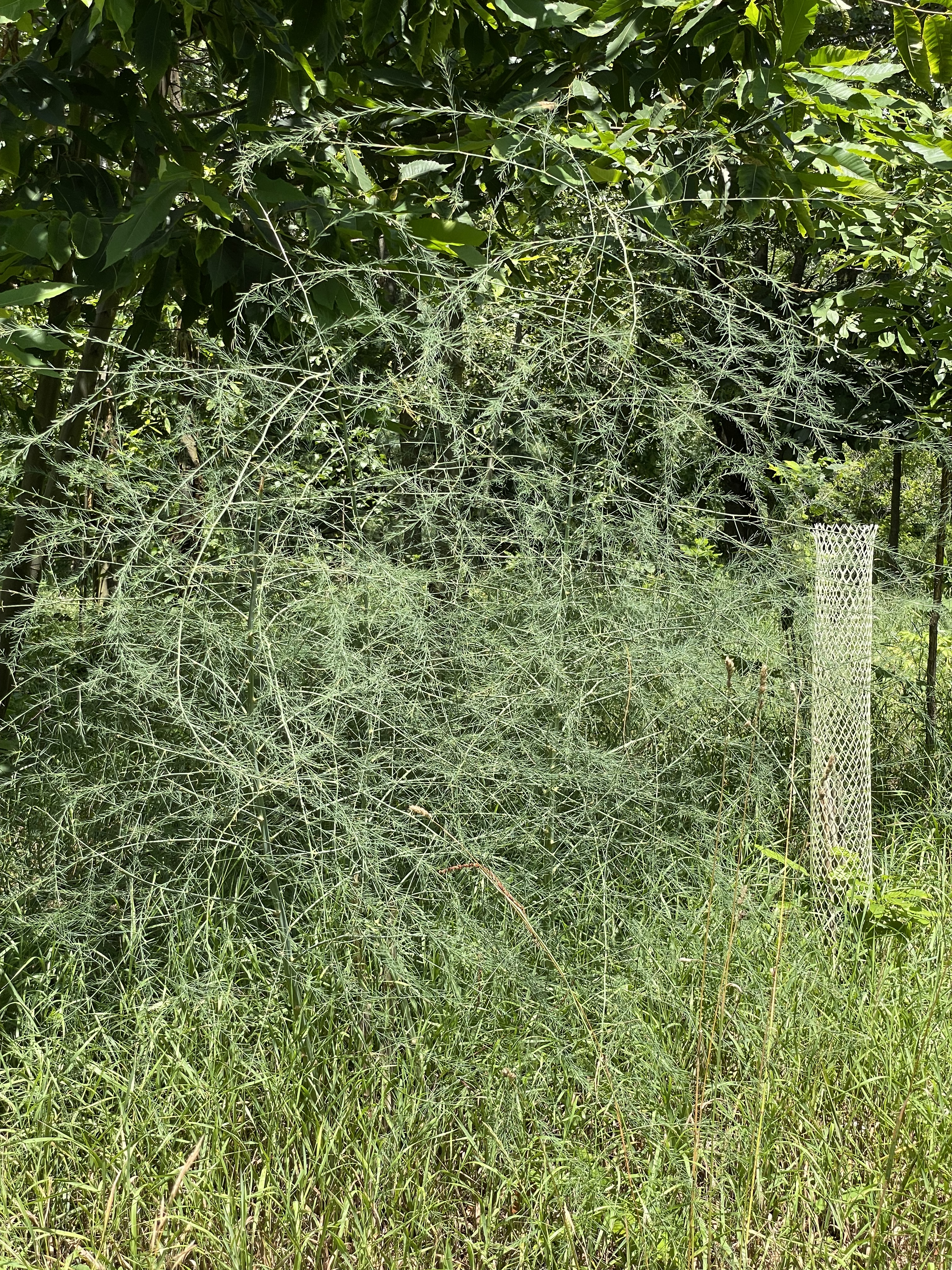
Today almost all asparagus plants are bred berry free using only male plants. There are several species of asparagus found worldwide only collected in the wild and today are on lock down in that the seed is not permitted to leave the country. Everyone is very strict on their wild and cultivated asparagus. There are many patented varieties and you just can’t willy nilly grow them and sell them under their trade names. That too is a problem. Everyone is full of asparagus rules. Wild asparagus is a bit like truffles in their non-cultivation. It is meant to be kept as a semi-secret ingredient only meant for the rich at high end restuarants in a far away land.
If you look at the line up of perennial vegetables, asparagus is a dream. It is a long lived cold climate perennial and is a health boat of vitamins and minerals. When picked fresh, it is a magnificient vegetable. I like the varietal selections but they did not have the flavor I was looking for. It needed more punch. Several customers wrote to me describing the flavor of “Very Wild” as way better than cultivated. I went rogue for a while and was importing small amounts of seeds from various countries. Eventually that came crashing down, when a paragraph was added to the laws governing importing asparagus seed. The asparagus breeding is very specific and my love of improvisational asparagus growing was a problem. I quit this but did find a work around in that several species of asparagus were already grown as ornamentals here in the U.S. One such planting that I made at my farm has only one plant left now but to me it is the perfect wild asparagus. The question now is how edible is it and what is the species? We have left our home town of Asparagus officinalis. I was limited time wise to create new species asparagus and the nursery closed down so no more interns to help me in my quest.
My quasi-theory is this: asparagus could be grown as something you would mow and catch in a bag similar or identical to a lawn mower grass catcher. It would not have to be a stalk. It would be a form of chopped green asparagus protoplasm. Probably shouldn’t call it that though. You would then use this as a mixture with other vegetables to aid in protein digestion and well as other health benefits found in wild type asparagus in large amounts. You could dry it or freeze it too as a form of asparagii protoplasm the same way I buy those damn green powders at the health food store that promise to give me immortal life. This would provide the flavor of asparagus without the gelatinous stalkiness of the carefully picked and tended asparagus. Asparagus is a finicky crop and to get pickers is not an easy task. Not far from my farm is a canning company that a few of my employees worked at before working for my nursery. They said it was a type of hell in that once the stalks come in, you had very little time to get it bottled. The plant ran 24-7 with a lot of overtime. There seemed to be a concensus it was brutal. They created a hot pepper and pickled asparagus. It is delicious. Asparagus could be more than what we experience today if we wanted it to. For that we may have to go to the source of unknown origins and tap into this wonderful sprout of a plant. You never know what you will find.


 biologicalenrichment
You must be logged in to post a comment.