

One of the easiest ways to create a strain of plant is to find similar individuals in a climate or zone similar to yours. The reason you might attempt this is that you desire to grow a plant that is traditionally known not to be adapted to your location and likely has few varieties that would be useful under cultivation. You then raise many seedlings of this species and plant them in a location where the plants can flourish on their own. This is not the one in a hundred breeding while trying to create a highly selected individual plant from a massive population. For the northern strain of the American persimmon, it is the 99 population that you desire. You will be able to use and enjoy reflecting on the most northern of its species in or outside of its range. The definition of northern in this case is central Indiana or Illinois. This is where the tree’s geographic range tops out on its own without the help of humans. There is a southern subspecies of American persimmon which is also said to have a different genetic make up. The American persimmon is not native to Michigan. The geographic maps always show a nice smooth line where something is found and is considered native. In reality, it is a dotted bumpy line with many satellite populations here and there in all directions, north, south, east and west. I view human dispersal as natural and treat it the same as any other vector. It is desireable and shows the level of integration found within all plants. Other people want the smooth line of understanding the movement of plants. It makes it simple. For me, I want the ever expanding universe of American persimmon. Others want a wide thick sharpie line on a map were everything is frozen in a 1491 timeline.
Since the American persimmon has been cultivated for over hundred years there are also varieties from this region known for their delicious fruit, low seed count and early ripening. When I found the American persimmon in southern Michigan, I found lone trees with no fruit used in cultivated landscapes but nothing else. So I began to find several individuals in the North American Fruit Explorers that I could purchase seed from and used this in my nursery for the production of seedlings. It was fortunate in that it was this clonal reproduction of female trees that allowed me to use these most northern forms with good fruit quality in my plantings. A few growers in Michigan had grafted selections of the many of the same northern varieties from the early to mid 1900’s. These did not ripen fully always. The flavor was very poor and the texture was grainy. There just was not enough heat units during the seasons to ripen them fully.
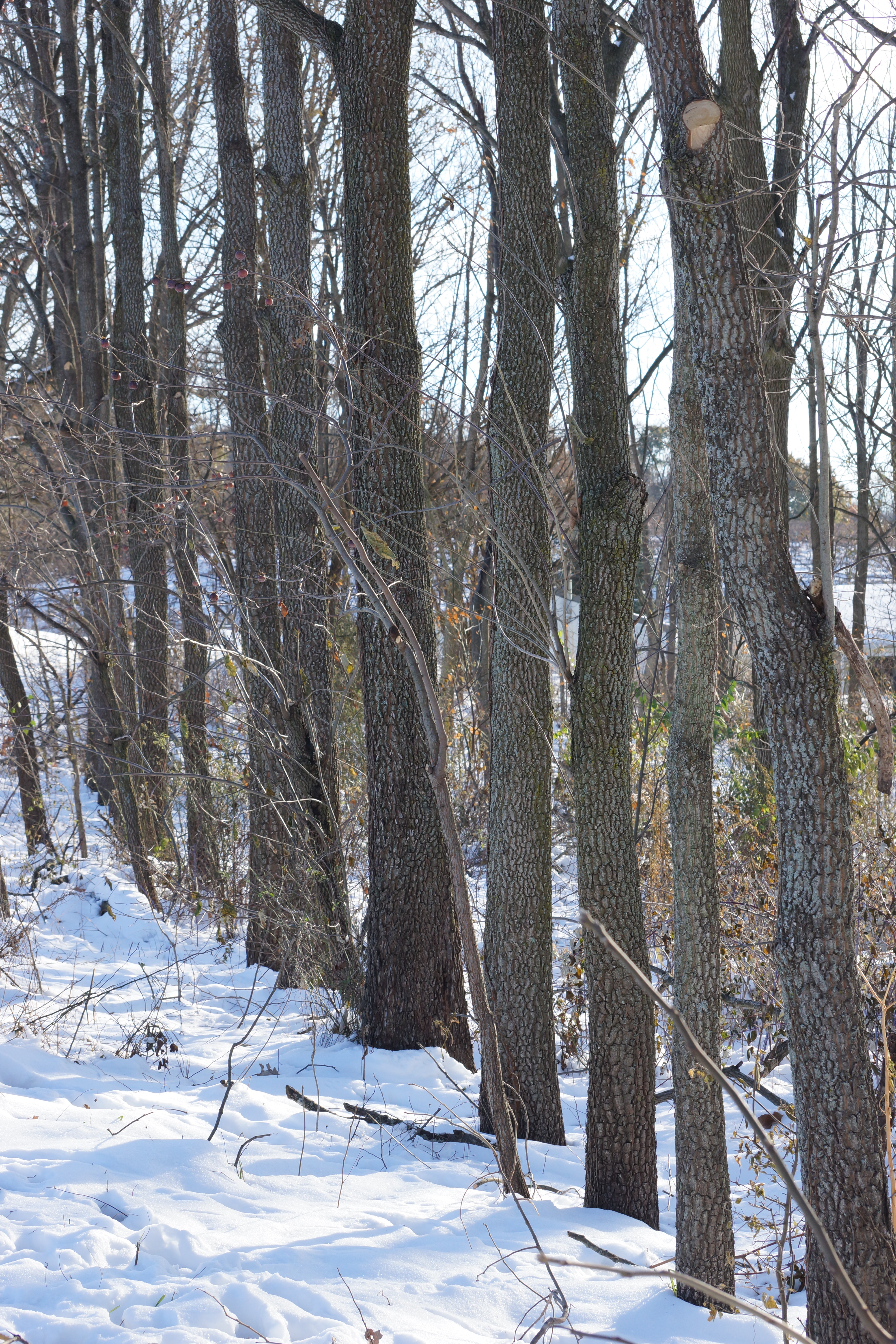
There use to be a farm I would drive by in Saginaw, Michigan that had a fantastic line of Norway spruce on its property line surrounding the land. The owner years earlier decided to make it his home in the middle of a treeless field and create this boundary marker out of trees. I always found that inspiring. I did the same thing only with persimmons. I planted lots of seedlings roughly 7-10 feet apart 5 feet within the property line. There was little or no competition for light at this time from nearby trees or anything that would interfere from my neighbors property. I remember cutting off a limb of a nearby mulberry tree but that was it. That tree still exists today encased by persimmons despite a set back created by groundhogs in that area. The power company removed one 300 ft. line I had which was 15 feet away from the poles. Other than that the total run is roughly 2000 feet with a few blanks in between.
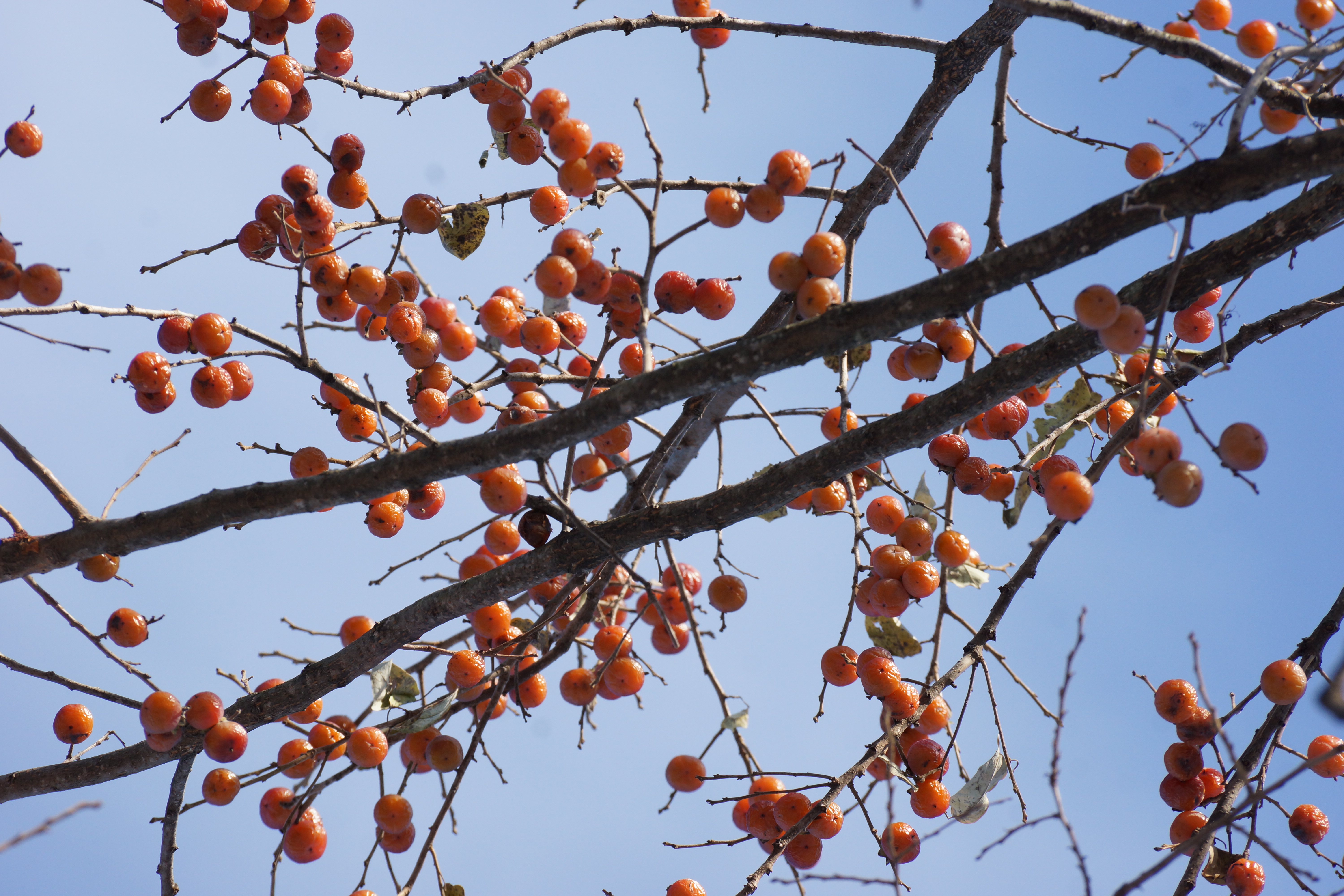
This was my starting point for the American persimmon in the real world weather conditions of southwestern Michigan. I live in an area that is one of the cloudiest areas in the United States. One of my maximum-minimum thermometers hit minus 29 once. Recently there was minus 27F but normally the coldest it hits is in the minus 15 F area. I am on the border of the fruit growing district surrounded by grapes mostly. The brix content of Concord grapes coincides with the ripening of persimmons at my farm. If they do not harvest the grapes, then likely much of the crop of persimmons will not ripen fully either. This is a rare event but it does it happen once every 10-20 years or so where Welch’s will not accept fruit. There have been both total success and no success along with everything in between. The trees always flourished but it was the ripening period of the fruit that was the ‘iffy’ part of growing the American persimmon in southern Michigan.
Since you have a nice population now which is fully fruitful you can make selections too. It is the population that you can draw from, like taking out a book from the library of persimmons and seeing what sort of knowledge you can gain from that one individual. The larger the population and the longer the time you taste test your way through the persimmon forest, the more you will discover. It is a joy and worth doing. You can make your seeds available and take cuttings for grafting on a new variety you have named yourself. It is not that hard despite half the trees will be male.
Either way you have created a crop where none existed before in a land where it was not thought possible to do. You have expanded the range of the plant, created a food opportunity for others to witness and share while you found a very easy way to tap into a plant that has been on the sidelines of agriculture for hundreds of years. This is rewarding on all levels which allows it to be moved even farther into ranges not acclimated to persimmon culture. But more important it allows people to actually taste a tree ripened American persimmon filled with sweet delicious goodness. That in itself is of great value despite its lack of use by the majority of the public and low interest in the fields of academia and institutions. The persimmon will hang its sweetness to catch you off guard until finally you too will be converted.
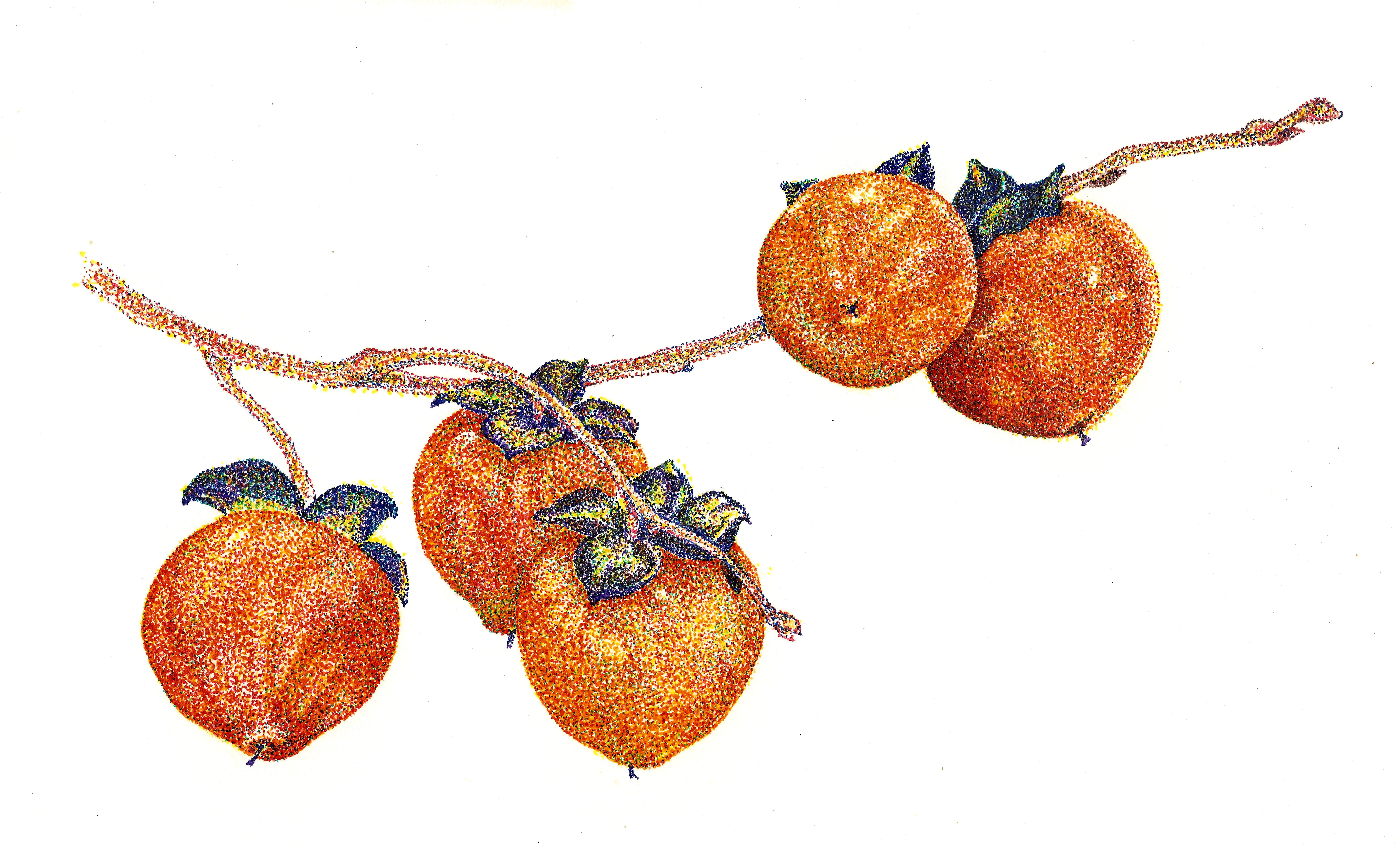
David Adams image Copyright American persimmon from my farm in Michigan.
In the farmerless fields, the American persimmon represents both wood and fruit potential and a simple means to begin our journey towards a more fruitful future.


 biologicalenrichment
I sometimes see persimmons at my local farmers market. I should pick one next time and give it a try! Lovely photos!
Ripe American persimmons look a little like dates and are soft to the touch. The lowest astringency and highest sweetness is found in fruit that drop on their own from the tree.