
You got to respect them.They are a tad thorny and hard to walk through. They are a bit overwhelming at times yet bring you closer to wild fruit nirvana more than any fruit. They can fourish where few fruits can grow. As a pioneer species their ecological enrichment should never be under estimated. They are quick and decisive as they form dense colonies. This is the wild raspberry. My goal was to discover these wild flavors and see how that would work in my mixed plantings. Slightly cultivated, I began small plantings of wild collected seeds in Michigan along with other wild collected species that are known for their use in the making of preserves, syrups and drinks.
A little known side note on cultivated raspberries: I no longer sell raspberry plants as they require by the state of Michigan two inspections and sometimes lab tests for virus and other problems. You can bypass the virus barrier by growing them from seed which I highly recommend.
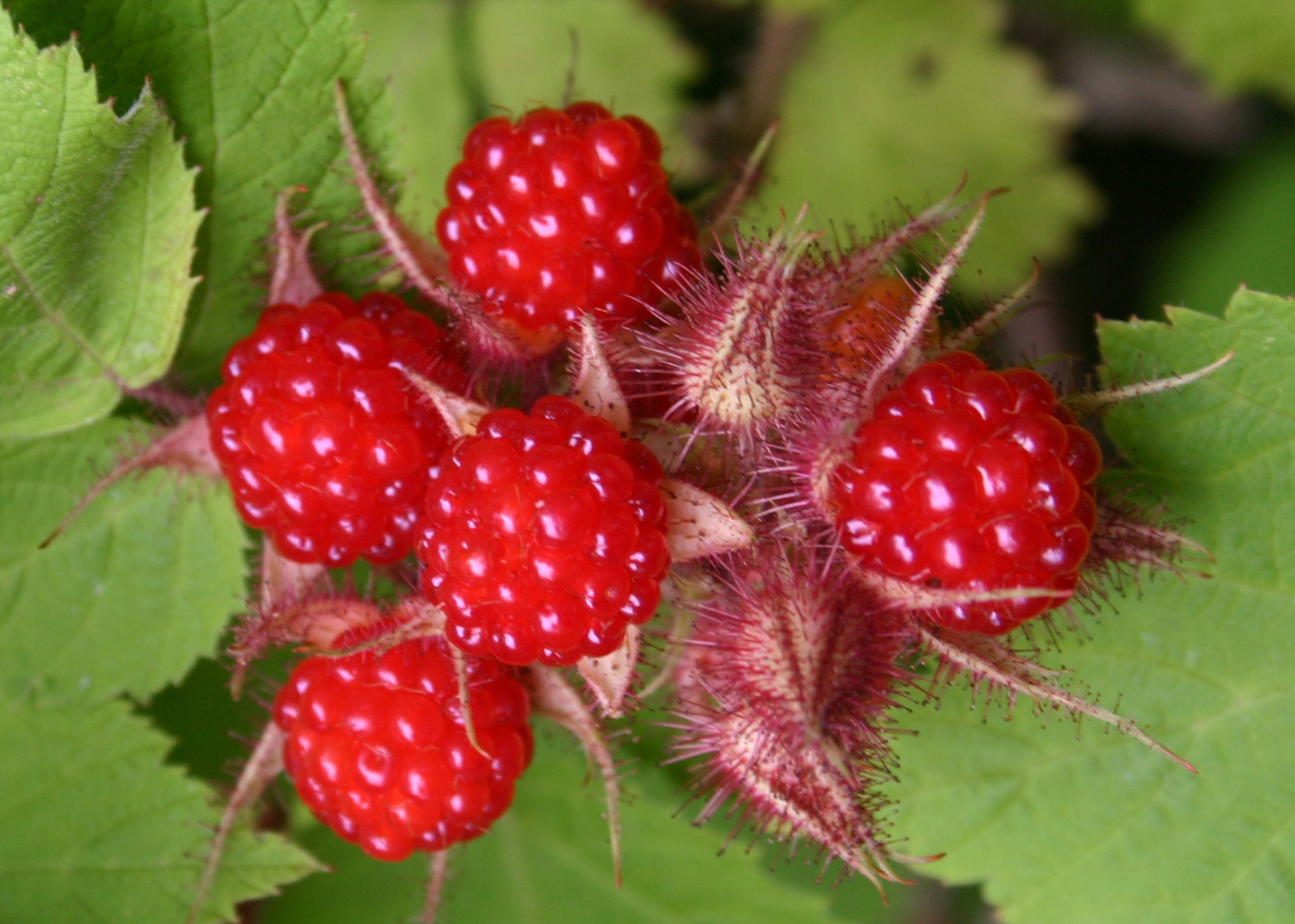
Japanese wineberry is the sweetest of the wild raspberries. It is very easy to collect and harvest large volumes of fruits because they sit on the top of the canes. It spreads by both tip layering and runners. Its use for for jelly, jam, syrup and wne. It is easy to process and the fruit is always clean. In Michigan, the species is not reliably winter hardy. I lost the tops of the plants if it hit in the minus 15 to 20 range. There are several forms of it and I found a group from a collector who thought it was higher yielding and slightly hardier. It has not self seeded at my farm. Its a thorny one and delicate movements like a ballet are needed as you weave through the canes. This species is collected here in the United States too for wine and jelly. Once while traveling from Washington, D.C. I saw many people harvesting at a rest stop along the highway. That is the perfect place for wineberry.
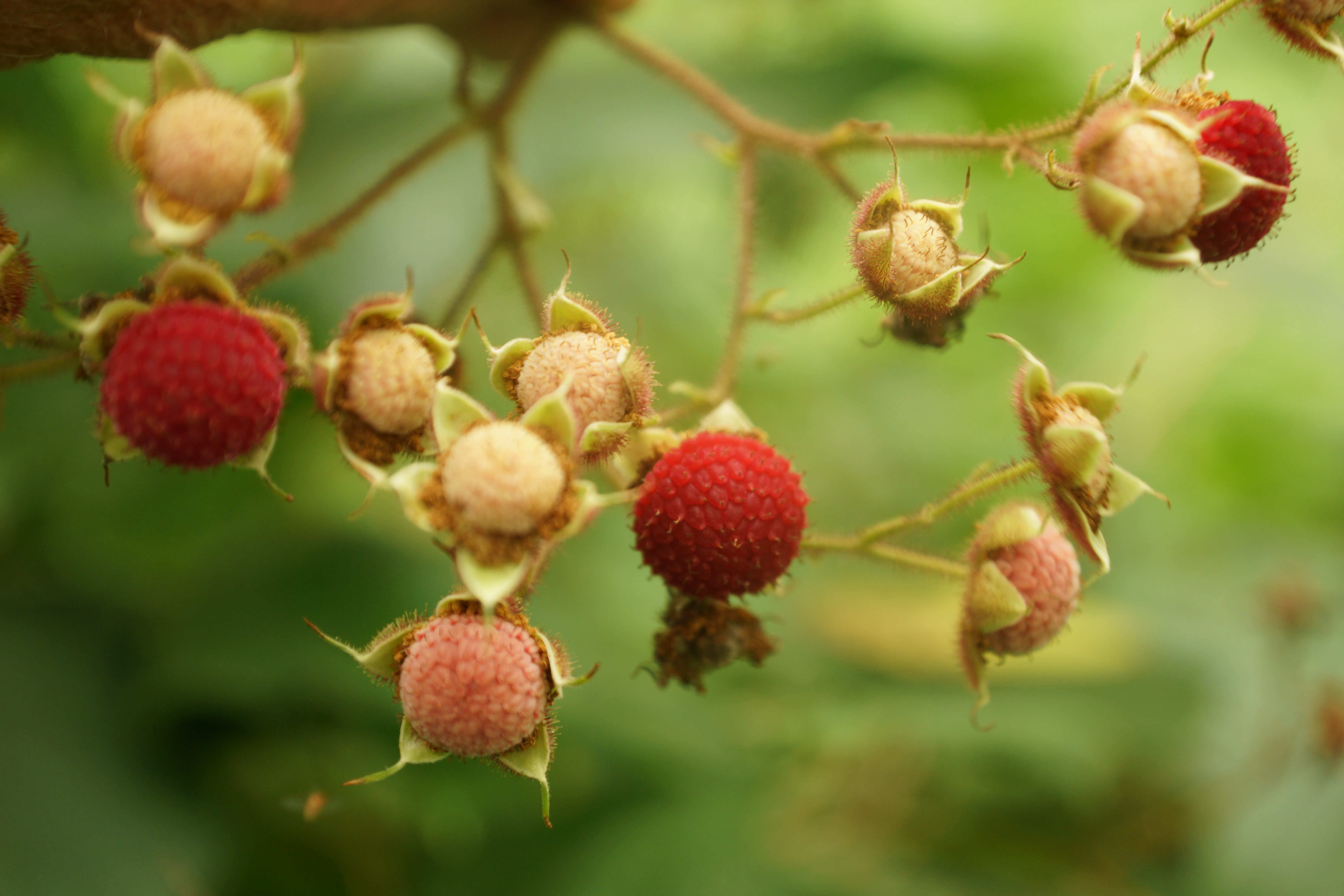
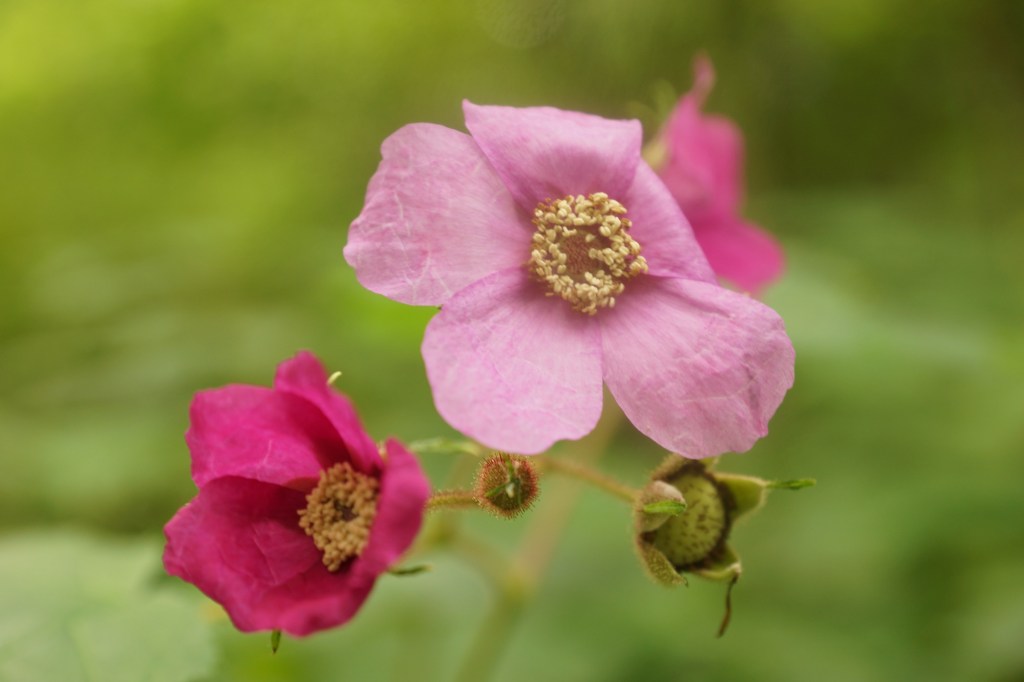
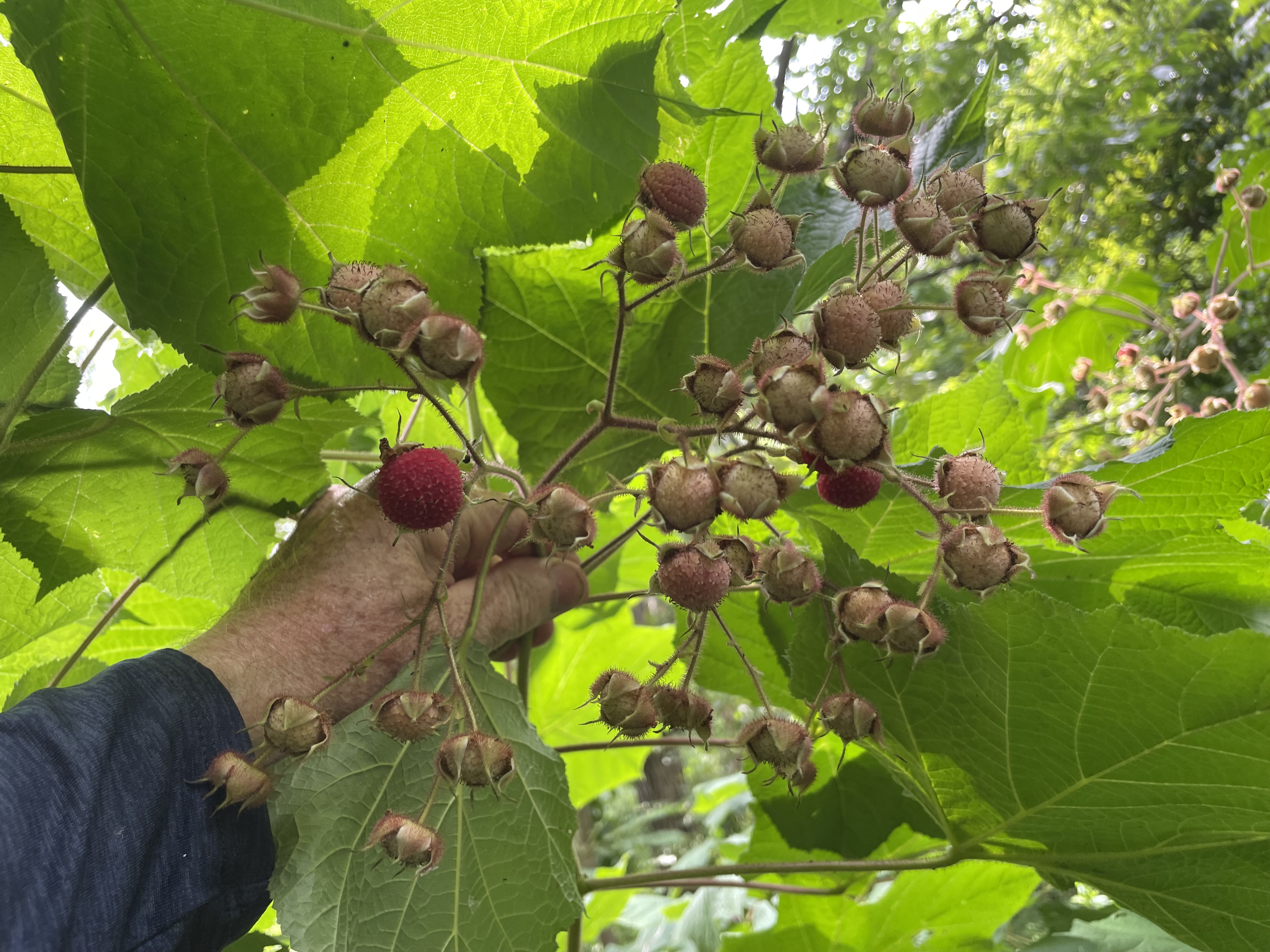
The thimbleberry represents one of the most northern forms of wild raspberry having a concentrated flavor with very tiny small crunchy seeds. This makes them ideal to eat as is or to make delicious jam and jelly. The colonies are thick and can form a monoculture of delicious wonderment. There are no thorns. The plants runner by underground stems. They produce fruit on 2-4 year old canes. It is not a cane that you remove after fruiting. You wait for it to finally die on its own. The clusters ripen over a very long period up to a month or more. This is common with a lot wild raspberries. They make you come back for more. I still believe I have cracked the code on cultivation by using my Pink Thimbleberries in southern Michigan. Thimbleberries are latitude sensitive and hard to fruit in extreme heat and dryness. The California based ecotypes I produced solved most if not all of that problem. Meanwhile thimbleberry jelly is still $17.00 dollars a jar. It can be grown from seed or cuttings. When I had the nursery, thimbleberry and wild black raspberry where the most popular of raspberries.
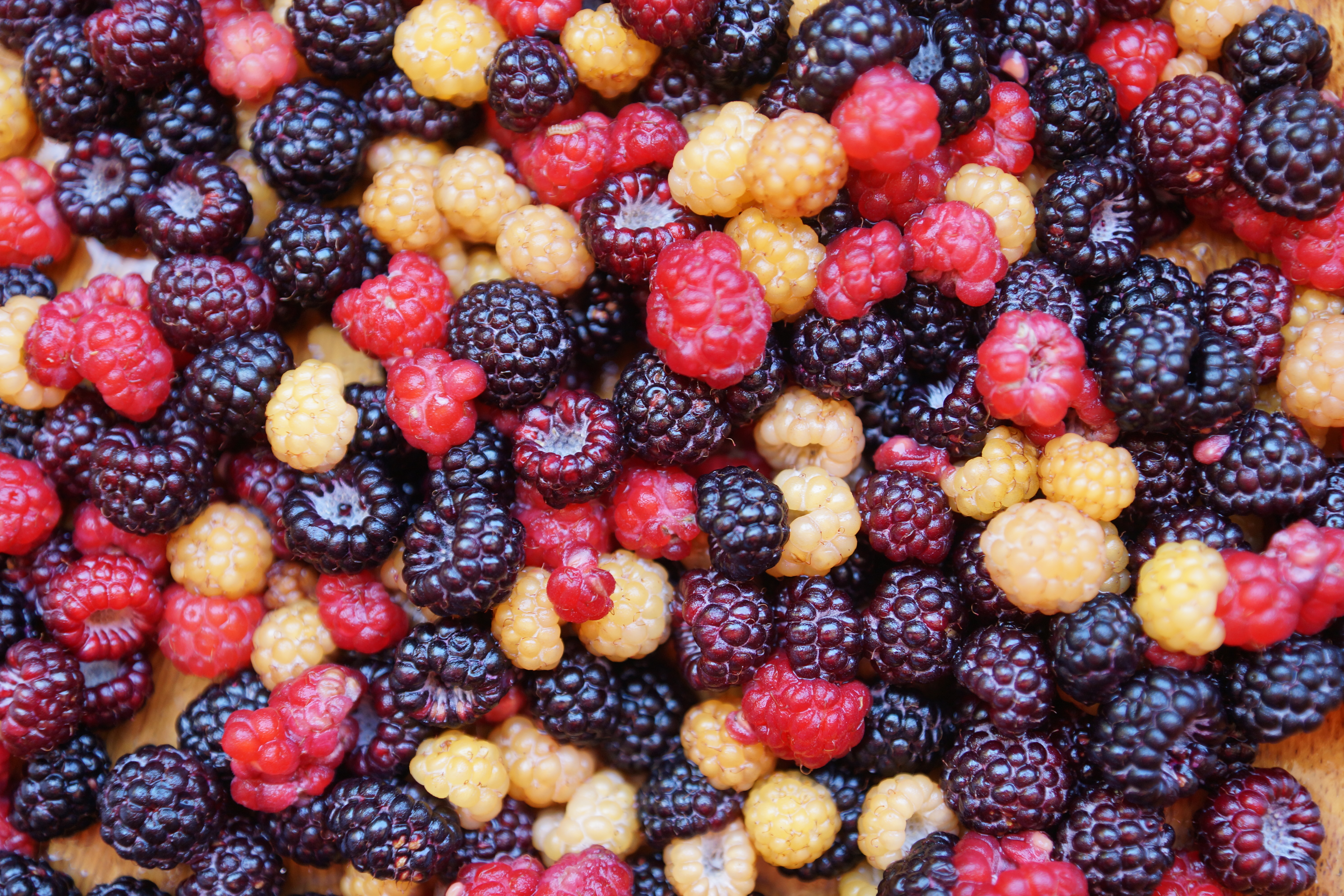
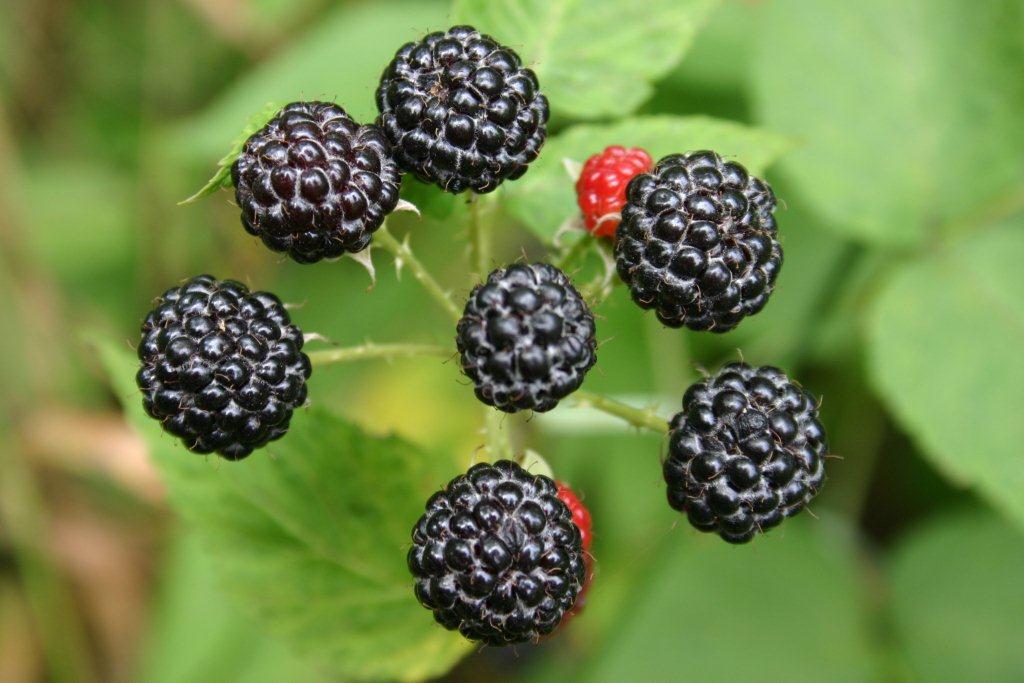
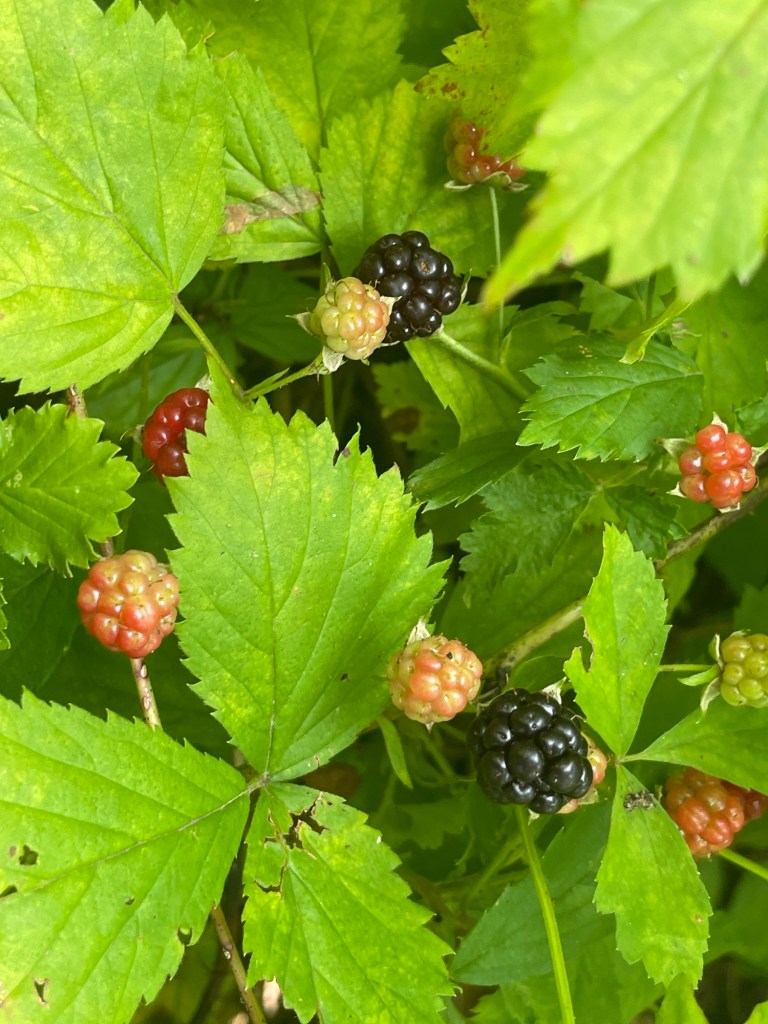
Wild black raspberries in my location are the most common of species. There is actually quite a bit of variation of them both in yields, size of fruit and color. The most two common types are yellow and black. The image above contains some Nortthern red raspberries as well. Wild blackberry canes tip layer their way along. The canes themselves are born from a crown and die after fruiting. New canes replace them quickly. They are the raspberries that are most known for their flavorable fruits. The seeds are medium-large and usually are taken out if making jam. Some people like to leave the seeds in which adds to the texture of the spread. This species is sensitive to drought which will cause the fruit to drop prematurely and never develp further. The roots of the species are shallow. I was surprised at how many people purchased this plant for their landscapes. The yellow form never was as high yielding for me until I found one plant with a massive crop. I started using that for a seed source. These produce best in full sun and wide open areas compared to the other species.

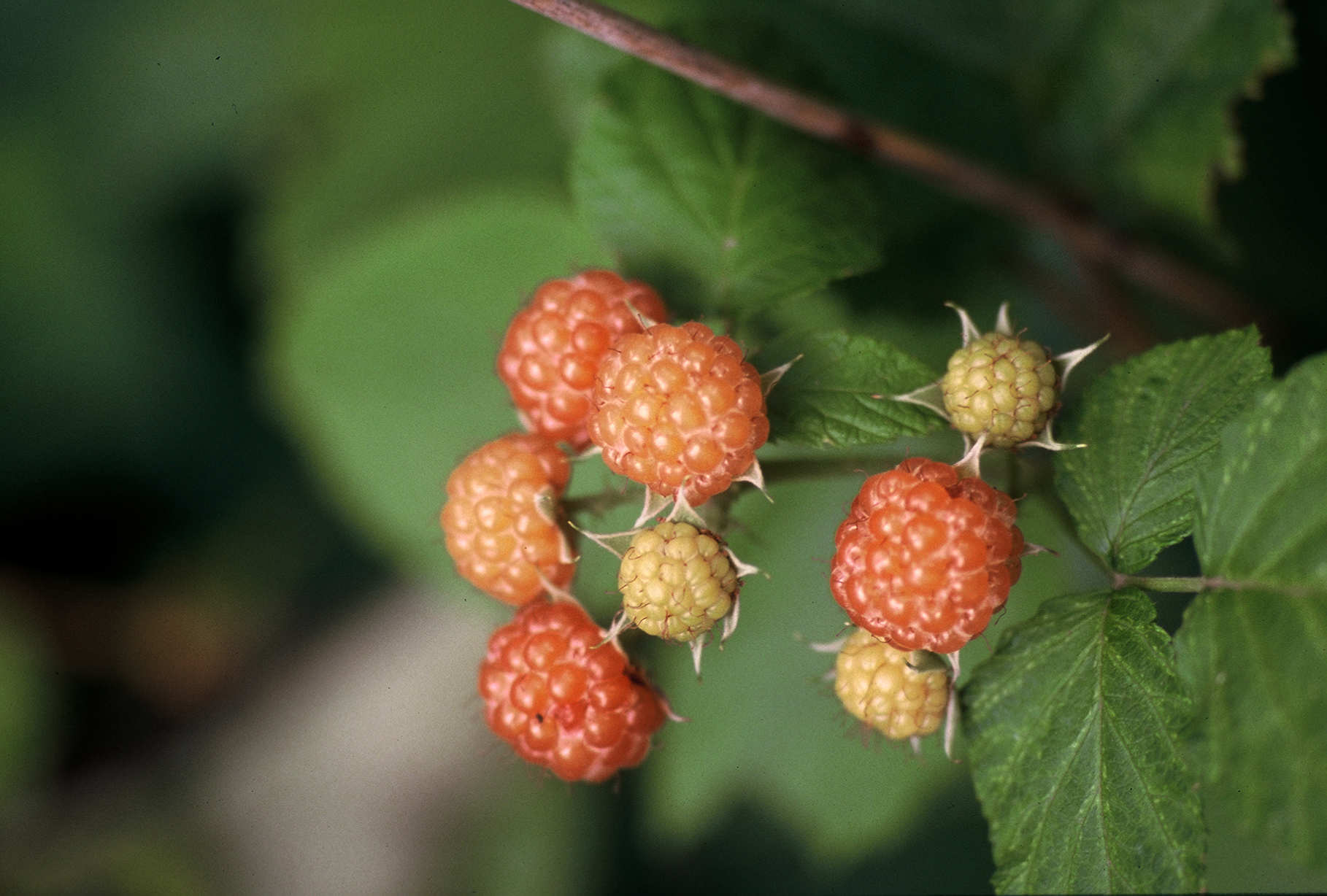
This image of a northern red raspberry on a wide open coastline of Lake Superior represents one of the most widespread species raspberries. It too is thornless and grows from runners. The seeds are tiny and it is like eating raspberry concentrate. The fruit size is small and variable depending on the colony you are harvesting from. Of any plant I have grown, it is the most powerful colony producer and has completely improved a part of my planting by creating a dense composite of raspberry mixed with Desmodium. Its thick in there. It is where the turkeys nest. It has become a groundcover only 3 foot high. You can imagine trying to get a toe hold in the ever shifting rock and sand along a windy coastline. You are going to develop a means to expand your presence by sneaking into the cracks and crevices and making do with what is around you. If you change that to an all you an eat buffet like my farm, then freedom has arrived for this Rubus family. This species despite its size and low yields is just amazing in flavor. Ironically it is found today in many cultivated raspberries too as it was a breeding connection maintained when raspberries went cultivated early on in American history.
Farmerless fields can accomodate the pioneer species as a means to reforest and replenish the landscape using species across a broad spectrum of inherent capabilities.
It will be from this repository that will help us to tap into these wild flavors and nutritional profiles of a well known fruit plant. It’s not a test. It already works. Employ the raspberries!


 biologicalenrichment
You must be logged in to post a comment.