Some of the most secretive plants are the most common. We pass by. We see it. Yet, our consciousness does not reflect it as a discovery of anything significant. I saw this trifoliate vine twining around an American hazelnut bush under the powerline and decided to investigate. I had just purchased my farm and this area had several nice hazelnut bushes. I dug down and saw some nice clusters of tubers along its root system. I was not aware of the hog peanut, but I had heard about it in one of my wild edible books. These books often paint a picture of a rich, diverse world filled with food opportunity galore. The hog peanut was one of those. I put them back in the soil not knowing what I was looking at.
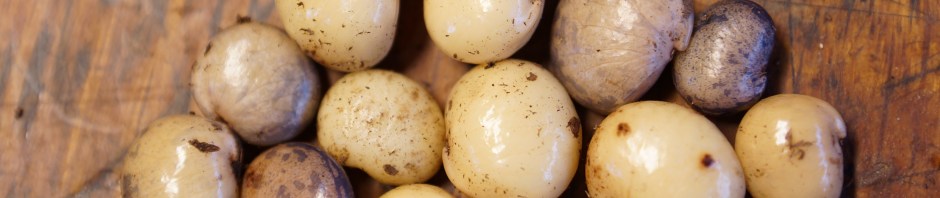
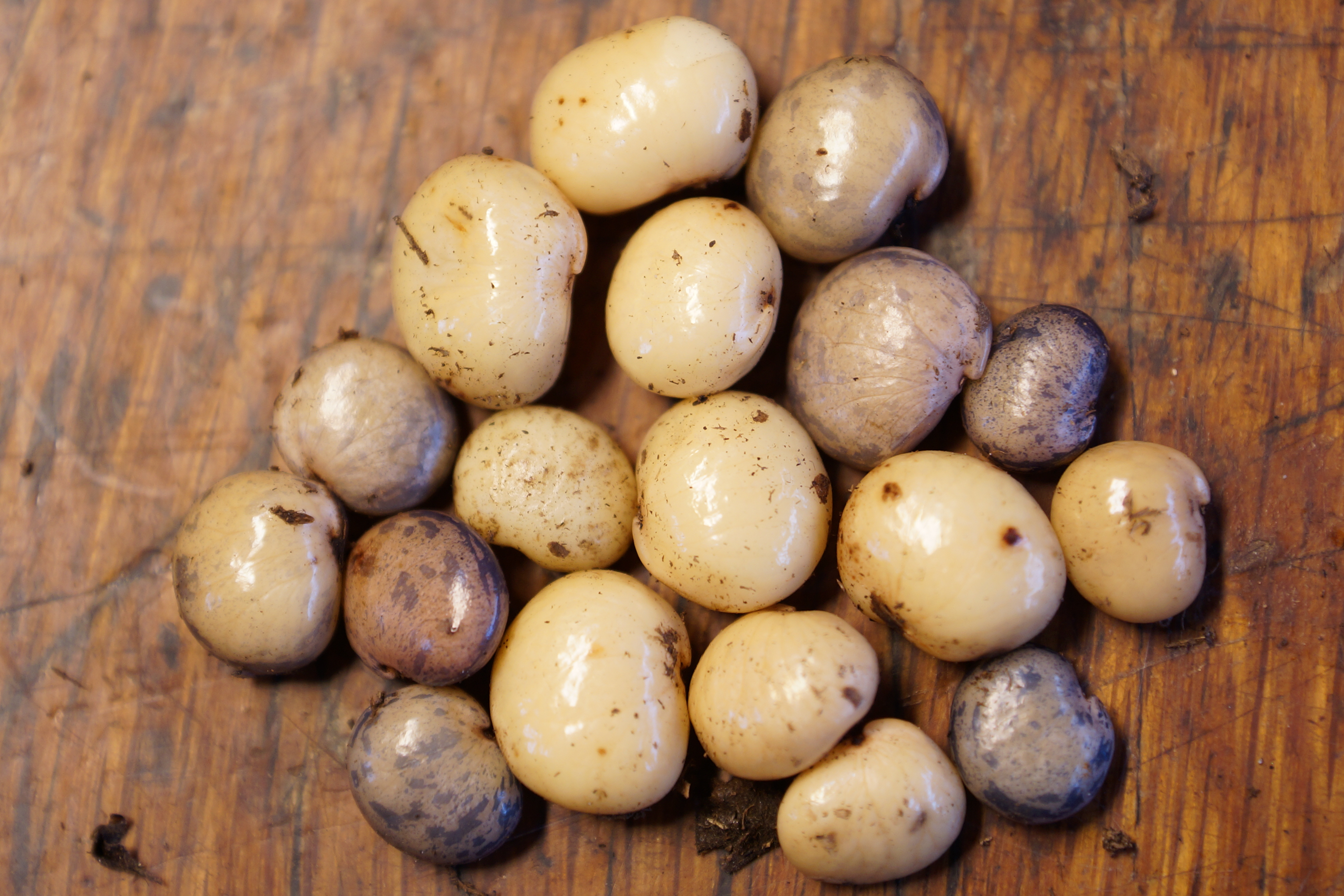
A couple of decades pass and I decided to create an edible forest planting in a hybrid bur-white oak forest I had grown using Quercus x bebbiana selections I planted from acorns. The trees in this forest were roughly 30 feet tall. They were pruned and thinned to accomodate their crowns. There on the forest floor we would plant ginseng, gingers, fiddle-head ferns, gooseberry, violets and magnolia vine. One of my interns at the time told me of the hog peanut at his property in northern Michigan and he would get me samples of it to plant in the understory. He mentioned they were all over and especially prevalent in forest road cuts in the area. I thought this was a good idea because of both its nitrogen fixing capabilities as well as it edible beans that form underground. At this point in time, I had yet to taste them. We did the planting and for the next few years, I really didn’t see much of it. Finally, you began to see it was spreading quickly across the forest floor and creating large patches. Once again when I dug down, I found the tiny tubers encased with a thin layer of soil and very difficult to spot. I rubbed off the soil and tasted this delectable little bean like tuber. I remember thinking I wish there was more of them. The camouflage alone made them very slow to find and harvest. This was my eureka moment as now I had a face with a name. I saw this plant before at my farm in my forgotten planting beds where it self seeded. I discovered there were many types of hog peanuts all a little different. Some were black, mottled, white with purple specks and some were dark purple. After photographing and increasing the magnification, I realized how beautiful and magnificent these peanuts were. It was from here I began to both harvest and sell them. I began to experiment with actually growing them in a more cultivated setting.
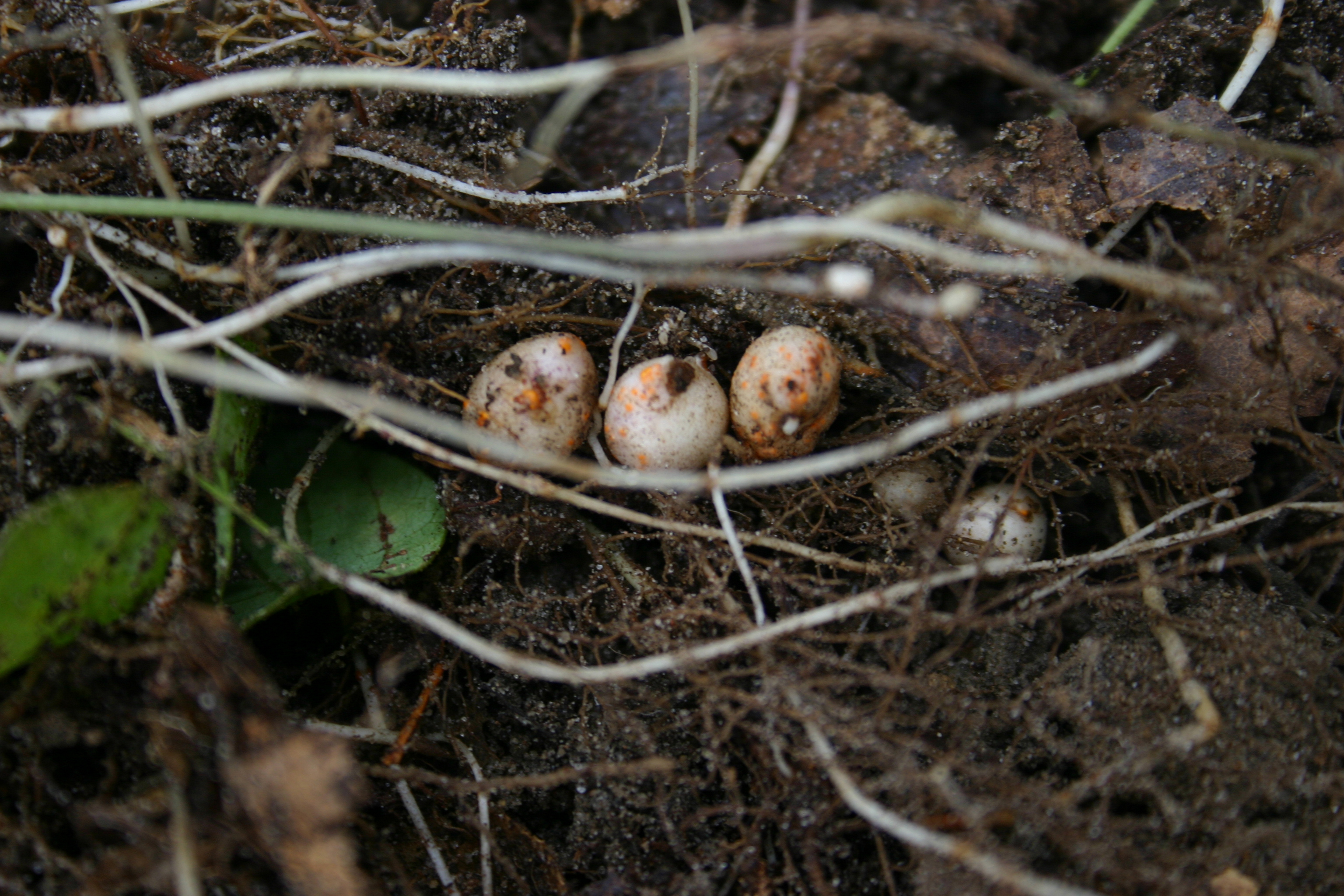
I made a selection with larger tubers and named it Crispy Snack. I put it in a raised bed in one of the polyhouses where it was easy to get a handle on harvest for sales in the spring. Even in the bed, they are very hard to discover with their sticky soil coverings. Cultivating a wild plant is a mix of ups and downs in emotions. One of the highs occurred by accident by growing the plant that had seeded into our cactus plants in our main greenhouse. It was popping out of the pots fixing nitrogen right next to the cactus. When I moved the trays from the ground cloth, I discovered a whole layer of tubers on the mat. It had turned out that the low nitrogen environment coupled with a lattice of roots on top of the weaved poly mat created the perfect growing conditions. I took this method and did similar plantings, but none worked so good to as the cactus. Look out for the spikes! Time to get the hog peanuts!
Today I still grow a few hog peanuts in 30 gallon woven poly bags. I harvest the tubers in the fall and then refrigerate until March. I plant them 2 inches deep. The bags are overkill in the propagation world of hog peanut but it elevates them off the ground as they swirl around in a cirlce in the bag devising an escape plan. Their plan worked as a few voles last winter scooped up a couple and moved them to another set of bags ten feet away. This was my foraging animal safety zone encased with a trellis of one inch cone four foot tall chicken wire. When the ever-expanding universe of hog peanut grew quite large (some would say overwhelming) in the Bebbs sweet oak acorn forest, the voles stepped in and soon that universe almost entirely imploded. They too love them and have a keen sense of smell far greater than any human plus they have radar for tubers. It turned out they are visually limited but have a keen sense of space and smell using a radar like bats. My visual acuity for the tubers improved dramatically as I began to spot even the tiniest purple or white color surrounded by that ever present soil cloak they had developed using its slimy outer covering. In the meantime, the voles totally cleared the patch making a lot of short inventory for this product I was selling.
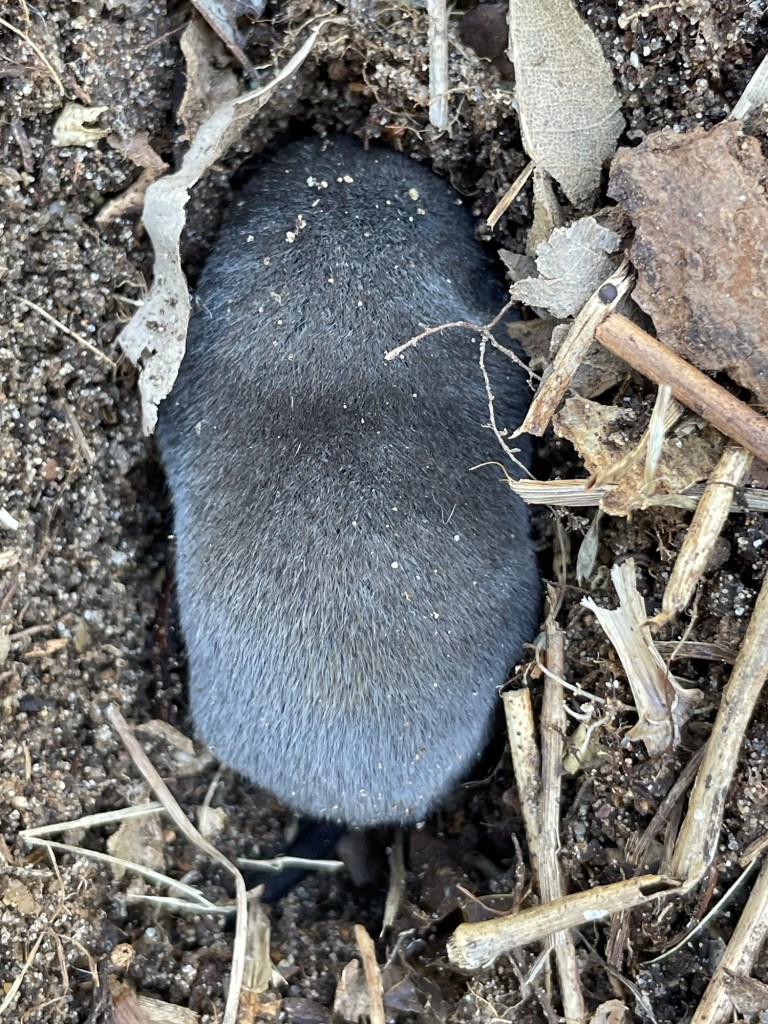
There was an upside to this behavior. In the spring as the plants began to grow and produce a top, I began to notice their caches of hog peanuts and I realized they do not always eat all of those out in the winter possibly due to mortality It is from here the new planting begins and the universe of hog peanut sets the stage for the outward expansion again. In one planting, there was not a single tuber left in 50 by 20 area. They totally disappeared yet nearby was a cluster of dozens of tubers all rammed together. This is the power of one cute little furry creature with superpowers totally connected to the hog peanut and its growth habit. You have to respect that. It’s from these satellite populations that create the patch again omnidirectionally spreading to fill the space of the forest floor.
Few know the hog peanut. Maybe feral or pastured hogs know of them but not humans. I heard from a few individuals of what I call the disgruntled with nature folks who thought I was poisoning the world with an invasive species of immense magnitude. Apparently, compost makers as well as commercial landscapes find it hard to get rid of. It is difficult for me to explain the benefits and complexities of a plant that is so highly valued for its nitrogen fixation, food for humans, food for voles and other mammals and not mention browse potential for white tailed deer. I like to illuminate the value. There were several people who are focused on breeding the plant in some way. Increasing the size, using other species and finding ways to harvest and eat them in some culinary way is their focus. One of the real-life university researchers was surprised when I told him about the variation. I told him, few are looking. It you were to ramp this up to a semi-commercial level, I think a shallow sand base with the peanuts growing out of the sand on a weed mat covered with a screen would be ideal. You would then feed with liquid fish emulsion to improve the vigor and tuber yield. The harvest would then include using screens to winnow out the tubers and sand. The hog peanut has a very different life cycle and produces larger tubers in the second year. So this might be more of a bienniel crop or a crop where you only use one year tubers to seed in your planting. It is hard to imagine in many ways because of this unique complexity and variation of these tubers and its sex life for pod formation. I still don’t understand all of it and frankly either do the botanical researchers.
Back at the forest floor, the hog peanut universe is expanding and contracting. All it takes is radar and a venomous cute little furry creature to tell us the full story. We need to listen.
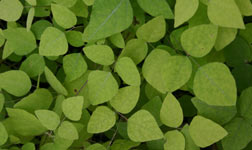
Farmerless fields do not need fertilizer from outside sources. They can be generated within using plants like the hog peanut to improve crop plant yields as well finding ways to grow and use a plant that is not on our radar of possible food solutions.
Enjoy, Kenneth Asmus


 biologicalenrichment
You must be logged in to post a comment.