If you have ever planted a cover crop of rye, you soon realize how much this powerhouse of a plant can do in such a short period of time. It is such a simple thing yet has immense environmental benefits. I know many people normally don’t view rye like this but after creating a field of rye on a family Christmas tree farm I soon became a believer of the little rye plant. It was more than wheat. Recently I saw an article questioning the use of rye in wildflower plantings since it is not native. My first thought was how stupid can you be. The second thought was how similar it was to my own thinking until I actually planted a field of rye! From the idea to its creation, the rye field became much more than I expected. It was definitely more than the sum of its parts. In the real world of an abandoned Christmas tree farm surrounded by white pine, oak and birch forests of central Michigan rye enriched all life on the many levels of plants and animals. It was from here I saw the light. And wow, was it bright. I too was lost until I was saved by the miracle of rye. There was nothing before and then after a few rains a green field emerges from darkness.
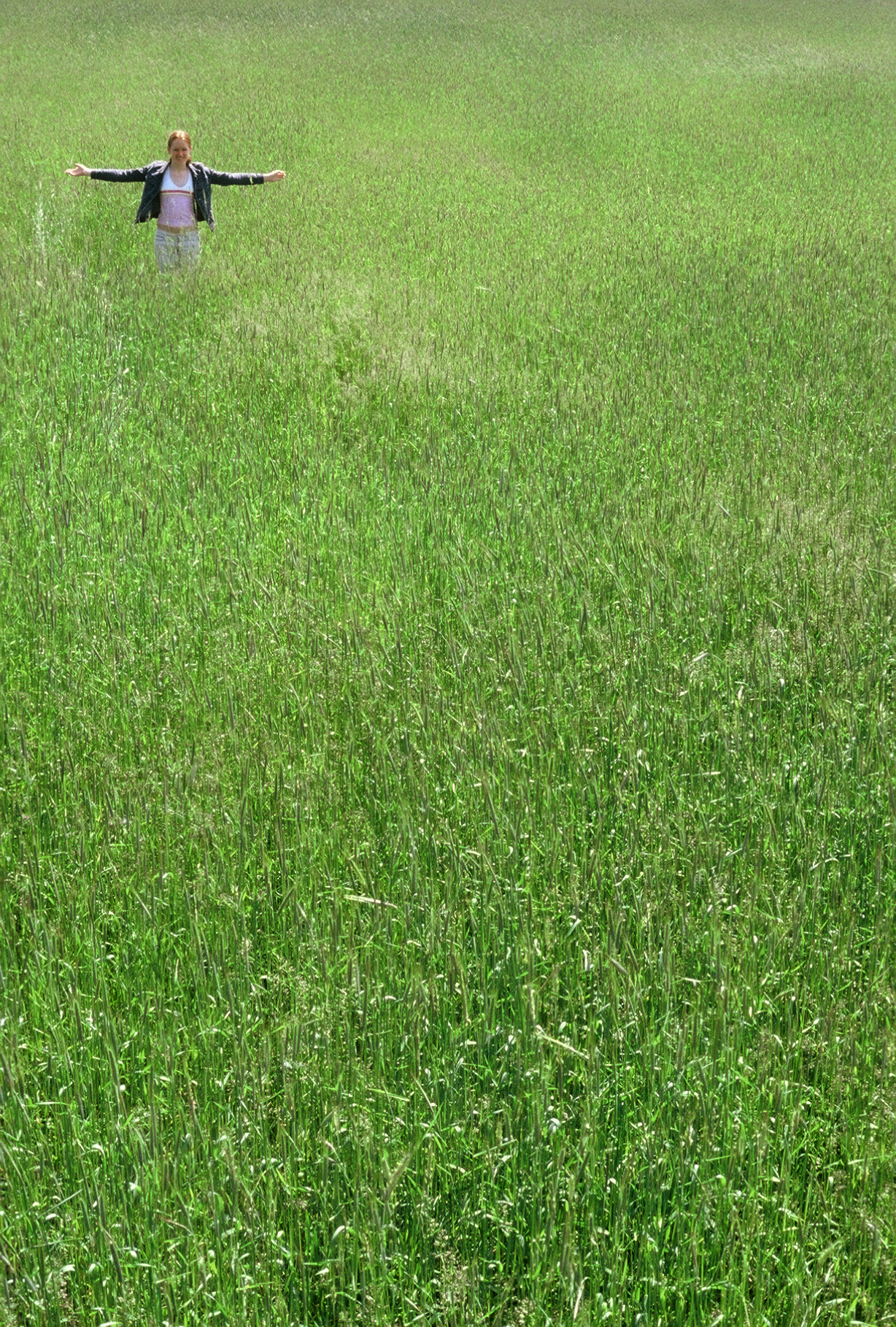
My daughter Kelly helped me create this image of the rye field in its first year. I used it for one my catalogs. The field was prepped by my father, uncle and a contractor with a bulldozer. The bulldozer removed the few remaining trees in the field. My uncle yanked out an old disc from the woods and attached it to the tractor. There are probably a lot of old discs sitting in Michigan woodlands. I rented a rotovator to run off the tractor to smooth everything out prior to planting. It was an abandoned Christmas tree field. Soon it will be rye. Rye seed is relatively inexpensive so we overplanted using a hand held spreader and walked back and forth criss crossing the field several times to get uniform coverage. It was a joy to do. I was wondering how many birds this would attract. The only thing to do was wait for rain. The stage was set.
I was aware of ryes green manure potential. I used it on my tree crop farm to build the soil prior to planting acorns. The stems and foliage break down quickly adding organic matter to the soil. The rye held my low organic sandy soil in place on this slope I was working and helped in the production of my seedling oak trees. You normally till it under before it reaches maturity and sets its ‘berries’. One day at my farm, I saw two large pheasants consuming the rye seed I had just planted. I was so enamored with these beautiful birds and the rarity of their presence, I considered it a great honor for them to visit. I didn’t scare them away. You just don’t see pheasants very often if at all in Michigan. The rye brought them in for me to see. Since there was no future Christmas trees being planned at my families farm, my father and I decided to let it go to maturity to see what would happen. This rye field signaled the last crop we would plant together. I would visit my parents home during this time and would always make a point to check the fields progress to see what sort of rye shenanigans was going on.
After emergence in late October, the plants were being heavily grazed by deer. The ground was solid with hoof prints. The succulent nature of this grass brought in large herds of deer. It was attracting the attention of many of the nearby homeowners who were probably spritzing out their coffee in the morning looking out their patio windows. It was solid hoof prints. The grazing had little influence on the plants themselves which seemed to generate even more foliage. Even in December with snow cover the deer kept coming back moving the snow aside for obtain fresh forage. The following year, the plants put on their heads and grew upwards to three feet tall. It was at this point, the turkeys began to nest in one thick area. As the seeds ripened and the stalks turned to a golden brown, a huge number of jumping mice filled the field. I began to mow it shattering the seed heads and spreading it in all directions just like I had done earlier with a hand cranked seeder. The field was alive with mice. They looked like kangaroos jumping in front of the tractor as I mowed the field. Finally after the mowing and a little rain, the new rye grass started again. This time it was not as thick. This same process continued for three more years minus the mowing and finally only one plant remained in year four. The rye had run its course.
The cumulative benefits created a new field of ecological opportunity. There was less thistle in one area. New trees began seeding in. Wild strawberries were there in great abundance again with solid patches of them here and there. A few willows grew in the area with the highest clay content. You could say it went back to normal and everything calmed down. To me it set the stage for things to come whatever that may be. We sold the land and gave up the field. But for a brief moment in time, we came together under one idea and one plant and immersed ourselves in the rye. Out of darkness we emerged after a few rains.


 biologicalenrichment
You must be logged in to post a comment.