I live in one of the cloudiest counties in North America. When sun appears, people comment on it in the stores. “Oh, it’s a sunny day!” As if to say time is short and you better enjoy it now! The sunny levels are spotty because of the effects of Lake Michigan which is roughly thirty miles away. Today the water temperatures are in the forties. This too creates this cooling effect along the lakeshore and inland. Called the fruit belt, Michigan has an ideal climate for a wide variety of fruits. Pecans on the other hand do not fit into this cloudy short season area. They are heat lovers and like to bathe in a long season of warm soils and air to ripen the nuts fully. If you announce to the world you are going to grow pecans in Michigan, you might as well say you have figured out cold fusion. The pecan market is massive and you need massive plantings to make it profitable. When I first started growing pecans in the mid to late 1980’s from the Northern Nut Growers Association northern pecan seed distribution project, I was not as optimistic as I am now. Cold pecan fusion was a dream not a reality. What happened? Time and the constant dream of this pie in the sky tree crop kept me going.
To find, create and develop any tree crop, takes patience. The pecan like all hickories takes a lot of time and space. They are huge trees. Some of the older southern orchards clock in at 8 tree per acre. People today do not have patience or have the land resources to make pecan growing profitable especially into the unknown real estate of Michigan. There is a large government breeding program in Beltsville, Texas that houses all the pecan varieties and actively breeds new pecans. It takes a certain stick-to-itness within a government repository. You need a long cycle time to grow and release a pecan variety. Very few are found in the wild anymore and used. Although it is still done this way, it is not a common thing in the most southern part of its range. Breeding pecans is all hand done with mass selection in the hundreds of thousands range to create the perfect pecan variety. No other tree crop takes this much time. The juvenile age of the tree runs from 15 to 30 years from seed. The short cut for researchers is to graft seedling trees into mature trees. This brings it down to 2-3 years to fruit but it doesn’t tell the whole story until several characteristics are met and then put out into an orchard as a single selection. Today at my farm, I still have some seedling plantings from Missouri seed from James Pecans and Shephards Farm that after forty years still have not fruited. Typical of seedling populations, I also found several seed strains that fruited in under ten years of age. One of them is highly precocious and a dwarf tree with minimal foliage production. This natural variation of pecan and its ripening period along with its precocity doesn’t mean you have a commercial pecan. It just means you have a pecan that can grow and ripen in southern Michigan and reliably produce good crops of nuts every year despite the climate. Is that commercial? Probably not, but then those characteristics have never been put to the test because…….. pecans do not grow in Michigan. See what I am saying? This highlights the issue of developing a new crop that is only thought of as a southern species. For many, it sounds too pie in the sky.
If you could have a working clonal collection here in Michigan, that would likely help alleviate the problem. There are other ‘ultra-northern’ pecans.They too are from some of the same wild selections I have at my farm. The difference is location, location, location. You need to have them in a short season area with cloudy cool weather area. This makes it possible not only to grow the tree but to ripen the fruit. I use to take my family to the Kellogg Bird Sanctuary not far from Battle Creek, Michigan. There they had some of the nut trees from the early Kellogg days. Near the lake there is one massive pecan tree reaching 70 feet tall. The nuts never ripen and do not get past the milk stage. The tree looks fantastic but nut production is zero and stayed that way for the decades I would visit the area. This is a common issue with pecan with such a huge range from Texas to Iowa. The pecan is a fast growing hickory species for Michigan. We have the right soils, climate and the tree is very well adapted here. Once I received seed from someone who collected from a tree in northern Minnesota. The nuts were fully ripened. This was in an area that minus 40F was common. This highlights a physiological compotent of hardiness much like bald cypress. Bringing a plant under cultivation expands the range and makes it possible to grow food in areas not thought possible before. The northern pecan leads the way with its high oil nut and rich flavor. The pecan pie is brought down to earth and made possible by human selection and agricultural innovation.
I asked one of the USDA scientists about the use of pecans in Michigan at a nut growers convention. He said I should focus on yields and not pay attention to the commercial characteristics needed for a commercial nut. We do not have heat stress, drought or missing levels of funky micronutrients. The shucks pop open on their own and the nuts drop in September and October. Michigan pecans are high in oil and delicious radically better than their southern counterparts.
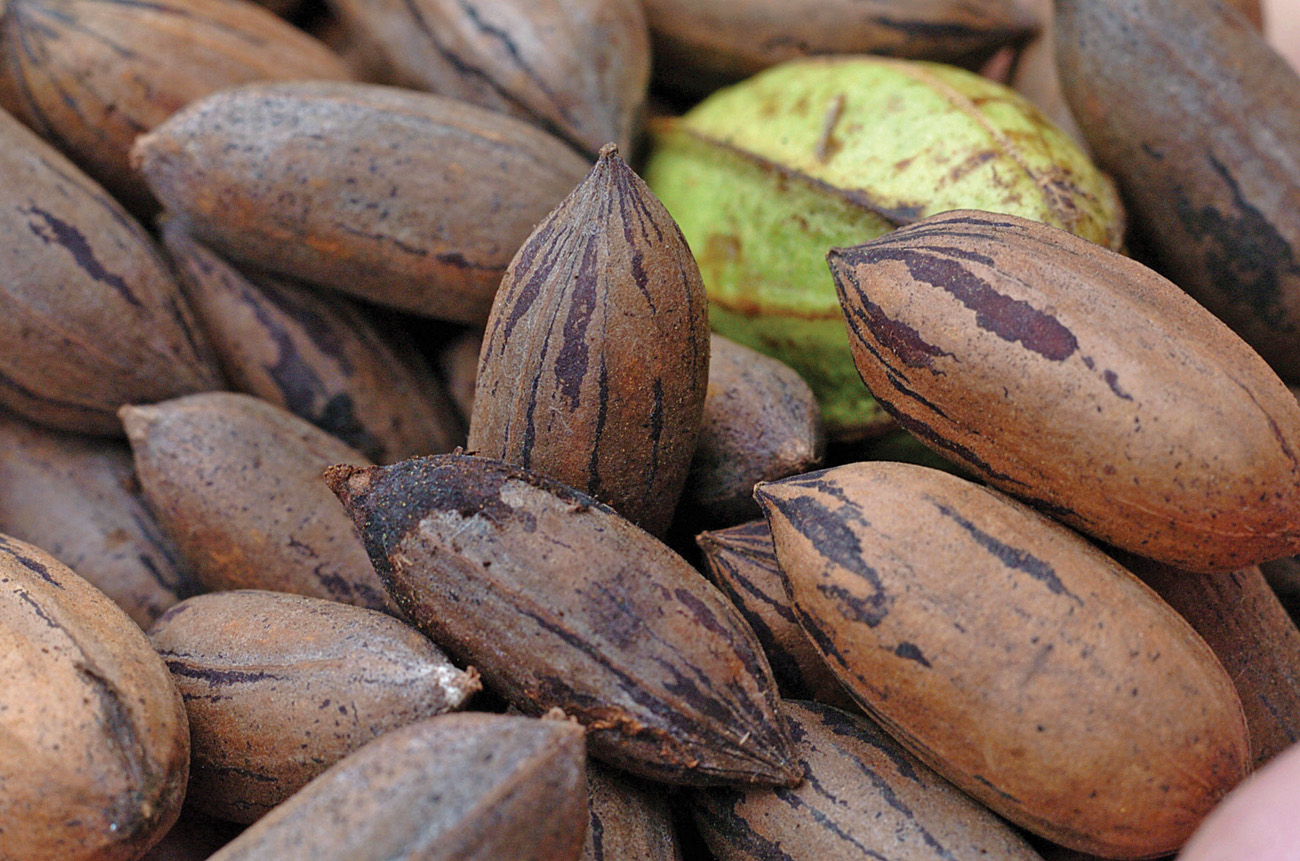
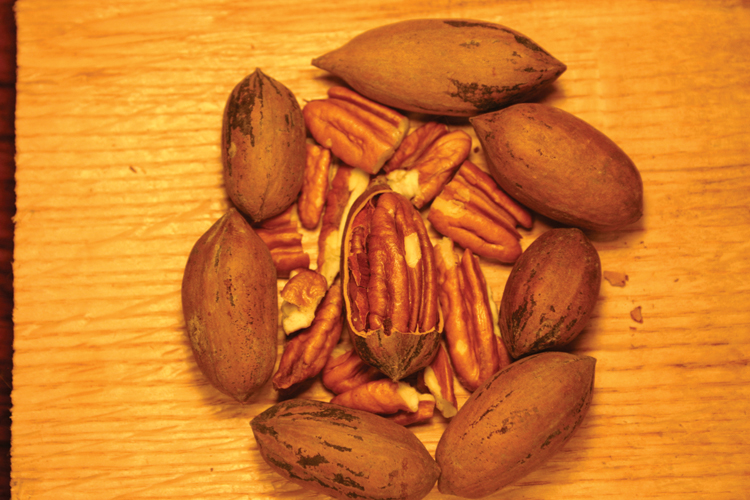
“Michigander Prolifica” A dwarf selection with clusters of nuts forming on the tips of the branches. Small, compact nuts form and drop free in late September. Tree is not as vigorous as others. Minimal foliage is produced and the crown is wide open with good light penetration throughout. Tree is very heavy bearing. Parent tree is on a low organic soil on a windy bluff. Hardy to minus 30F.

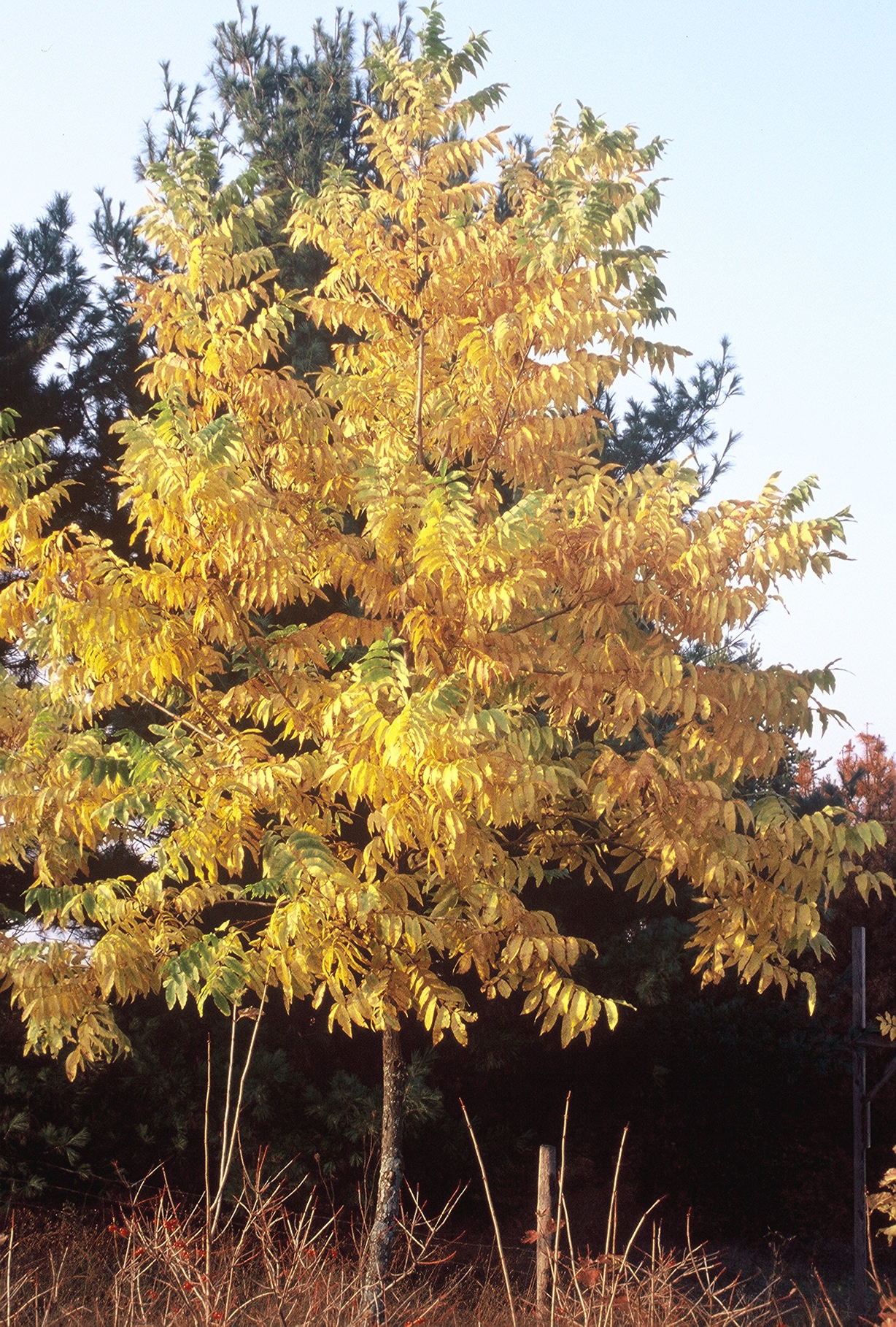
“Michigan” Selected from dozens of other ultra northern seedlings, this one selection was both the most vigorous and heaviest yielding of all pecans at my farm. Almost every year the nuts ripen fully and drop free of the husk on its own. It has long thin nuts that ripen in early October. the ripening period is spread out over a two week period. This is by far the best selection for ripening and yields on a large robust tree. It was likely one of the seedlings from the Voiles #2 seed source which was from the Richard Best orchard prior to its demise from the Mississippi flood waters. The Northern Nut Growers Association brought this seed source to light as well as others found in Iowa as possible sources of short season pecans in the northern part of its range. This was the geographical hot spot of short season pecans distributed by crows, native Americans and early settlers.


 biologicalenrichment
You must be logged in to post a comment.