Almost immediately after I closed the door shut on my nursery in 2021, several great opportunities existed where I could foster new crops in unexpected ways. These would be crops that few people have experience with under the banner of minor crops or the edible wild. That banner is colorful and exciting but it is something few take seriously as a means of cultivation, applied ecology and agriculture blending it into a seamless whole. Since the plantings are more mature now, I can look at the yields and the quality of the fruit. There is no way to promote a new tree crop unless you do it yourself because you can’t explain flavor very well. I used to go to farm shows with my jams and syrups so people would get an idea of how these minor fruits taste. Direct experience is the only way. Once I left my booth to check another vendors display. When I got back, I noticed the spreads were all eaten. I asked a nearby attendee what happened and he said a class was let out directly across the hall and they really liked it. Problem solved.
Yesterday while talking to the power line vegetation control folks at my farm, one of them said to me, “It must be really cool-satisfying to know you planted a forest.” I agree. It is satisfying. I was very fortunate to do this. But what can you do with this diversity? Diversity has to move and expand outwards. Otherwise its just a ‘cool forest’. Since my forest is a novel ecosystem filled with plants and seed strains from around the globe, the focus has shifted to inspire others to do the same. Untended, wild and otherwise non-varietal plants are the future. We have gone too far to convince people that varietal plants are the only game in town. I am saying it is not. That is the power of my global forest. Its not exclusive. Anyone can harness that power in a short period of time very inexpensively on their land and spread the word of diversity by having diverse genetically different individuals that make up populations that are also genetically different.
Here are two examples:
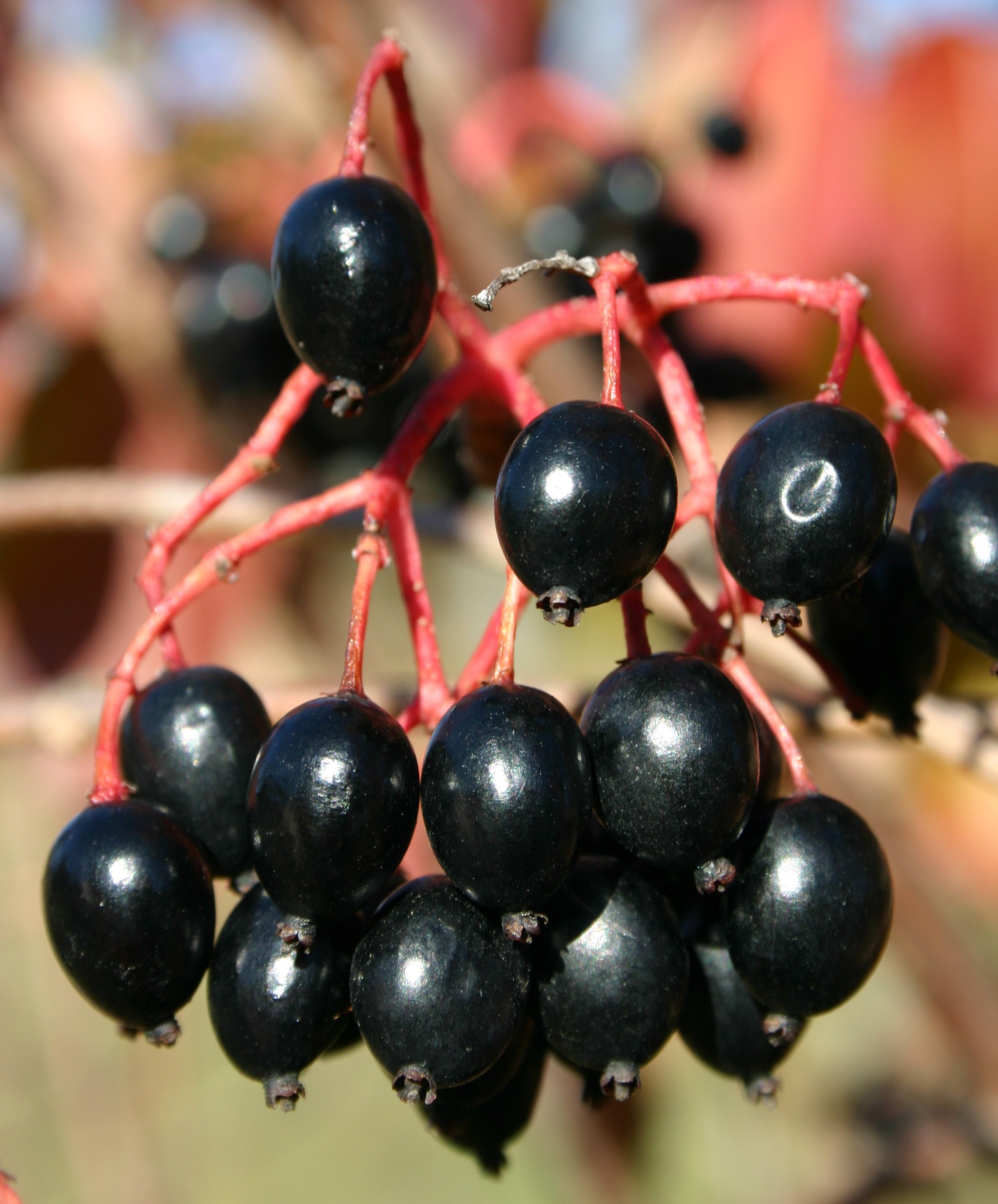
Blackhaw Viburnum – Viburnum prunifolium Iowa or Michigan
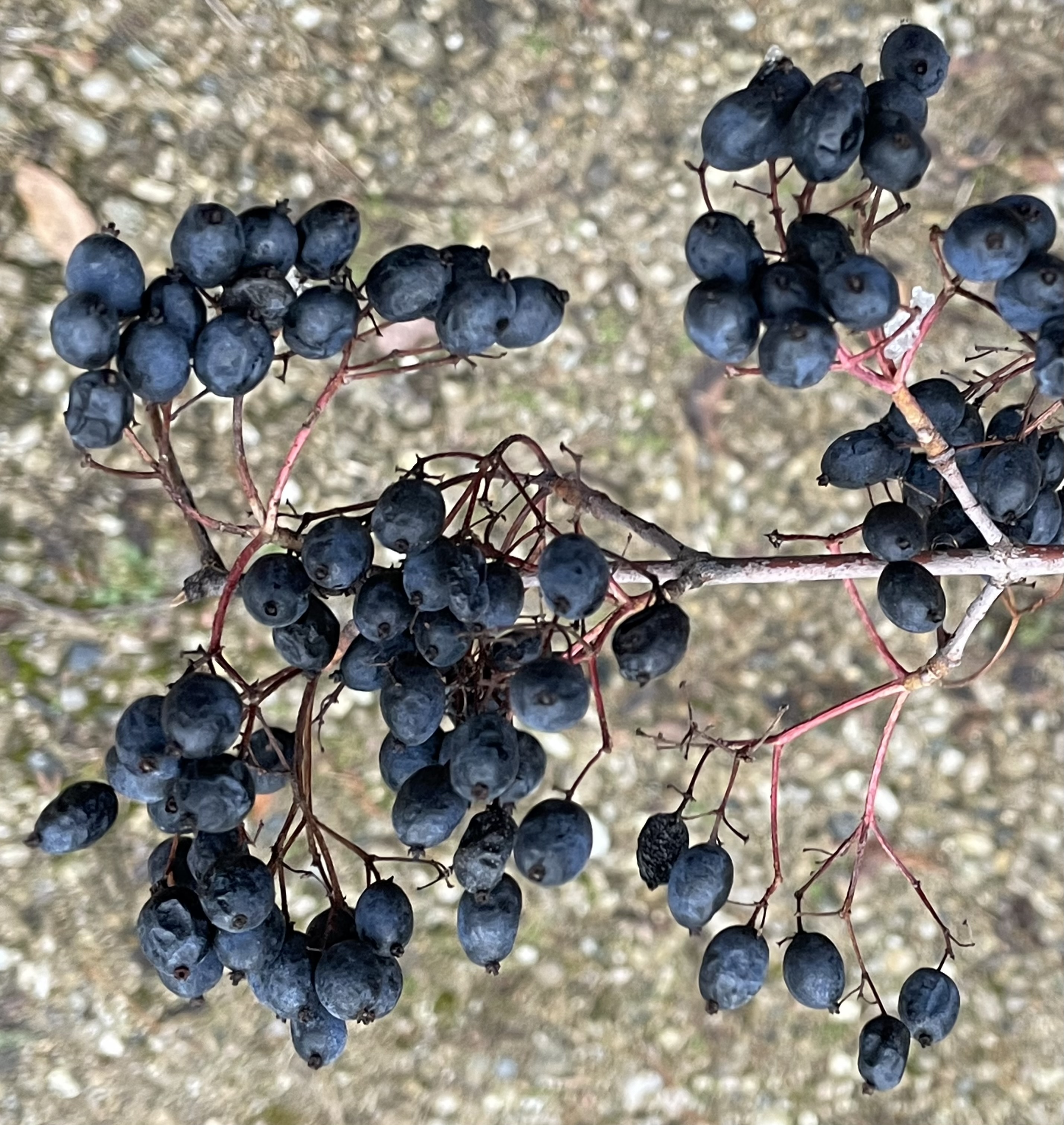
For Syrup, Flavoring, Jam, Spreads, Dressing-Raisin like Quality
The flavor of blackhaw is one of those aha Viburnum moments where the flavor is very strong and enjoyable even if you eat it fresh without processing. There are other species I have that have the edible raisin fruit like Viburnum cassinoides, manshurica and carlesii but the fruit has a limited amount of pulp surrounding the bony seed. Blackhaw has the most pulp and it dries nicely on the bush which is the time to harvest it. It has to look crinkly for the best flavor. Blackhaw could probably use a new name like “Raisin Mango Tree” or “Raisin Spice Bush”. Blackhaw does not make me want to buy it off a store shelf or market. I have no idea what that would be really. A good name is everything. I like seaberry. I do not like sea buckthorn. One creates a vista of ocean and fruit. The other creates an image of blood and injury picking the fruit. You choose. Choose a good descriptive name for your fruit.
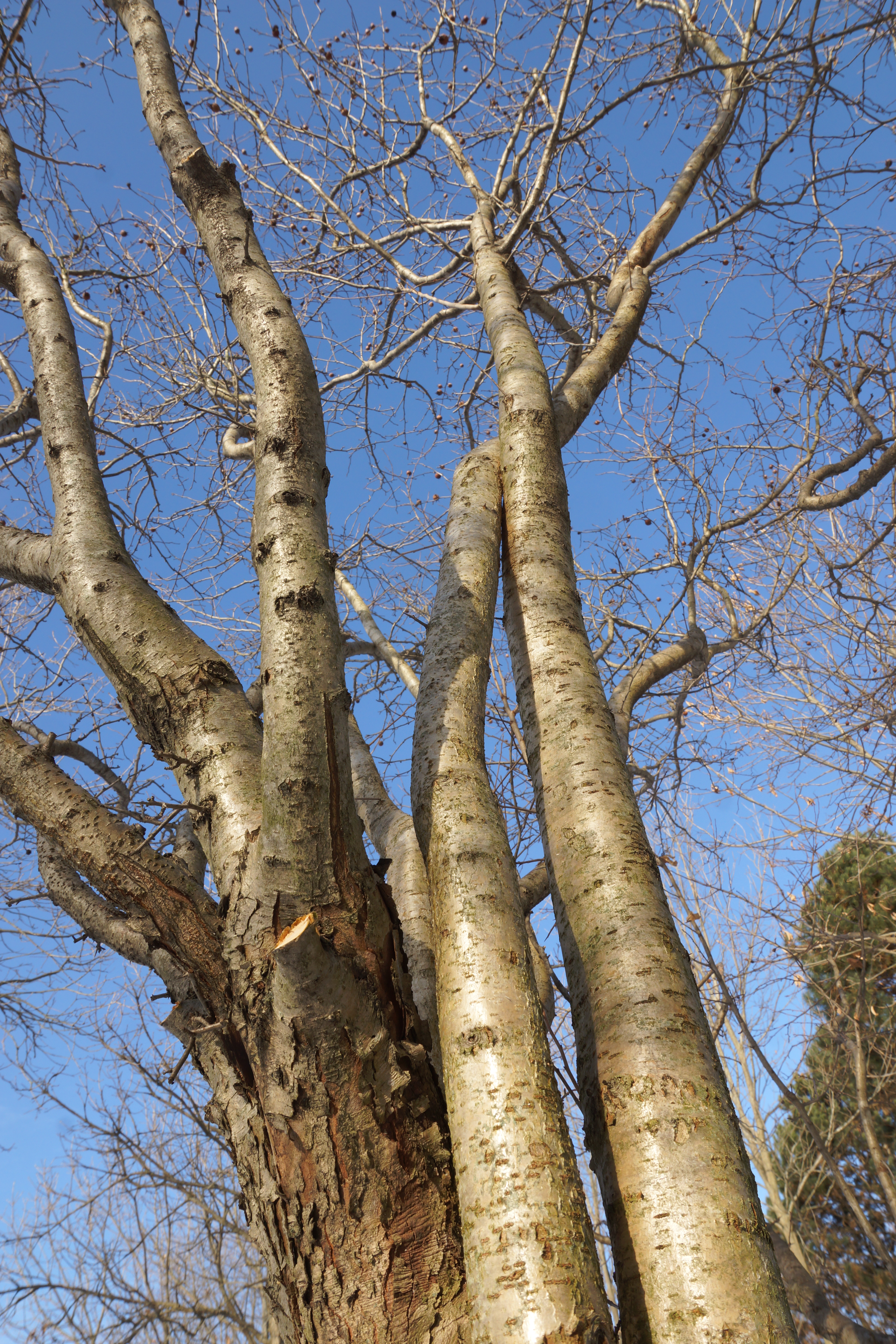
The foliage and fruit of blackhaw are pristine always. It would not require sprays. The fruit is easy to hand harvest in clusters. Other methods could be worked out too with mechanical harvesting. The fruit drops free of the racemes easily. Many years ago, someone who knew the plant very well was telling me of tree forms of it with large trunks. He mentioned I should look for those if possible as they have the highest yields because of the vigor. He was right. I noticed in my small population that there are some selections that are naturally more tree like with single trunks and others that are multi-trunked. I found one selection that has roughly a 30 percent larger fruit. This may not matter as you really are looking at plants with high yields of fruits because you are processing it. If the larger fruited one has higher pulp yields per fruit, then this might be a start to more fruitful selections. Rooting viburnums is easy so you could multi-clonal types in a single orchard too. It took roughly twenty years for my plants to stolon outwards. They are now an understory colony near the sawtooth oak and bur oak hybrids. You can harvest the stolons and use them as your own clones too.
The Michigan seedlings I have are also very heavy fruiting which started fruiting three years ago. The fruit is smaller but all things considered you could easily create a seedling planting with this strain as well. One tree I have in particular seems very high yielding with dense clusters all up and down the shrub. I received this seedling from a nursery in Michigan that had produced it from cuttings. It is found here in Michigan but it is not common in landscapes. It is interesting in that there are no named varieities of the prunifolium species in this super selected highly cloned genus. The Viburnums are rich in diversity of ornamental appeal. Viburnum lantana is grown as a kind of substitute of the blackhaw. Unfortunately it is short lived outside of its wetland environment and has foliar diseases weakening the plant over time. My planting made it up to a decade before disappearing entirely but no fruit in my sandy dry soil.
Medlar-Mespilus germanica Walters Ecos Selection Michigan
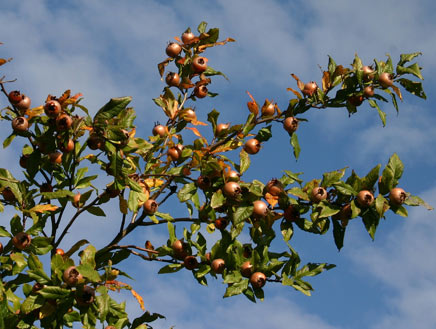
For Flavoring, Jam, Spreads, Fresh fruit sauce-Pear like flavor
I could never understand the hype around this smooshy looking brown fruit until I finally tapped into a ripe one in November. Here was all the flavors I love in one fruit, sweet, slightly sour, pear, raisin and apple all in one mellow syrupy sauce delivery vehicle. I had over a dozen varieties at one point. They had large fruits and some had fairly good production but the flavor was funky with dry like astrigency. The ripening period seemed never to come. It was not uniform and I never understood how anyone would eat this. I was wondering what I was doing wrong. To make matters worst, the grafted trees I had were nailed by a fungus called fireblight and like the name suggests makes the foliage of the tree look scorched while killing the tree to the ground eventually. It was from here I began looking at a seedling grown trees from a nursery I had known from my college days. As time went on and the trees got more mature, it left the other cloned varieties in the dust as far as yields go. It also had something the others did not, fire blight immunity. The fruit was smaller but this did not matter in terms of making it into a sauce. It was from this spring board of seedling plants that produced identical plants with dense fruiting. The fruits were always rich in flavor like pear sauce. It was surprising to me no one looked at this fruit before. It too could use a new branding name. Meddlin with Medlar. That is all I got because the name actually comes from something that looks like a horses anus from the blossom end part of the fruit. Maybe “Perryeire” ? Because of its long history of use past and present, medlar is fine but you could have a brand name around the fruit that would be more descriptive. Like “Pearhaw” or “Pear Berry” or “Apple Berry” or “Perry Berry” Last one looks cool but difficult to speak clearly. berry berry or perry berry? Medlar does not jump off the shelf.
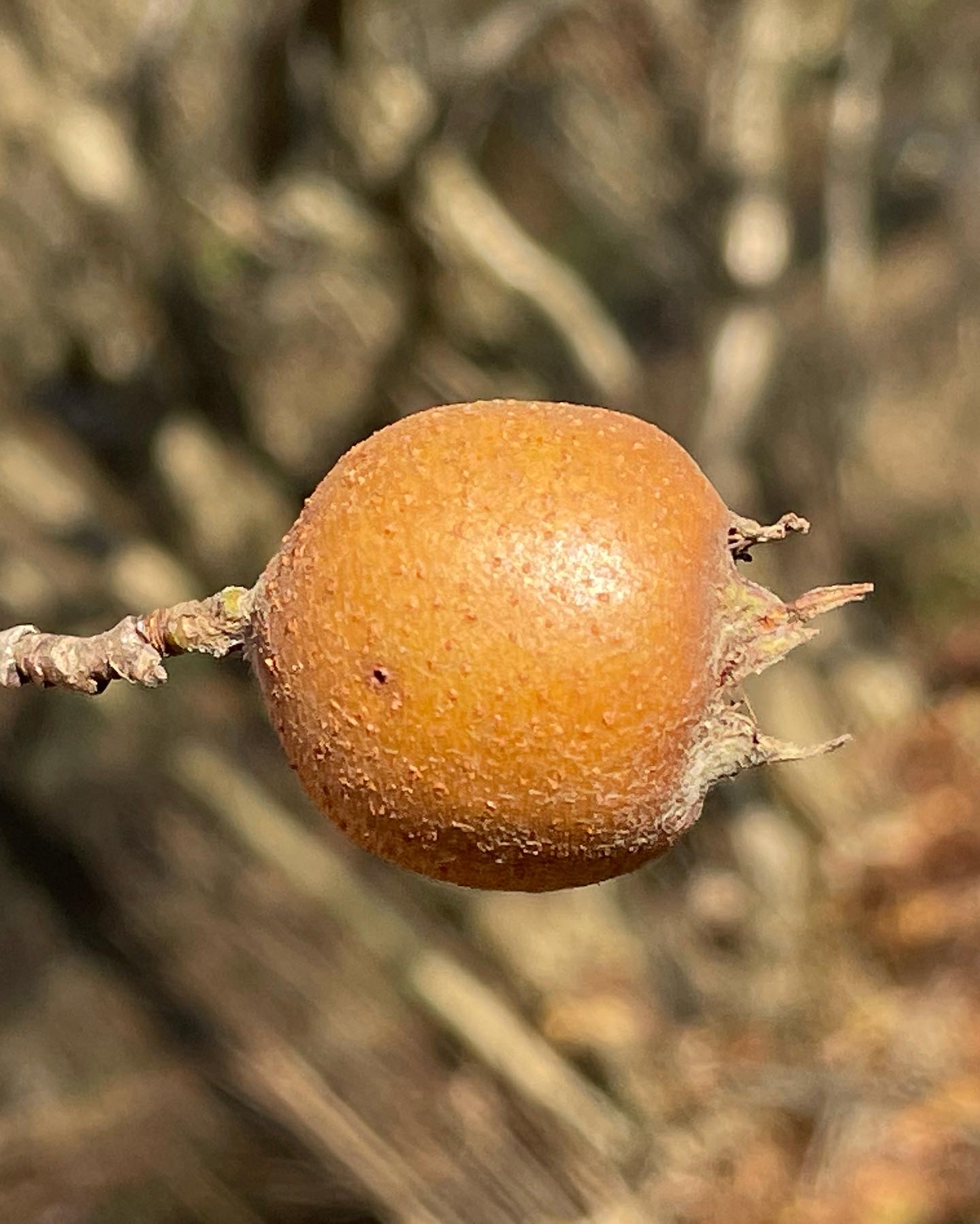
The propagation of medlar is slow from seed and this might be why no one grew it from seed to begin with. The seed has a two year dormancy. Once the seed has sprouted the tree grows fast from year three on making upwards to 12 to 18 inches of growth per year. It has a deep tap root and until this is formed the trees stand still just like hickory. Fruiting begins in years 5-8. I made one clonal selection only to speed up this process. Called ‘Beacon’ it was the highest yielding plant with the greatest vigor on the sandy hill where it stands. Normally the varieties are grafted onto hawthorne which is readily available in the nursery trade as ornamental trees. The Walters strain medlar is likely from central Europe which made it more adaptable to the Michigan climate to begin with.
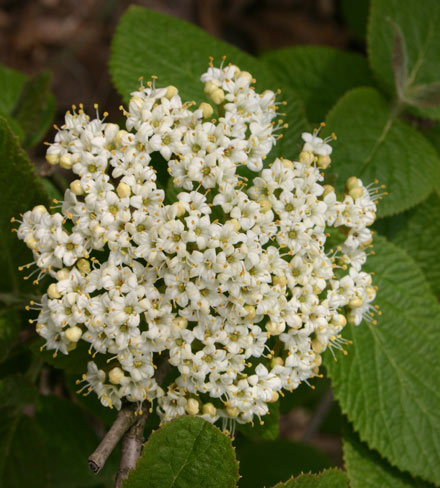
GERMINATING THE SEEDS OF BLACKHAW VIBURNUM
Like all Viburnums, this requires double dormancy. Fall plant after cleaning the fruit. Plant 1/2 inch deep. The seed has a tendency to migrate to the surface of the soil so tamp in and use a sawdust mulch or something similar in consistency. The first year in the summer and fall, roots will develop from the seeds you planted the year before. Then in the following spring, a top will emerge from the seed. Usually leaving them grow for two years is ideal for transplanting. Seeds can be consumed by rodents so using a screened tray is another option leaving it outside in a protected area and letting nature do the dormancy. Lift the screen in the second spring to allow for the seedlings to develp their tops.
GERMINATING THE SEEDS OF MEDLAR
Medlar seeds have both an internal clock type of dormancy which requires a completion of the embryo’s growth along with an extremely hard dense seed coat which needs wearing down by soil bacteria to split the sutres. Normally planting them outside and/or going through dormancy requires a winter, spring-summer and winter again to sprout fully. I have had several seed batches have portions of the seeds go into the third year. The seed coat takes the bacterial action of the soil to complete the splitting of the seeds along the sutre. Peach seeds are like this. There must be a tremendous force of a germinating medlar seed to pop the sutre. The seeds are consumed by animals so I would suggest using a screened prop tray to germinate the seeds. But it is not as heavily consumed compared to other seeds. It is in the same class as hawthorne and can be treated the same way. If you have every grown hawthorne from seed, medlar is pretty much identical and is a close relative. The young trees are extremely tap rooted and can be kept in place for 2-3 years before digging and transplanting. It transplants very well and grows in a variety of soils except water logged conditions.
Seeds will likely be the new source of many orchard plants in agroforestry systems as well as normal fruit plantings. This will allow a certain flexibility in selection by defining a seed strain to a specific region. What will matter most is the yield and end use of the fruit and how a market can create a value to it so that the farmer is wealthy for creating healthy individuals who eat the fruit. The medlar and blackhaw viburnum are likely a source of wonderful nutrition. We just don’t know what that is entirely. Now we can have a range of flavors and nutrition combined in one fruit. We found diversity and it found us too. Now we can share this resource to others in need of greater health and well being on both environmental and individual levels.
Enjoy, Kenneth Asmus


 biologicalenrichment
You must be logged in to post a comment.