
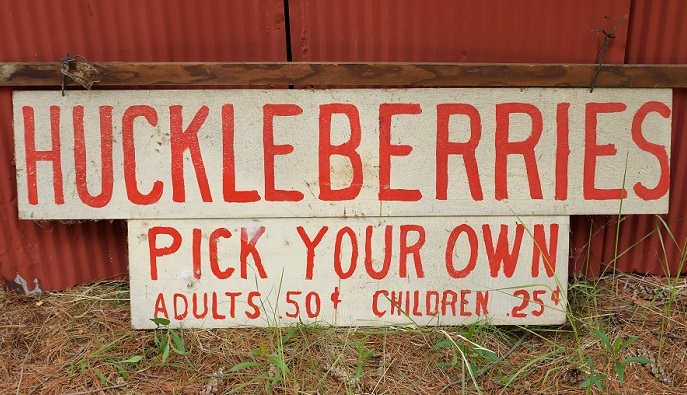
When my father and his friend from the post office purchased 140 acres of wetland in central Michigan in the mid-1960’s they knew that it was a swamp and generally unusable.The price was roughly $100 per acre at the time. There was no standing timber and for the most part, only a quarter of it was high enough to walk on. There was only one trail surrounding the farm said to have been created by a machine meant to prevent wildfires. A large portion of that trail was underwater most of the year. You did not know what was in the middle. I remember you couldn’t walk through many of these dense swamp areas because of the ‘saw grass’ which was a very sharp edged sedge that grew up to five feet tall. As time went on, it became quickly apparent there were a lot of wild blueberries all over the farm. They were all sizes and colors. There were even dwarf little plants, only a foot tall loaded with tiny berries which took forever to pick. Immediately we began to collect them and make everything from jams to pies. At one point, we allowed people to harvest the berries as a pick your own type of farm. It was not easy and usually people got a few quarts before being chased off by the horse flies. 50 cents was the charge for the whole day no matter what you harvested. 50 cents.
At one point, a small contingent of the Ladies Aid from our Lutheran church showed up. They were professionals. They had mosquito netting. They had repellants. They had nimble fingers created by years of knitting, repairing socks and making gigantic quilts able to cover a house. 110 quarts later, the 50 cents was quite a bargain. I don’t remember how many days they spent but I do remember the sounds of their laughter in the forest as they picked away and told stories to one another. The smell of fresh pine and marsh gas mingling with the sounds of the grandmotherly ladies laughing seemed like another world to me at twelve years old. The blueberry was the center of this social dynamic on the land.
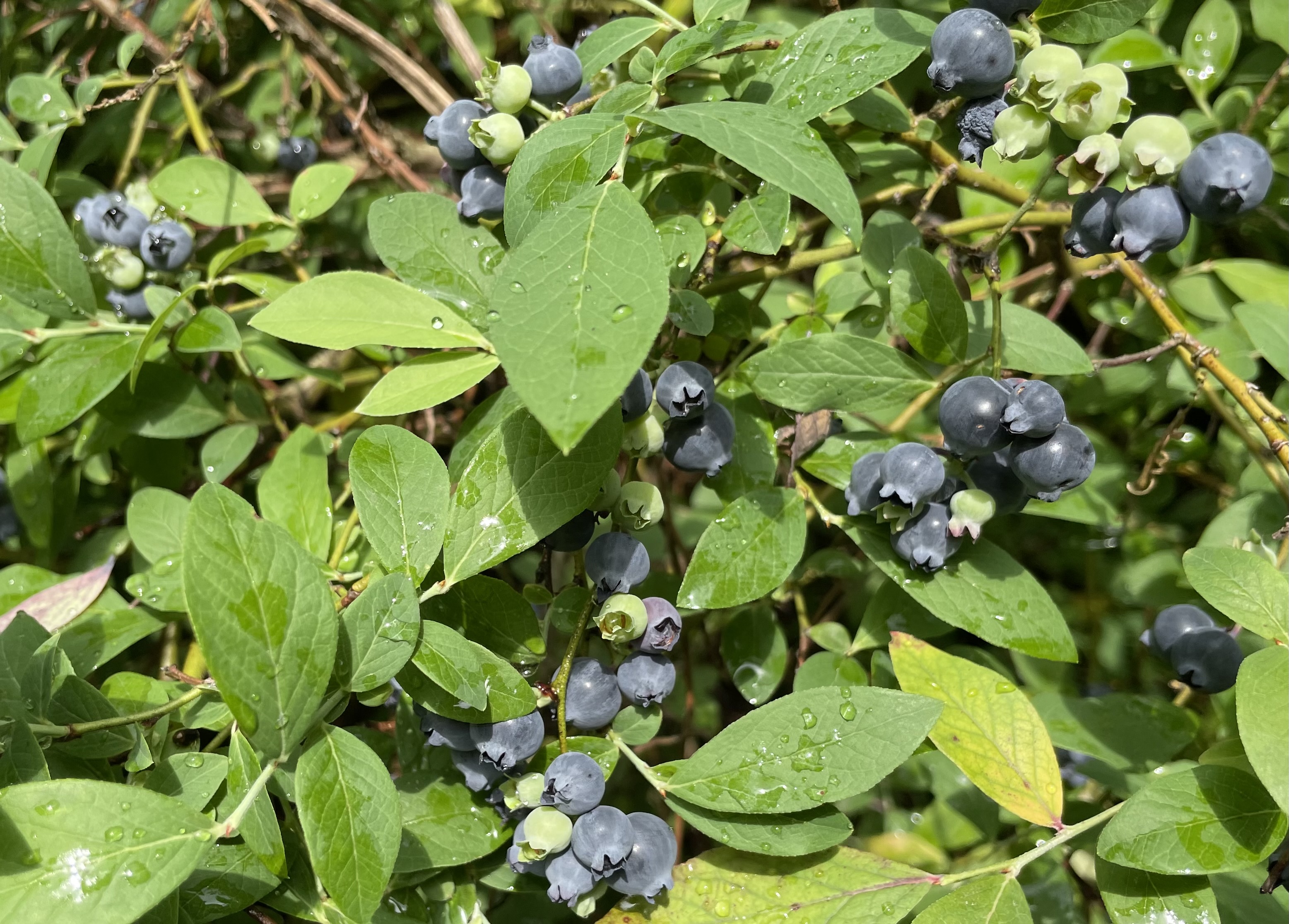
When I moved to southwestern Michigan, I discovered the commercial fruit industry. Here blueberries were grown in giant rows and picked by machines that looked like small houses on wheels. The fields were flat wetlands and laid out in a perfect grid. In college I would attend the fruit meetings of various fruit industry leaders and shakers. This was hard core. Here there was no laughter in the forests by the women from the Ladies Aid Society from the Lutheran Church. Apparently when you bring together a great uniformity of blueberry varieties, a lot of problems occur. Here I heard the sounds of angry old men with complaints like farts in a windstorm. The stories were filled with strife and hardship with cash in the balance. The money was very good I was told. It was much better than apples, but you needed a wetland with a high-water table and acidic soil. This whole system came at a cost of both mental and environmental health. I am guessing but I think those two things are connected.

When I started my nursery, I was very much confused on blueberry varieties and their potential in a edible landscape as a wild plant. Blueberries had very specific soil requirements and were short lived outside of their wetland home. You had to buy a Costco Paper Towel size bag of Aluminum Sulfate to keep the soil acidic. The only nursery I knew that had a wild collection was Hartmanns Plant Company. These were blueberries found growing on bluffs and windswept locations in pine forests. The owner, Dan Hartmann had found certain seedlings in Michigan’s Upper Peninsula while on vacation. They were the lowbush varieties growing in acidic sandy soils with small dense flavorful fruit. He used his nursery to propagate them and make them available to the public. No one that I knew at the time, really cared about this wild germplasm. He too loved the flavor despite having a choice from his mega repository of blueberry cultivars. Although my hats off to the newer variety of blueberries, that are more focused on flavor a lot of the Jersey variety was bland as they were grown in these highly cultivated settings. The real issue was the over cultivation of the plants to the point as the berries got bigger while the flavor got smaller.
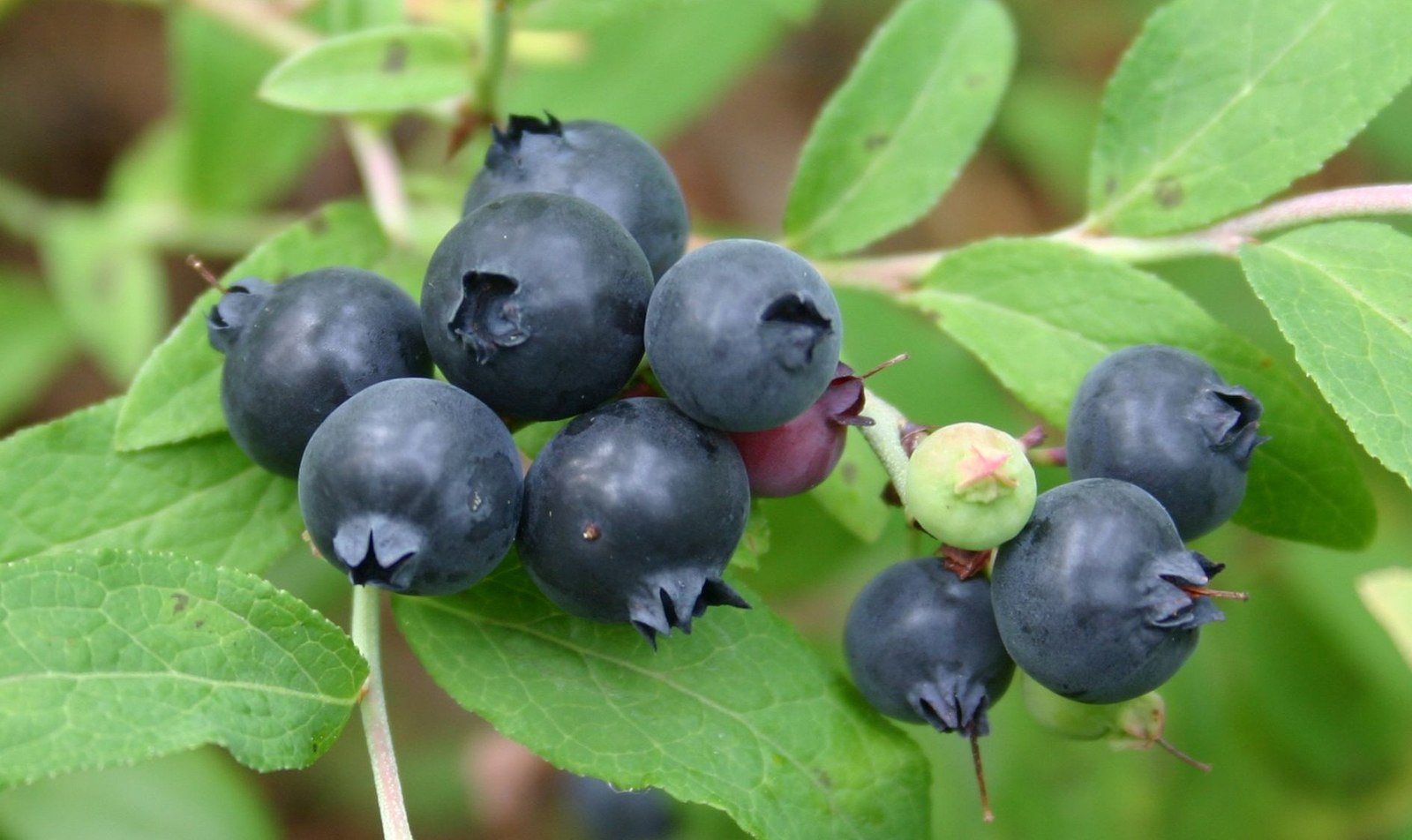
It was during my trips to my family home to help my father that I took the time to rediscover the farm that I knew so well as a child. There was one area on the farm that was rich in dwarf blueberries on a sandy hill. The hill was the area where we would find arrowheads and flint. On one end there was a blueberry bush that kept getting whittled away at by the mower. It was once buried by sand when the ponds were dug. That blueberry did not give up. It had a stoloniferous tendency. It was larger than the dwarf ground blueberries in the area reaching up to 3-4 ft. tall. I took a root piece of it and planted it at my farm. It never had fruit on it at the Christmas tree farm. I would walk by this plant every time I walked around the pond. I would always look. Once I found three berries on it. They were very good. Three berries was enough. The main reason I took the piece of root was it was constantly replenishing itself with great vigor and vegetative growth. It was surrounded by Scotch and Austrian pines near the pond growing in pure sand. A wild black cherry tree grew right out of the center. It just never fruited. As time went on the plant continued its luxuriant growth at my farm. It was without irrigation on a sandy south facing hill. In this new home it began fruiting heavy, producing very delicious small wild fruit. I moved several additional root cuttings under some African Oaks near the River cane bamboo. They all started fruiting heavy. It was this under cultivation scenario that made this happen. It was not like I was searching for a variety with heavy fruit set. I chose the opposite and did it randomly. It is purely where a wild plant thrives in a new location and produces a great abundance of fruit far greater than where it currently resides. This is a common experience where cultivation can improve even an unselected wild plant with zero fruit on it and change its fruiting characteristics even though it appears to be fine in its original habitat. This says something extraordinary about wild populations. There are no inferior seedlings. It is how we view the plant and how we decide to grow it as an individual or a population.
We may not need machines the size of small houses. The Ladies Aid Society of the Lutheran Church is good. Bring your own stories and laughter. The plants will respond.



 biologicalenrichment
You must be logged in to post a comment.