
There is always something new to learn from plants. Growing them from seeds adds to the anticipation of discovery and connection to the natural world. When I grew plants in my nursery we would sell seeds along with nursery stock of the same species. It was very popular. We made small packets and grew it up to 3000 packets per year. We tried to use species not available elsewhere in the seed trade. It was very time consuming figuring out quantities and inventory. We did sell them internationally at the time and it was one way to spread the diversity inexpensively. People were very appreciative of the seeds. I put detailed information on germinating the seeds on line to help people in their quest to grow woody plants from seeds. There is a certain mystery to it but once the conditions are met the plants grow effortlessly as tomato plants. It is the dormancy part that is complex. Here are a few of my favorite from seed plants which were also rather popular when I grew them in the nursery and farm. Specifics on dormancy are included. I’ve included a few failures too because that is also part of the experience.
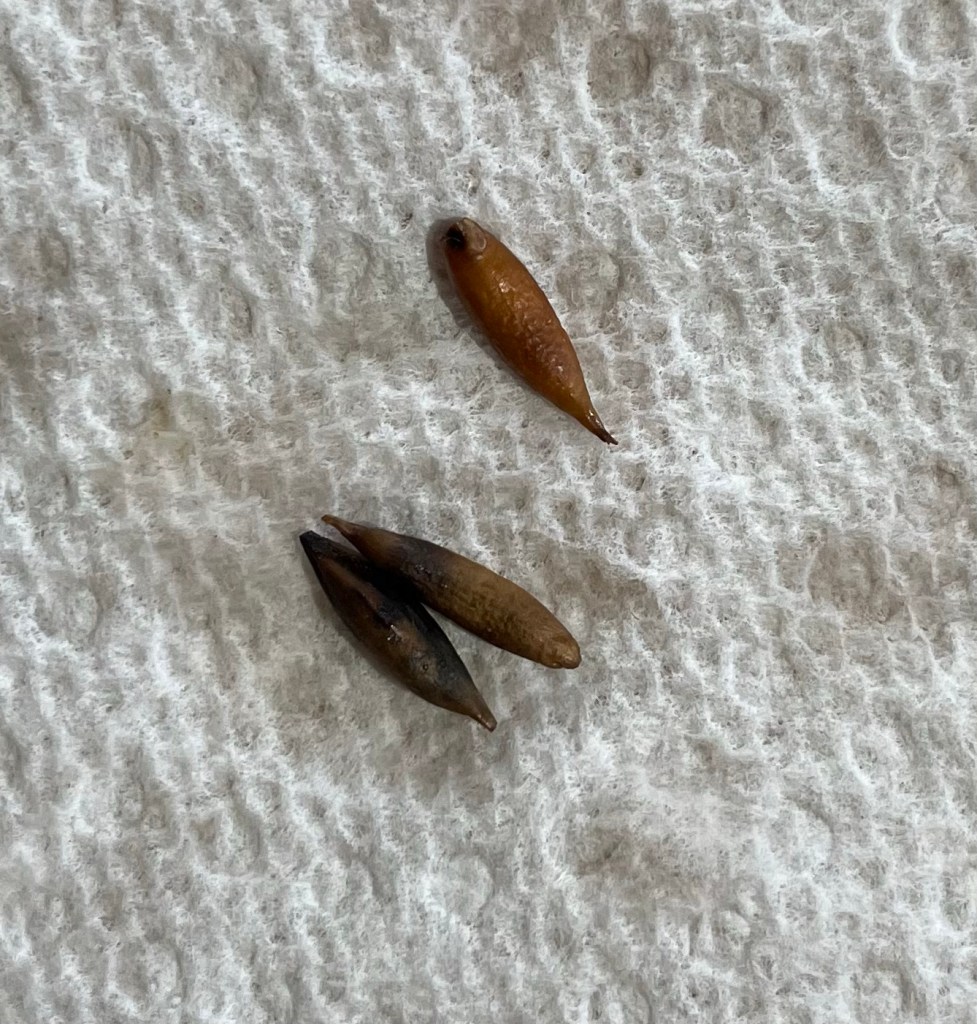
River Cane Bamboo- Here is one that did not work. I have yet to grow it successfully from seed. The seeds are fresh and produced at my farm. They appear viable and pure white in the embryo and fully developed. For whatever reason I cannot get them to sprout despite applying warm and cold periods as well as moisture. Bamboo is generally easy to grow from seed especially the Phyllostachyus genus. It is my favorite to grow from seed. I have tried the last three years. This year there is no seed crop, so I will have to wait. How long? They say when bamboo flowers every hundred years or so, the clone dies entirely as a kind of respect for the new progeny about to be produced. This has not happened to the River Cane so lucky I still have the original strains that I started with over 20 years ago.
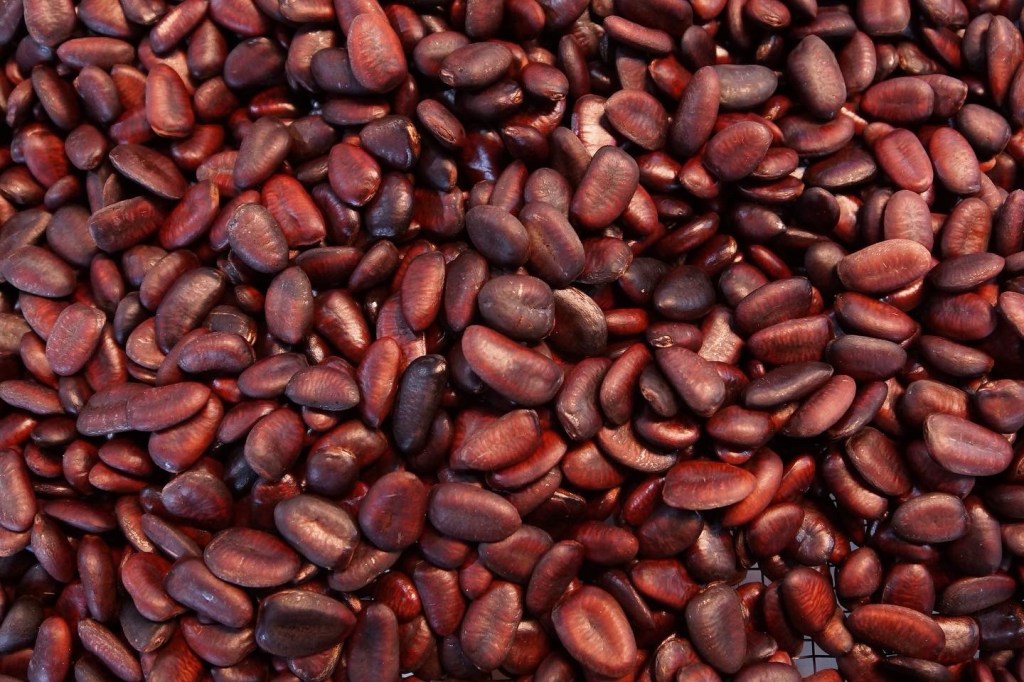
Pawpaw-Asimina triloba This seed requires constant moisture from processing to planting. Never let the seed dry out on a rack or open air. The fruit is very soft and the seeds are encased in a clear celluose sack. Even after removing the pulp, that little sack has to be removed because it can rot the seed in dormancy. The fruit pulp has to be removed prior to it breaking down as the alcohol will kill the embryo if concentrated enough. The fruit has to ripen on the tree for this to happen as it relates directly to the maturity of the seed. It is not good to pick the fruit green and do it later. The fruit drops out of the tree with a light shake when mature so it is soft to the touch. This condition is ideal for the seed. The seed gets its nourishment from the fruit and the surrounding vascular system in the fruit which is directly connected to the tree. After extracting the seed and cleaning the fruit from it spotless, drop it into a moist media like Canadian peat moss. It should be lightly moist so you cannot squeeze out any more water from it using your hands. Apply a cold dormancy of 90-120 days from 34F to 38F is ideal. A refrigerator is fine but not freezing. Then put the seeds at room temperature. Seeds take a long time to sprout usually a good two months. At my farm pawpaw seeds sprout in July when planted in November. Pawpaw roots are produced first and then the top comes up. The plant needs to be in at least 50 percent shade the first year otherwise the first two leaves burn off in the sun and that is the end of the seedling. It will not resprout. Pawpaw seeds are odd brain looking seeds with deeply resessed cotyledons. This year I planted late and the seeds came up in early September. This is fine and the trees will grow like crazy next year because the tap root is now completed. My particular strain of pawpaw is the most northern in the United States and people have put them in areas of extreme cold from Finland to Minnesota. Apparently using this seed source will increase the plants northern range under cultivation.
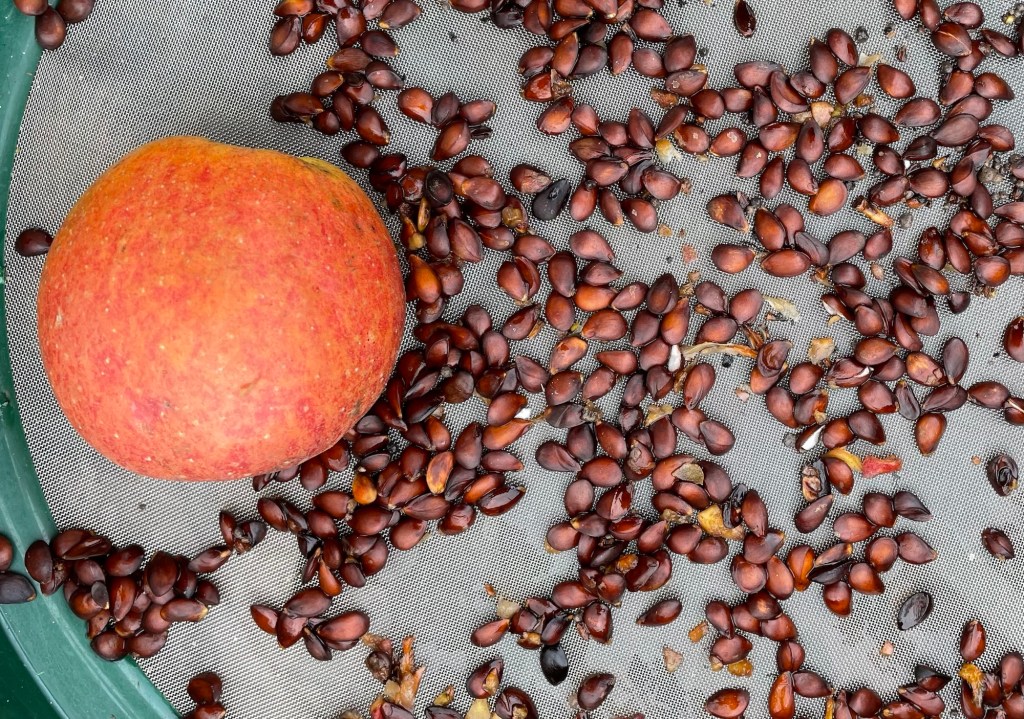
Apples are very easy to grow from seed. I would recommend collecting wild apples that are blemish and insect proof. This is the future of apples. Organically producing them while improving the overall health benefits you can find the perfect apple far greater than research scientists. Anyone can contribute to this noble cause. Apple seeds are extracted by crushing the core or cutting them with a knife and popping the seeds out one by one if you want. I use to use a hand brick and patio sand tamper for crushing. Then I would put the apple pomice in a Vita-mix slowly grinding it in reverse to break the seeds out of the inner core. Then onto a large bowl and do a bit of panning action for gold where the seeds would sink to the bottom and the pulp would float off. Once cleaned then I would put them on a screen rack to dry. After drying for a couple of days, I would rub them and repeat the process adding a touch of Dr. Bronners peppermint soap. All-One Brothers and Sisters. Then let them dry again for a few days. From here I would let them after ripen for a month on a shelf where they were in an open zip lock bag with a bit of dry peat moss in there to let them continue the growth of their embyo. Finally I would add a teeny amount of water and mix thoroughly and store at 34 F to 38F for 90 to 120 days. Often apple seeds will sprout after 60 days or so. You cannot stop that so the seed needs to get planted soon because once its too etioliated, then it damps off easy. Sprouting them in the fridge is very good in terms of success. Sometimes a portion of them sprout the second year. So do not throw your seeds out thinking you failed. Check for rotting or mold. Wash and check for smelly seeds that are now part of the compost. Remember to plant at the level of the root collar and not the stem. You can skip all of this if you put them in a germination tray with drainage holes and germinate them outside. Make sure to cover the tray in window screeen to prevent mice and voles from consuming them during the winter. The tray should never let to be dried out. The apples will sprout in the spring in April and May.
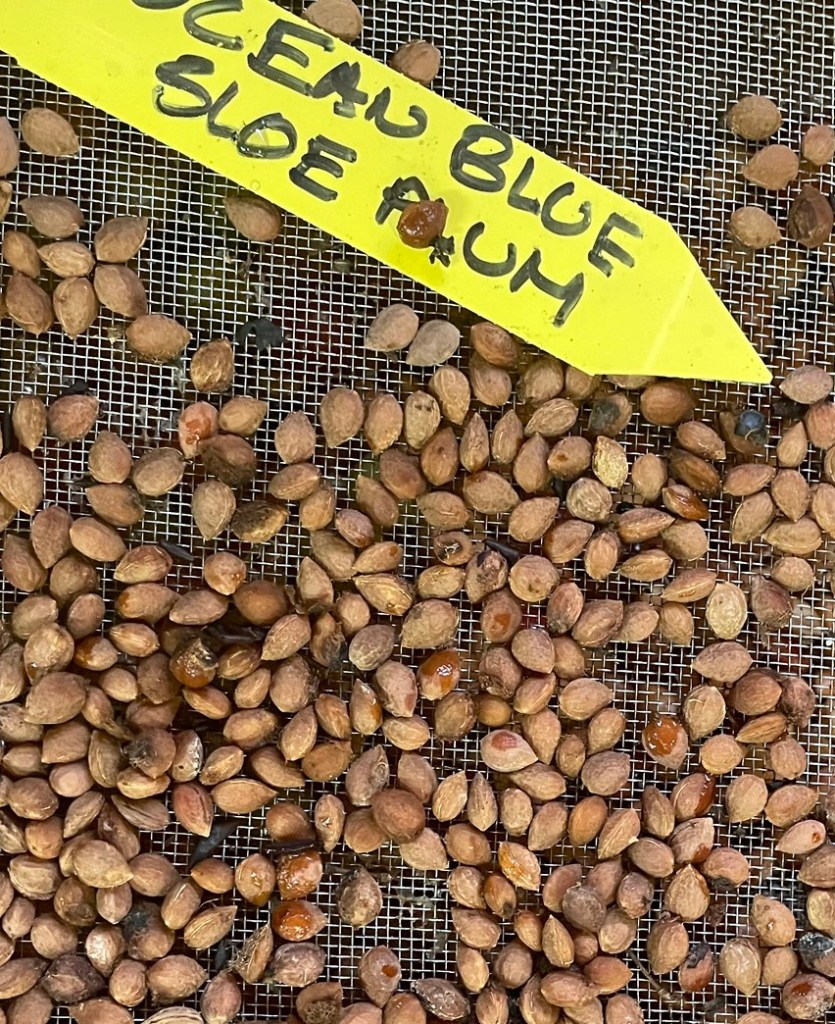
Sloe plum is a good example of a species fruit that has health benefits yet it is not found to any degree in North America. At that time, people had no idea what it was or anything about the plant. Eventually the spirit companies along with a few wineries purchased all of the plants I could produce. I remember finding the plant in a landscape in the early 1980’s in an apartment complex where I had a contract to do the lawn maintenance for one season. There was a woman from Latvia who lived in one of the units so I am guessing she got her starts from her homeland. The fruit was not possible to eat fresh as it was so highly astringent. It was used to flavor drinks. Eventually through an arboretum exchange I received enough seed to outplant a row of them from the variety, ‘Plena’. From here after the giant whittling down from black knot disease began and I ended up with 3-4 plants with immunity . This is the ideal thing to do with seed grown plants to make a healthy population. Sloe plum seeds need an after ripening period to mature fully. I would whiz them up in a blender carefully not crushing the seed coats. I would do this several times over the course of a week going back and forth from blending to letting it sit overnight on a screen after several washes. The fruit hangs on tight to the seed coat. After cleaning I would put them in a lightly moist media and store at room temperature for 2 months before refrigeration. Then cold 3 months and then store at room temperature for the next season. Some sprouting may be seen after three months of cold but normally this species requires two cold dormancies with a warm dormancy in between. This warm dormancy matures the embryo fully and the seed continues its growth prior to the last cold dormancy which then changes the chemical make up which prohibits sprouting. The plant produces a very long tap root and a small top the first year. From seed it takes roughly 4-6 years to fruit.
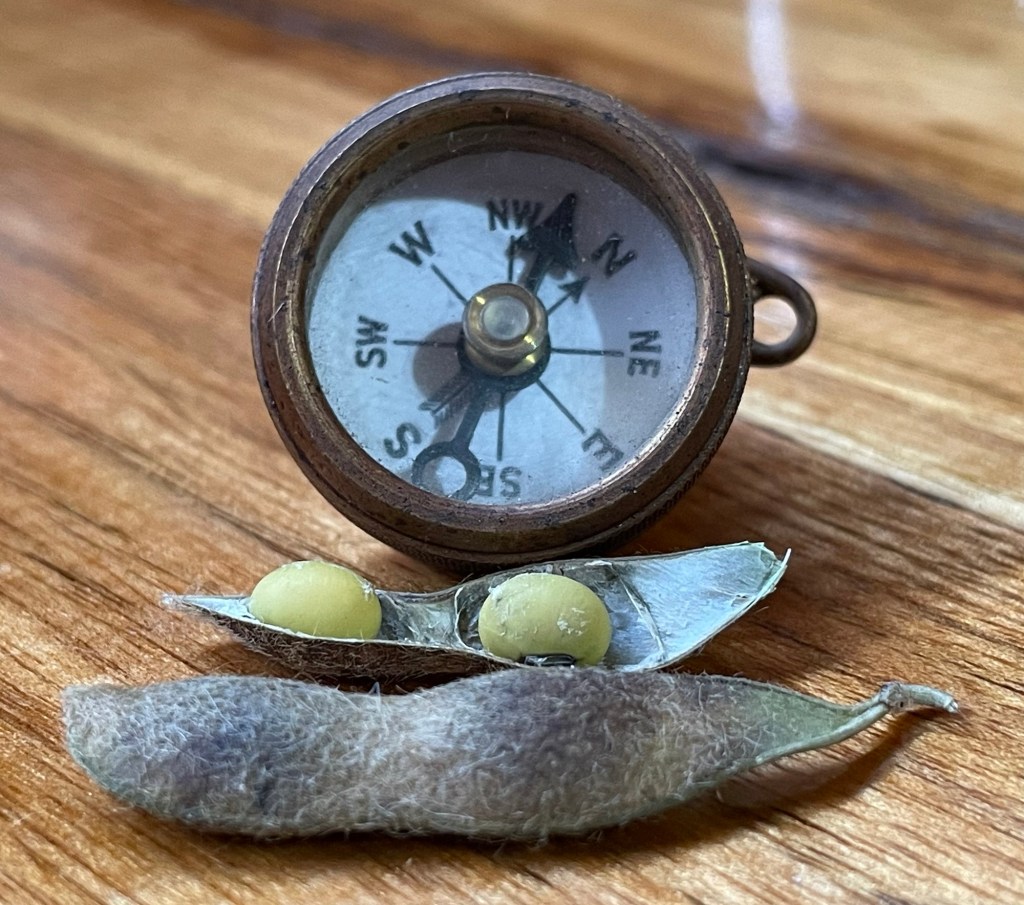
I found a soybean plant near the entry way to a cottage I was renting. What am I going to do with those? I planted them. A groundhog came by and ate most of the plant. They flowered and set fruit. I now have the same amount of seeds I started with. I tried once to buy the wild groundcover soybeans of Australia. I remember seeing the giant five foot soybean plants across the road from our farm when they first started growing them in the 1970’s. I remember trying to eat soybeans in college where even butter and soy bacon bits could not cloak the flavor. I have four beans. I will try again and see what the beans will say to me in terms of directions . Thoreau said to expect miracles in a seed. He grew soybeans.
Enjoy, Ken Asmus


 biologicalenrichment
You must be logged in to post a comment.