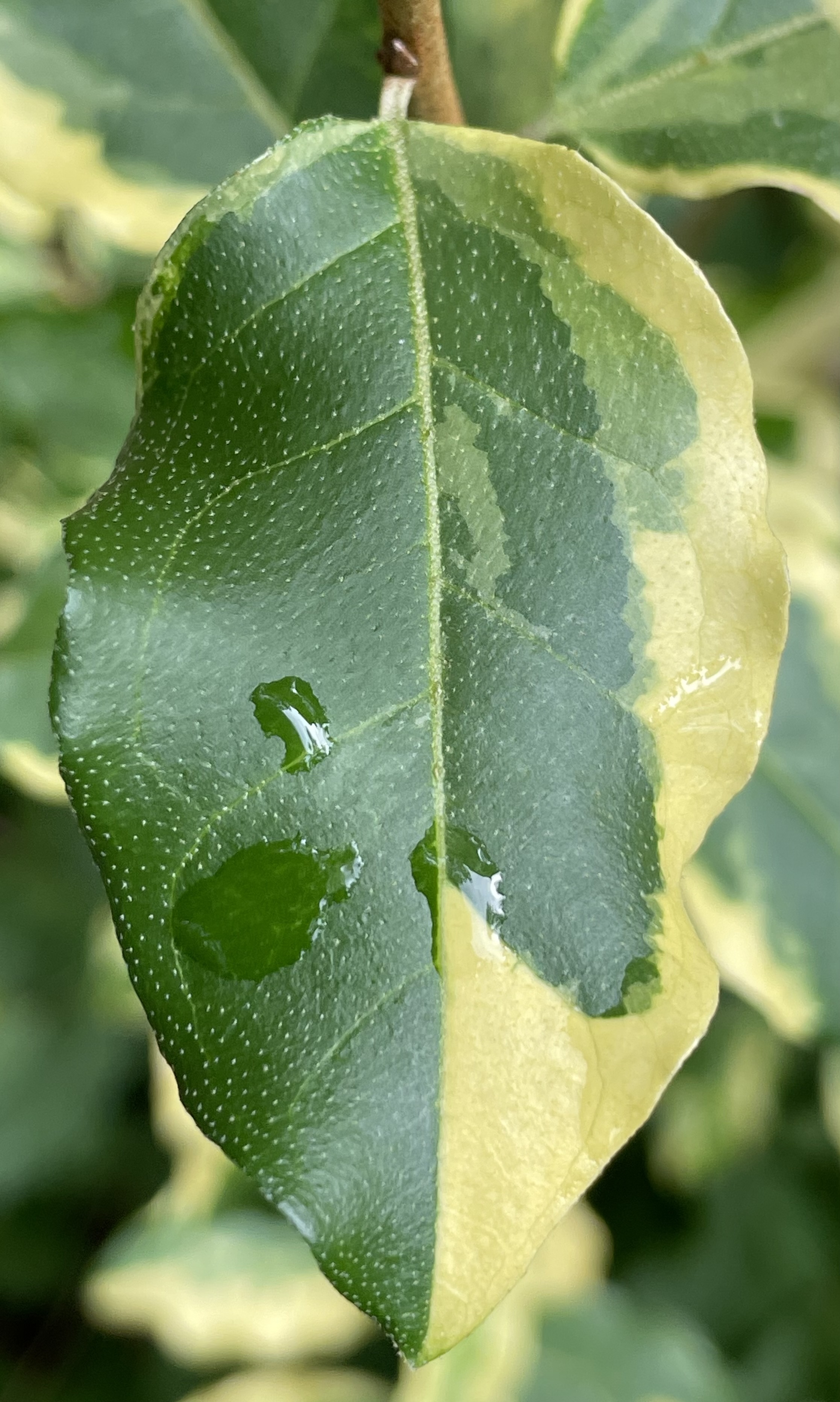
Under a powerline ground to sawdust by the tree services of Consumers Power is an autumn olive bush which resprouted creating this one bud sport or sprout which is variegated. From a hundred sprouts only one is variegated. Variegation can be short lived or fade altogether in the years to follow. Variegation is attractive in the ornamental world we live in. There are many variegated Oleander family members like the autumn olive already in existence. This is the second autumn olive variegated seedling I have seen in my years looking for unique plants. Many years ago, a colleague of mine sold a variegated hosta plant from his nursery in an auction for the Hosta Society for over a thousand dollars. Why? It produced all variegated seedlings. That was something that was not found in other variegated hostas at that time and would make it easy to develop new hosta varieties. Hostas are highly propagated and valued. Not so much with autumn olive despite its use as a delicious and healthy fruit crop.

Looking at the roots of potatoes is enlightening. You start with a microscopic group of tiny cells along a rhizome which then explodes outwards into the spud we enjoy today. I always have the thought it is likely the same laws of nature that create galaxies but on a microcosmic level. Here is a slight variation of this trait like a clustering galaxy creating more galaxies of tubers found all from one small plant. It is a very unique and highly structured orderly potato.
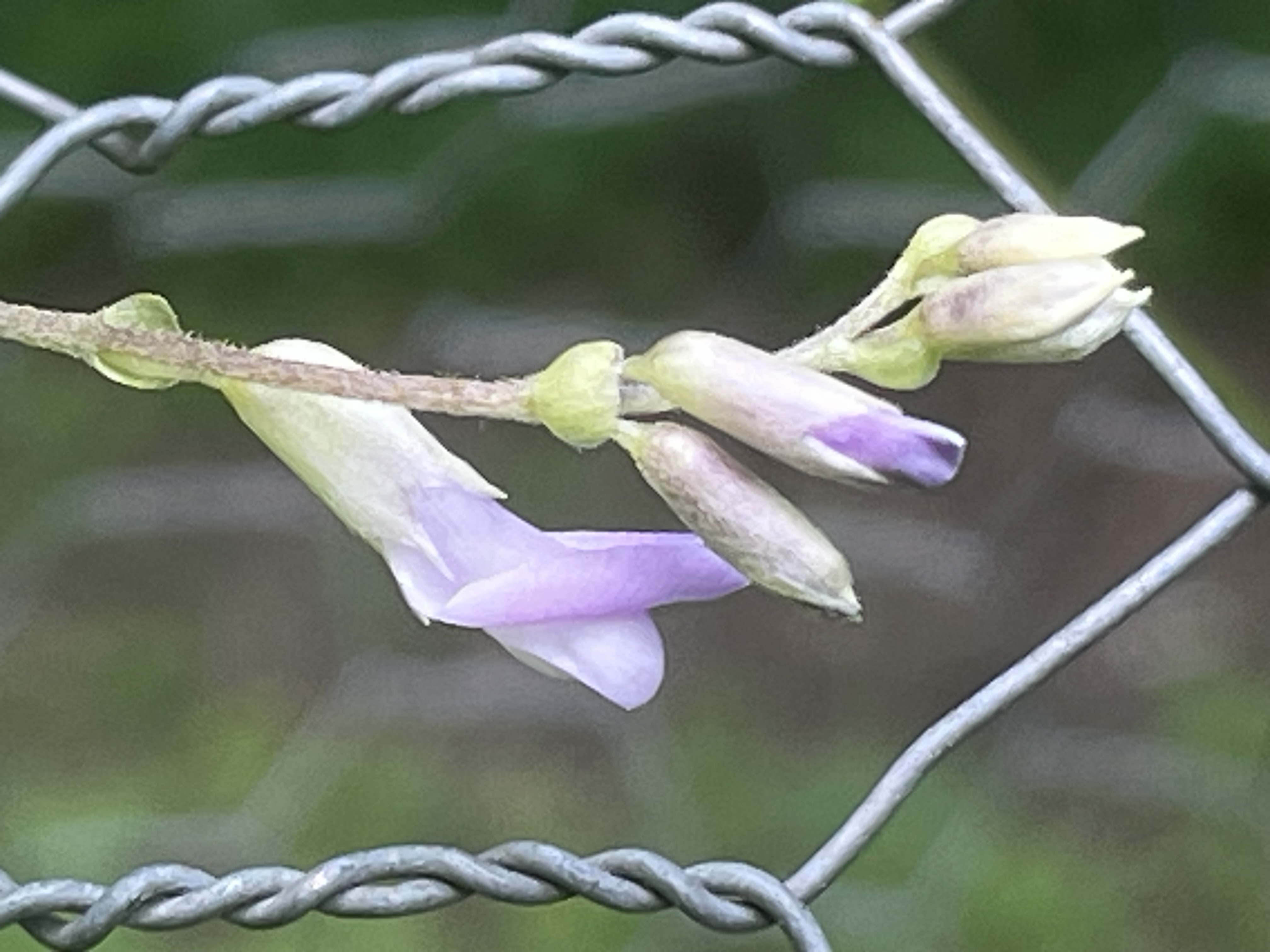
If you mention the words ‘Hog peanut’ it is not likely to get you the good seats at a concert. It’s confusing. Why hogs? And is it a peanut? I have never seen the flowers close up until this year when I put a cone of chicken wire around the plants and added fish emulstion to the soil mix. At five feet high the flowers and beans are prolifc. The flowers are at the ends of the vine and branch off the main ‘trunk’ like a tree. This structure produces a huge amount of seeds. From the variety ‘Crispy Snack’ I now have enough diversity to create the first ever hog peanut planting devoted entirely to this wonderful nitrogen fixing plant. I will not get the front row seats to REO Speedwagon though and apparently hog peanut cannot help me there.

I like the species name of this sunflower ‘anomalus’. Helianthus anomalus is the sand sunflower. Why is it an anomaly? It looks ‘normalus’. Being a desert plant, I found it is not a fan of my industrial peat driven high organic soil rich in micronutrients fed by chicken manure. It’s too much. But it did respond to the point, the plants fell over. I keep proping them up letting them lean on the corn and sunchokes. What is interesting in this flower is its large seed head for a wild species and its dense clusters of compact seeds. That head says volumes about its evolutionary history. I wonder how the seeds taste. When was the last time a human consumed this food in the desert? The heads protect the seeds more than any other sunflower I have grown. My guess is the orderly extraction of the seeds begins by birds and this is the best way to disemminate it in the real world.
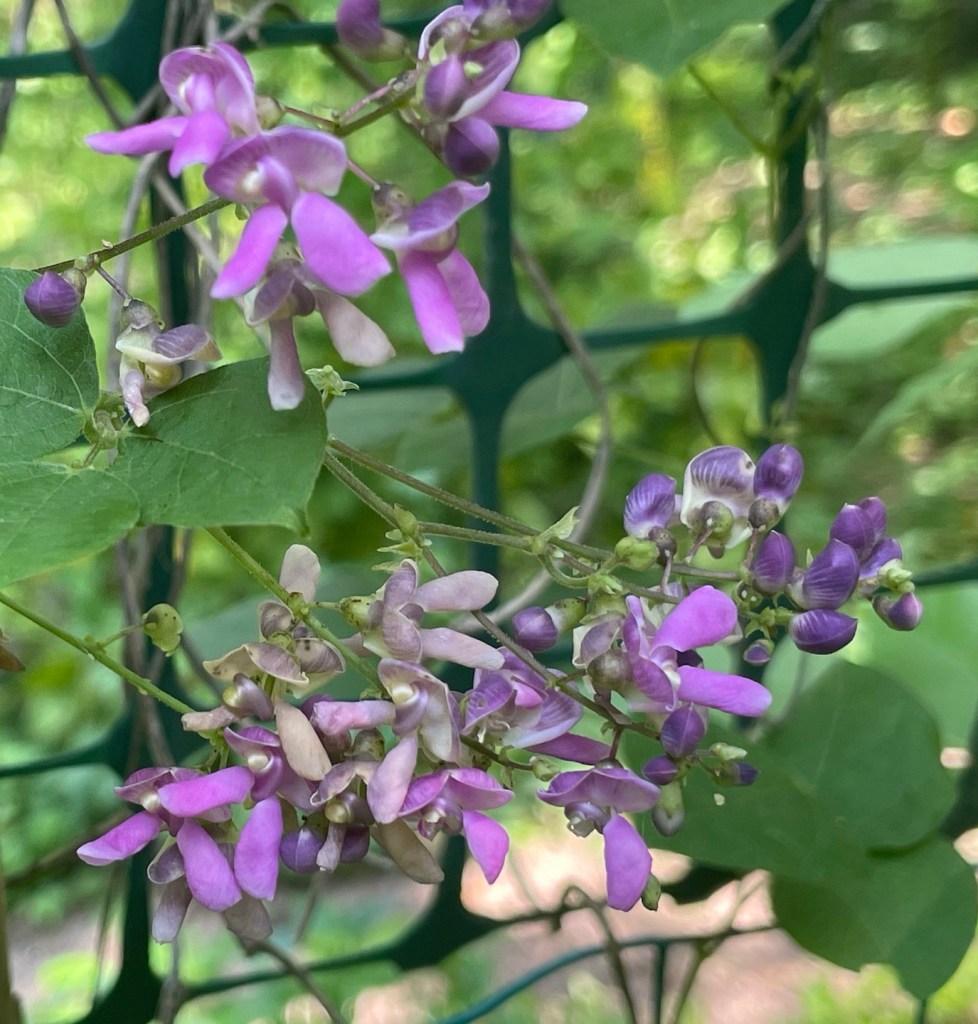
Thicket bean flowers go all out. It is all or nothing for them. Their large clusters seem to over produce compared to the actual fruit -bean pod-set. This is intentional as the plant can only support so much effort for seed production. Unlike an annual bean, it does not die and needs resources for its long deep tap root which can drill down twenty deep. This is one flower cluster that is the largest amount of flowers I have seen so far in the decades of growing it. Having a cluster of flowers that slowly opens over time ensures bean set. You do a little at a time to attract attention which then creates a road map in a bees brain where all the good stuff is. Very simple. Very orderly. The bee knows where it is and keeps coming back enhancing the production of seeds in the process. Order creates more order.

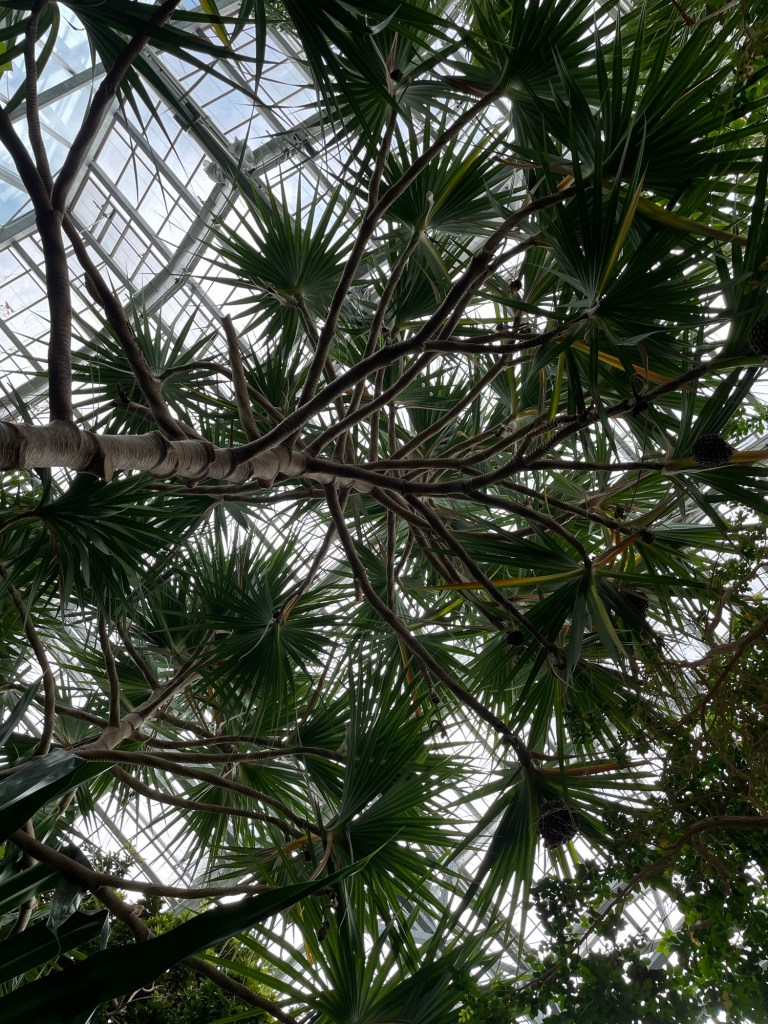
Looking at all the date palms and plants within the Frederick Meijer Gardens greenhouses is peaceful and comforting. Against the back drop of an orderly human structure, it appears we cognize the same structures found in nature. Each one supports the other in an orderly and beautiful fashion. Beauty is calming and attracts humans. We are by nature calm. Calm is where we do our best work. There order is found in the greatest amount.


 biologicalenrichment
You must be logged in to post a comment.