
Starting in the early 90’s I started a collection of species roses at my farm. I would plant different cultivated rose seeds that I found in my area or wild roses I found on vacation. I placed the seeds in propagation trays to put them through dormancy outside in the polyhouses. Then we would pluck them out of the flats as they sprouted and plant them in paper and peat pots. It was a simple process to extract the seeds. When I found the hips on a certain plant I liked for whatever reason, I would take them to my farm and whiz them up in a blender and then decant off the fruit. I would put the seeds on a screen to dry a little before planting in the trays. In the nursery industry, there was only one or two species grown to any degree. In general, people had a fear of species roses because of the thorns and what is thought of as their uncontrollable nature. It was estimated at one point that 25 percent of all nursery sales in the United States were roses. Roses were grafted and grown in abundance in Texas. There are literally thousands of varieties of them. On the species level, there was maybe three or four.
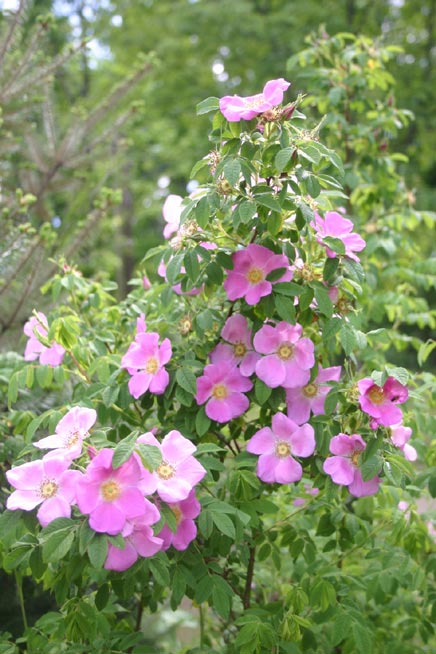
I became focused on hip and petal production because of their well-known health benefits. As far as I could tell no one had bred roses specifically for this purpose. In the nursery trade it was the Rugosa rose for hips and nothing else. Damask rose was used for its petals for the Ayurvedic formula Gulkland made with rock sugar. I grew that species for a while but seeds were extremely rare as it was usually clonally produced. I knew I could find better examples that tasted better or were a lot easier to grow under cultivation. I was hoping to find more productive and longer lived selections and species. As far as I knew no one was looking at the global rose hip or petal production picture in terms of cultivation in the U.S. Many countries had their own preferences or varieties developed. I was able to obtain seeds of some of these selections and began to grow them at my farm. Everything that is within the edible rose market was imported. I was making rose petal jam from dried dog rose petals that I ordered from a local food co-op. I loved the flavor of the Indian cabbage rose selections used in Ayurveda. Those had a long history of cultivation and use. The flavor was superior to everything else I had tried up to that point. I now had a goal for a flavor profile from the petals.
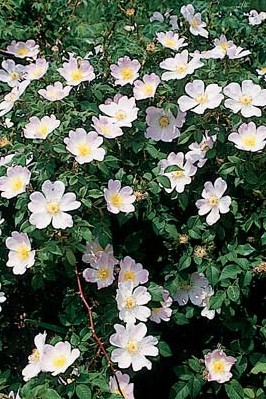
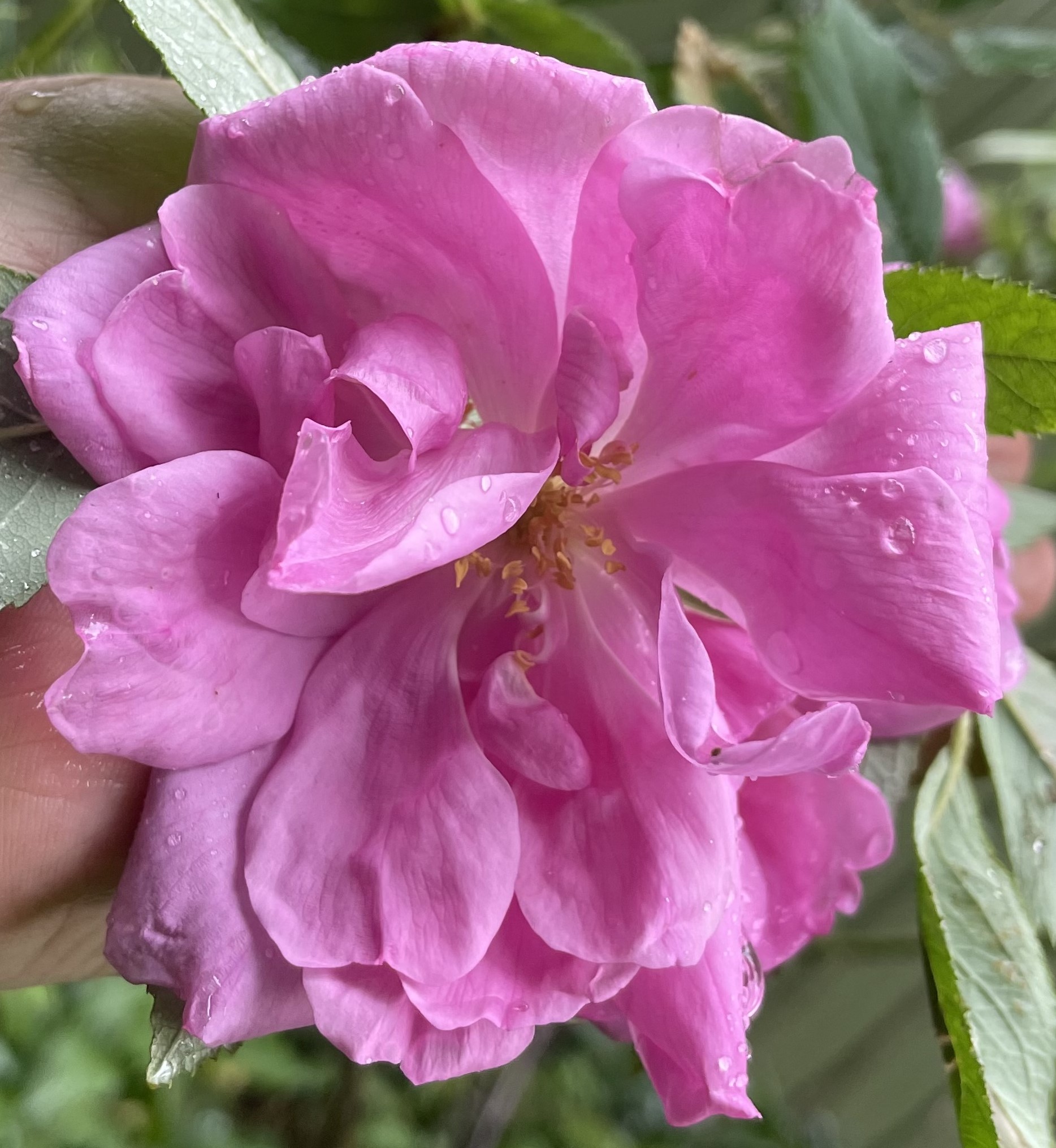
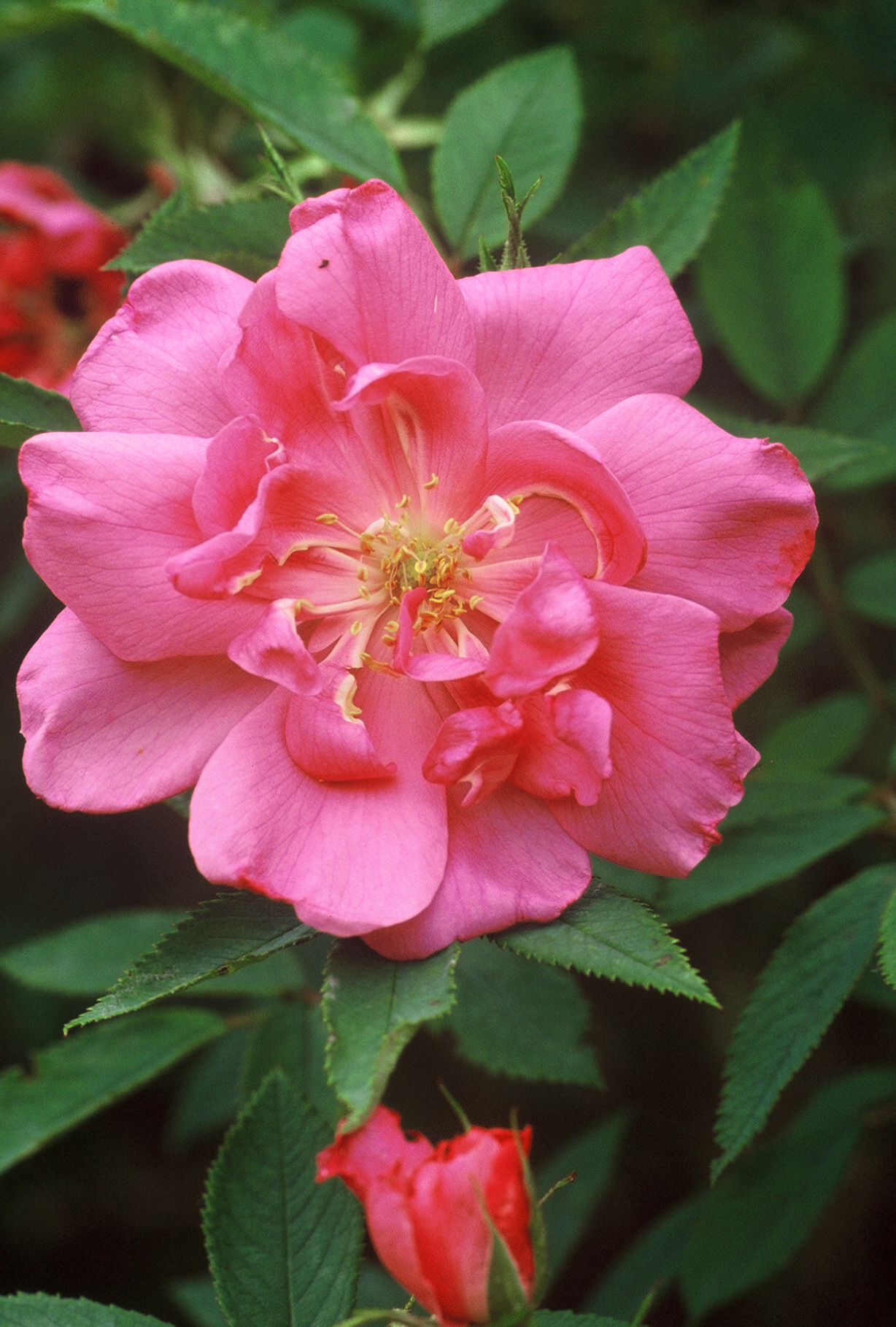
I decided to start from scratch and grow them all from seed. Many were from arboretum collections all around the world. I also purchased pound lots of seed from seed dealers in the U.S. Because rose seed has an incredibly hard seed coat which is designed to go through the intestines of a bird, seeds processed by humans were usually good too. I found many rose hips on vacation on the shores of the Great Lakes as well as hips on ornamental roses. One of the ornamental types likely created the “Mary Jo” rose. (The above image) It was my senior year in college and I lived about a mile away from campus. I had an old ten speed with horrible brakes that I used to get around on. I overslept and was very late for my agricultural class exam on east campus. I had to take this one corner at the base of a steep hill very fast to get enough momentum to make it up the hill. The corner house had a wonderful garden of roses along a split rail fence. When I hit the curb and went airborne over the fence, the last thing I saw were the roses. I had the thought don’t crush the roses because I knew how much care and cost the hybrid T roses took. I did miss them and ended up in the lawn. The rim on my bike was completely bent and the people who owned the house let me store my bike there while I hobbled off to get to my exam late and beat up. A decade later I moved to the area, and I decided to jog by that house. To my surprise, they still had the roses but not in the same density as before. I picked one of the hips near the road and extracted the seed. The hybrid T roses are highly bred and rarely have viable seeds. The hips are often a green fruit shaped like a cup with no seeds inside. The hips rarely ripen fully. But every now and then you get one large seed in the middle of the hip. This plant had one of those and I grew the variety ‘Mary Jo’ from it. I since repeated this experiment using other highly bred roses with the hips harvested in November from public gardens where there is a good mix of varieties. It is interesting the progeny from these seed sources are so broken down genetically that rarely is there a plant that grows vigorously and healthy from the seed lots. I viewed it like breeding a ’race horse’ with few possibilities of winning the Kentucky Derby of roses. I loved the texture of the thick petaled hybrid T roses. Yet many of them did not have fragrance or flavor. The two go together. Even today when I see rose hips, I want to harvest them. Many times when I found certain selections, I would bring them to my farm only to realize there was no seeds inside. This is the world of over breeding and roses.
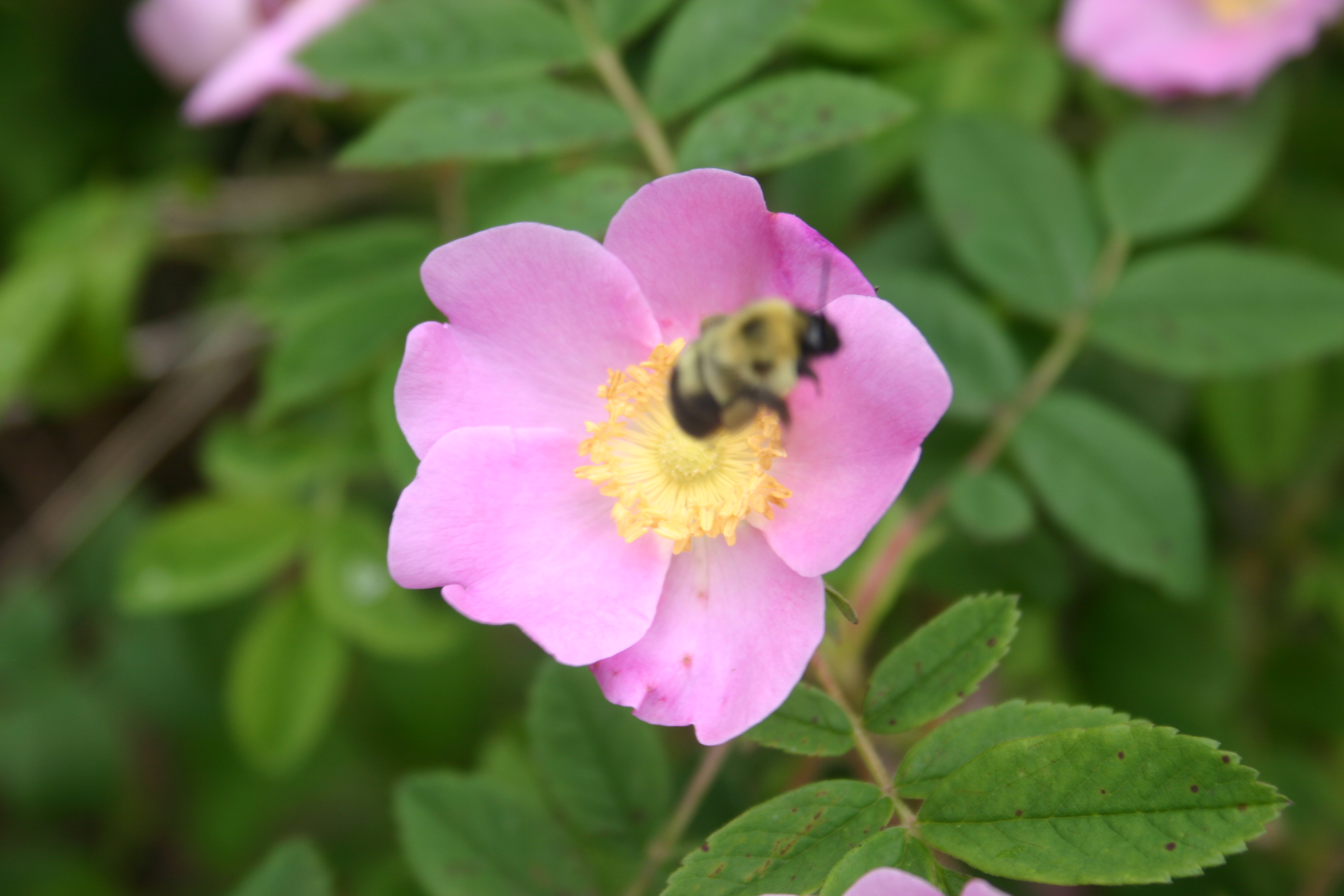
Many of the native Michigan species roses were very easy to grow from seed. There were many species that I collected in the Keewanaw peninsula in Michigan’s upper peninsula. They provided a nice selection of species roses for landscape use but they were not that flavorable or productive enough for hip or petal production. I did find one selection with a very strong bouquet and put it at the top of a hill at my farm. The whole area smells wonderful in early spring when this one plant flowers. It does not produce hips. This experimental attitude highlights the benefits of cultivation of roses for human consumption. Unless you test these species over time, you cannot appreciate or understand what direction a population is leading you in. Most people who breed roses are not going to fiddle with species. Like apple varieties, they need a cultivar at the end with a patent after their hard work. For me, I want a species population that is refined enough like corn varieties that can be produced from seed. It is more than making one or two selections. Unfortunately, I ran out of room. You need to have hedgerows of nothing but roses to test the whole system of cultivation for hips and petals. It is such a huge area of untapped potential. I think rose seed oil, rose petals and rose hips. Other people think Jackson and Perkins with the embossed metal tags.
In one of my grow outs, I found a small rose with intense fragrance and another with hips when only two years old. These greenhouse discoveries made me move several plants out to other areas of my farm to see how they would do on their own without spray or care other than sawdust mulch. It worked and today I have many very nice species types all established and growing on their own free of disease and insects. The hip production is significant. My original ‘Wild Thang’ roses were low yielding in hips but insanely vigorous and with large canes reaching up to 15 ft. long. They shared one unique trait. They had no foliar diseases. For a rose that is rare. At the garden center I use to work at, rose fungicides and pesticides were the leading chemicals in sales. No wonder people fear roses. You have to nuke the surrounding areas to enjoy them.
Advancing the goals of a healthy environment and a healthy human being can create the means for coming out of the research of plant selection and smelling like a rose in the end.
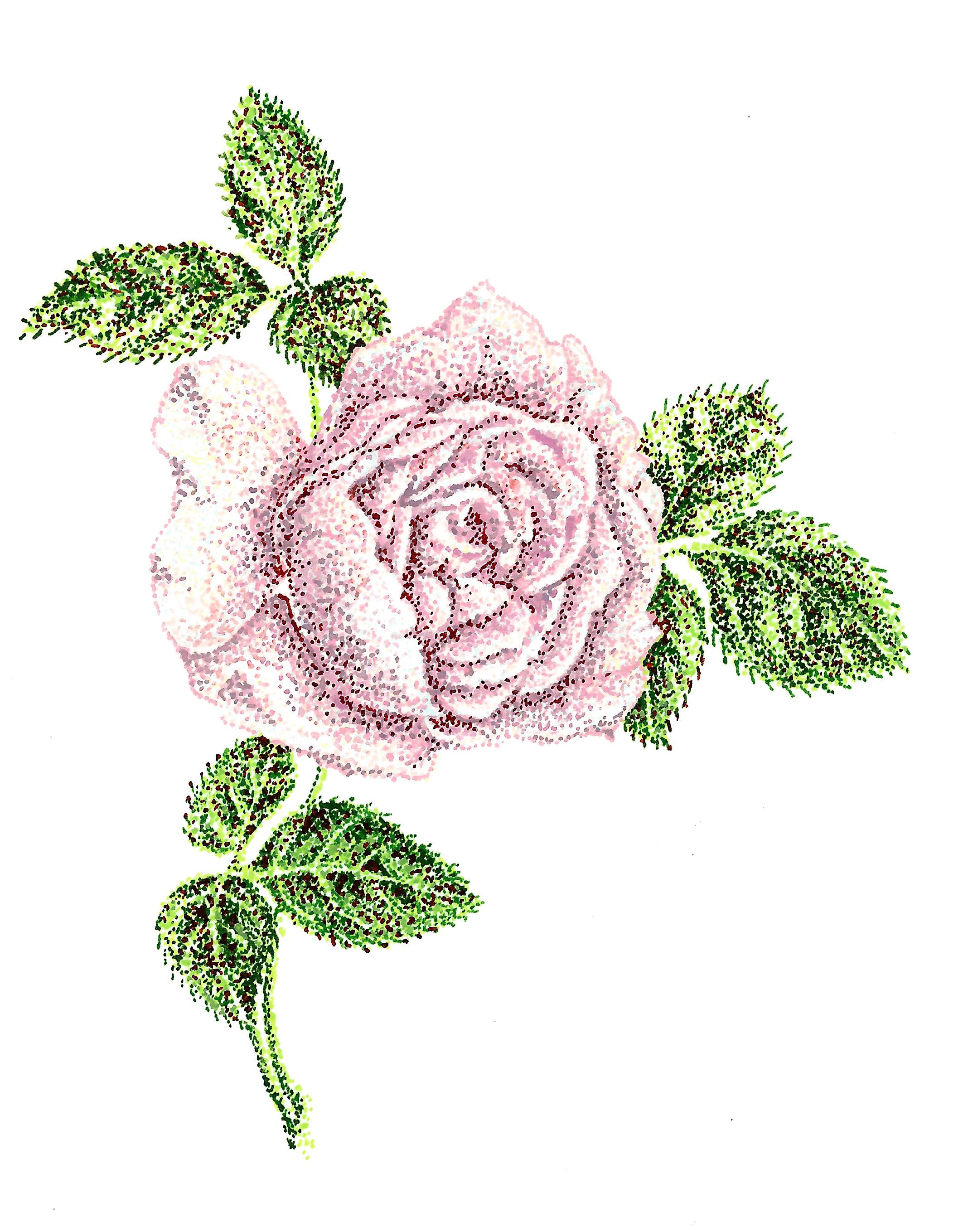
David Adams copyright.Selected seedling from my farm grown from seed from a highly cultivated rose.


 biologicalenrichment
You must be logged in to post a comment.