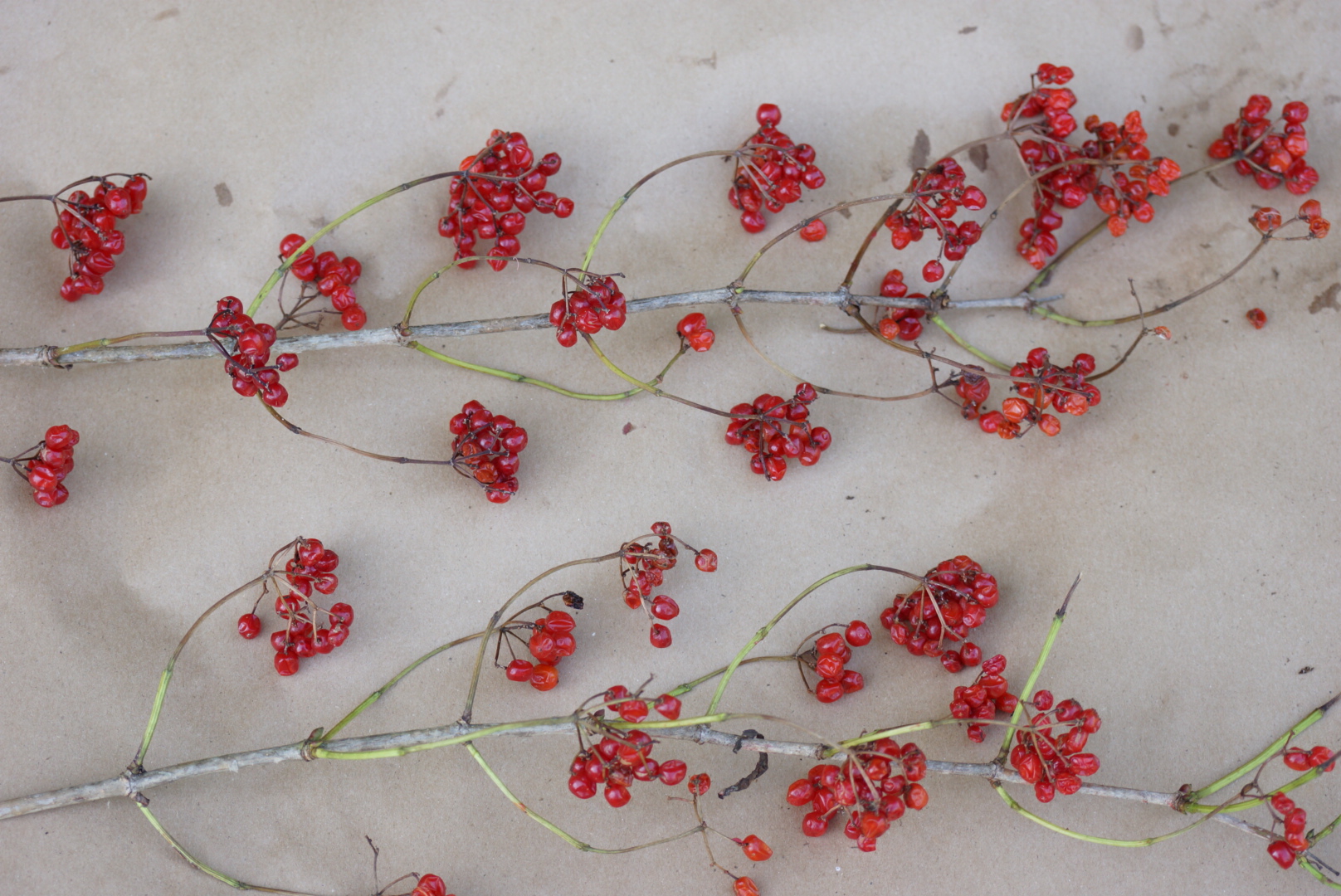
There are many types of wild fruits that people use for jam, jelly and syrup. These are harvested locally by those who are aware of a unique fruit that are not cultivated. It is made on stove tops in small batches. There are no commercial plantings where you can buy the fruit. They are processed with loads of sugar. If you take these same fruits and try to consume them directly off the tree or bush you soon find your mouth awry in much torment. The reason for this is that the very compounds that protects the plant from insects and disease is found throughout the sap including the fruit. The fruits usually have a very high mineral and vitamin content along with many types of anthocyanins. These all combine to make the torment even more pronounced to the point the fruit is not possible to eat fresh. This is what fuels my constant use of sugar when I make something from these fruits. I go to Costco. I buy the large bags of organic sugar because lets face it nothing says organic like sugar. To be honest, when the Michigan Sugar Producers decided to go to GMO sugar beets and not separate them, I bailed. I use a 7 cup sugar to 5 cup juice or pulp ratio when I make my jams. I give them as Christmas presents to my family and friends. I use to take my jams and syrups to farming shows and feed everyone my creations on crackers at the end of my presentations. One woman came up to me at the end of my talk once and looked me straight in the eye. She was a close talker. “So you’re a man who makes jams?” Yes I am. I am a man who makes jams. It was right out of a Dr. Suess book. For some reason that was a shock and disbelief to her. My mom taught me how to do that in high school and I continued the tradition. That was the day when you used paraffin wax on top of the jam jar. It is through this type of processing that allows you to tap into the nutrition and flavor found within these fruits. It puts it into a delivery system that you can spread it on toast in the morning. I like that system. Today I view it as a gummy type of vitamin with intense flavor. Each tablespoon is filled with dense nutrients. It is good with yogurt. You are not going to get that same effect with regular fruit. There the flavors are weak. Yet we know the trade off is delicious fruit you can eat fresh with regular old fruit.
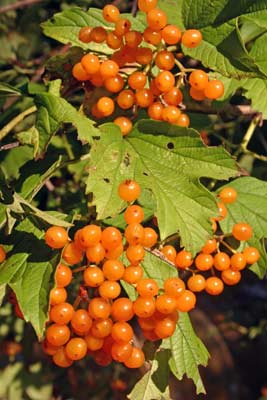
The American Cranberry Bush – Viburnum trilobum
People who worked for me know this smell. The whole barn was dense with it when we ran it in the seed processor. I call it the old-gym-socks-stuck in-your-locker for-two-months-in-high-school fragrance. I had a selection that was yellow that was particularly bad. Normally yellow means mellow in fruit taste. The fresh taste was even more putrid than the reds. Each seed source had a slightly different fragrance and taste. I collected a few locally and began seed production right away using the varieties Phillips, Flava or Yellow, Local Compacta and seedlings from Montana. At that time no one really was selecting for fruit production. I was interested in the fruit quality and quantity. The fruit is used for jelly in the northern regions of the U.S. and Canada. The use revolves around using the fruit like a cranberry of which it is not even remotely related. I started torturing myself by taste testing many seedlings over time while growing them at my farm. Finally, a much more experienced grower and wild food afficinado told me to wait until several frosts and then try. That was a revelation wrapped in a good idea. The fruit is much better when the frosts weaken the grip of the tannins and astrigency in the fruit. The flavor changes over the course of two months on the bush. I began to propagate a few of them from cuttings that had a relatively friendly taste that was possible to consume fresh without having to snap your head back to get down. One selection did not require the frosts and I felt that selection was better than the average gym sock. The varieties do have a smoother flavor yet still retained their tart and cranberry like essence. In my seedling grow outs I found several types that I developed further because the fruit production was far greater than the average plant. This stemmed from finding plants with side branching that produced heavy fruit set. Normally fruit is only set on long canes. This easily trippled the volume of fruit per bush. In case you’re wondering, there is no market for the results of my research. American Cranberrybush is used extensively as a wildlife conservation and ornamental plant. I did not make something necessarily better but I did find a flavor profile that is useful for the making of new fruit products like juice and syrup. So for now, I will lay low waiting to pounce on someone with my high school gym socks fruit. Watch out. I might send you a jar of it. Afterall I am a man who makes jam.
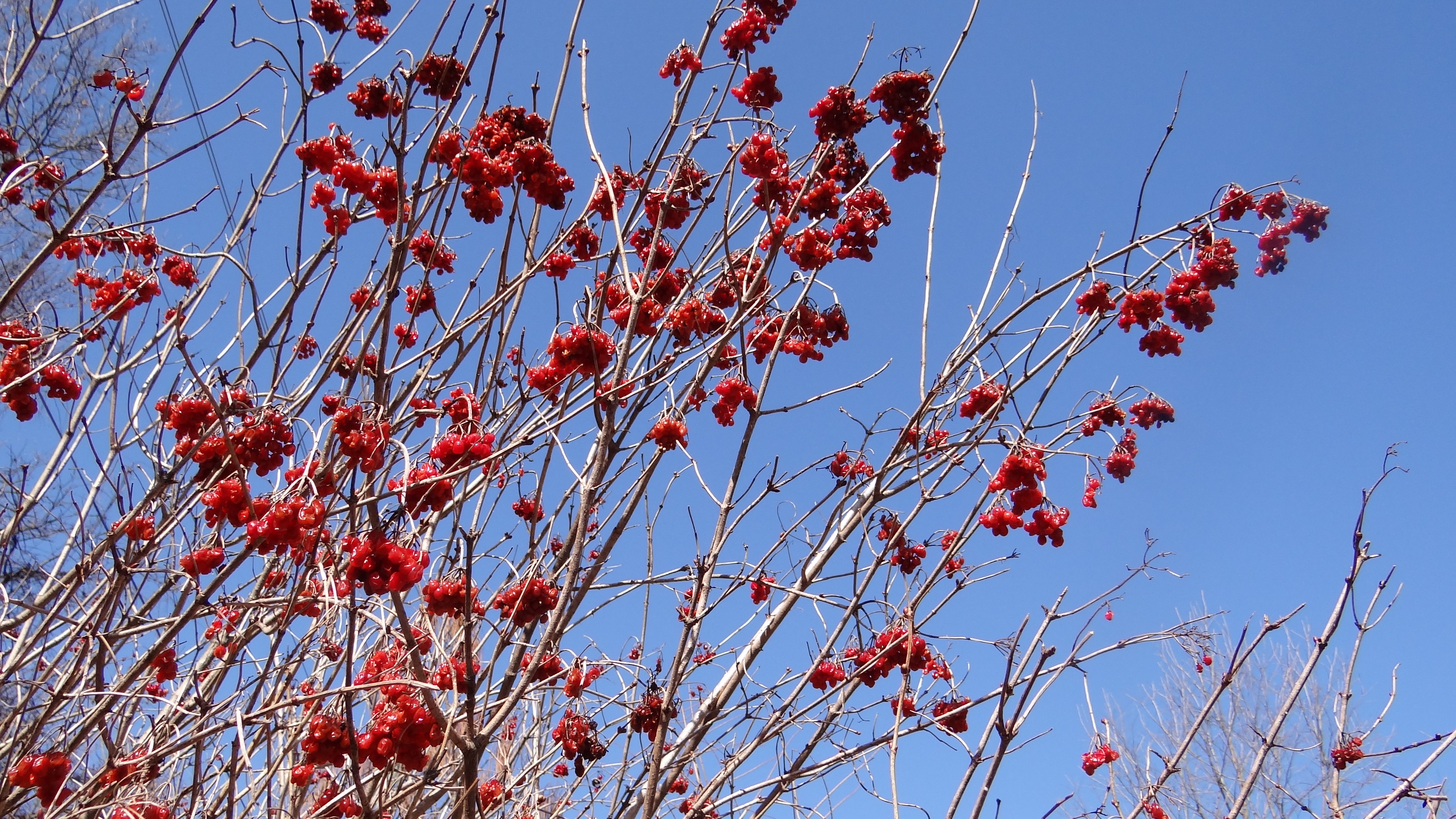
It is easy to spot the American cranberry bush from a long distance.The bright red berries hang on to the plant in clusters near the outside of the bush when all the foliage has long dropped in the winter. This seedling below was grown from seeds collected originally in Montana. I called it ‘Movin-to-Montana’ selection. It had heavy yields and thick dense fruit clusters which were useable after frosts. Get a cuppa coffee. Some may know this reference. Others will have to look up the song Moving to Montana by Frank Zappa.


 biologicalenrichment
You must be logged in to post a comment.