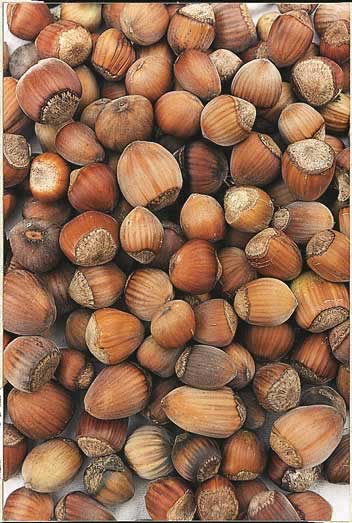
It was over forty years ago when I first peered through the tree line on the land I was about to purchase and spotted hazelnuts. It was a good sign. I had no idea what was ahead of me. Here was an expanse of complete emptiness where I could create a tree farm. Here was the flag of hazelnuts waiving me in. They were found only near the road and under the powerline near the hickory trees dropped by chipmunks and birds long ago.They were loaded with nuts. It was obvious I needed to purchase this fruitful land for my farm.
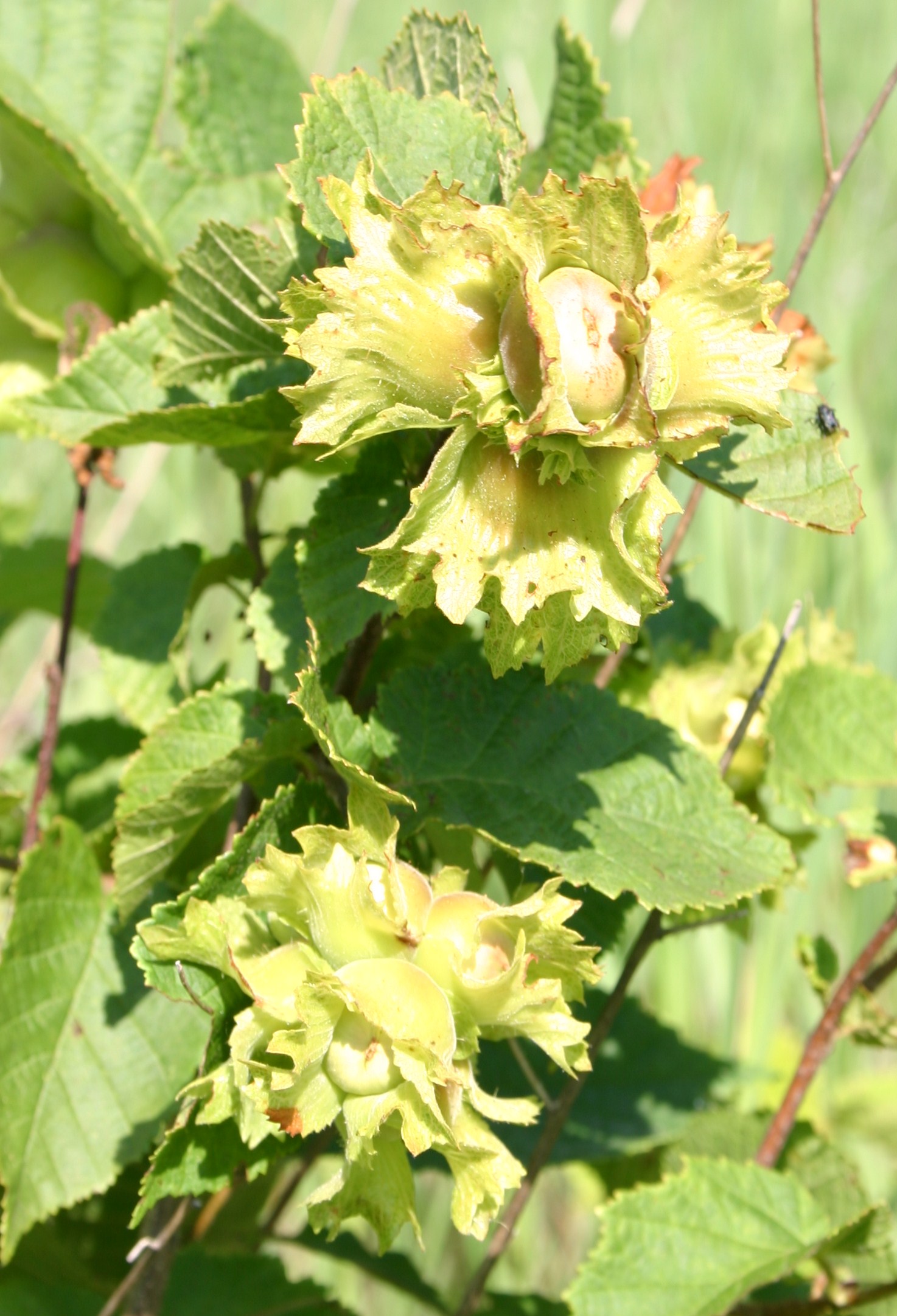
I began growing them right away. It was joy to do. I found American hazelnuts in other locations throughout the county. One person I met hesitantly showed me a map where he marked all the hazelnuts he could find along the roadsides. He didn’t want me to look too long at his map and figure out his spots. I promised him I would not go to those locations. We both laughed after I said that. There are a lot of hazelnuts along the roads but getting nuts from wild shrubs is very difficult because a lot of animals also love hazels including deer which will eat the nuts husks and all. It is not just knowing the locations but getting there at just the right moment in the fall to harvest.
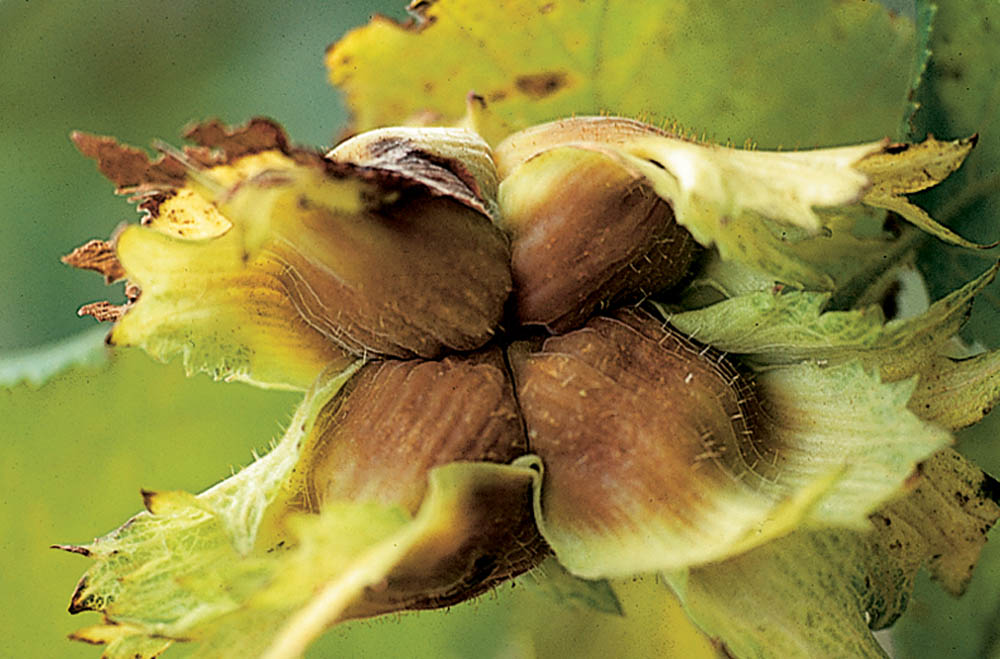
When I first started selling to the large mail order companies, there was a good market for hazelnut plants. I found I could purchase nuts from other growers and seed dealers and soon began a much larger scale grow out. The gardening companies did not care if the plants were hybrids or not. They just needed hazelnuts. It could be a filazel or it could be a hazelbert. Sometimes they would go into detail on the origin of the crosses in their write ups. Other times, it was left out entirely. You have to realize for them it was a small subset of plants in a subset of edible nuts in a much larger catalog of plants used by the American public. Teeny interest compared to everything else. Eventually they discontinued the selections I was growing because it fulfilled the market and sales did not support the catalog space. Hazels are grown only for one or two years before they are sold. I sold many thousands of them bundled in twine, dipped in water gel and shipped to Iowa and Missouri. If you are a nursery growing plants for sale on a national scale, it tends to be a boom or bust type of thing. When they switch to a different supplier because it is cheaper or drop a product all together, they will not tell you in advance. What you are left with is significant inventory while you scramble to find a market. Since the wholesale market price was so low (partially sustained by the state run conservation nurseries) it was much easier to destroy the plants. I told a local farmer he could dig out as many as he wanted for free. I was coming back from lunch in town and here was this giant pile of brush driving down the road heading right at me. My employee next to me asked, “What the hell is that?” I said, “Relax. It’s Dave and a boat load of hazels in his old flatbed Chevy.” When I peered into the cab I noticed Dave looked a bit disheveled. Later Dave told me he darn near died digging and replanting those. His wife had to take off work to nurse him back to health. I had tens of thousands of hazels. I let them grow as much as possible. Very slowly I began taking out beds of hazels as I began new types of plants and plantings hopefully with a more forgiving market. I started producing seed to sell at that time as well.

It was through these large groups of hybrid hazels that I soon unwillingly became a participant of a giant experiment. I had assumed previous plant breeders had solved the filbert blight problem and growing them from seed despite the genetic diversity was not an issue. Filbert blight has minimal effect on the American hazelnut that I first knew when I purchased my farm. It exists on the plant and really is part of its evolutionary history that benefits the plant. When the older canes begin to weaken, it helps decrease the vigor and eliminate the stems while new ones generate from the roots keeping the plant healthy and productive. Disease in plants is more like a motivator than anything. Time to change. Without disease, plants would be in trouble in many ways. This is the stoloniferous tendency of the American hazel as it continues its life unimpeded by disease. It’s a fantastic work around. With the European hazelnut types as well as the hybrids with it, death of the plant is imminent and painless. The plants rarely have a chance to fruit. It encircles the canes immediately killing the stem. The plant rarely resprouts. By years 3-4 the plants are toast. Here was my giant field of toast. Blackened stems falling over as I walked through the old planting beds crushing the dried twigs as I went. With an over 95 percent failure rate only a few green spots were evident. I didn’t mind the death of my plantings entirely because I could till them into the soil and continue new crops. Build new on top of the old. Never underestimate the optimism of a farmer. I was surprised at how much disease there was and how unforgiving it was to the hybrid plants. I needed a reboot on this project if I was going to continue growing hazelnuts. The last time someone had done that was in the early 1900’s. I gave up on selling to the large mail order companies.

It was from this large sea of nothingness that hazel life sprang forth. From the first batch, I moved 67 plants to new locations on the farm that appeared to show complete immunity. This new group of hybrids I called ‘Precocious’. They were directly selected from plants showing no disease fruiting in a 3-5 year range from seed. I was very happy with myself at first. I must of just cracked the two hour marathon I thought. However, it turned out the time slot of freedom from disease I discovered in the life of these plants was only temporary. The disease also had a work around. This took another decade to sink in fully. Scientists had found the Michigan hazelnut disease was the most powerful in terms of its effects. It was from here I began to use seeds from the most American like and follow the seedlings that were completely immune and healthy despite having small nuts or thick shells. Survival became an all or nothing in terms of the hybrid hazels. In the meantime, the American hazelnuts were singing Tiptoe Through the Tulips by Tiny Tim while humming I’ve Seen All Good People by Yes.You could not stop their upbeat life filled with joy trajectory. I too took note and began growing more selections from my plants near the roadside I had almost forgot about. Dave moved. I visited a few times prior to the new owners bulldozing out his plantings. A few remain today to herald a time gone by.
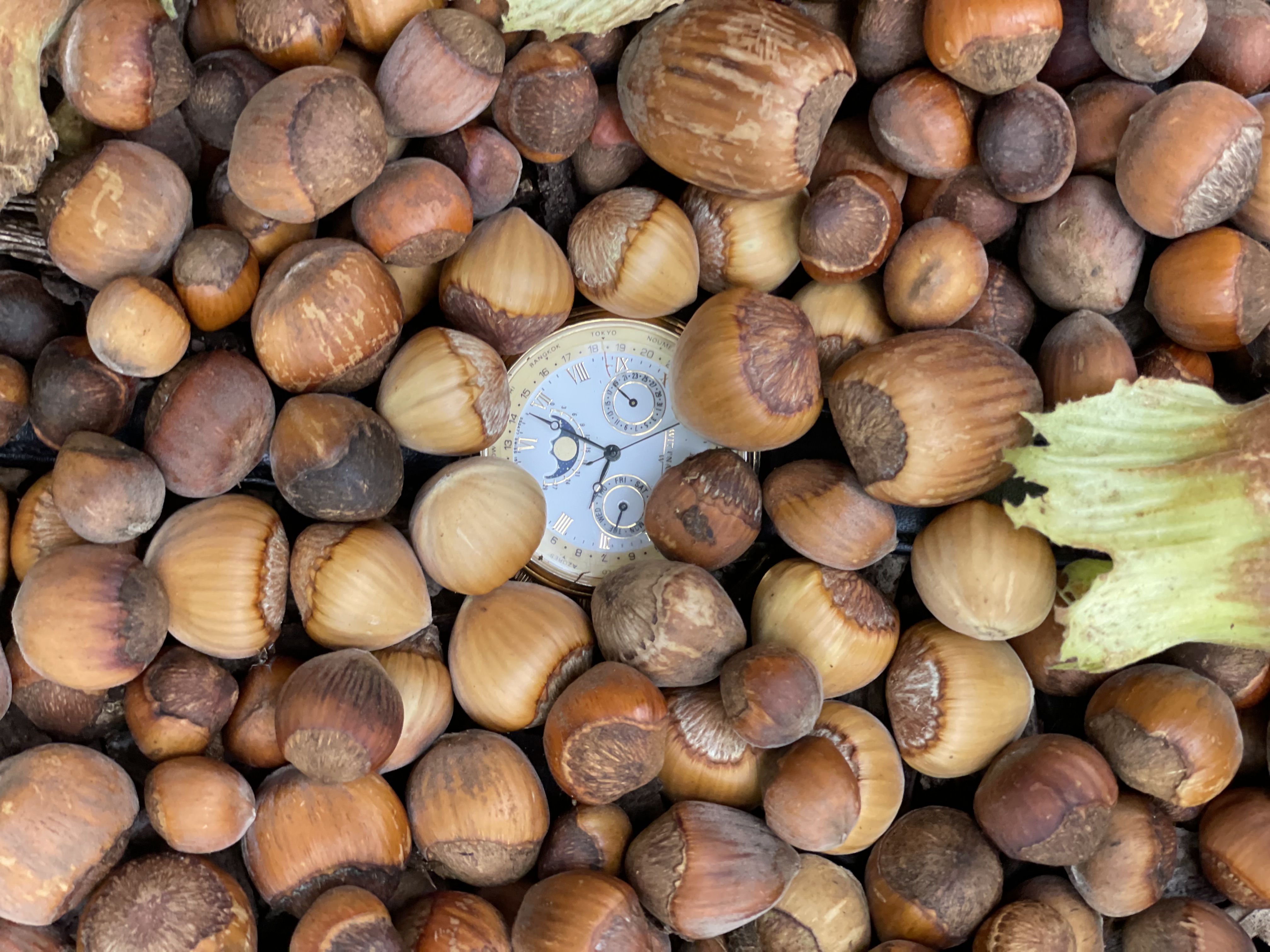
In the meantime, I continue to add to my plantings and harvest the nuts in the fall. I love the hazelnut plant. The flavor is rich. The catkins remind me of spring. I named a few varieties yet it is calm and slow now. Not a lot of activity. The disease is minor. The plants fruit. No one is interested like before the grow outs. Many others have stepped forward in the cultivar development circle with greater cash reserves and a means to fulfill the teeny market of hobby growers. Will it expand to any degree and become part of a success story of agroforestry and tree crops? I did create one solution to the problem of low crop diversity within a commercial tree crop. I was satisfied with the results because that crop is currently only capable of growing in the United States in the state of Oregon isolated from all other hazels. In many ways, it’s a message in a bottle. Throw it in the ocean and see where the current takes it.
I wish for Dave to drive in. I wish to see a brush pile going down the road again.
Enjoy, Kenneth Asmus
”Take a straight and stronger course………”


 biologicalenrichment
You must be logged in to post a comment.