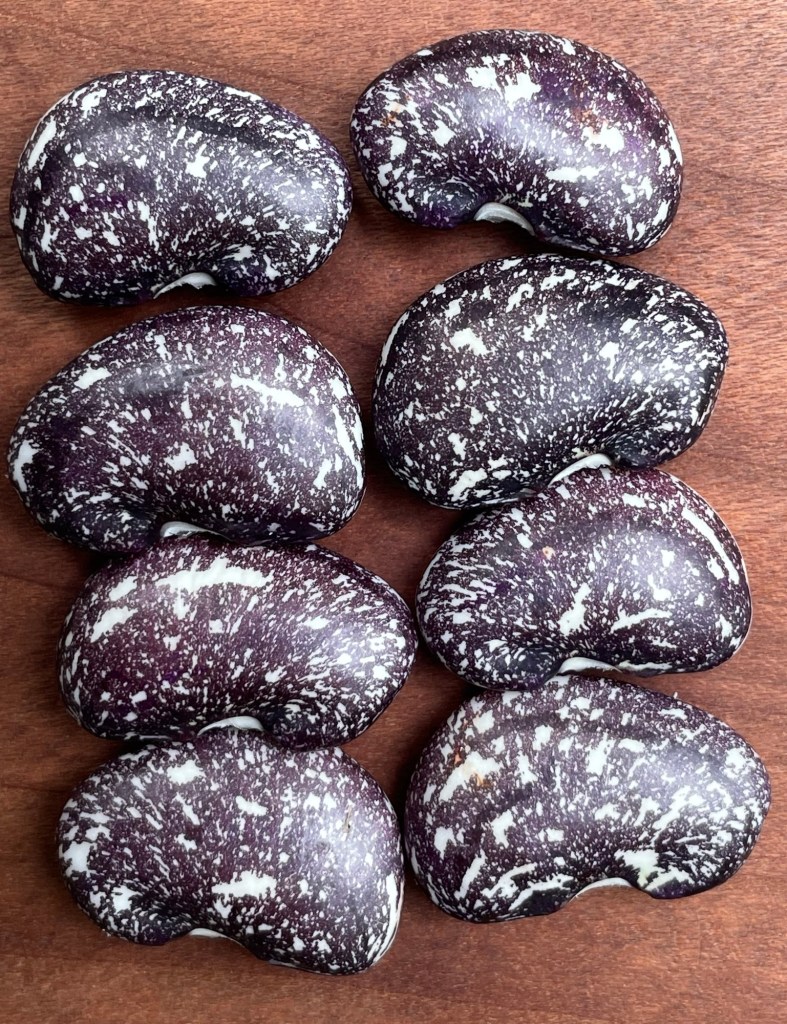
The thought of creating or exploring a new crop is a good idea. It is very simple. You start with seeds. All new crops start with new seeds. Like an idea the new seeds are something that no one has explored or thought of. You plant it, it takes root as it grows and then changes over time. It can solve a lot of problems and create new possibilities for farmers. It can create a new food rich in flavor and dense in nutrition.
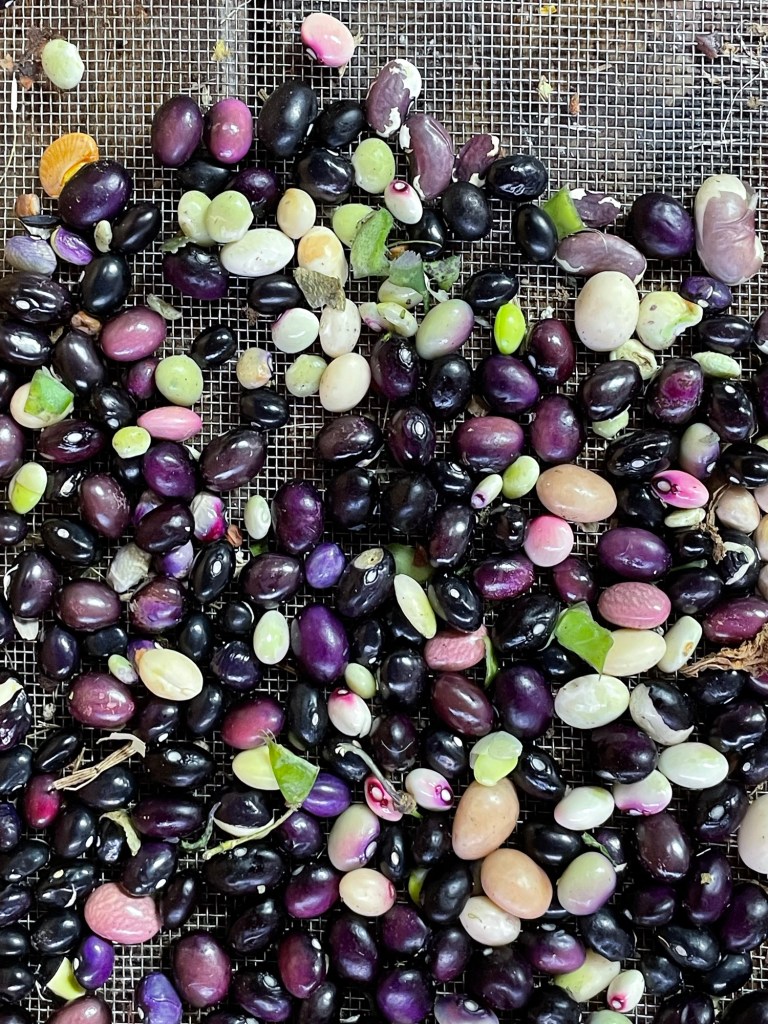
About twenty years ago, I became fascinated by beans. I have no idea why. I periodically would sell and give them away in my nursery but it was not something I was serious about in any way. I just liked growing beans. They were so prolific and fun to shuck. I remember once the neighborhood kids were over for lunch at our house playing with my children. We were having green beans from the garden and Kraft mac-and-cheese. They were completely unaware of greenbeans. When one asked “what is this?” I knew beans were not universal in appeal or use. They loved them. I wondered what happened when they went home that night. “Mom, Dad we love beans” could be heard for miles around.
Today I am searching for a deep-rooted perennial protein crop that is easy to cultivate. It can generate food diversity in the process of creating health and wealth for the farmer who grows it to the people who eat it. It doesn’t have to take decades to do and millions of dollars of research. Crop diversity is critical if we are going to make crops healthier to grow and more resistant to extreme climates throughout the world. It can be an individual that will make great discoveries in the field and not a massive breeding project. You are wish that your crop will be adopted and selected from the giant cloud of diversity already in existence hoping it will be appreciated by all even those unaware of its potential.
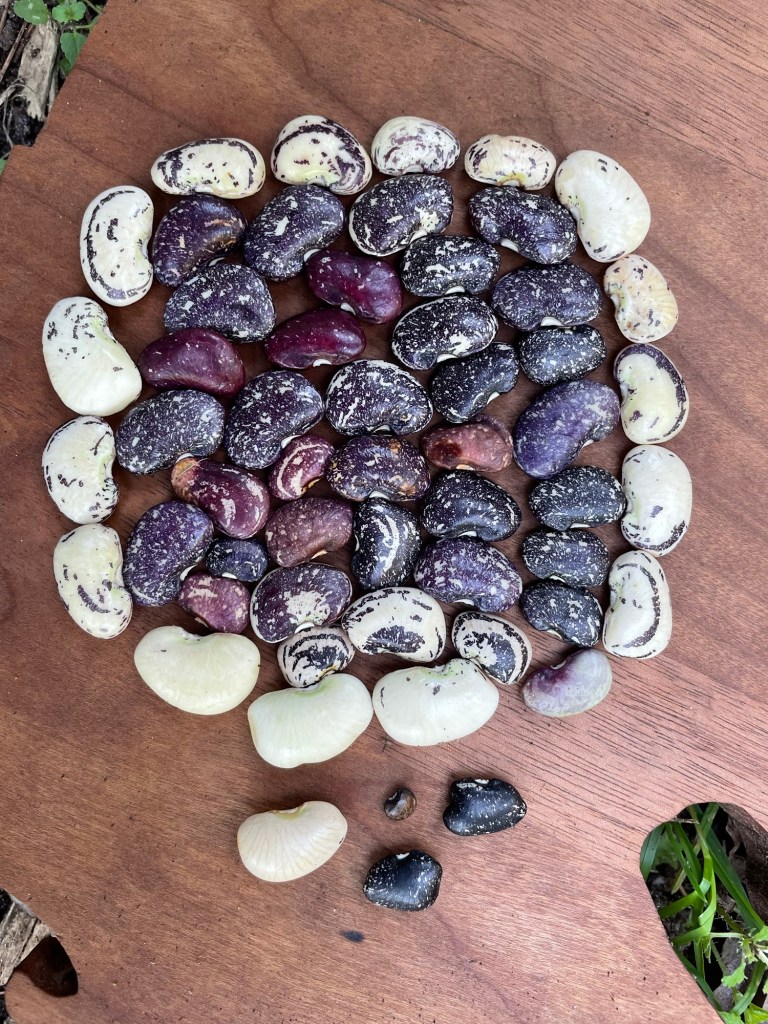
The perennial wild thicket bean, Phaseolus polystachios was not grown as a crop in North America by anyone as far as we know. However it played a part in the diets of the early Native Americans many thousands of years ago before the introduction and use of annual beans. One discovery found the shells in a 9000 year old strata in a cave on the east coast of North America and another on an island in the Detroit River. Obviously the beans did not swim there on their own. Thicket beans have a very hard seed coat which allows them to be stored even in high humidity areas. That reason alone suggests a strong positive for cultivation. But to cultivate a vine like bean means you need wide open areas similar to what you would find along rivers and streams where there is plenty of light and open soil which is perfect for expansion of the population via exploding twisty shells that pitch the beans great distances. This is the habitat of the thicket bean today. There are no varieties of thicket bean but there are slight variations found in the wild. To find all the variations and grow them would be a very interesting exploration of wild crop diversity.

I consider this wild bean a cosmopolitan indigenous North American plant lost in its historical use. Some species like the Hurricane bean in Puerto Rico look almost identical to the wild bean of North America. In South America, its close relative the lima bean was cultivated extensively by ancient cultures. The Mayan grew the plant in the forests and jungles as a giant vine. I wouldn’t be surprised if the lima wasn’t perennial in nature long ago. Here was the protein that did not run away. The food fell from the sky as the pods twisted and expelled its beans in the warm sun of its tropical homeland.
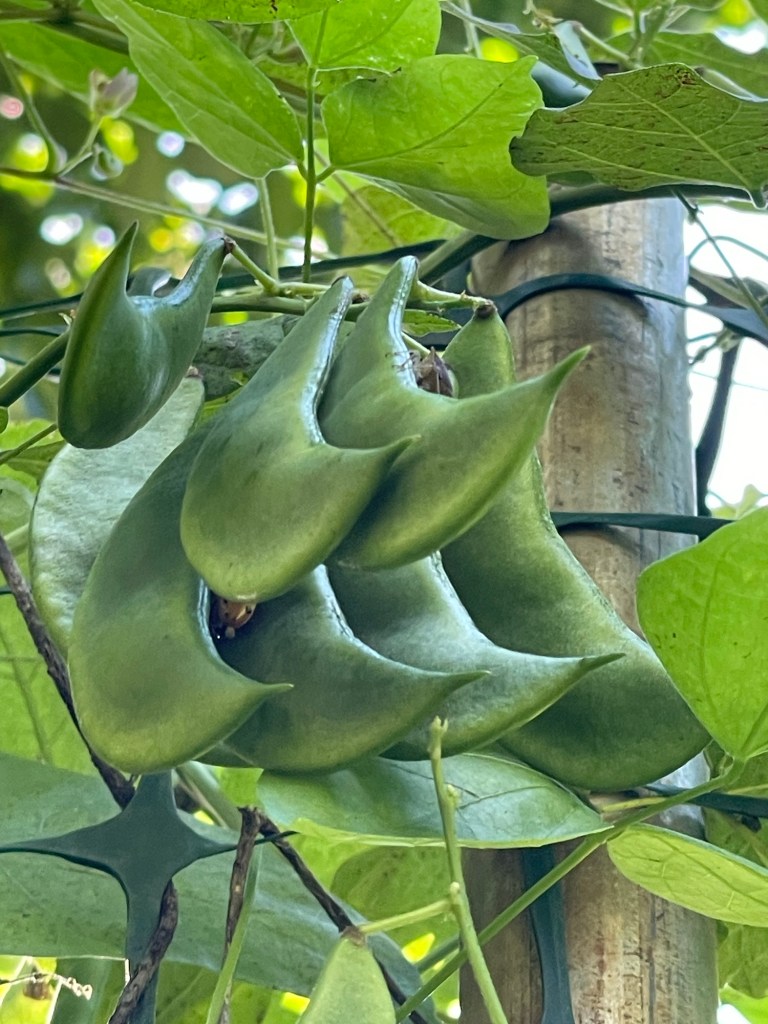
I feel fortunate to explore plants left abandoned long ago. I have the luxury of finding ‘cool plant’ things as my college botany professor use to say. Some are forgotten and not considered practical on a larger scale. Many are passed by in industry and commerce. I know there are some good ideas stuck in storage somewhere. I think of the Indiana Jones movie with the Ark of Covenant scene of a giant warehouse filled with many wooden crates one of which contains a valuable treasure. I think of seeds. It could be something of great value but it is nailed shut in a crate in a dark and obscure warehouse in the middle of a desert locked away surrounded by barbed wire. I have to follow the plants and their connection to the real world. I have to see how they respond to all the different environmental conditions that shape their lives. I want to foster a personal connection based on observation and intuition. Every year to me is a joy of discovery and full of unexpected surprises. This is what seeds are meant to do. Change. That is my world of beans and why I follow it like a trail in the forest. Each new vista is inspiring to behold.

Here is my view of a potential future for a perennial bean long ago forgotten and left as a horticultural oddity. I have listed some of the characteristics that will shape its future and what lies ahead in terms of its cultivation. I found the crate. I have to open it up to see what is inside. You may not want to look directly at it. In this case only good can come from it. It won’t melt your face off. That I can promise.

The Lima Bean and the Thicket Bean Meet On A Lonely Row In the Middle of My Field of Dreams
I know little about the technicalities of plant breeding and even less about beans. I love beans but I am not a bean breeder or know what sort of ‘shenanigans’ they are up to in terms of combining traits or developing varieties. When I first tried to create natural crosses of the thicket bean to create satellite populations, everything was too separated by time and space. First I tried to flood the area with tepary beans only because to me they look like the thicket bean. There is a subspecies of tepary bean that is perennial. I thought it was a good fit. The goal was to create a cloud of beans and inter-weave plants within the cloud and hope for the best in terms of cross pollination. This works with oaks very easily but they are wind pollinated. That is where I got the idea from. It turned out that the tepary branch of the bean family was too far away to connect genetically. It would be like crossing a red oak with a white oak. It is not likely to happen. The tepary beans engulfed the thicket beans. It looked impressive. I did enjoy growing the wild selections from Native Seeds from the southwestern U.S. The following years I planted several varieties of lima beans because I read they were much more closely related in their family tree. The thicket beans were on a nice long trellis flowering in August and the lima beans were in a series of cone shaped chicken wire trellis’ ten feet away flowering in June and July. The gaps were just too big in time and space. They will never meet during the pollinator banquet. I did raise a nice crop of Christmas limas in the process and became familiar with the lima bean during this time.

Eventually to overcome this, I had to snuggle up the plants next to each other in the same row and trellis interspersing them next to each other while planting the lima beans very late in the season to allow the overlap of the flowering of both species. This meant planting the limas in late June. Not all of the lima beans would form completely and only a small portion of the crop will be usuable. I needed many of them to do this effectively and not just a lone individual. To double down in my wild like varietal selections, I switched to a lima bean called The Heirloom Traveler Lima. It was an old variety grown in Michigan that contained the ‘older than dirt’ traits of exploding pods that twist. The thicket bean explodes its beans too. There were very few insects visiting the flowers of the lima beans the first year. I was wondering what if anything would hybridize the plants. Eventually as I increased the plant diversity with other types of limas and some of what appeared to be their hybrids, I noticed many new types of pollinators including one very tiny fly sneaking in and out of the tiny yellow flowers. The surrounding insect populations were finding and using these new plants as part of their diet. This was an eye opening experience for me because up until then I was a statue in my plantings waiting trying not to scare any insects away. I must of looked whacky out there frozen and staring straight ahead at banks of bean flowers on the trellis walking extremely slow as I worked my way down the trellis.
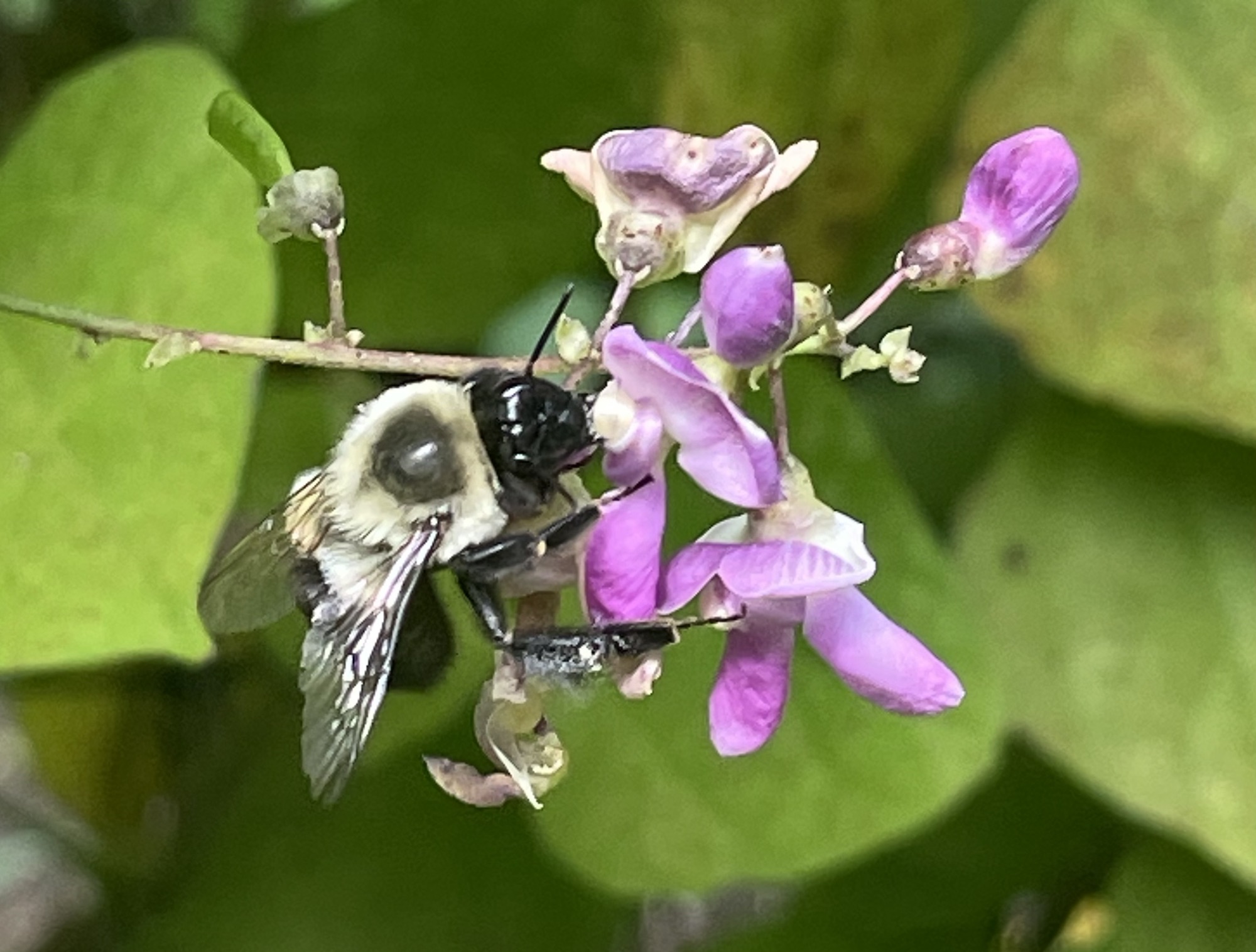
I observed many types of hoover flies in my patch of beans. This was a constant. It took several years before the carpenter bees began using both the lima and hybrid flowers going back and forth. My neighbor had an open post and beam shed filled with cavities drilled by the carpenter bees. That was carpenter bee central. Cabbage, oranges, skippers and fritillary butterflies were in strong attendance. During the first few seasons there were few insects pollinating lima beans that I could see. I wondered how they would even form beans. Some people told me it was not necessary as the beans set without pollination. As the generations changed, the flowers began to have shapes that were more pollinator friendly. The flowers were larger with bigger petals and wider openings which allowed a greater diversity of insects to do the crossing. My guess is this attraction was scent based as well as color and size. I no longer had to late plant the limas as now they were in synchrony with the thicket bean. The flowers in new generations became mostly pink but there were a few yellows and white. I finally had my satellite populations of cloud limas and they were orbiting each other. The meeting that I had set up years ago came to fruition. This was a decade long endeavor. The bean shenanigan level hit an all time high and has remained that way since.
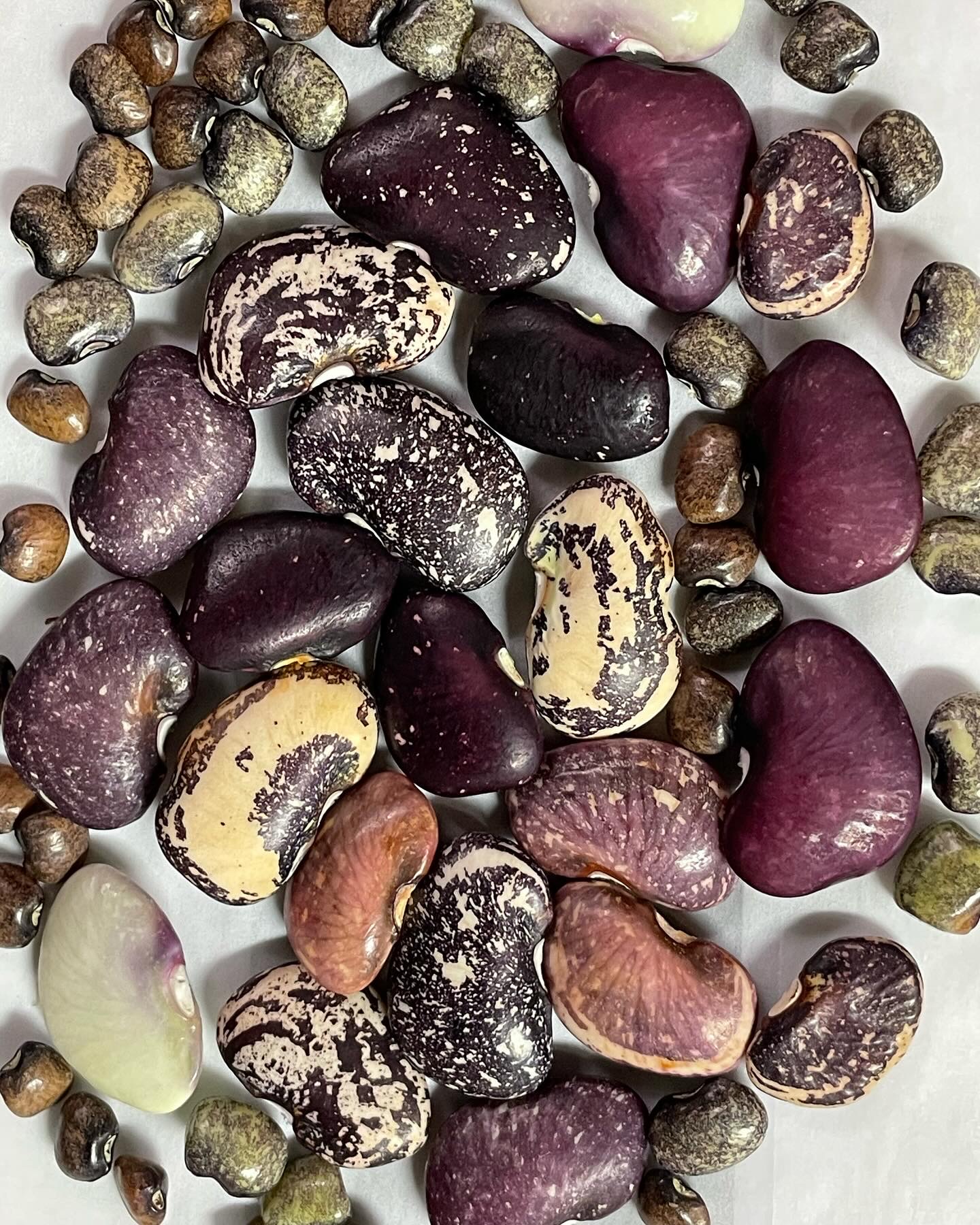
Annual and Perennial in Nature
My explorations with the cloud limas became an engine of diversity far greater than I predicted. The unpredictable populations created both perennials and annuals very easily. There is a great flexibility to it. If you were a strict plant breeder and you needed A TRAIT then this would only lead to frustration. It is a field of mixtures blending like a tapestry of infinite colors. You can create new annual beans as well as develop perennial beans in the process. A new annual bean could contain some delicious treasures filled with health. I think the flavor and texture of the lima bean is much more agreeable than the soybean. It could be possible to use the thicket bean to help discover even more robust selections where vigor, yield and larger bean size would foster a huge robust populations of perennial beans. In terms of growth, it needs to be over the top in terms of root development. It is the root you are actually searching for. It is the basis for everything else; yields, flavor, growth rate in extreme environments. Even without hybridization cultivation of a wild species is possible. However you decide to grow it, you need a broad base of supporting individual plants with natural crossing by the bees, butterflies and flies. This is much more effective than hand pollination or other methods used while creating a strong population of genetically diverse plants. Now you have the cloud in front of you and it is not floating away in the distance. It allows you to enjoy it too. No need to turn into a statue in the middle of the field trying not to scare away pollinators.
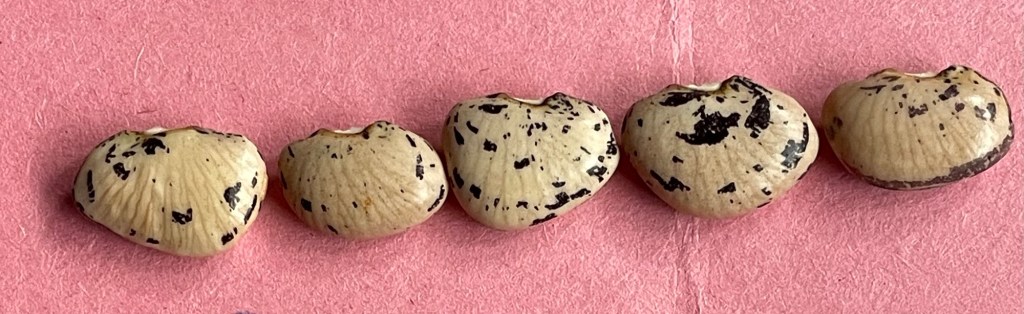
Small Beans and Fast Cooking Selections
Having a small lentil sized lima bean that is quick to cook would be ideal. On a culinary level a small lima could greatly reduce cooking time and eliminate the need for soaking. In my plantings, small is often associated with heavy yields. The combination of these two traits makes this ideal to cultivate and foster the population along. Many lima bean varieties are not that productive for me so finding small seeded individuals with large amounts of beans all along the vine is a wonderful surprise. The pods are set in large clusters and all along a secondary branch from the main stem (vine) or a single line of them on the vine. It is unknown what percentage are perennial but most have inherited the pink coloration in the flowers. It’s part of the cloud. Synthesis is critical at this juncture.
Uniform Early Ripening For Cold Climates
Finding the sixty to seventy day early season lima beans that ripen a full crop in Michigan is not as common as you might think. It turns out that a lot of the lima bean varieties have a rather long luxurious season much like their tropical homelands in South America. The season is spread out so far that frost is likely to cut a part of the crop short meaning that the beans-seeds will be shriveled and not fully formed. This tendency decreases with time as the population changes and I select for full ripening beans. I now have no problem growing them in the cool spring soils as the plants become more adapted to their northern home. The husks on some plants will remain a solid crispy green color even with frost approaching. This is partially why the lima bean is considered more of a southern crop or delicacy. It is not something you would find growing in a place like Michigan. Although there are Michigan selections and other short season bush limas, the ripening period is late. Even within the hardy northern thicket bean there are late years ripening all of the seeds. These late years and cool summers create crinkly seeds. The heat units during the summer are critical. This year there was plenty of heat and frost still hadn’t arrived as of October 30. The vines have gone dormant now on their own without the help of frost. The stems are a bright green yet.
I was checking out my planting yesterday on October 15th and there are individual plants flowering still. This is normal and highlights a certain evergreen nature that most of us are not aware of. Ideally you want all of the pods to ripen at once to make bean life a lot easier for the farmer to harvest all at once if it was produced commercially. You want the pods to turn brown and dry like soybeans on the bush. Uniformity is the key for that. The population on the other hand is only useful if it can regenerate new diversity and is totally adapted to its environment as time and space marches on whenever and wherever that is. Flowering in the fall is not going to create a winter lima in Michigan however it does hint at its use in the tropics as a perennial bean. So for that reason, I cull nothing. I keep all of the diversity if possible. Plant breeders do not do that because they are hyper-focused on a single characteristic. Diversity like this is a curse for the old scientific back waters of breeding plants.

How Perennial is Your Perennial
Within the diversity of a population of a wild plant like the thicket bean, you will discover many traits beyond the obvious ones like flower color. These traits represent the species on its own not selected by human beings. Thicket bean is rare in that it happens to be a bean never to have been bred by a human. The twisty pod characteristic was de-selected a little 9000 years ago but nothing else. For my cloud limas, there is no tell tale sign a single characteristic of the thicket bean hybrids or the species in its ‘pure’ form is seen as a perennial. However a quick look underground of the out of sight root reveals a large tap root. The tap root is the perennial nature in force. Here is the obvious power of the bean. I once found an individual thicket bean plant that fruited very heavy in its first year from seed and then promptly faded like an annual bean. It was a small vine with side branching on a dwarf plant. The annual nature is likely a characteristic of the thicket bean as well. No matter how we grew thicket beans in the nursery, if they were in pots in the polyhouses, it was a 100 percent lost. To me that says part annual and part perennial. It has both natures found within it. It is only a matter of time a population will create a dominant group of perennial beans in a perennial way. This means it is a smooth transition done in a few years of growing and replanting. This is something anyone can do.
The Beans Are Taking Requests and Answering in a Quantum Mechanical Way
The perennial nature of a population of plants may not contain a single dominant trait making it obvious which plants are perennial or which plants are something else that you desire. I think of it more as a quiet expression below the more outward characteristics. When you first grow a perennial species of a common annual plant, it will take time for that plant to build up reserves to set seed. This is common with perennial plants from daylilies to milkweed. As the roots become increasingly larger and the vines grow taller, sooner or later you hit the sweet spot of foliage production and flower and seed set. It is within the third and fourth year of the thicket bean that fruiting will occur. Before that time you may think your plants are sterile because it is locked into a growth only cycle. Sometimes the flowers will form but no seeds are set the first year. This happens especially with super vigorous hybrid plants. The whole population is undergoing a transformation. It is robust in nature and hard to pin down. I tend to view the population as a single individual. It has to stabilize itself as if it was settling down after its great expansion into a new region of space. It is this settling down that you will see new characteristics replicated many other times by individual plants. It is the expression of only the best ideas in the world of beans. This is the trajectory to follow on a course to evolutionary and ecological success. It is not random. The plants will thrive and be fruitful. By and large we have no clue what the beans are up to. It is bean consciousness after all. I define it as a cloud of possibilities. It happens within a group of diverse individuals all uniquely different. We are often confused in our interpretations of real life natural events. Not the beans. The beans are fine and doing their bean thing. We need to catch up to this bean intelligence; bean order, bean creativity and bean consciousness. As odd as all that sounds, that is exactly what best describes the events of my real experience of growing wild beans.There is one vigorous plant that in its first year grew extremely fast to the top of a twelve foot trellis. In year two, the same plant grew many secondary branches this time filling the trellis with flowers and pods with a few seeds. This is one possible beginning of a perennial bean. I now see the multiple sprouts from the same root, giant leaves and vigorous growth overtaking the trellis. It is not a goal but a path to a diverse future.
You are the moderator and guide in your creation of diversity. It is infinite in diversity. To say infinite, I mean there is no end to it. Pay no attention to the “How Can We Help You’ box as you leave the Trader Joe’s store. The specific requests have already been answered. It is done by generating the greatest diversity of all uniquely different plants. All the questions are answered and all requests are fulfilled automatically.
That is bean consciousness. By consciousness I mean intelligence at work structuring itself on the level of the genes as well as the sound and light vibrations behind the genes we have yet to discover. I am sure the micro-RNA is in tow. This is the way to harness a dynamic population of perennial beans beneficial for its cultivation by humans. It all starts as a human desire fulfilled by beans.
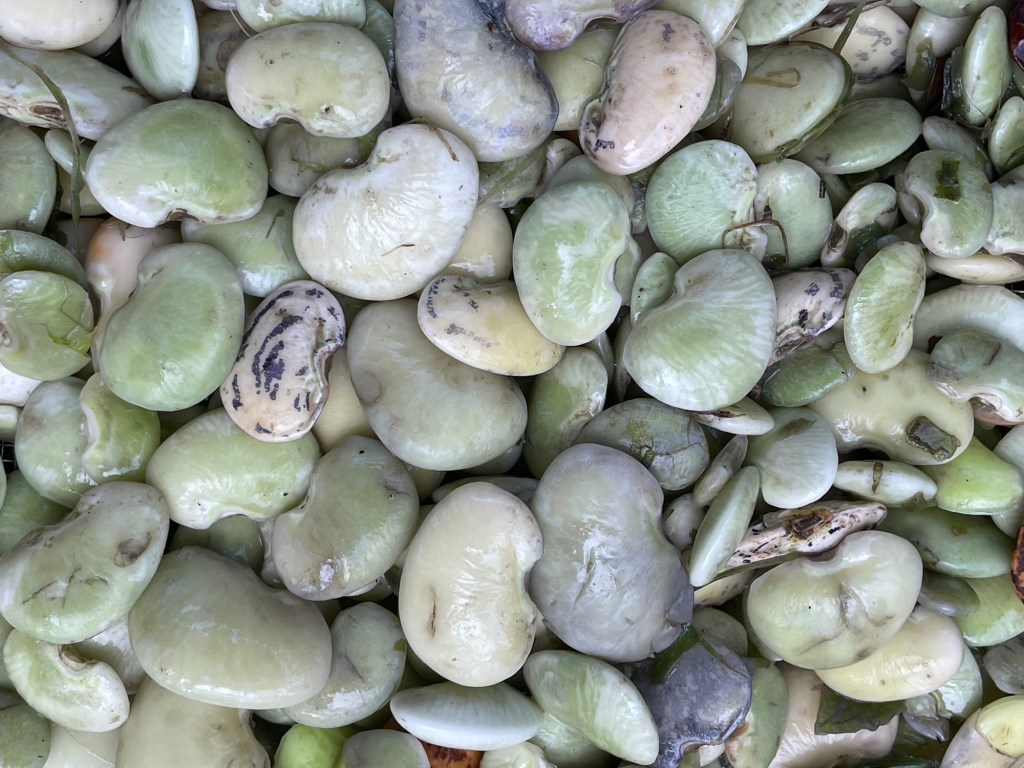

THE CLOUD LIMA SEED PACKET AVAILABLE FROM OIKOS TREE CROPS
4 PACKETS OF BOTH SPECIES AND HYBRIDS OF THE LIMA AND THICKET BEANS described in the above article.
This is enough to enclose a 10 ft. trellis or arbor of your choosing. See details on the link above. Free shipping with this seed offer and the other beans on our website currently grown in the 2024 season here in Michigan.
Thank you for your support and help to steward and spread the cloud limas.


 biologicalenrichment
You must be logged in to post a comment.