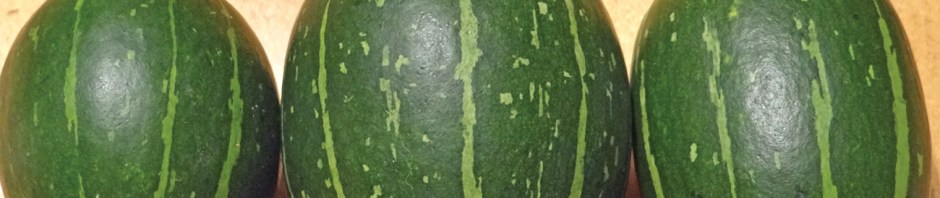
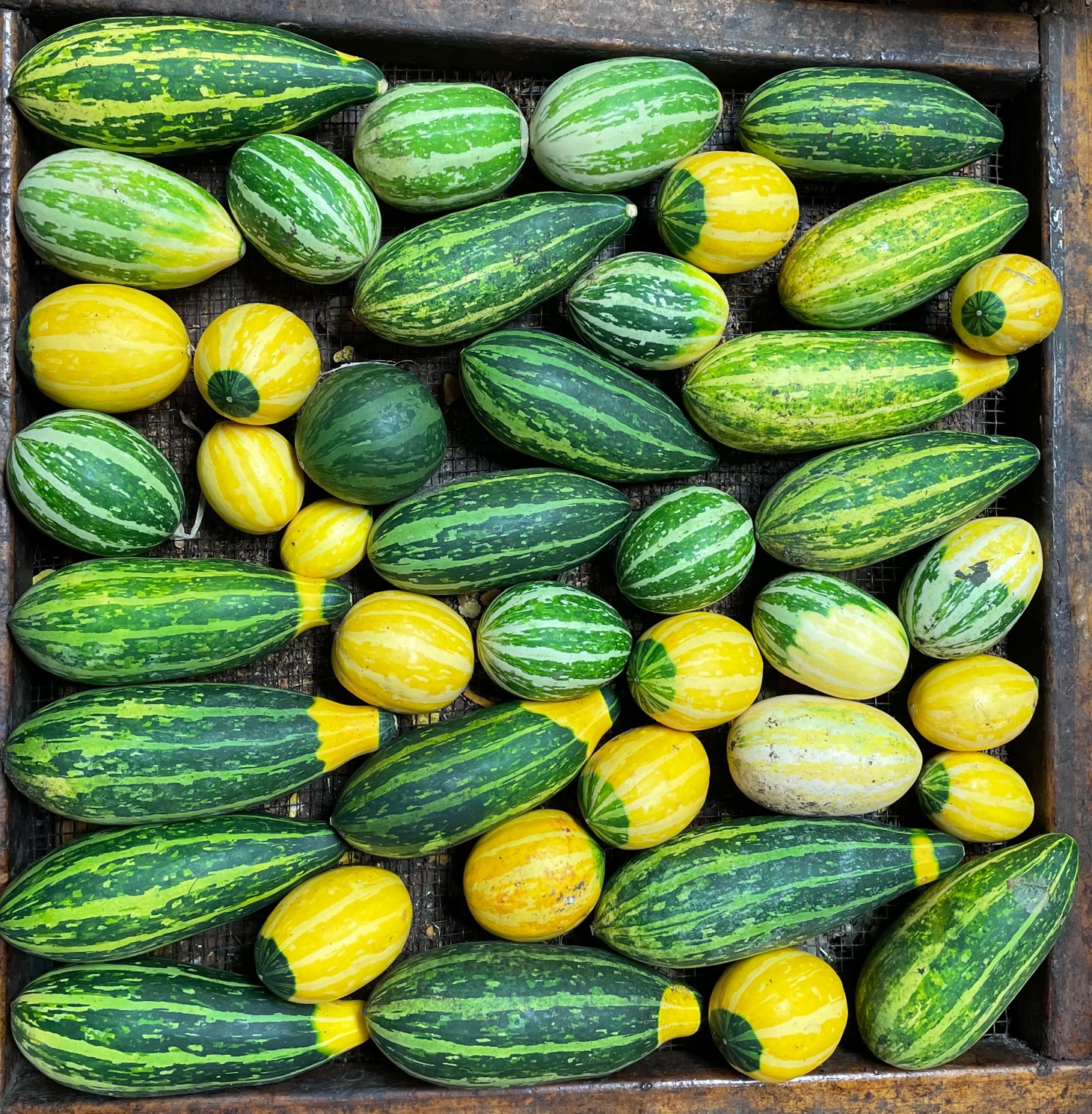
One of the blessings of growing plants is the unknown progeny produced by cross pollination. This twist of fate brings huge benefits to the plants as they change. The species is plastic and changes over time to help adjust to its new environment making the plants more vigorous and productive. In some circles of plant breeding and botany this is a crime scene. To me its a glorious divine exaltation worthy of a trumpet fanfare. Ta-Da!!!!!! To others the germplasm needs to be destroyed because now it is not what that person wants for some reason or doesn’t fit into the native realm following the botanical rules of taxonomic engagement anymore. Wa-Waaaa….This is the case for the Ozark gourd and wild pumpkins from South America that I grew at my farm.
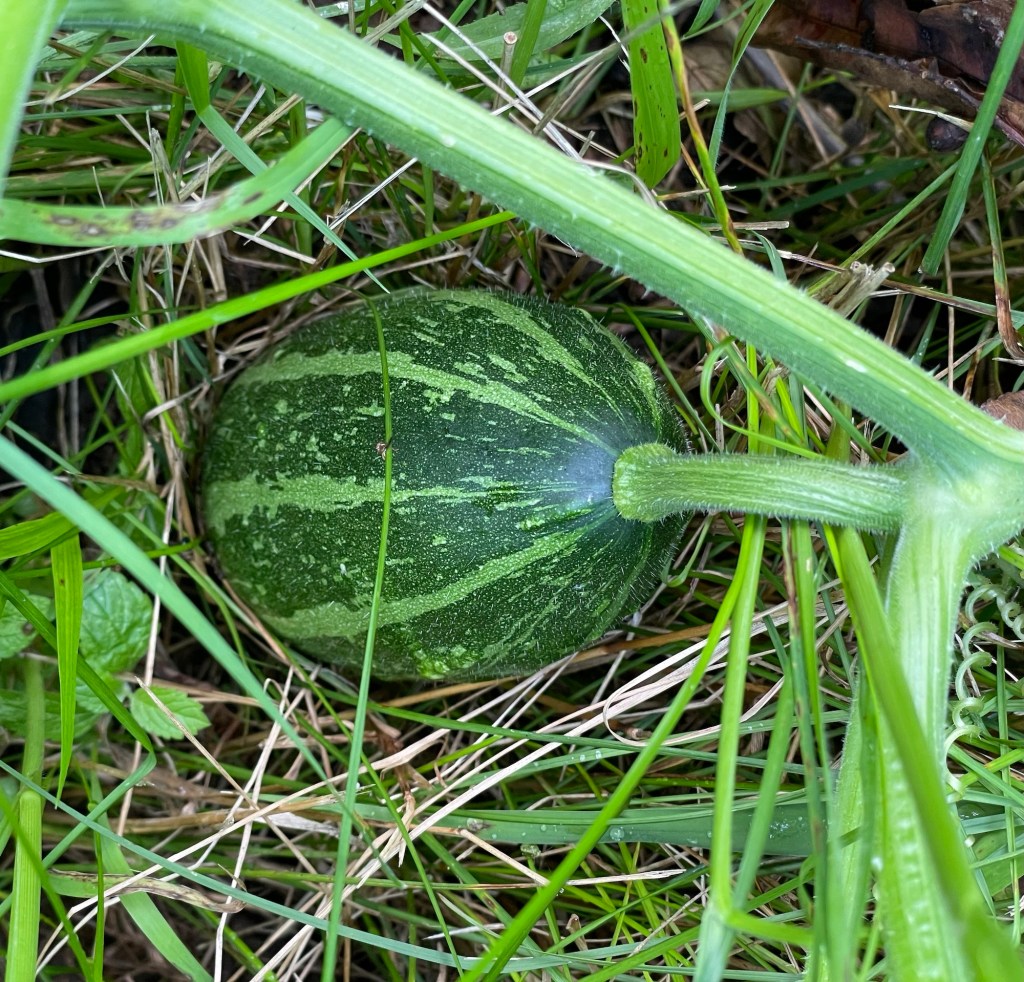
My goal was to find a species member of the squash family avoiding all varieties that would grow untended and become a vine like weed growing over the pasture grasses while dropping seed rich gourds or squash in the grass throughout my farm. I thought it was a good idea both as a wild plant potentially rich in nutrition for humans and a wildlife plant. The whole genus seemed to be missing in action to me. It was very hard to find these seeds because no one would grow the species. They were viewed very oddly as unimportant and remnants of wild species with no inherent value. No one needs them anymore. They were also poisonous to eat. So that may have added to it as far as wanting to have self perpetuating colonies of it. Yet the goal is within reach. Let’s face it. It’s a squash. Anyone can grow it. Yet it was one of the most difficult things I attempted to do at my farm of which I only partially fulfilled even today. Here is what happened.
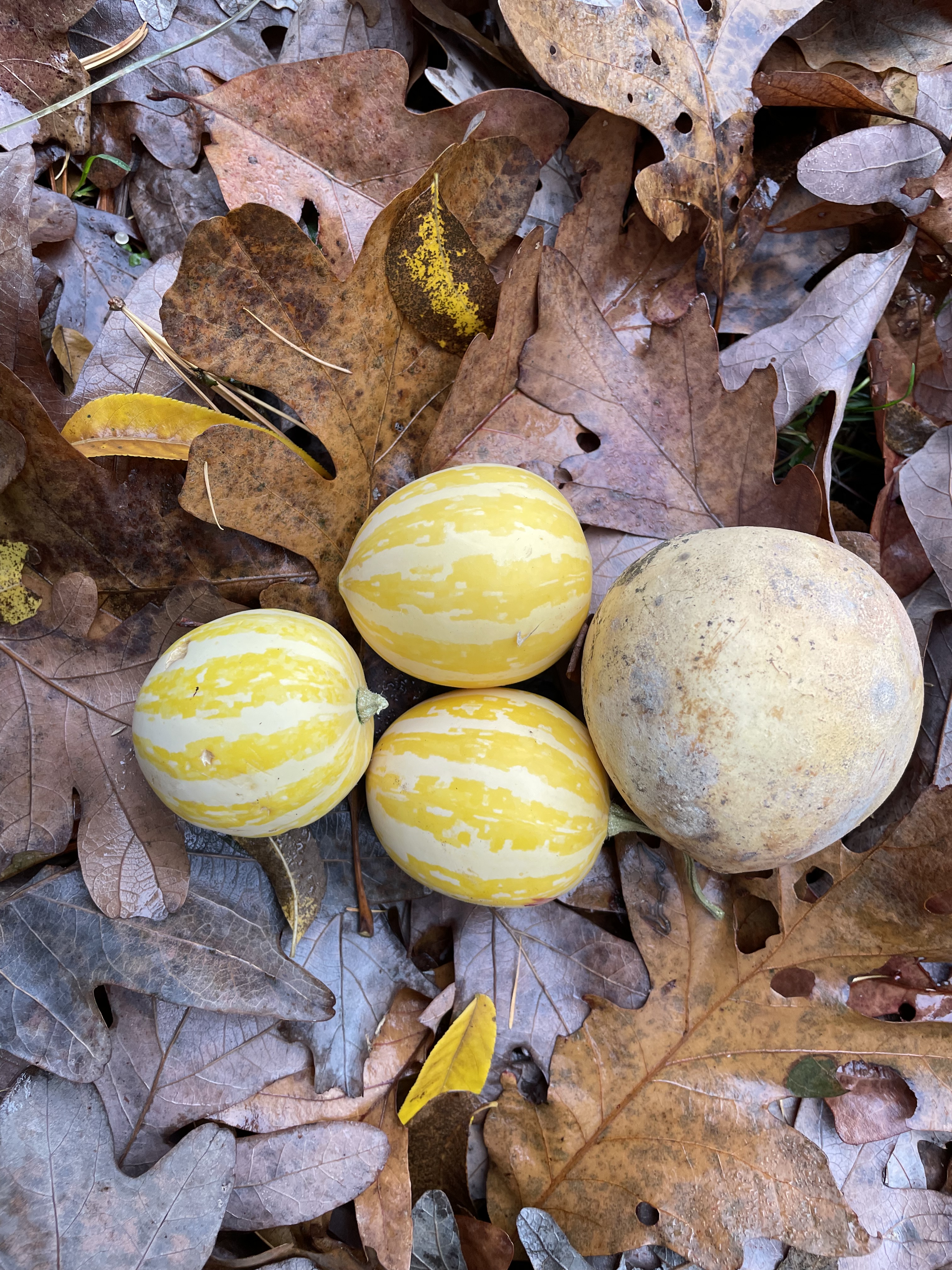
I gave up trying. This spring I drove over some squash and gourds which were produced back in 2022 and sat on the ground near on my packed gravel driveway for almost two years. The vines started on top of my wood chip compost pile-driveway and grew up and over the pokeweed and onto the driveway taking up quite a few parking spaces. I let them go. No one was parking anymore. The gourds sat there as they dried over the winters. It was funny in that prior to my crushing gourd experience, nothing was happening. There were no new seedlings from the 2022 crop. The gourds just sat there in their entirety. No animals drilled into them. No one was tempted to snack on them. No bird pecks. It looked two incisor marks were on one fruit. It looked squirrel to me. Nothing for two years. After crushing them with my Dodge pick up truck, the dust and seeds spread out on the ground in great abundance followed by massive amounts of seedlings many of which grew right into the gravel. I began to think what would help in this conversion for the species. I am sure the squash plants were asking ‘Where are the cars when you need them?” Obviously the snow, the freezing temperatures, the massive spring rains and lots of animals wandering by did not touch the gourds or seeds. There the seeds sat protected and locked into their shell type universe while riding out their quiet life until I drove over them. Why could I not replicate this before?
This genus of these two species combines a certain resilence to both groundhog and deer browse yet it is not completed yet in terms of its population. One year I took a hundred plants and moved them to my outback far away from my barn. Within a months time the plants were nailed mercilessly and then regrew. No gourds were produced. Last year I moved several plants to my home near an oak woodland to test against shade tolerance. They too got nailed. However in that batch a few did not. The light shines on those with the deepest faith I am told. Its a nice ideal but in the real world they say action is needed for enlightenment. For that I would need only a few plants that had the right smell and chemical compotents to resist browse. That was the direction I took but I am not sure I am at my destination. I see the browsing has included some gourd consumption too as well as foliage but this time it is light which allows the plant to fruit too.It is not one or the other. It includes the browsers as part and parcel of its life cycle and does not block them entirely. Complexity is the key to success.
At one point during my grow out of heirloom pumpkins and squash we made several attempts on my farm at wild grown edible pumpkins. This entailed using the failed tree planting locations and mulch mats to establish them untended by direct seeding and hoping for the best. This method was not very uniform but it was a joy to see a Howden Alaskan pumpkin sticking up in the middle of a grassy field. It was like the vine creeped along the ground to avoid detection and then a pumpkin emerged. This method was not reliable only because the plants were not drought, bug, disease and animal resistant to do that on their own. The direct seed method also attracted thirteen lined ground squirrels who must of thought they hit the Creators popcorn mix of seeds. They disappeared fast so few areas took. We tried replanting but by then it was a bird feeder effect. They knew where the good stuff was.
I did find one particular hybrid plant with insane off the chart growth. This deep self rooting vine produced dozens of buttercup squash sized fruit on a 100 ft. long vine. The orange squash turned out to be completely void of seeds. I found a seedless squash totally incapable of reproducing itself. Every year I would test small batches of seeds hoping for some breakthrough. Most of the time it was just small plantings done along the paths where I would walk. I was tempted to spread them to the barren islands surrounded by pavement like at my nearby Menards home improvement store. But frankly, people who manage those areas don’t need more work of which they would likely apply even more herbicides to remove my experiment. For that reason, I am hanging with my buds in the gourd patch for now.
The next test is likely going to be the most painful. I must taste the seeds to check for edibility. It happens that the ozark squash is poisonous. Someone once told me that it is nothing but a crooked neck edible yellow summer squash and you could breed it like that. Not so fast. Crooked neck squash has several thousand cumulative years of breeding behind it. Ozark has none. It is not edible and same with the wild Andean pumpkin. There might be some variations found within them as they are grown out over time but it is far from snack time. It is entirely possible the seeds could be harvested and eaten. But it is equally possible I could get sick and die. This would only add to my tombstone, “Ken: Thought He Was Immortal.A Squash Took Him Down Much Too Early.” or shortened to: “Don’t Consume Bitter Alkaloids was his last words.” On the other hand, it’s fortunate the flavor is incredibly acrid. It is impossible to consume even a fraction of a seed. A taste test would have to be very small.
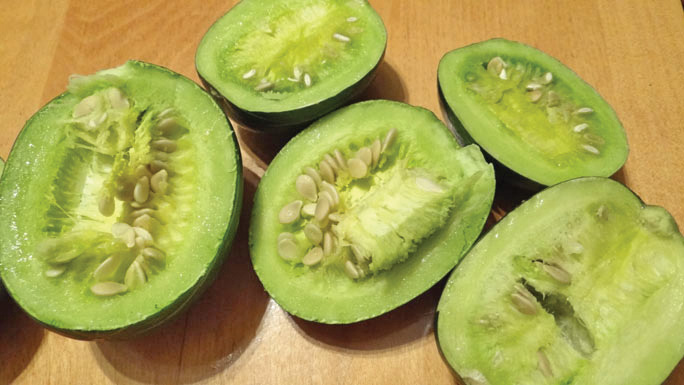
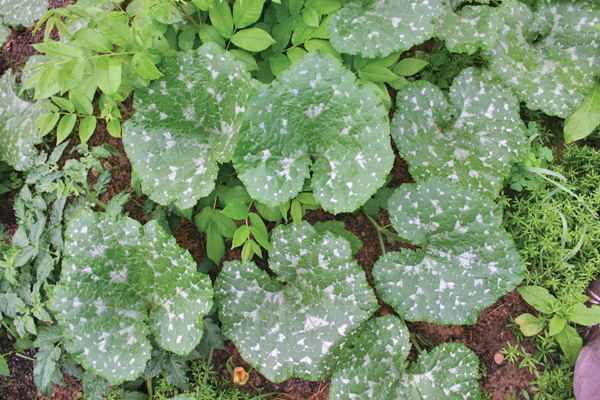
This year a new form of gourd emerged that kind of looked like a spaghetti squash but densely packed with seeds. It had been around earlier and came and went in the population. The deer and groundhogs did consume a portion of the fruits too. That is unusual and a good sign. Maybe they were just hungrier than normal this year. I’m not sure. I could start there to check for the bitter alkaloids as a larger mammal had a role already in selecting it and so far no one that I could tell died in the process. It looks like the groundhogs were eating most of them and one currently lives under my office where he vacations during winter. During this consumption process, the fruits are only half eaten meaning it too would self regenerate the following year without a truck driving over the top of it. That is a great benefit in many ways helping in distribution. You could imagine using the plants as a sort of soil stabilizer in the mix with wildflowers shading perennial plants as they establish. In the end you want a stable end game to the whole dynamic population. This will allow then for greater diversity to emerge if it has to happen in different environments. I found out that the mildew produced on the leaves slows the end of the vine and hastens ripening of the fruit. This signals the season is over for the plant. Each vine does root on the nodes to which further increases it drought tolerance, immunity to vine borer and general overall vigor.
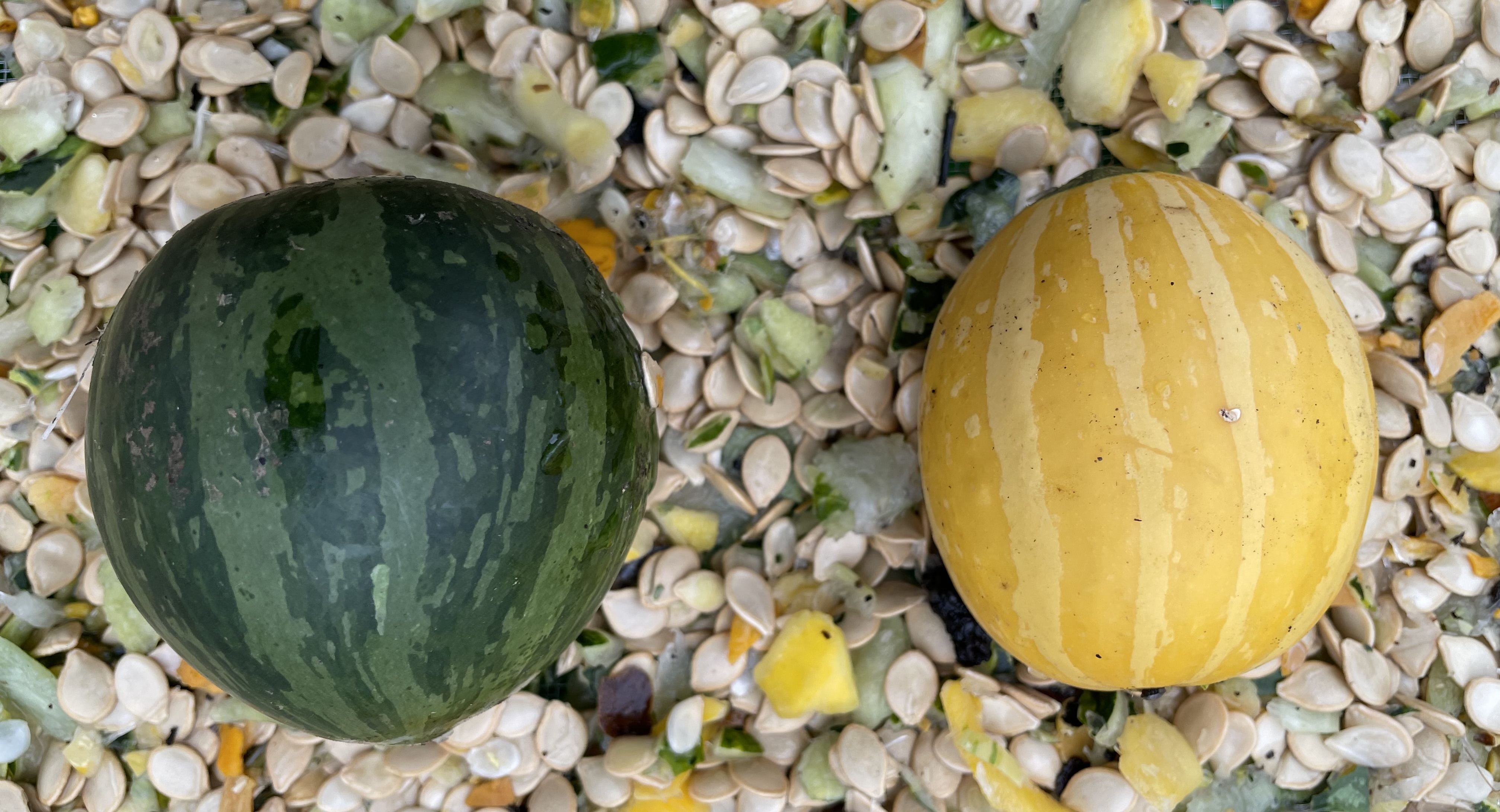
Of course you could try to hybridize it with the Naked seed Austrian pumpkin or other edible squash. But sometimes its the wide unexpected crosses that yield the greatest diversity of which can be totally unpredictable. Unpredictability is a joy to have because now you have distinct options to follow where before it might just be small steps of changes. This particular Styrian pumpkin does appear 100 percent immune to the squash vine borer plus the deer so far have left it alone. With that knowledge in tow, I will have to attempt another grow out in the outback puting it in the presence of small and large mammals and wait for their response. Will my faith be strong enough to accept whatever happens? Will the evil thirteen line ground squirrels show up ready to dine? I think so.
I kind of have the feeling that the gourd patches in my field free of cars will continue along waiting for the perfect moment to drop their seeds. They will be ready to spread weed-like galloping over my pasture free of stupid humans like me trying to taste the seeds. That is the dynamic solution. I’m going with that. I have no choice. Thankfully.
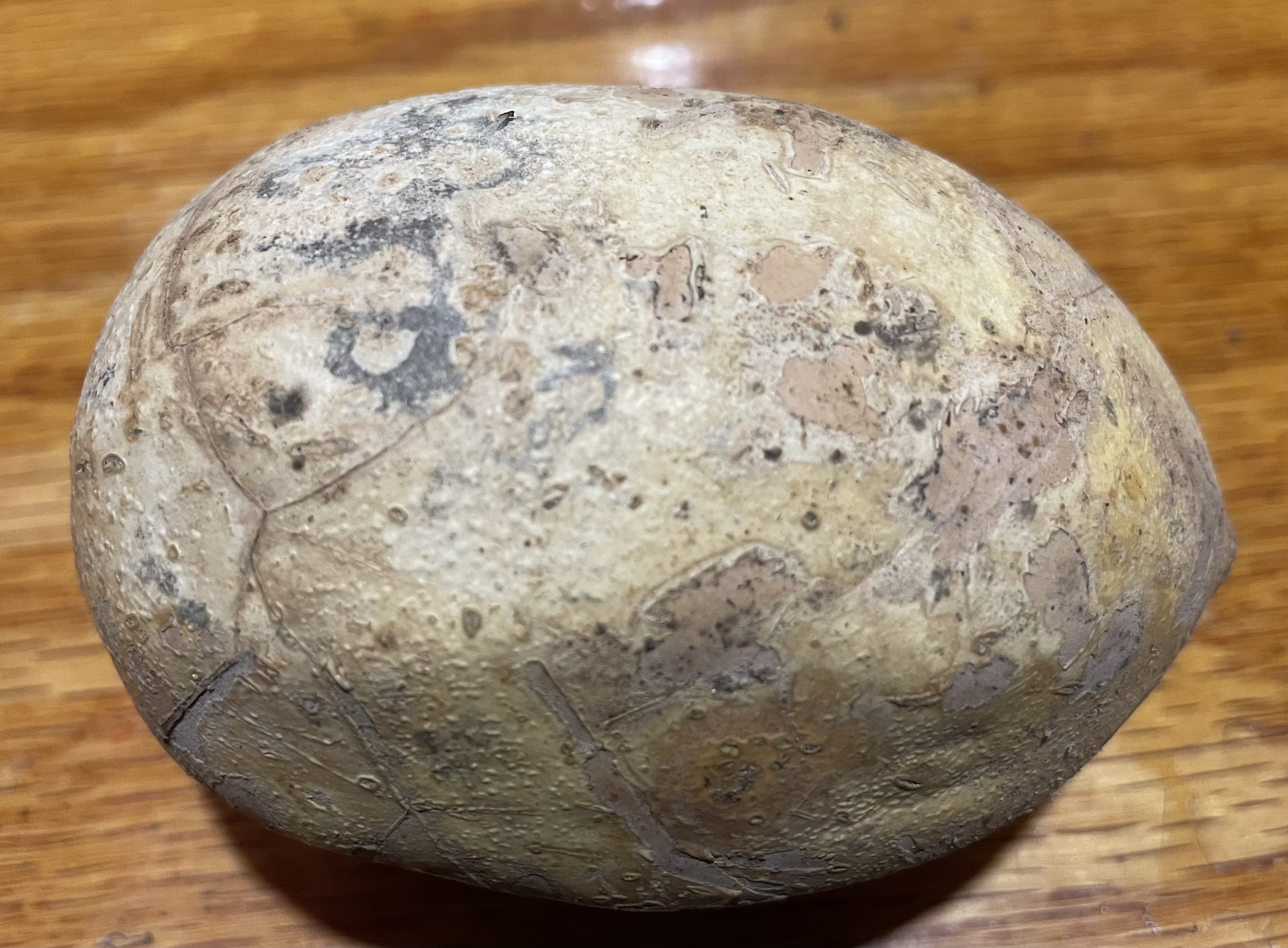
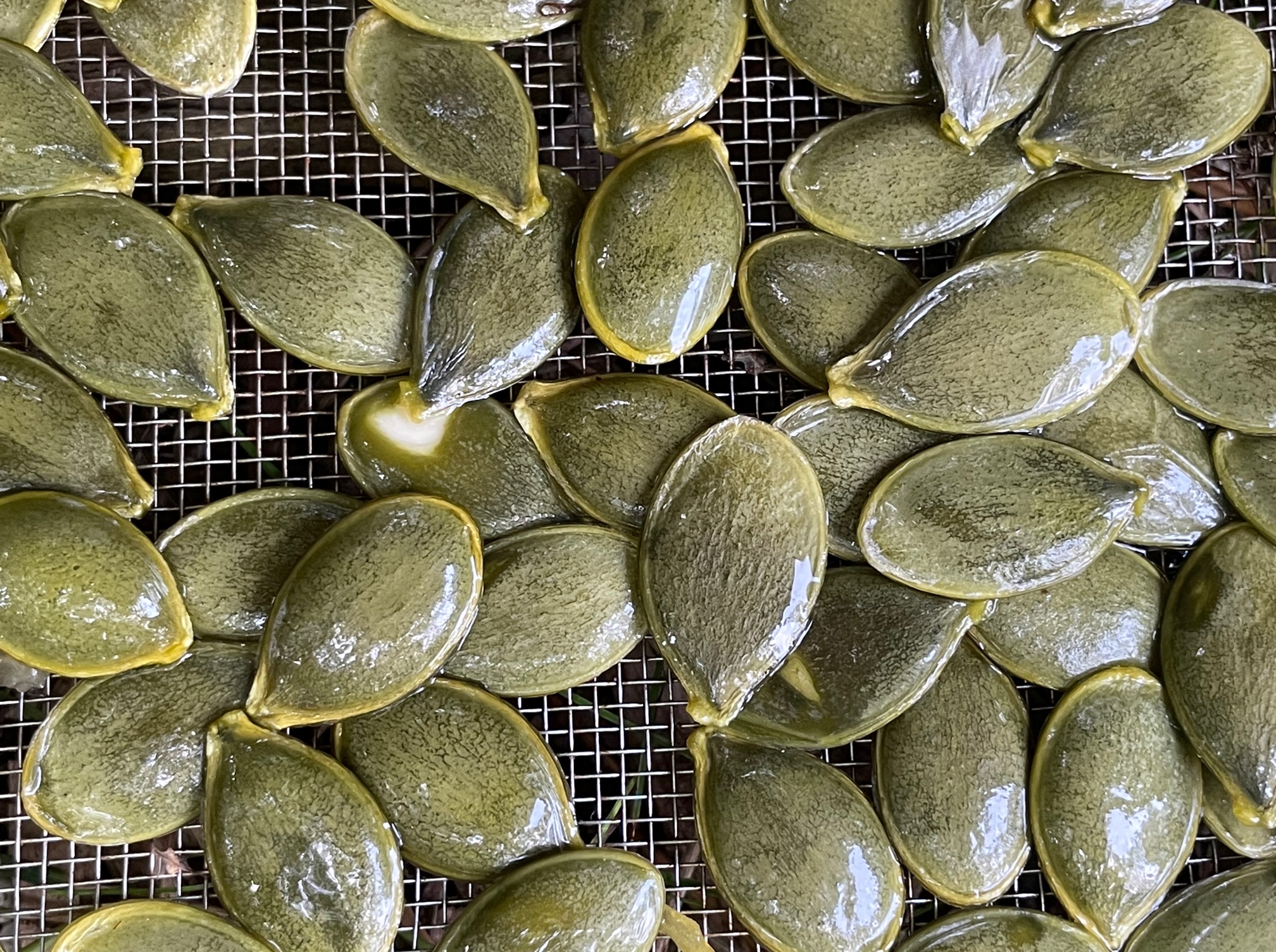
Seeds of the selections listed above are available harvested in the fall of 2024. These are a mixture of types all produced at my farm with no care applied. The seeds are easy to grow in a wide range of soil conditions but are especially prolific in herbicide damaged soils similar to what is used along roadsides and conservation easements. Green Cover grows in low organic and drought tolerant soils. It is shade tolerant to a degree able to produce gourds under the shade of oaks. The vines spread up to 25 ft. or more rooting as they grow. Plants have good tendril capabilities able to use the support of other shrubs like honeysuckle and autumn olive as support for the weight of the fruits. Fruits ripen late from September thru October. The fruits can lie on the ground for several years maintaining good seed quality within the shells as pictured above. These can then stepped on to release their seeds and grow into new locations. View the gourds as ‘seed balls’ like the ones people make for roadside distribution of flowering sunflowers or coated seeds with clay. Packet contains 300 seeds. Free shipping for this product.
The Gourd by Kenneth Asmus
I was hit by a dried gourd today. Nothing happened. On impact, I became enlightened in an instant.
What is this gourd I speak of? It is empty inside yet contains the seed of all possibilities within its shell.
If you shake it, you can hear them rattling around in there.
I have a thin shell saving my ideas for later deployment in a world filled with expansive capabilities.


 biologicalenrichment
You must be logged in to post a comment.