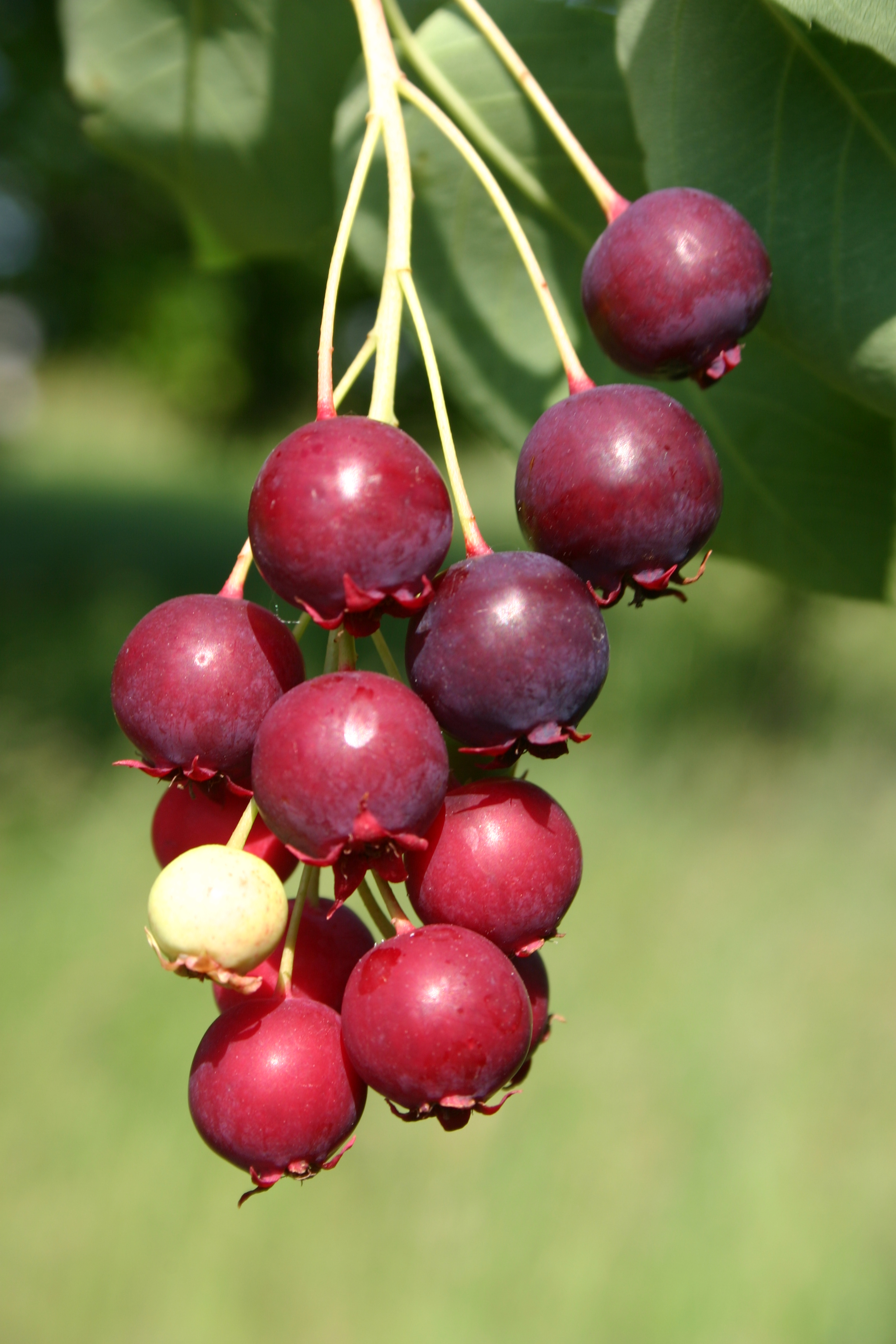
At the time of my early nursery life in the 1980’s I was well aware of this beautiful flowering ornamental plant with delicious fruit. Sometimes in the nursery profession, you would not want to use the word serviceberry. It made you look botanically inept a little if you said that. Instead you would use the genus name Amelanchier and nothing else. This is exactly how we would call each other by our last names in high school. It was only your close friends you did that with. The same with Amelanchier. It is everyone’s close friend. The nursery industry focused on two species, Amelanchier laevis and canadensis.These were usually multi-stemmed small trees grown from seed by the wholesale seedling nurseries and put into production for larger landscape balled and burlapped material. Between this tree and white dogwood, it was the most produced and well known flowering tree. Parking lots, churches, schools, strip malls, residential homes, office parks are great places to discover Amelanchier. There is no place that is missing Amelanchier. Serviceberries in flower in the spring are seen in the untended and wild landscapes prior to the oaks getting their leaves on. Birds are the friend of the serviceberry. They love them more than people and consume the fruits in great abundance distributing them wherever they go. Always expanding, always on the move, people can join in if they want but not a problem if they don’t. There are vacancies to be filled and serviceberry is going to find them. Even the racoon plays a role and will climb the trees and break branches to get the fruit. This too will pass. As the seeds spread far and wide in forests and shrub filled fields under the multiflora roses.
I was trying to figure out how to grow it from seed. The answer was to treat it like an apple seed. It requires a small dormancy of 90-120 days of cold and moisture. It was not too hard. I liked the plant but not because it was native or some sort of magical rare fruit. It was delicious and like all fruit trees there is this beautiful variation found throughout Michigan. I had the thought to create seed orchards of these unique individuals that I found all by accident. The discoveries occurred during a bike ride, a family vacation, my family’s farm, jogging along the roads in southwestern Michigan, a failed fishing fiasco, the campus of a nearby college and parking lot landscapes at strip malls. This variation of fruit was due to slight genetic differences within the genus. There were distinct species of Amelanchier but there was also many subspecies being plastic like in composition. Some thought it was nothing but hybrids of the hybrids of the hybrids type of thing where your split ends have more split ends on a population level. It was subject to interpretation when taxonomists try to figure out these slight variations in leaf and flower. To me, I did not care about native. I did not care about the taxonomic species. I would say to them, “You go ahead and argue with each other.” While they are busy with that, I will grow the trees from seed from the trees I found, create a seed orchard and enjoy the fruit. This was my straight line to cultivation. It was from these locations that I began my seed collection to produce both plants for sale as well a seed orchard for further production of seeds at my farm. It was then I began to appreciate all of the taxonomic aspects of the fruit and tree including its indigenous status and how that would taste in the fruit department at my tree crop farm. Native in relation to Amelanchier on the other hand, I found to be a very bitter drink within a wavy taxonomic category of strong opinions and bad ideas. Yet Amelanchier is sweet, delicious and full of life. I like choice number two.

Many years ago, I took my family on a vacation to another country. Canada. My older daughter felt that we betrayed her by saying we were traveling to a foreign country. We drove along the northern shore of Lake Superior in Ontario camping our way along the shoreline all the way to the town of WaWa. At one point, we camped near a bay that I thought would be a good place to fish. It was a protected location with easy access to the beach. I got up real early in the morning and started casting into the bay. What I didn’t realize was this bay had large deposits of wood and jagged stones on the bottom making it the land of snags. Soon my Rapalas were hung up and lost. Frustrated I gave up fishing and began putting away my fishing rod when I saw an area up ahead filled with blue rocks. I went to investigate realizing it was a large tree type of serviceberry tree dropping huge amounts of fruit on the rocks. With help from the birds, the rocks were highlighted in paint splatters of blue and violet. There was a nice bear print in the sand between the rocks near the trunk of the tree. The fruit was large and juicy with large clusters. It was heavenly in flavor. It was like no other Amelanchier I had ever eaten. Pure water, pure soil, pure air, a little bear fertilizer and the overall feeling that bear is coming back soon, made me appreciate this location for the short period of time I had available to pick the berries. This particular seed source like other Amelanchier, carry with it a certain proclivity to be apomictic and true from seed like the parent trees. I grew these trees at my farm and began producing the seeds and trees under the name, “Pancake Bay”. It was true to seed. “Pancake Bay” was a giant in stature with large leaves and heavy fruit set. It was adapatable to my southern farm. Amelanchier are latitude sensitive. This is a common characteristic with many types of northern plants where cultivating them a couple of hundred miles south under different conditions will make the trees succumb to disease, be unfruitful for no reason and lack vigor in growth. Latitude sensitivities are very high in another Amelanchier called the saskatoon. The selections called Northline, Pembina, Smokey and Honeywood were a major problem for my farm because of the high amounts of humidity and heat which then brings disease to the leaves and fruits. Because Amelanchier is such a huge genus and found all over it allows you to discover plants that remain clean of disease with heavy production of clean and delicious fruit. The ‘if and only if’ in this formula is time. You need to look at the plants over several years to hone in on clean fruit with minimal damage with scab disease. It was fun to find these trees hoping in the years to follow it would look just as spectacular in fruit the next year. Some did not. I focused on those that did. Over the course of two decades I began finding many unknown species in the wild including my family’s farm in central Michigan. Impossible to ignore, I also found several very nice trees in planted landscapes that I used as well which had fantastic fruit quality worthy to grow on a larger scale. In my growing of all the different seedlings the Amelanchier canadensis and laevis has just as good fruit as the selections people had made in Canada with Amelanchier alnifolia. It was a new fruit of a new species that could be used on a larger scale for fruit production.
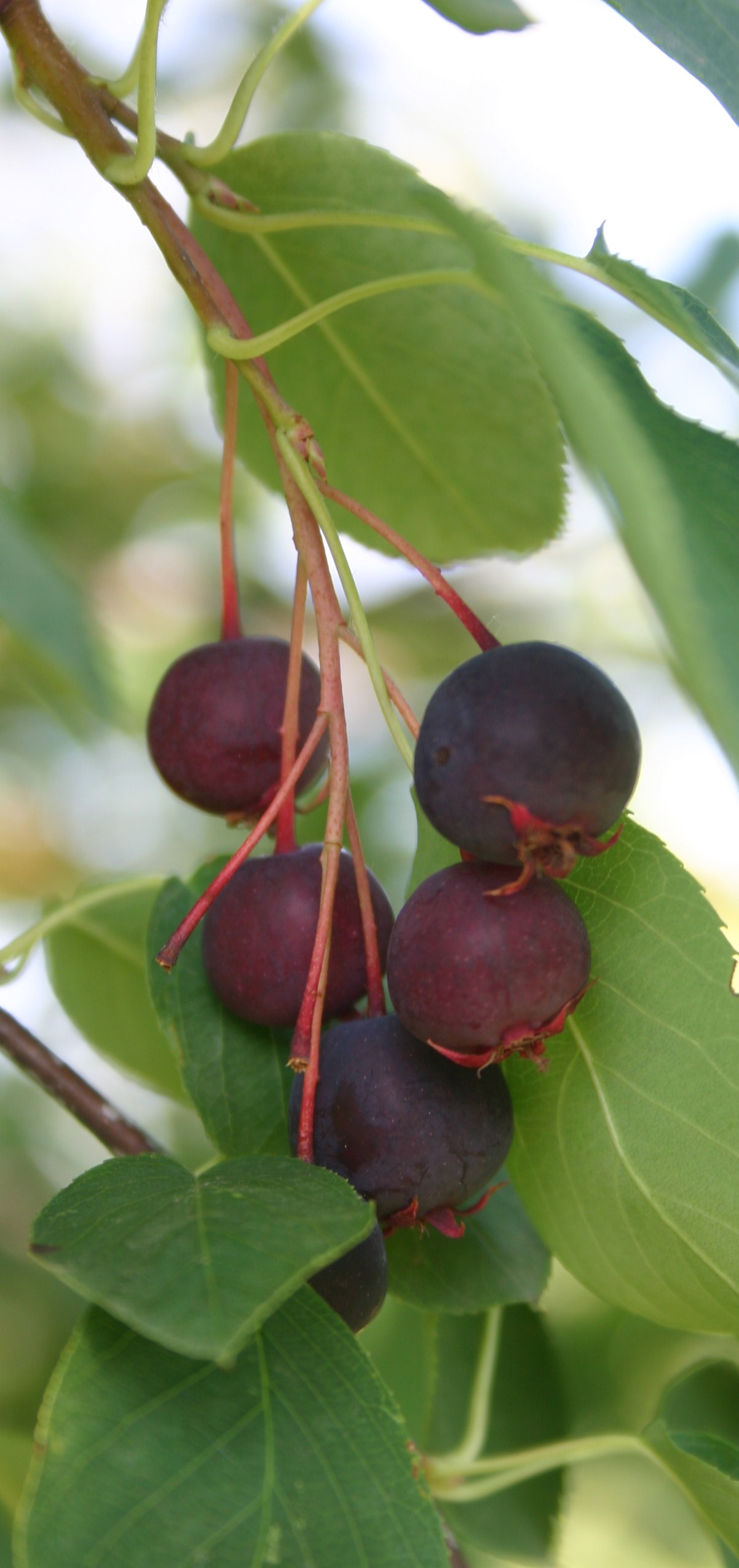
Other seed sources included ‘Two Hearted River’, ‘Whitefish Point’ and ‘Keweenaw’. And never forget ‘My Cousins Methodist Church of Which He Was a Pastor’. Oh. That was a good one. “My Old College Dorm” had a good one out front. It was consistent fruiting buried in landscape rock on a traffic island. I found several European selections like the Juneberry and hybrids found in the nursery trade and arboretum system that I slowly added to my plantings all in the name of fruit. Praise the fruit. What I didn’t know was that deer ate the foliage of these plants when they were the most succulent in spring which stunted the trees right when they started to flower. The deer would walk directly to the plants and consume them to the point of stunting the trees. Eventually, by tubing the trees and mulching with sawdust and grape pulp from Welchs, my trees began to make headway past the browse line. In the early years, I used herbicide and found out that the Amelanchier were sensitive to the damage done to the herbicided grasses next to them. They took in the herbicide through their roots sharing the herbicide but only stunting the trees. I quit using Round-up herbicide, went to poly and cellulose mulch mats and switched to sawdust as a mulch. The trees flourished and grew very fast after that. The fruits were just as delicious as when I collected them wherever the location. The heat sensitivity part was rough on the fruit production. It was particularly pronounced in drought and if it was a hot spring. Sometimes the fruit would just drop off as a dried raisin. This is a limitation found within these latitude sensitive trees.
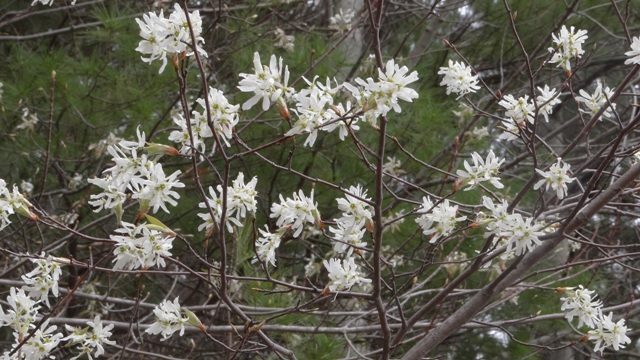
At the same time there was a bit of wiggle room in terms of adaptibility to attempt to use plants outside of its botanical range. The wiggle room was not etched in stone but it was enough to find specific trees that under cultivation would be reliable in fruiting in terms of what may be needed in terms of an orchard setting. This is much more critical if you want commercial production or a good home orchard tree. I had found the seedlings in populations of Amelanchier laevis and canadensis and these were every bit as good as the western species but much more forgiving to my climate in terms of fruit production. The big plus was they could be grown from seed. Knowing the fruit industry they would likely shun that but at least there is a variety that can be maintained and improved upon as a population of plants.
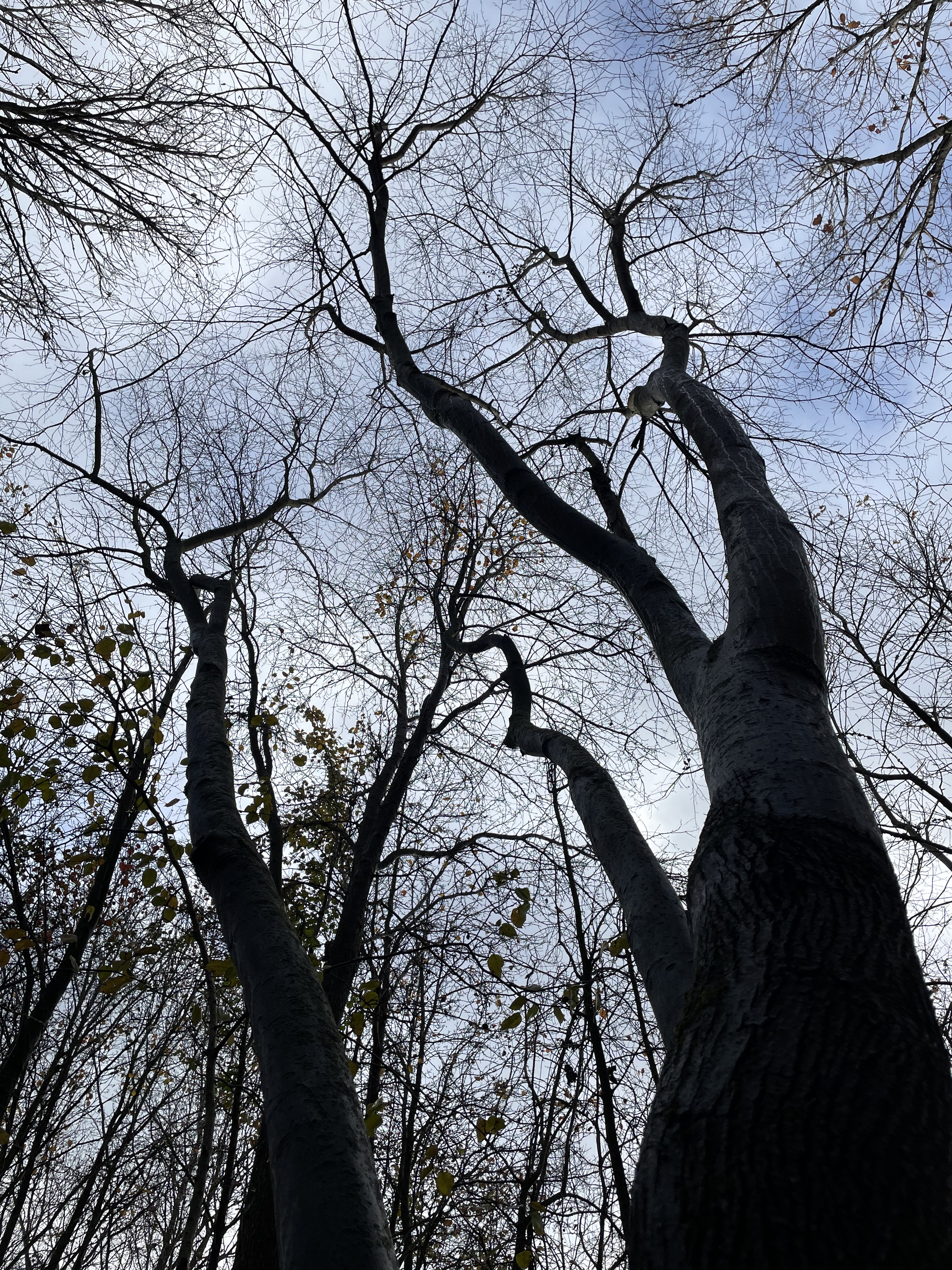
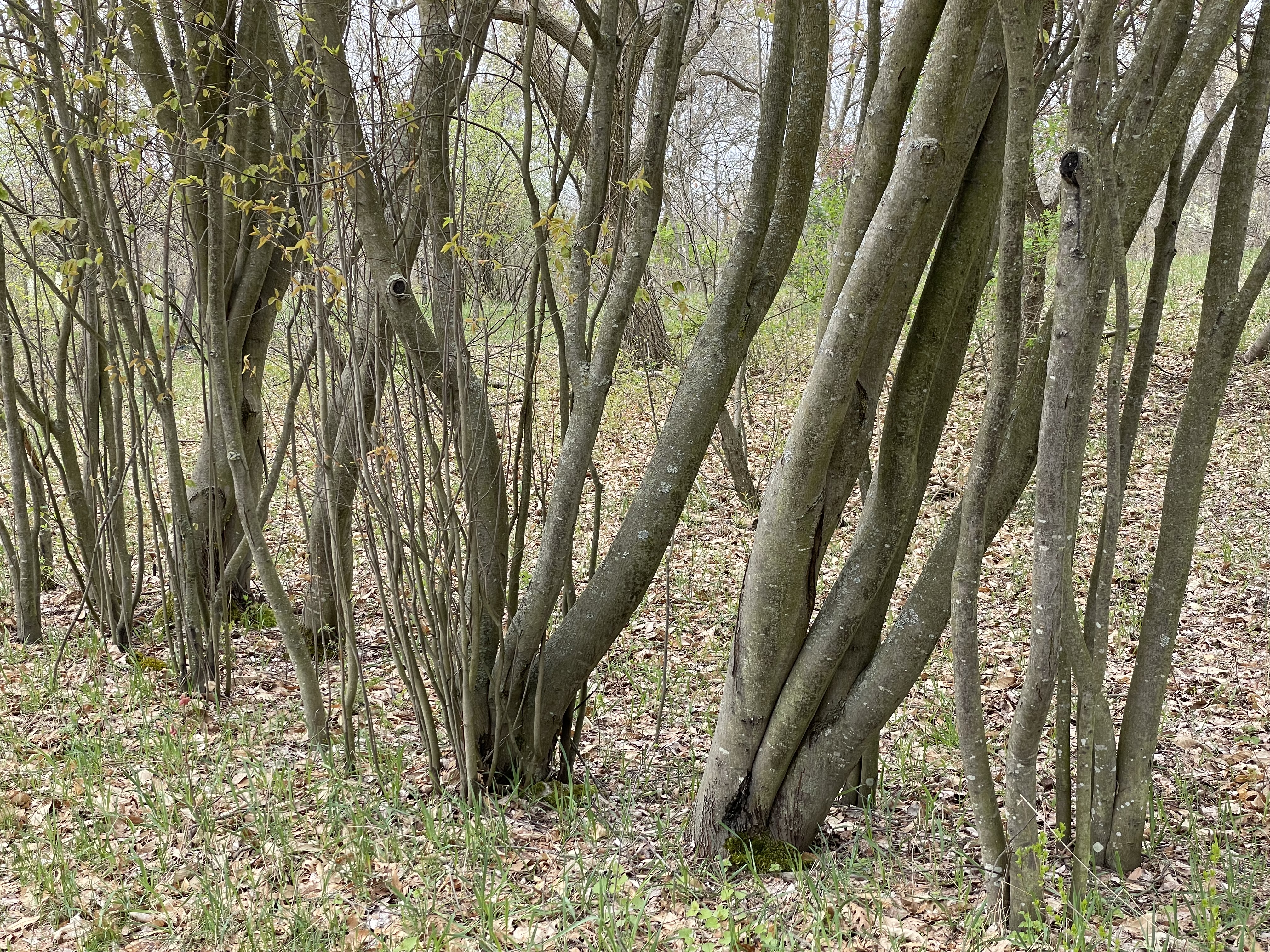
It was just by chance I purchased Amelanchier from an east coast nursery called Hess Nurseries from New Jersey. They produced from seed a tree called Amelanchier canadensis x laevis. The trees were very vigorous with large healthy leaves. I began making seed selections of this unknown cross fruiting them through three generations. I put a few of them surrounding my barn and along a hillside for later fruit production. This hybrid vigor did translate to a large tree type with excellent tasting fruit clean of disease. It was very different because this was the forest tree of Amelanchier straight and tall and free of side branching.When you grow them, you find out these variations in real life and are able to navigate the populations like you would any fruit tree. I began focusing on other single trunk large trees at my family’s farm for a while. They were also very distinct and worthy of propagation. It was very interesting in terms of wild crop diversity. The world of serviceberries is wide open. No one I knew was doing these from seed populations. It was either a cultivar or nothing. That could be the problem. We just don’t know what is out there.
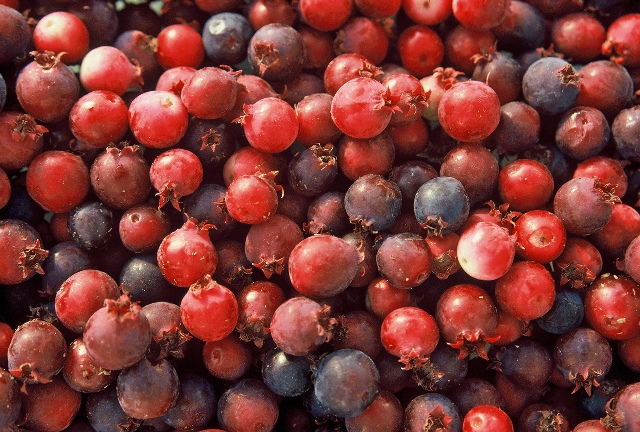
The skin of Amelanchier is not like the blueberry. You cannot put them in a quart basket or something to be used later. The fruit is soft when ready to eat.The berries have to be harvested fully ripe on the tree and then processed or frozen. The processing reveals a hint of almond due to the seeds being cooked along with the pulp. It has a smooth almost gel like consistency. I made several batches of serviceberry sauce using the variety ‘Regent’ at my farm. This selection is Amelanchier stolonifera and widely available. It produces well in Michigan but can suffer from scab in high humidity and hot summer years.
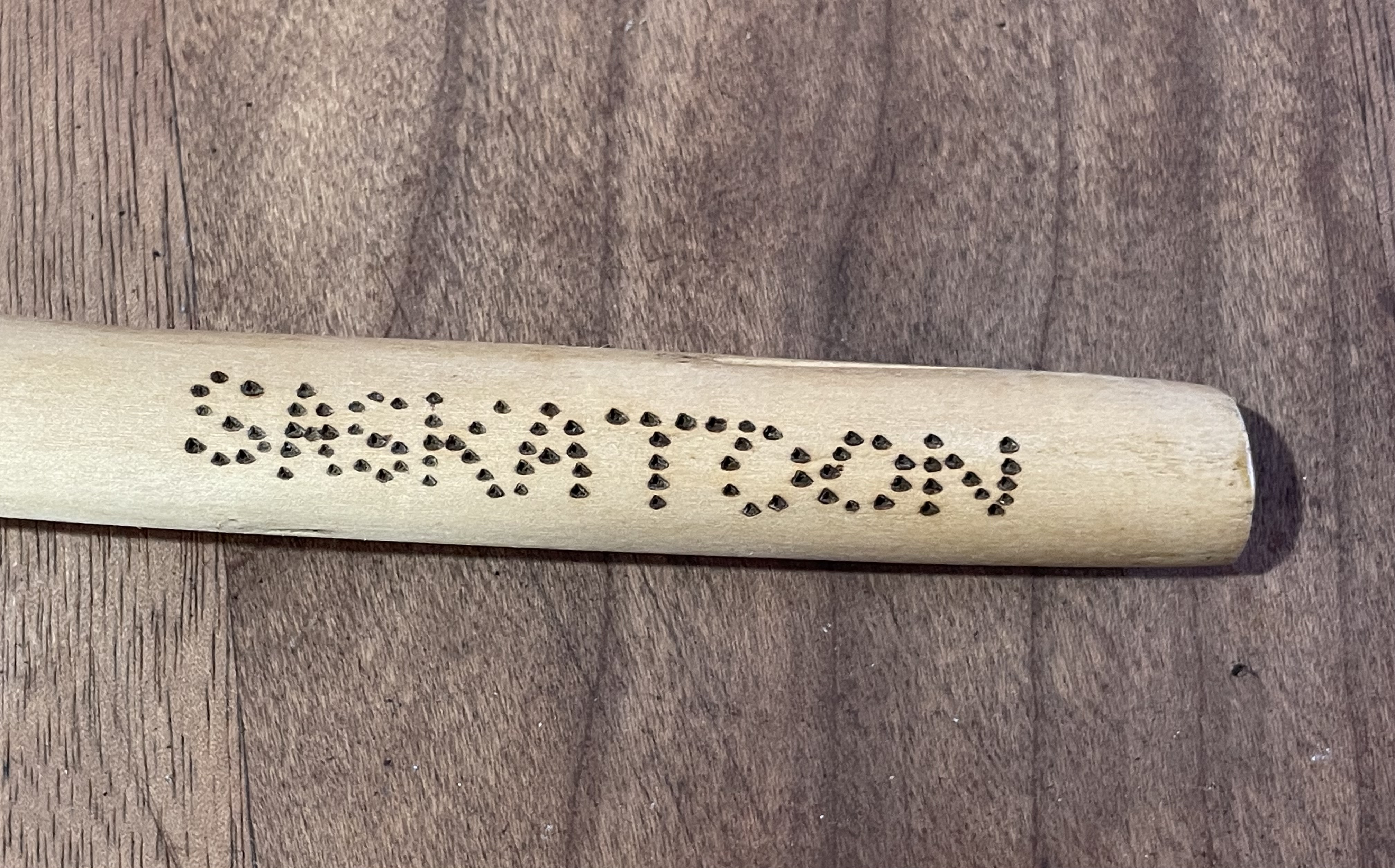
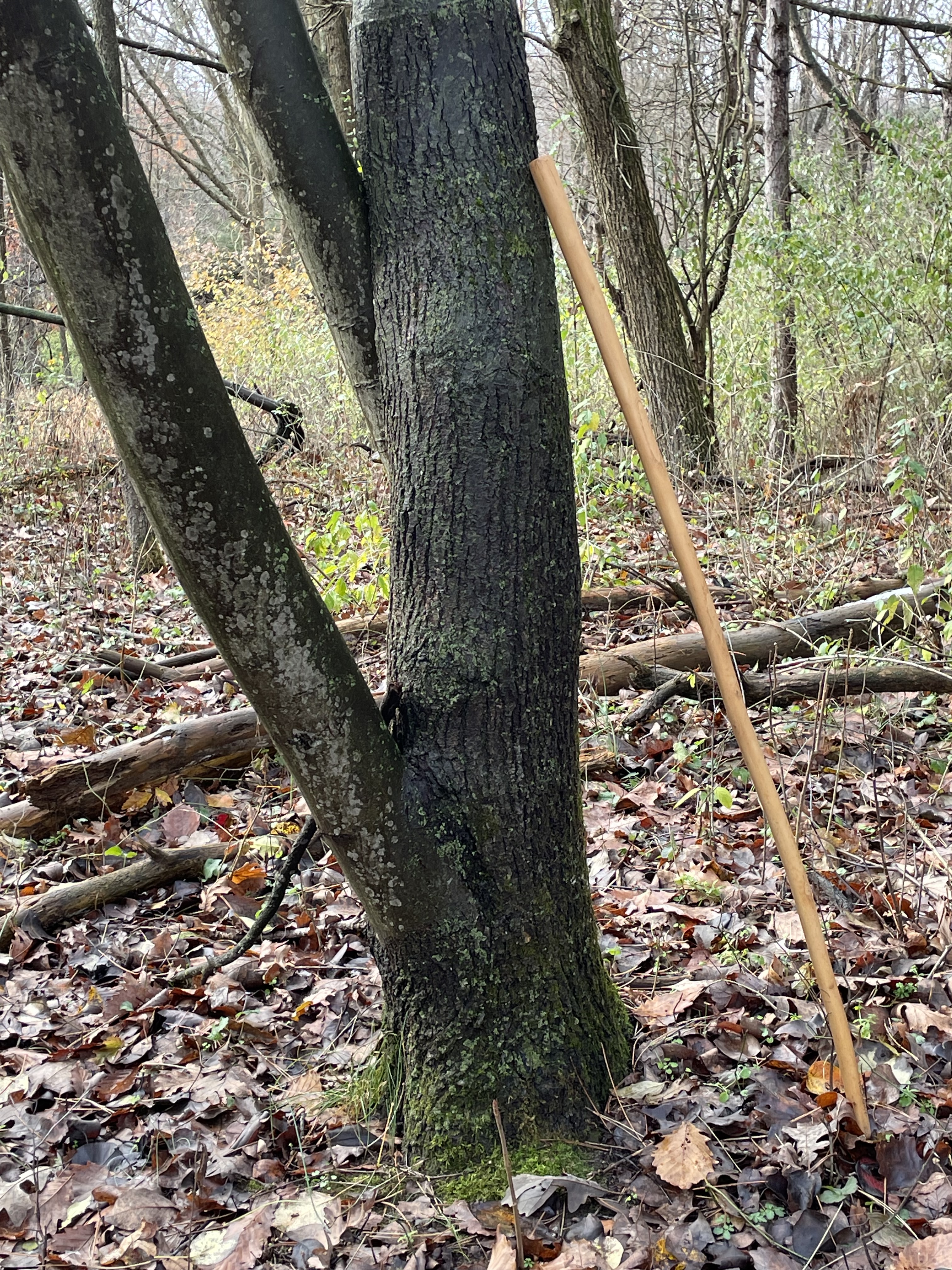
I love the subtle flavor of Amelanchier. I love the flowers in the early spring. They are such a joy to see in the spring after a long winter. I love watching the birds eat my crop while I’m in the middle picking away. I love everything about the plant. I have a walking stick I use made from Amelanchier from my farm plantings. I am wrapped up in this cocoon of warm feelings about this plant and its healthy fruit. Yet, in a brutal sort of agricultural reality you need a bear behind it. Once the bear returns, decisions have to be made quickly on the run. You need practical solutions to fruit problems otherwise it will remain as the edible wild only. Your feelings about that do not matter. Taxonomy does not matter. What are you going to do with that fruit and can it be shared to others? The bear is coming. He too loves the fruit and depends upon it for survival. He has large white teeth. You can see them glistening in the sunlight bouncing off the Lake Superior shoreline. The bear will speed us along in this discovery. I know that the Amelanchier walking stick I made is not going to be enough. It’s too small.


 biologicalenrichment
You must be logged in to post a comment.