All fruit trees contain within them their original blueprint of the forest environment that they were originally found. There are apricots, plums and apples throughout the world that are part of the forests around them in some way. When these fruits leave their homes, they are methodically selected over hundreds and thousands of years to grow into the orchard system we know today. I am sure there are still 100-foot-tall apples somewhere with trunks three feet through. But where can you find that type of tree? It’s highly improbable. I wondered if it could be possible to create or re-create a robust apple capable of reaching new heights in a forest like environment? I did not have a specific direction to follow because I did not know where to look. It turned out it was hiding in plain sight.
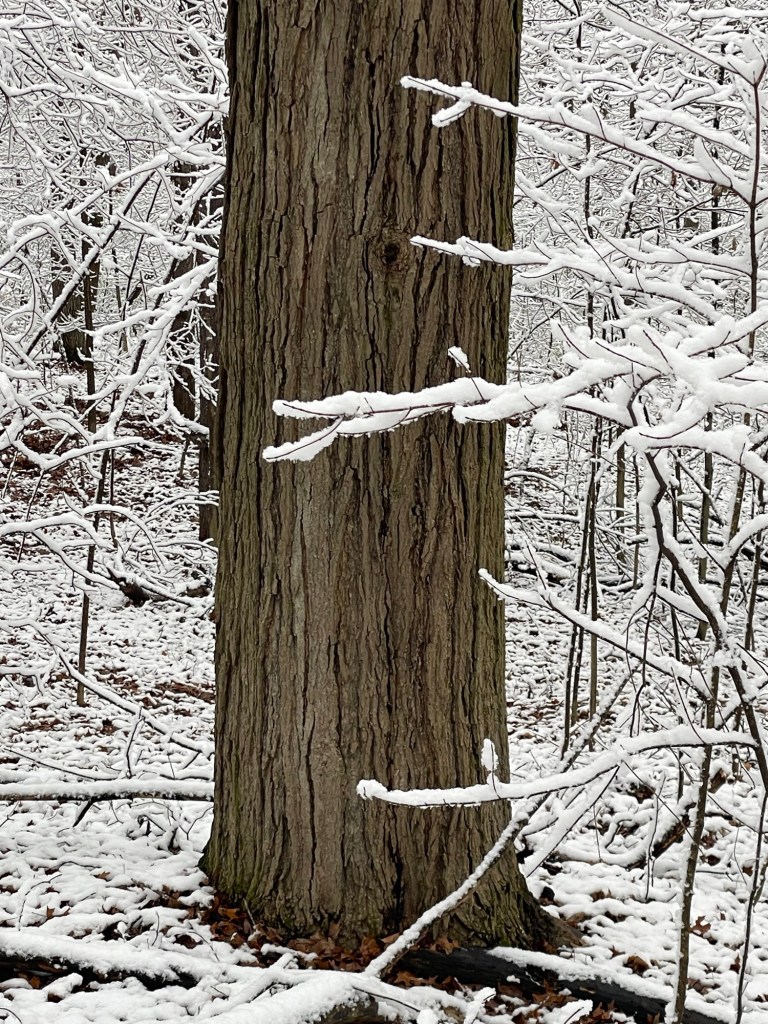
Apples are pruned, put on dwarfing rootstocks and bred to be squatty with thick wide branching trees to support huge amounts of weight. Everything is grafted. There are no seedling apple forests with tall vigorous trees rich in fruits way at the top of 100-foot-tall trees in North America. But there are components of forests that contain apples as part of their composition. Often these are cast away fruits along the roadside. By great fortune, I found some of these species that were hiding in plain sight mixed with Russian apples originally found in these ancient wild apple forests. Only this time they were in the curb lawn of a retirement community planted over 60 years ago. I began wondering if they would show up in a population of them if I grew them from seed. They did and here is how that went up and up.

I started from seeds. You grow everything from seed, and you start with selecting seedlings for their vigorous growth, clean foliage and small amounts of side branching. I have two trees of the same age in one of my plantings. One is 5 feet tall. It is thick with spurs like a pin cushion with thorns. Each thorn has thorns which produce loads of flowers and fruits every other year. Just a few away is a 30-foot-tall apple of the same age. It rarely fruits. It has only a few branches at the top and no branches for the first 20 feet. I did prune it a little but only directionally to accommodate the other nearby apple trees. Both apples have a wild apple counterpart within them. The dwarf spur type is indicative of a very cold and windy climate with little vegetation. It is from Siberia and Alaska and is said to be the world’s cold hardiest apple able to take minus 40F or more. It is the Ranetka crabapple selection. In a different environment, the tall apple must reach the canopy as soon as possible and cannot waste energy on fruit production. It took many of my selections of timber apples 20 to 30 years to fruit whereas the spur type fruited when only 4 years old from seed. Both selections are essentially the same seedling type of apple free of a graft union. They are growing their best in my untended forest planting next to the shellbark hickories, American hybrid chestnut and walnuts. Within this same population, I found several spur type apples all of which produce small fruit in dense clusters. This heavy fruit set slows the apple tree down and creates a compact tree that is a natural dwarf. This time it is likely related to the nearby pollination of the Chinese crabapple that was also in the planting. Apples are great outbreeders. The bees do their jobs very well.
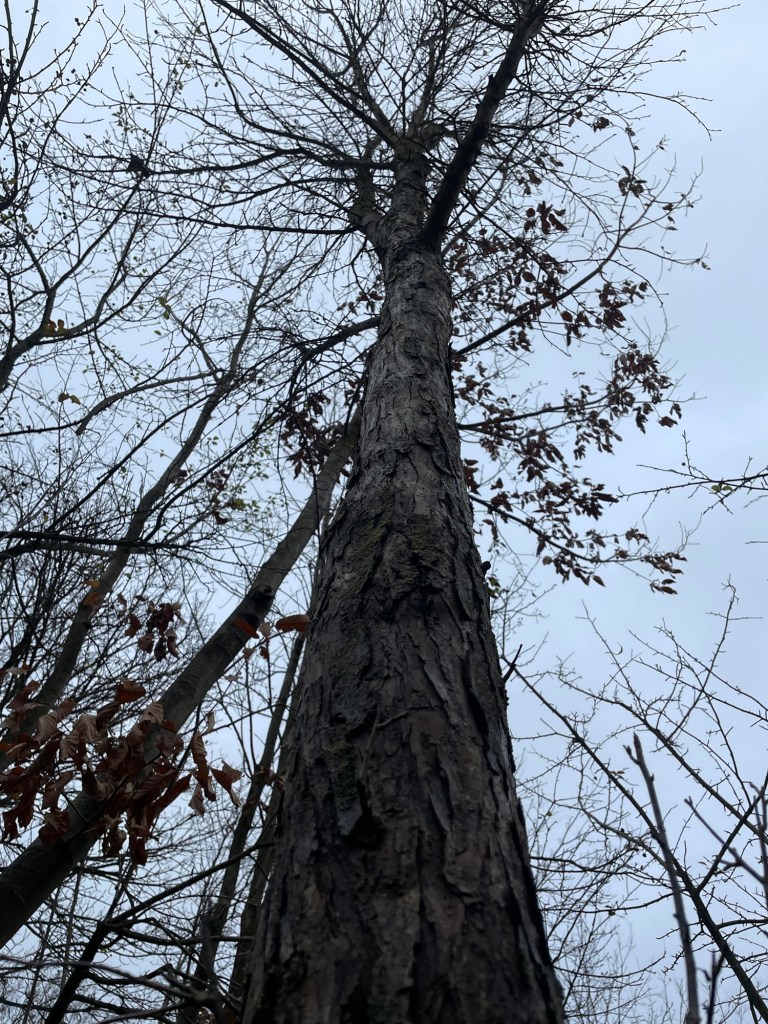
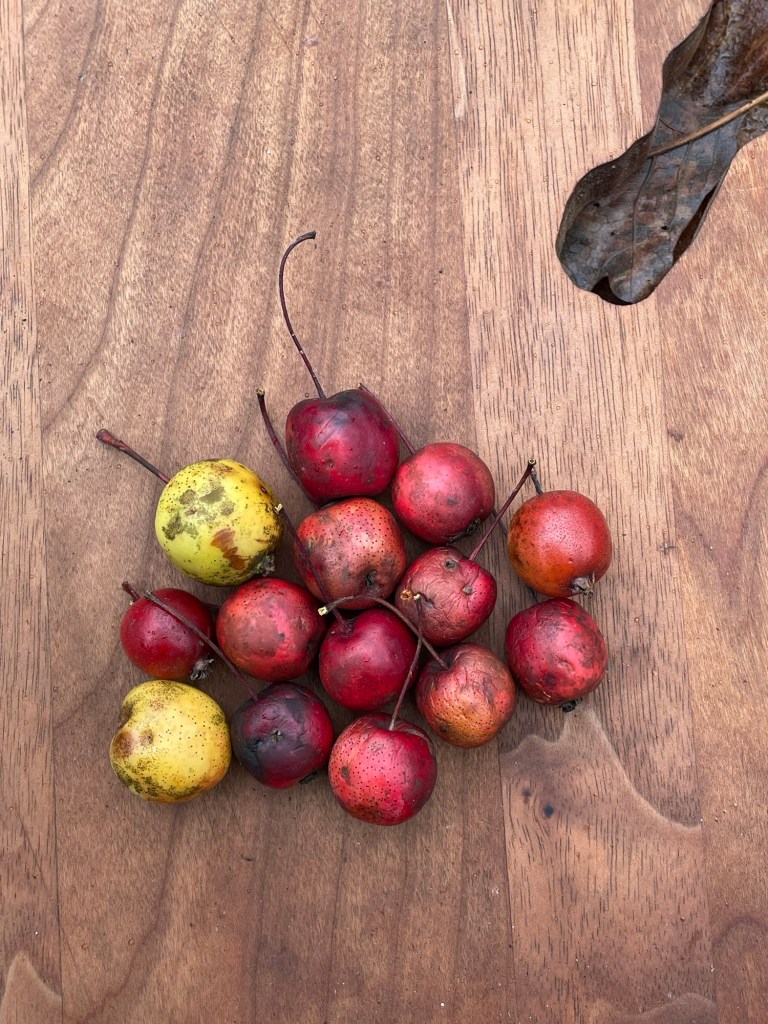
The retirement community apples were off the charts in yields. The grass was layered with them fermenting under our noses. Other people had come to collect them for bait piles for deer hunting. We took them back to my barn and crushed a half a truck load of the two-inch sized red and green fruit with sledgehammers and soil tampers cleaning the seed in a blender and screens. Eventually this produced around 3000 seedlings. From this group roughly four plants had extremely fast growth, clean foliage with hardly any fruit production. This was the forest apple I was looking for. Obviously, these are the apples that people do not desire. They are small fruits with low yields of tart and astringent tasting fruit. It was not relevant to the human population as far as cultivation goes. Once again I think I created something that no one wants. Or not?
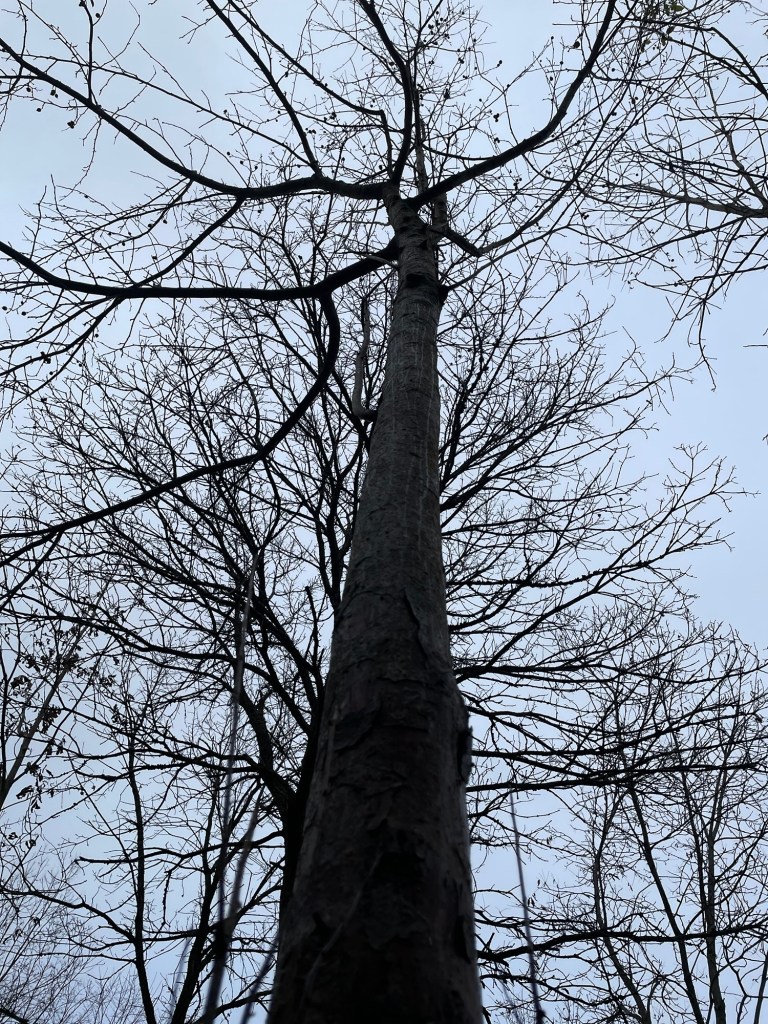
This population approach to breeding apples is very common in that you are making selections from a large population, winnowing it down to those individual seedlings which produce the most or taste the best. When I visited Cornell University once with the North American Fruit Explorers and met Roger Way, he described it as a one in quarter million shot of a good apple for eating. This time you select the apples that look like oak trees using seed from the best timber like selections. The odds are more in your favor only because it is based on the natural propensity of the apple to grow fast and straight. It is not a rare flavor profile almost impossible to find for a large population of people. People have narrow tastes usually and are picky. Plants are broad and expansive.
You can graft the best timber selections (see the website for details) but only for making additional seeds. You want to avoid grafting at all costs for the seed orchard. You want the seed tree to be free of graft union incompatibility and the results of stunted growth. It would be preferrable to grow the timber apple quasi-isolated for the best effect. That could be difficult because ornamental crab apples as well as wild apples are everywhere and the pollinators they attract travel for miles effortlessly. The apple is best represented by seedling trees from the forest and not the orchard. You have moved it to a different ecological system. From the botanist G.E.Hutchison, I call it the theater where evolution is the play or driving force of its future development. This is where you begin to step aside and let nature handle it in many ways. Your appearance is for guidance from time to time only to reinvigorate and enhance this opposite value you have discovered. These selections along with their seedlings can produce additional seeds which could be refined and improved further to the point where all the trees would be the forest giants of apples. Each tree can now reach the canopy quickly and produce a clean knot free lumber as well as a rootstock for apples where vigor equates to immunity to disease, deep rooted drought tolerance and fast growth to the scions put onto them.
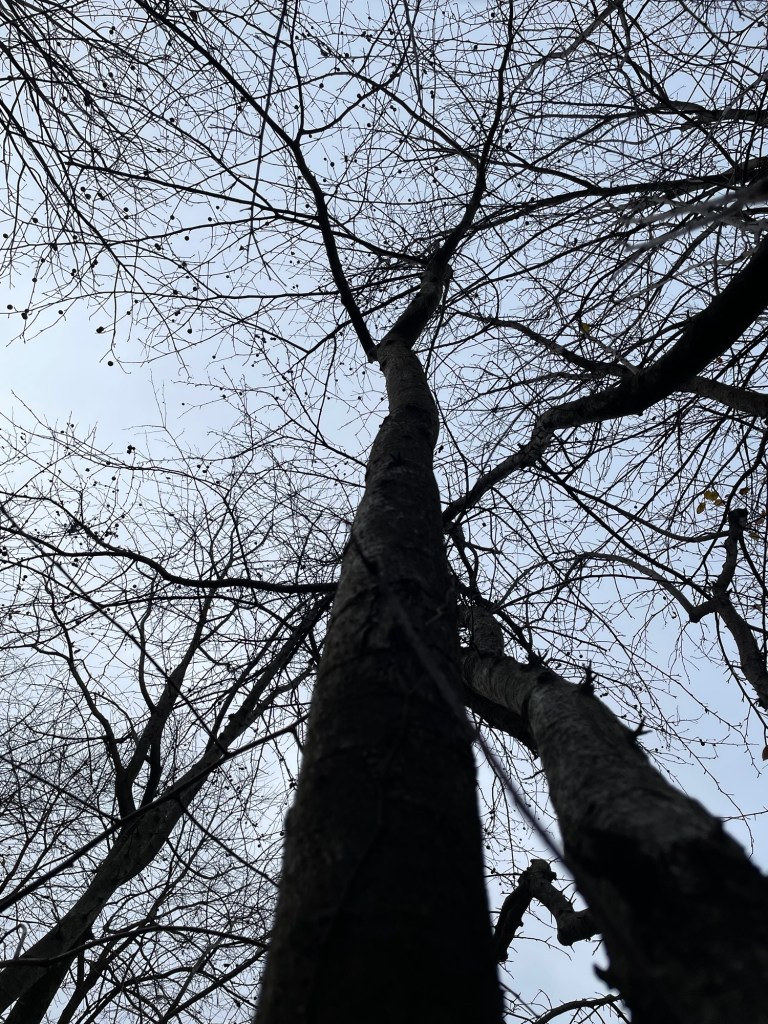
The possibilities are endless in the forest. Even in the urban world the forest apple has a place free of low hanging branches that interfere with pedestrian traffic and pruning to avoid wires easily with wide branching. Putting it into production is quick with existing technology and techniques within the nursery industry too because after all, it is an apple. The selections you see on my website Timber Apples are not etched in stone. That is the starting point. Another generation or two of growing out the populations will only get better before leveling off at some unheard of height for an apple tree.
It only took 30 years to come to fruition. It is not quite the sugar maple mammoth I envisioned. But one step in this journey is half done in my overly vigorous seed strain. The apple forest is alive and well at Oikos Tree Crops. At this point in time you don’t have to crush apples with a sledgehammer or the use an old Vitamix to pulverize a wheelbarrow full of apple pulp. There are easier ways to improve the world’s greatest fruit. You start with seeds and then ask yourself is this the beginning of the giant tree I have been dreaming of?
Enjoy. Kenneth Asmus


 biologicalenrichment
You must be logged in to post a comment.