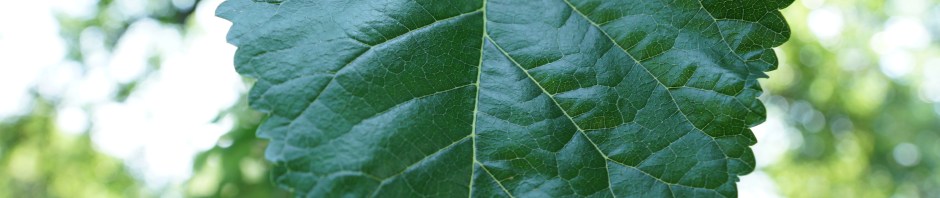
The range of any plant can vary tremendously from high to low elevations, across whole continents not to mention human introductions. With many woody plants, these are not entirely reflected in the selections available in the nursery marketplace. It was this winter hardiness factor that interested me when I grew palm trees in Michigan. The Chinese Windmill Palm had a large range of adaptability and did survive here much longer than I expected. I was wondering if other plants had a broader range of hardiness and where I could find those. One of those was the black mulberry. It was considered a Zone 7ish plant and not hardy enough to survive Michigan. There are no wild black mulberry trees to draw germplasm from. The species Morus nigra was never used to any degree in the United States compared to the well-known species of Russian and White species which were staples of the conservation industry. They were the windbreak and fruit bearing trees for wildlife including the trees used for silk production which never came to fruition. I initially started growing black mulberry from the grafted varieties. I found four Pakistan selections with huge fruits from a nursery here in the U.S. only because that was all that was available. They are also food selections bred for human consumption. I think anything with ‘Hunza’ attached to its name sounds mystical to me. Maybe I can live to 100 years old too if I eat mulberries. The selections grew vigorously. I loved the large lustrous leaves. When winter came and went there was no live tissue left. Only a brittle stem remained. I remember walking by the sprouting trees below the graft union thinking at least I got a rootstock out of it. A week went by, and those sprouts disappeared via white tailed deer. Maybe not. Time to move on.
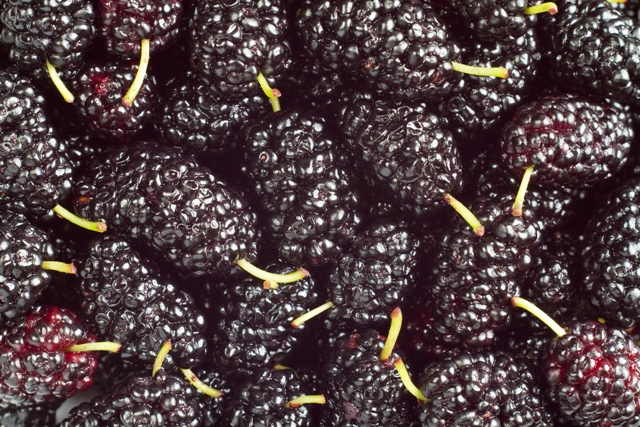
I began to look more closely at the Morus nigra species to find what is considered a good mulberry as far as cultivation goes. There was a lot more than I thought. I knew about the fruit variation found in wild mulberries in southwestern Michigan. When I had a social media account for my business and posted something on mulberries, a few people had very strong opinions on mulberries. The native plant movement had greatly exaggerated the claims on red mulberry as well as what was considered the proper identification. The cultivated mulberry that people consumed worldwide was the black mulberry. It was considered the best in terms of flavor and sugar content. A close second were the hybrids of it and certain selections of white mulberries known for their heavy fruit production. Many viewed mulberries as weed trees with no inherent value. That was me at the beginning of my farm. I cut down several smaller trees which were growing in my pasture. Before I became more knowledgeable about the Morus genus, I had no idea of the value of this crop and its importance to wildlife and people. It was the fence row tree growing into the wires and fusing with the metal that made me rethink the power of this plant. I was impressed with the galloping mulberry, making its way across landscapes because birds survive on them for food. Removing them does not create environmental health where better trees will grow. It is the mulberry that can grow in places where few things will grow, and it does it with great ease. The cracks of cement contain mulberries. This is the superpower of the mulberry. It will be the new fruit plant in the coming years of fluctuating climate. It’s not going anywhere, and we need to harness that fruit’s power into something wonderful for people. There is a huge repository already in existence in the wild trees. We could make use of that if we wanted. I began to wonder why there were few if any varieties of the wonderful black mulberry for zone 5. For that, I would have to create it myself
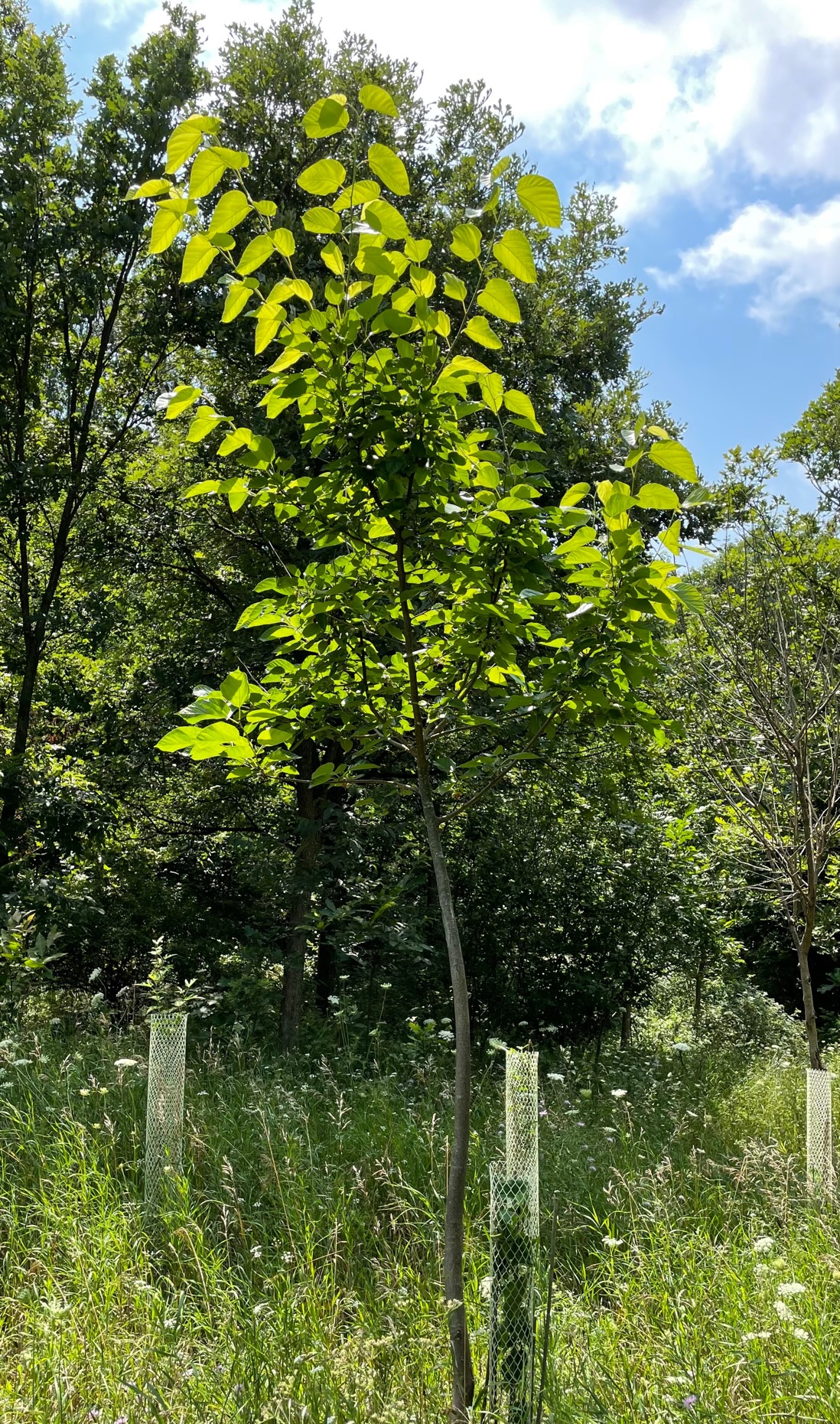
It was during a seed grown population that I finally got a chance to explore Morus nigra in its full glory. The population had the dark green, large round and sometimes lobed leaves in perfect formation. I was very excited when I was able to verify the seed source from a seed company here in the U.S. Having a means of growing the trees in bulk would eliminate the need for grafting. I could remove weak and less hardy seedlings. I created a population to select seedlings from to develop a fully hardy zone 5 seed source with the fruit quality that people love in a mulberry. It cannot be too watery or insipid and it must have a flavor a little bit like a raisin with a mellow taste. My population could provide additional cultivars for fruit and wood quality. The mulberry wood is very beautiful with an orangish red hue to it. I have a plank I bought from a local wood lumber company of which I am making a table from.
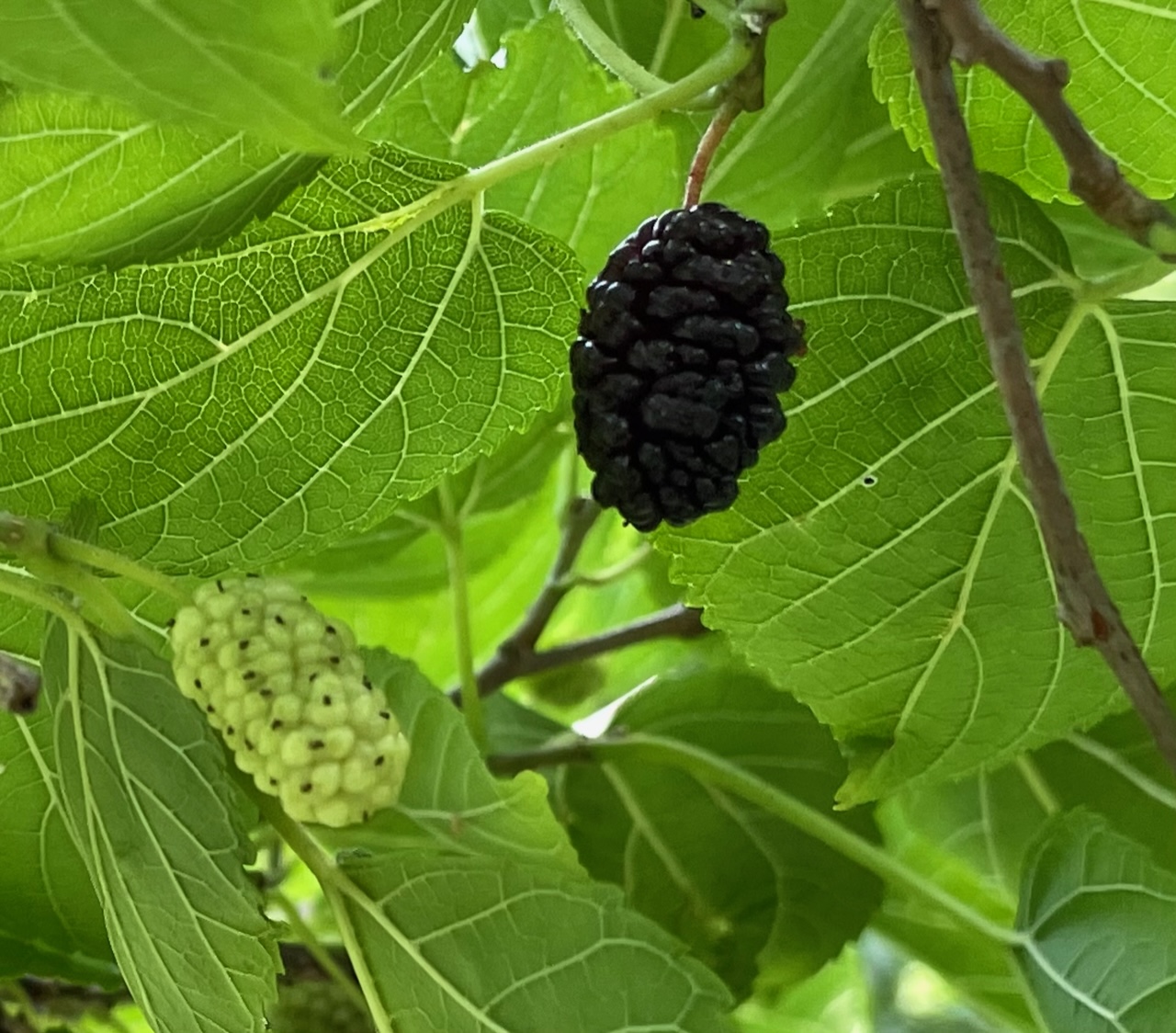
The first batch of seedlings I grew were very nice looking. When I moved them out to one of my hillsides, I lost four of the five trees in the winter. What was I doing wrong? I discovered that overly vigorous trees in this species were not desirable. The plants growing late in the season were not adjusted to my climate as the wood never hardened off completely. They grow five feet in a single season. They died five feet in a single season. It was ruthless out there. The second time I expanded production upwards to the 2000 mark in pots in the greenhouse. This created a more uniform population with equal care for all plants under irrigation and protection. After two years, further plants were put out in the orchard based on leaf structure and fast but not too fast growth. The plants from the second population didn’t have the southern long season take your time growth patterns that were in the first generation. I finally had a stable from seed black mulberry population. In the last few years, I began taking better care of the trees for seed production. Deer do love the foliage, and it requires protection to make growth happen. I noticed that racoons and opossums were climbing the trees and eating the fruit. I am pretty sure woodchucks were up there. Their weight will sometimes break the branches at the crotch near the main trunk. This breaking is not completed so the cambium is attached still. It creates a wide branching pattern on the tree eliminating the narrow crotches and improving the fruit set allowing for greater production of fruit. What was great about this in my limited knowledge of mulberries is that all of this was done from the seedling level. There was no grafting. I named one selection and began to think about what to do in the future with the plants. This was one of the last tree crops I put in my plantings as seedlings. Today one tree is producing delicious small fruit that is like a drop of sugar. Another seedling with deeply cut leaves, in a location outside of my farm produces a white fruit that is sweet but has no flavor. Each of these trees are very distinct in growth habit and could be used as shade trees rich in fruit production and a joy to consume in the summer.
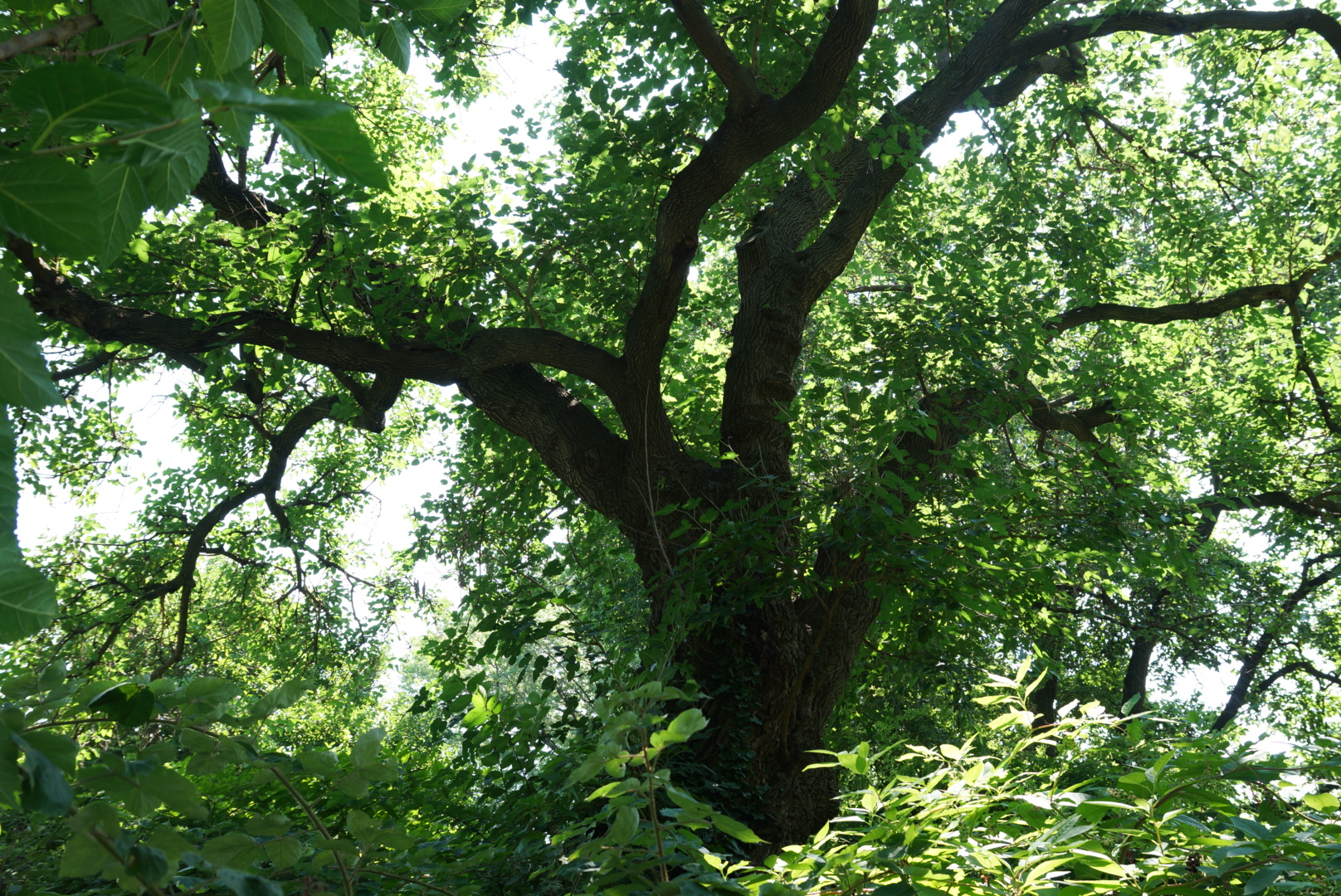
Now the Central Park tree was not just a magnificent giant but a real-life expression of the Morus nigra in its wide range of adaptability and success in a climate that is equally part of its heritage. Without the seedlings of its species, I would never have made that discovery. The seedlings led the way.


 biologicalenrichment
You must be logged in to post a comment.