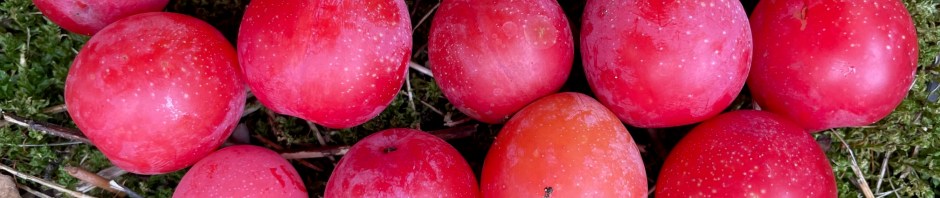
North America is filled with wild plums.There is no shortage nor threat to the wild plum. They can be increased in number very easily. There are seeds available from many seed companies and individuals who love to find them as if they were a secret treasure. Each region has its preferences. You will see the seedlings grown in both the wholesale and retail nursery trade. As far as cultivation goes, there are no indigenous North American wild plums in cultivation for fruit production in orchard settings. They are in the conservation industries ‘to do’ list but no one has 40 acres of them for people to pick and use in some way. There was a fruit farmer who was a customer of mine from northern Minnesota who was using my beach plums for a U-pick operation. He put florescent tagging tape on the plants to let people know those were the shrubs with ripe fruit ready to be picked. He was the only farmer I knew in the history of my farm where he took seedling plums into cultivation directly to the public in an orchard. He lived in a region known for its jam makers so there was a demand for wild fruit that made this retail loop possible. People were also willing to pay for that convenience rather than tough it out in wild while on the look out for bears, ticks and bald faced hornets. Not to mention trespassing on private lands or violating some sort of state or federal law that prohibits fruit collection finding the best spots is a challenge. Today road side fruits are not in the most pristine environments where herbicide use is the wild plums greatest enemy. Even if they miss the foliage, the plants roots and stems absorb a portion of the herbicide damaging the plant. In my county the green protoplasmic removal companies get huge contracts to spray things that appear to be bad. I see the carnage because I’m one of those people looking for wild plums in the late summer.
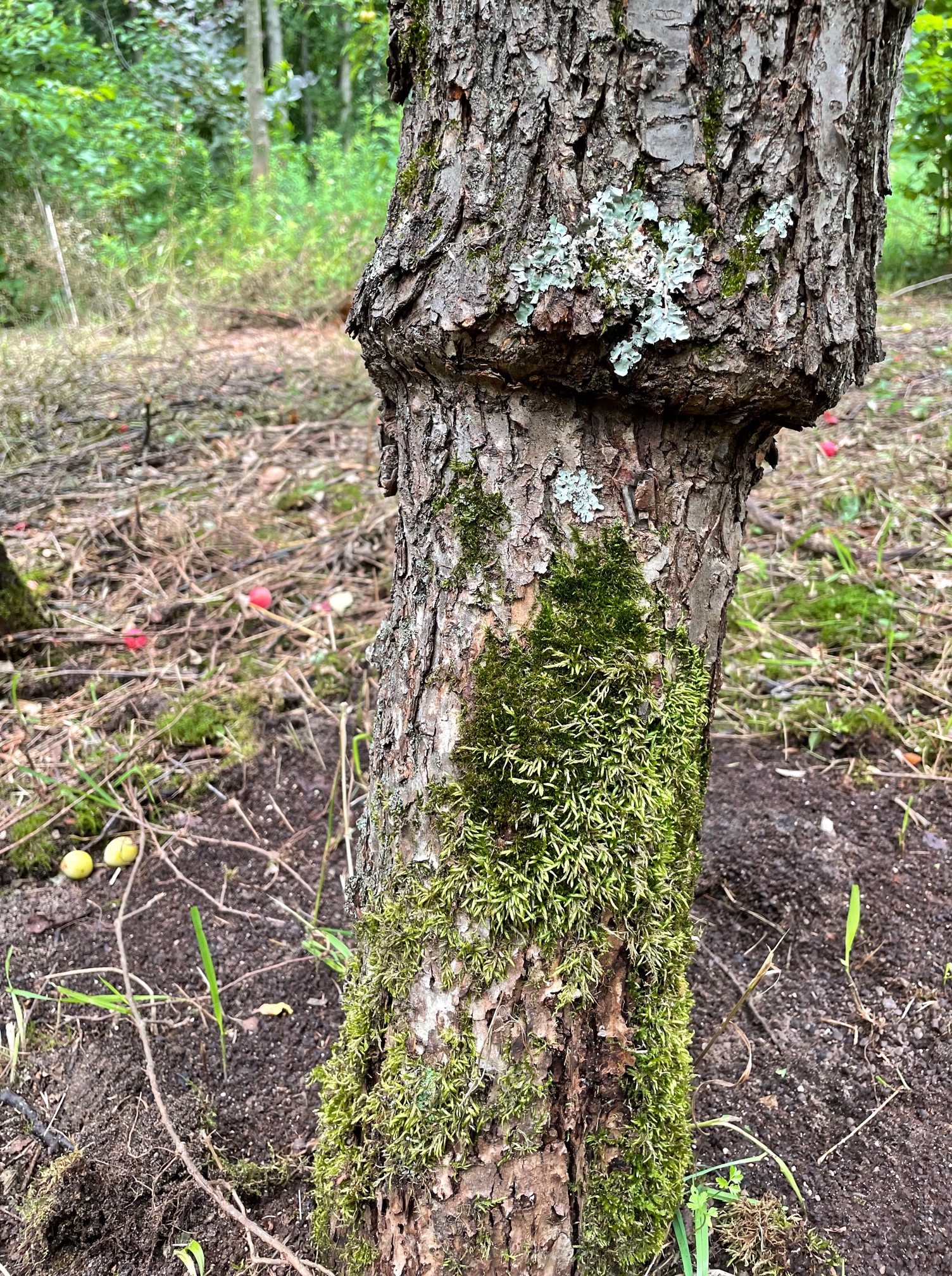
Not every plum species is available in commerce. There are gaps. Part of this due to the isolated nature of the plums in areas of the country that has no collectors. Few people are aware of the wild plums anymore. One of these species was the Wild Goose plum. The species is a mixture of midwestern and southern strains spread out over several states where they exist only in fence rows, abandoned rail lines and other forgotten unmanaged places. I could not find a source of the seeds. One of the scientists who had a part in the plum group of the North American Fruit Explorers sent me scionwood of what he said was the original ‘wild goose’ plum. I did not know there was an original and soon I had the scionwood. I was hoping for the seeds, but he insisted I did not want that. He said the seeds were not reliable. He was a fruit researcher and in that universe everything is cloned. The other plants are worthless seedlings. At my farm we grafted the scions onto the American plum roots as seen above. The trees did very well and I moved them to my outback planting in one of the most exposed hillsides to wind and sun. There the top soil was thin. The trees flourished yet there was no fruit production. Every now and then over the course of a decade I would check the trees and see nothing. One year in late July, I noticed crows in that area landing underneath the trees. That caught my attention. I thought something had died there. I went over and soon found seven pits each carved out and cleaned of the fruit by the crows. Thank you crows. I did not get a chance to taste the fruit, but it looked delicious. The crows said it was good. I grew the trees from these pits and planted them right next to the grafted trees. As they began filling out and flowering the grafted Wild Goose began fruiting in much greater quantity. I had created a fruitful population while increasing the fruit set of the grafted Wild Goose plum. Wild Goose was not the most productive plum tree but it was delicious and juicy. No wonder people cultivated this variety prior to the cultivated plums we eat today. Now I had a group of its siblings and each tree began fruiting in great abundance. This was the population I was searching for with each plant contributing to the population.
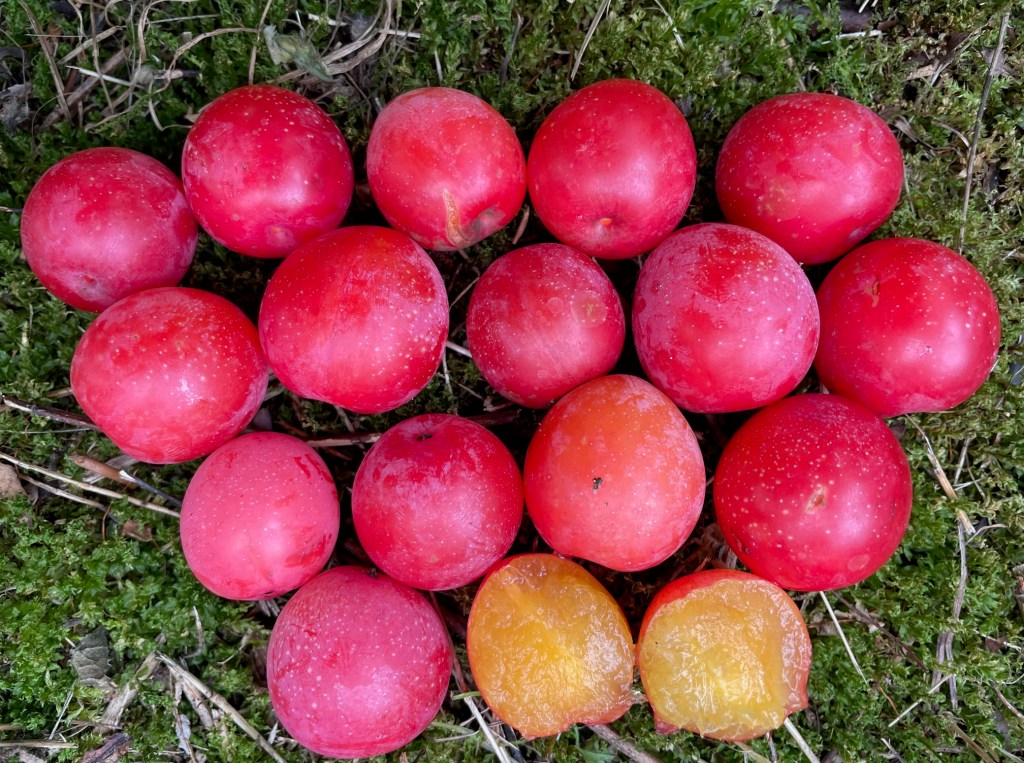
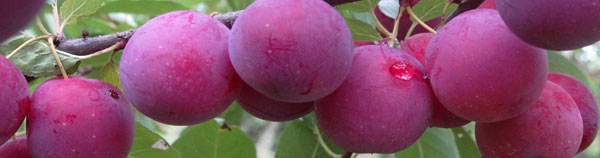
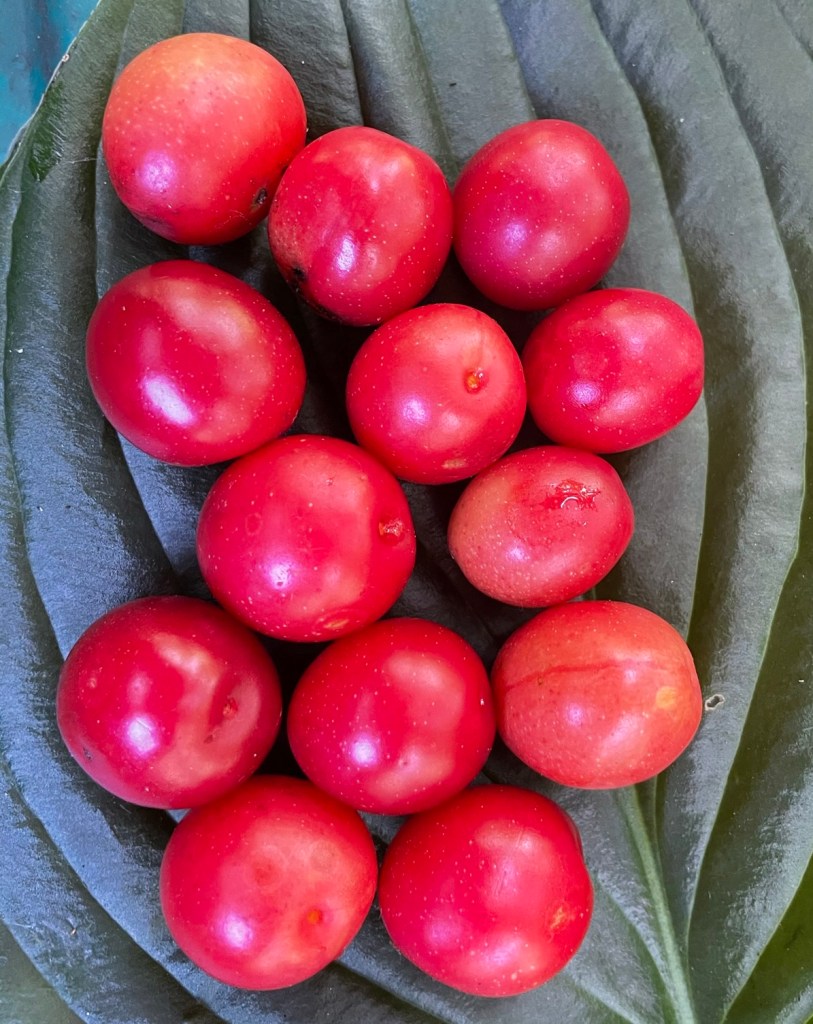
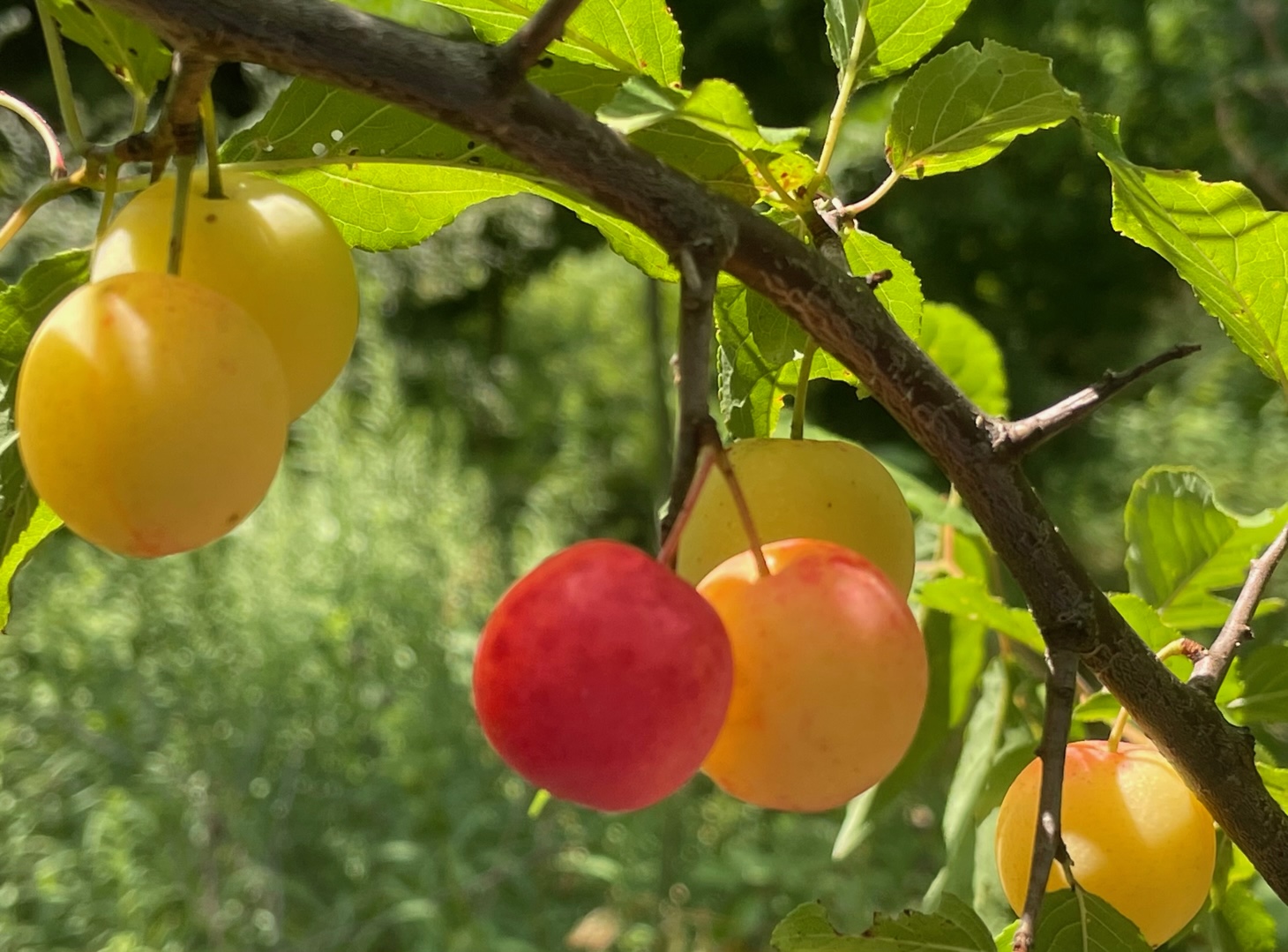
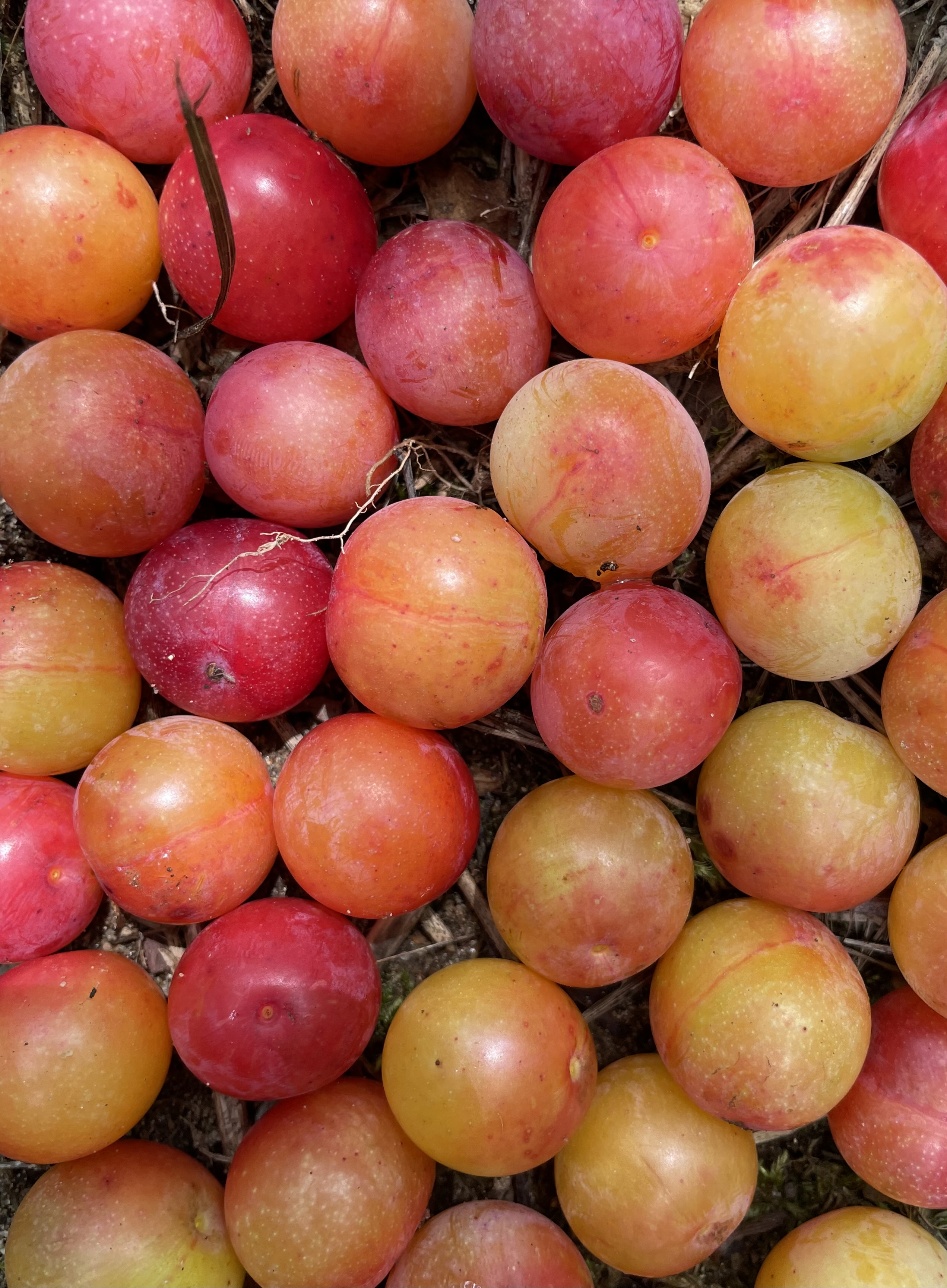
It was from this vantage point, I began to see an outpouring of diversity like nothing I had seen before. It reminded me of my hybrid oaks at my farm. The road was getting wider with each generation with greater possibilities to select from as well as finding the most vigorous trees with clean foliage. It also created new plants that could potentially be used as a means for cultivar development as a wild plum. The issue was what do people like in a plum? The answer to that leads straight to the supermarket of Japanese plums in large sizes and colors with apriums and plumcots in tow. This was a land very different than wild plums. If that was the market my little wild plums would go up against, it’s the end of the world as we know it. It is just too radically different in flavor, texture and size. But certainly the flavor profiles allow for processing and development as a fruit crop as it exists in the wild however we define that as a whole. When I started looking into this further, I soon found out that the fruit industry has no clue nor cares about wild plums other than rootstocks. Even as a rootstock, those are slowly being phased out. If you say, lets grow it from seed and create a diverse mixture of flavors, then most fruit farmers walk away. This species is not allowed to be grown in California, Oregon, Arizona and Washington. The regulations are based on what it ‘could’ contain not on what is actually found. No science is involved. So if a virus infects something, then the best solution is to ban it entirely. But so far, the seeds are allowed and you could potentially grow it if you lived in those states from seed.
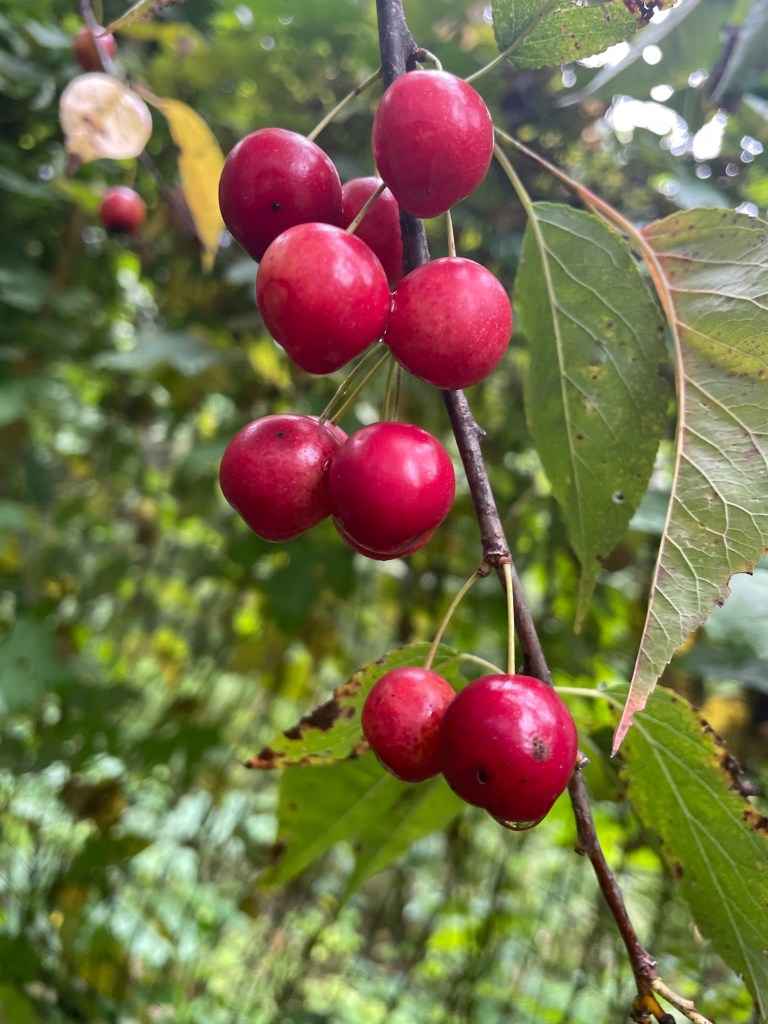
It is a very common experience of growing plants from seeds that every plant creates its own diversity by using its seedlings to build on its existing characteristics. It expands its ecological adaptibility within its evolutionary framework. That is what I wanted to find for the wild goose plum. In the process, I discovered the heirloom fruit used by early Americans and a flavor not found today in the supermarket of plums. In my plantings, I had several types of plums producing near the wild goose including beach, chickasaw and an American x beach plum called Dunbars plum. The normal overlap of flowering in each of these does not necessarily equate to successful pollenation. It could be one is flowering while the others are long gone. There is little or no overlap. This creates an illusion you know what is going on. . It is the population that is created as the result of this diversity. It could even be self pollenated. This is the surprise and joy of growing a plum from seed. I would try it if you have doubts.
The crow knows.
Kenneth Asmus
in stock periodically after harvest in October.


 biologicalenrichment
You must be logged in to post a comment.