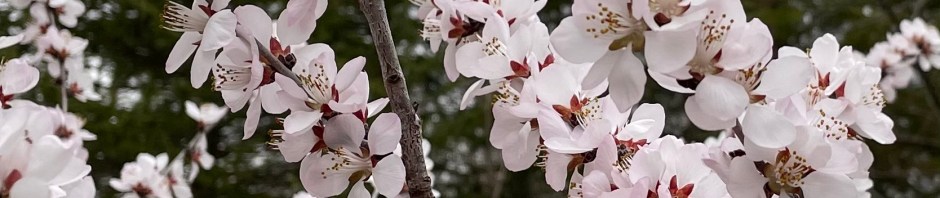
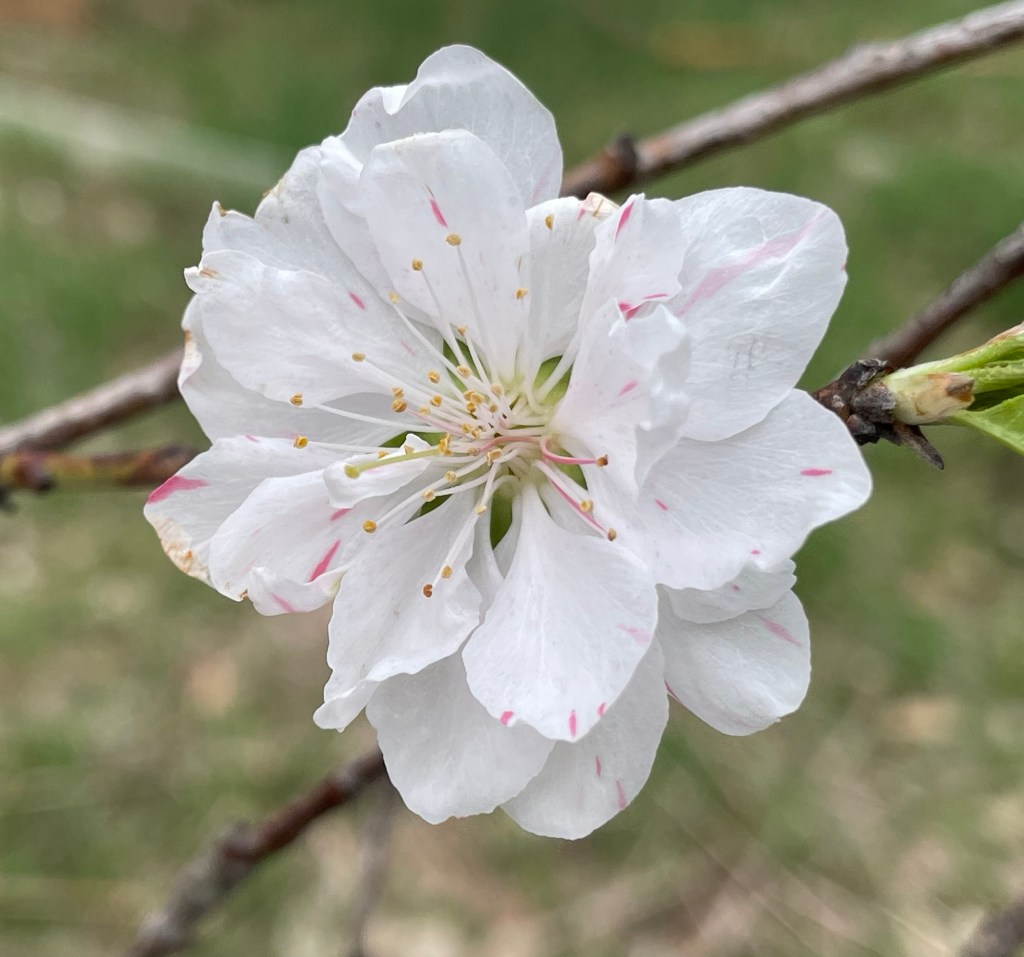
One of my local customers told me about a peach in his front yard that had a lot of fruit on that he did not want. It was horrible tasting he said and filled with worms. Perfect. I was very interested. When I got there, most of the crop had fallen to the ground where they sat fermenting. This was a peach he purchased from a large mail order company. It was a seedling peach of some kind and he was unaware of the species or variety. It had semi-double white flowers. I picked up the gooey mess on the ground trying to avoid the yellow jackets. Jackpot. In my mind, I was in business with the world’s peaches.
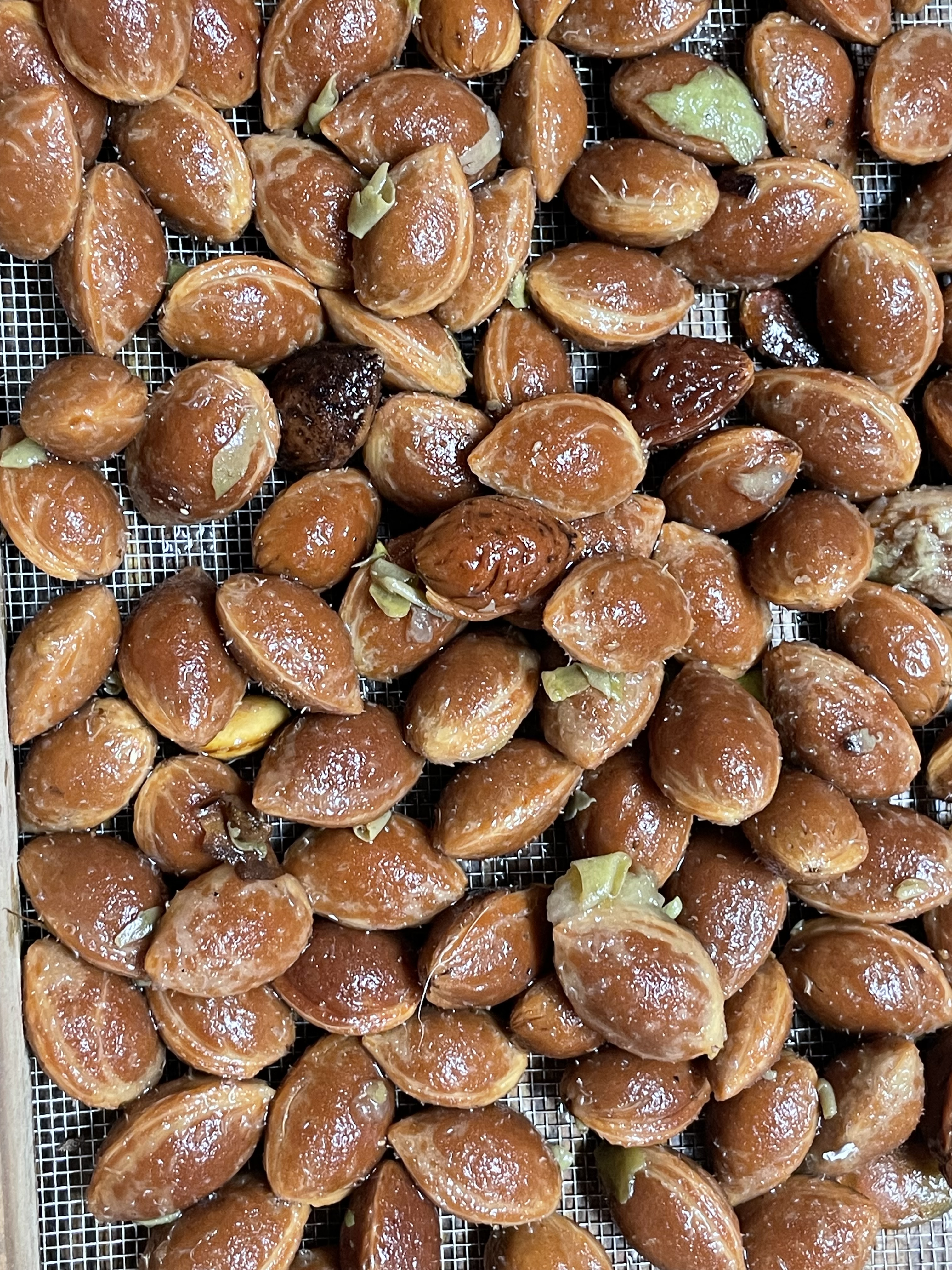
I brought them back to my farm where I cleaned them and began the dormancy procedure. The barn was filled with a great fruity aroma that day far more pleasant than the pile of rotted fruit let on.With peach pits, it is a good idea to let them dry down a little on screens before putting them into a lightly damp peat moss mixture. It is best to store them at room temperature until December before refrigerating them from 34F to 39F for 60-90 days. The warm period continues the growth of the embryo which allows the seed to mature. Sometimes a portion of the peach pits take two years to sprout. Part of this is due to the incredibly hard pit and tight suture and the other is the immaturity of the embryo. To over come this, we use to put them on a bench grinder with a coarse grit wheel to remove a portion of the suture on one side. We would hold the pits with Vise-grips as we sanded away one by one. That was my ‘good idea’. The pressure to pop that pit must be immense. In the evolution department the ‘good idea’ of peach pit survival tactics is to spread out the years of establishment and go dormant for long periods of time if the conditions are not conducive for growth and reproduction. This is exactly how and why peaches are spread out in the wild in the southwestern U.S. and how they were moved by humans throughout time. Peaches are loved everywhere and the pits were pitched by people on the move. There are peaches in Germany moved by the Romans. There are peaches in the United States tended by Native Americans moved by the Spaniards. Peaches get around. And to think it all started in China.
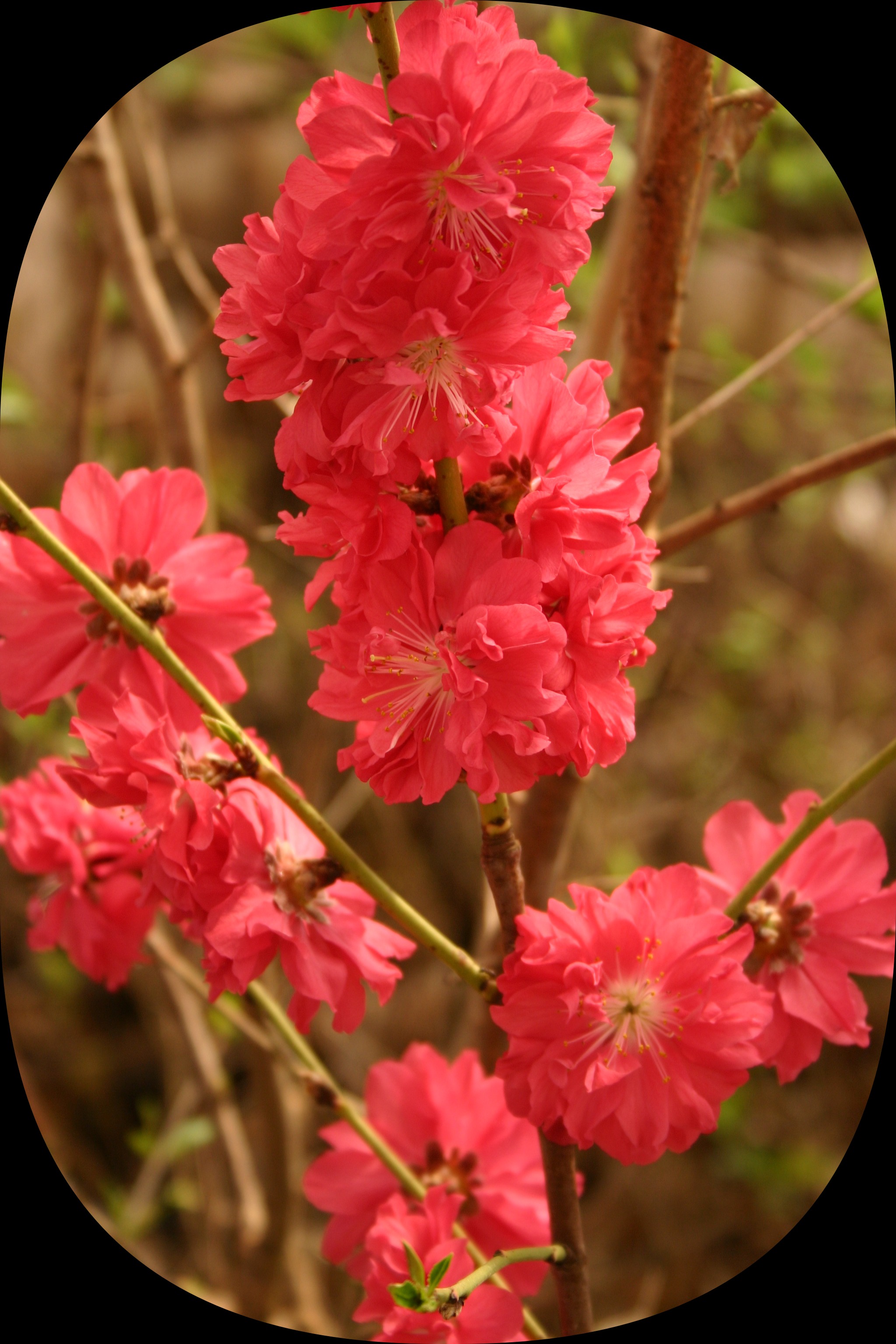
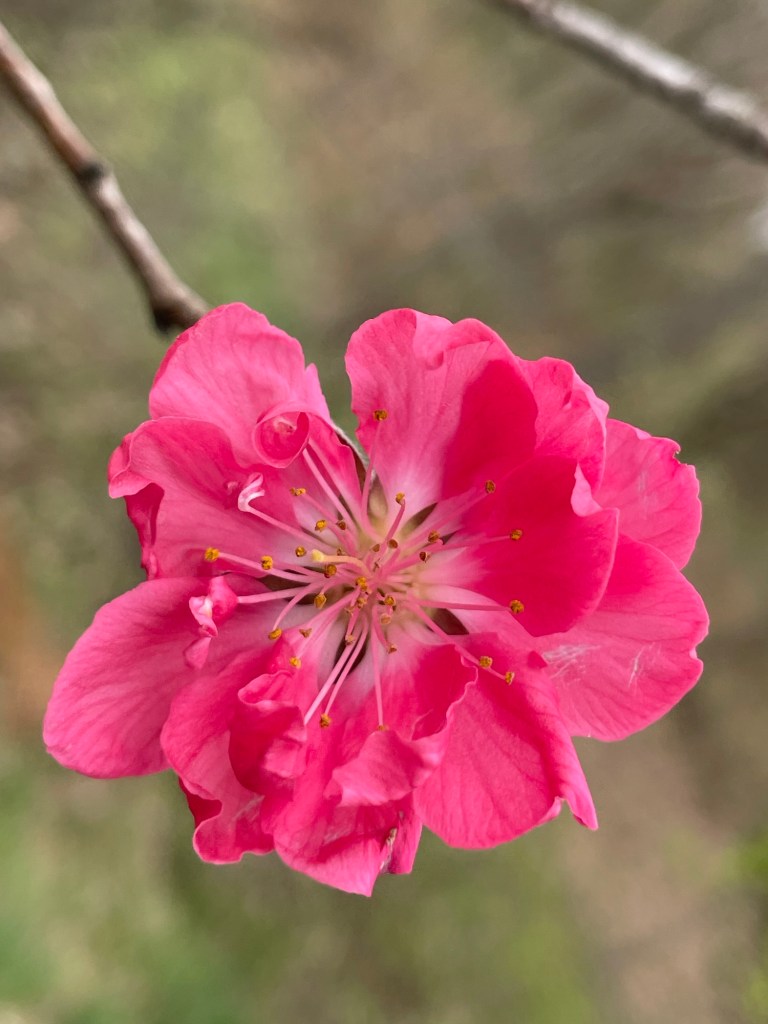
My plants in my polyhouse were very vigorous and twiggy. They began flowering in two years from seed. Obviously deep within its constitution was the precocious double red flowers. Despite being a lone tree in the front of an old farm house far from any peach tree, this tree had a story to tell of its past. The image above shows the surprise. The trees produced small, white and coarse fleshed mis-shapened peaches. They ran in size from 1-2 inches and looked like miniature furry tennis balls. They were pleasant to eat but they were not familiar in terms of their overall peachiness. They were the peaches with minimal peach flavor and maximum floral characteristics. It was like eating the seedless green grapes in the grocery store. This peach was also selected by humans who loved the flowers and did not matter what the fruit was. Jackpot. The value of the plant is its ability to comfort humans. The flowers bring happiness. This is a great goal. It is food for the mind. Could it be possible to create a forest of peach trees where you could just walk around and marvel at the glorious flowers in the spring while imbibing the essence of peach? Absolutely. Why aren’t we doing that? Whoa. Not too fast there agri-buddy. That peach pit needs more grinding on the wheel of human intellect and creativity before it sprouts.
Enjoy. Kenneth Asmus


 biologicalenrichment
You must be logged in to post a comment.