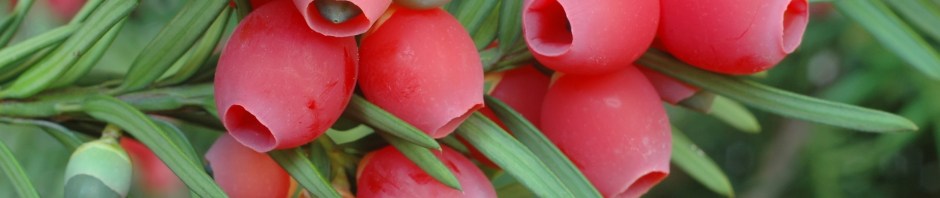
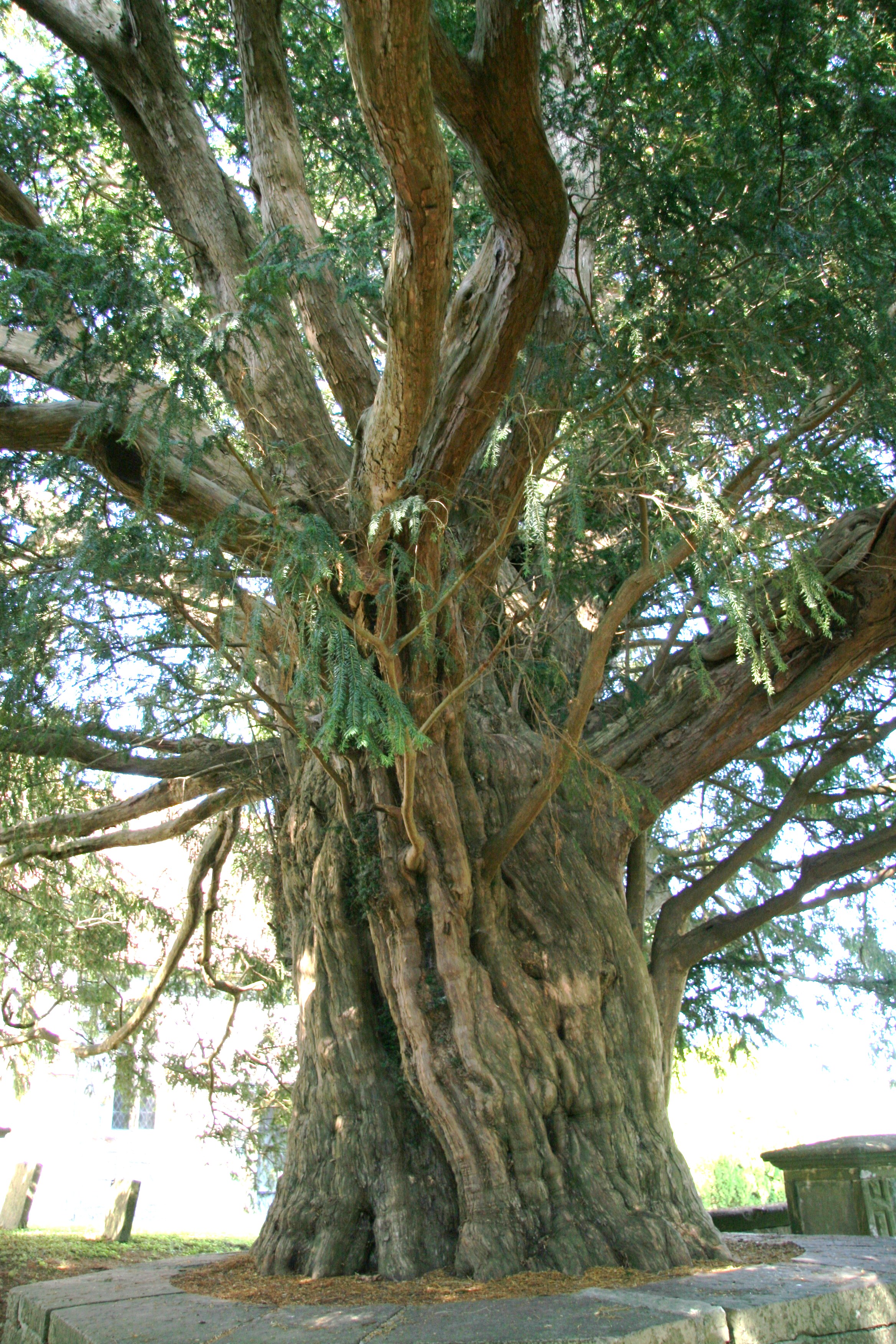
I have always been fond of yew. It was one of those species that inspired me to grow trees in my mind. Where in creation is yew? For me it was only in photographs. Like the one above, I saw them in the thousand-year-old trees in cemeteries and churches in the U.K. that made me wonder the history of such magnificent specimens. Most landscapes today have yews within them. They are the standard of the landscape industry as an evergreen shrub with rich dark green foliage. Their spiritual nature has been sidelined but not forgotten. Instead, yew liked us and decided to move in closer. They live a long time and tolerate the worst soil and air conditions while being disease free. When I began to grow the yew from seed, I started to notice large specimens that were not trimmed in untended landscapes. They became wedged in my consciousness as a sort of immortal species with the same ancient reverence that others enjoy in stone architecture. There was one yew shrub that grew a large multistemmed top to 50 ft. in diameter in front of a large home near a park where I still visit. I told the owner how special that plant was and not to ever remove it. Normally yews are rooted as varieties selected for specific ornamental appeal. I was more interested in the fruit and the wood quality than anything else. Late at night sometimes I would hear the deer bump into my house as they positioned themselves between the deck and planting bed eating my ornamental yews. In spring most of the foliage was gone. It is interesting that a cow or horse can eat a handful of yew foliage and drop dead. With its dozen or so alkaloids, it has protected itself against the human livestock. The deer benefits and thrives from the yew. I moved several seedlings out to my roadside. One made it past the browse line and is now ten feet tall straight as an arrow. This was yew I was searching for.
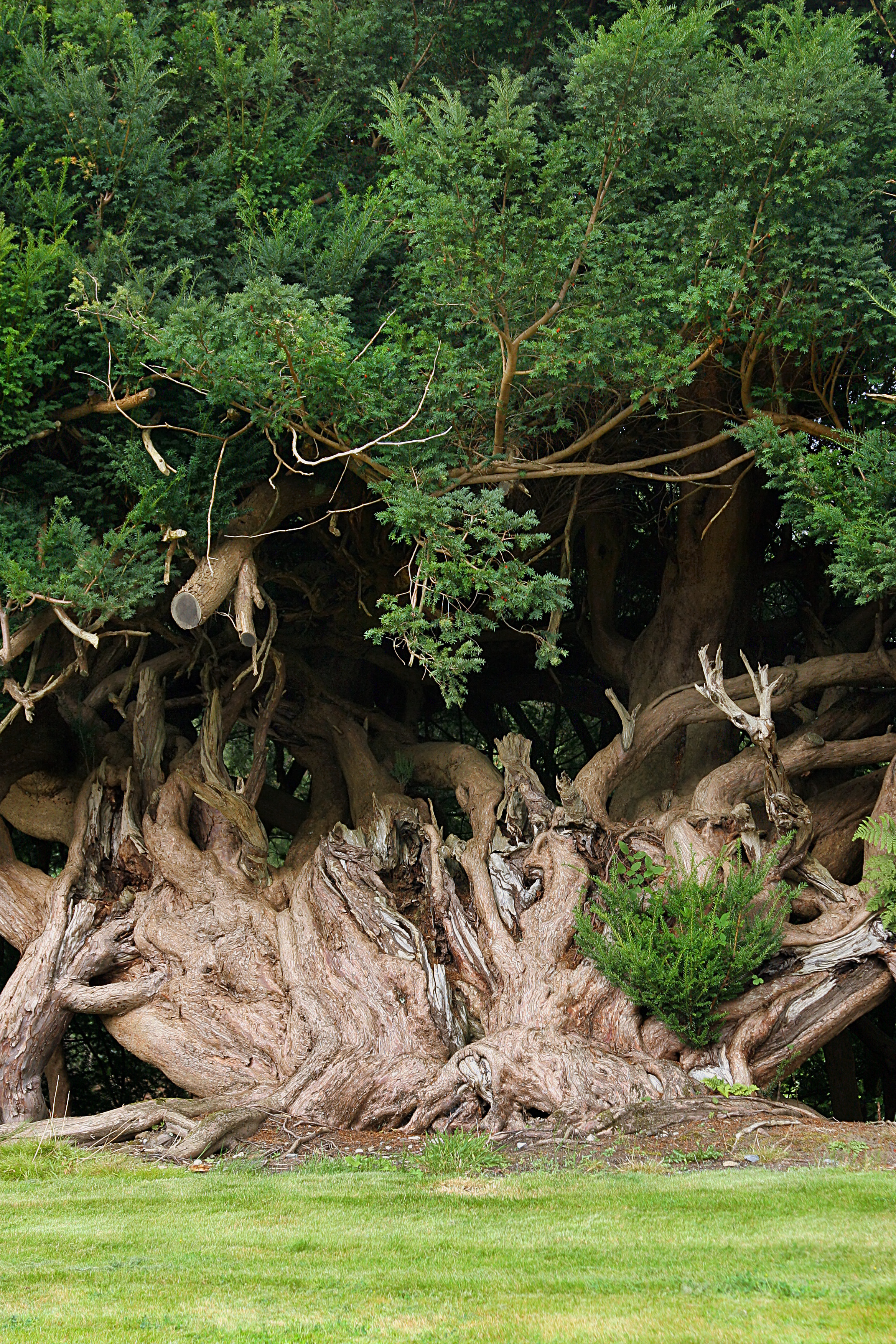
The English yew is Taxus baccata and it has never been developed as a tree crop. There is interest in preserving it in its native habitat with various laws in place but nothing really in growing it throughout the world or expanding its habitat. It is not forbidden. It is just not thought of. As humans, we are busy creatures not really thinking of our future with yew. Yet in the past it was the human that destroyed the trees for fear of death of their livestock and over harvested the trees for weapons of war-the English long bow. One of the oldest spears ever discovered was a 400,000 year old point made of yew. My guess is yew is confused about humans with this love hate relationship we have for it. The American yew is Taxus canadensis and it has never been used as an ornamental. For that the Japanese yew, Taxus cuspidata stepped in. It is more adaptable and capable of being sheared in different shapes. The American yew is a shrub which produces large colonies growing and rooting along the ground. I have seen many of these along the Lake Michigan shoreline wedged in between the dunes. Each of these species are unique in their own habitats which are distributed by birds. They eat the ‘arils’ and drop the seeds with a small package of fertilizer while scarring the seed with their intestinal flora helping ready the seed for germination. The intermediate forms of tree and shrub are Taxus x media of Japanese and English origin. These create some fast-growing hybrid plants of various selections. If you grow them from seed, you will see some amazing growth forms and patterns as well as the original forest type of English yew all in one population. It was from this vantage point, I began to grow these yew selections from seed pretty much all by the force of one person who wants to remain nameless. He secured for me the crosses and the species from old arboretum plantings both here in the United States and overseas. I had no idea what I was doing other than to grow the trees. It was not a success in terms of its sales. People thought of the yew as a shrubby thingy-doodle next to their home. My species of yews were not considered desirable from a horticultural standpoint. They were not the thingy-doodles most of us know. The market was flooded with yews with hundreds of varieties of them. To add another one is another flavor of ice cream. I finally had a massive sale to clean them out of my polyhouses. Then I began planting out some of the seedlings from these batches of seeds.
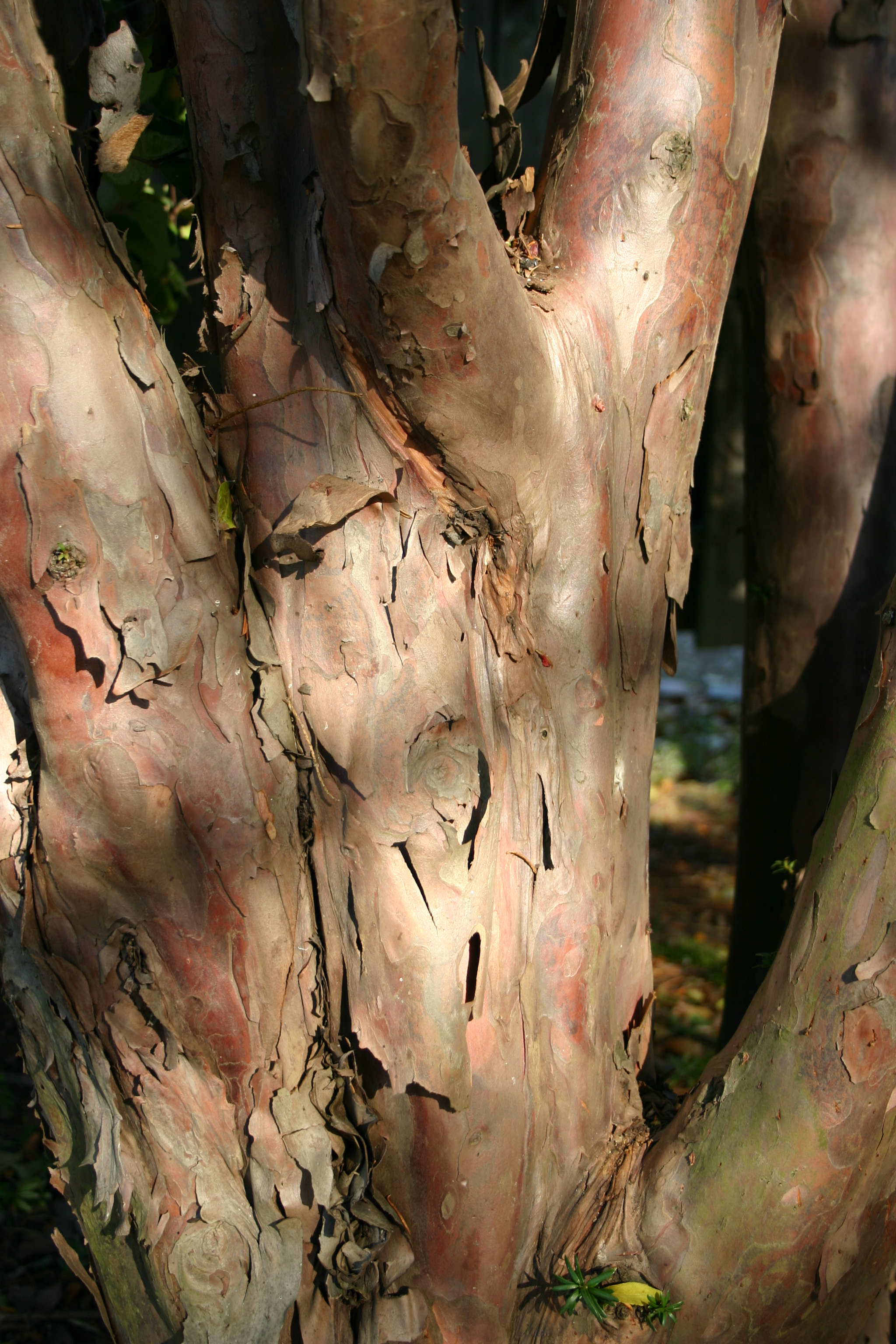
With evergreen species, you normally want a wide range of seed sources to see what suits your climatic conditions. This is akin to the seed sources for Scotch pine for Christmas trees where different geographic regions produce different forms and growth rates. I did not have that luxury. I had Romania. Luckily, Romania came through with big dividends. It was immune to winter burn on the foliage and completely hardy in southern Michigan. Romania had minimal side branching with a strong growth rate. It takes roughly four years from seed to see what is going on within the population of yew. Plus, two years to germinate the seeds. Here the growth rate was uniform in nature.
I did hit a few bumps with yew. My out plantings were put on a windy and sandy west facing hill. The dry soil conditions were rough on the trees. Yews will ‘drop their top’ if conditions are not met that first year and then resprout from the roots. This is a common characteristic of the tree which is why you see 2000-year-old specimens with sprouts all along the root collars which make it look like a giant hedge plant. They have what is known as epicormic sprouting and they do not mess around. It is like a dense pin cushion of sprouts not just a couple of sprigs like some trees. They can do this on very old trunks too which in itself is not common with most trees. These same plants sprouted again from the central leaders only to be nailed mercilessly from the white-tailed deer. They rammed the cages to get the greens within. English yew tends to be one of the most shade tolerant trees able to grow in the canopy of deciduous trees very easily. For this reason, you will find it in mixed beech and oak forests in Europe. The Swiss beech and yew forests are said to contain a great number and diversity of trees. In my case, I have them near shellbark hickory, hybrid American chestnuts, hican and black cherry surrounding a row of edible Autumn olive selections.

I still have hope for yew. Last year I fixed them up again. The fruit production could be a side benefit of creating a healthy cancer preventative fruit. Yet I am not sure anyone has looked at the composition of the fruit to see if it does have some Taxol or other compounds within it. The warnings on not swallowing the seeds are noted.
The wood is used for wood working for furniture today. (See below for link.) It is very dense and could be used to produce musical instruments. A luthier wrote about lutes that was made from this wood which was common prior to the use of Brazilian rosewood. The wood I have experimented with is very enticing. You would need several hundred acres of it to really get your foot in the door. Even if this sounds too pie-in-the-sky it could be possible to distribute small trees of it to farmers along farm roads here and there to test seed sources before committing to larger pieces of land. If the trees are tracked religiously for the next twenty years, you could create a marvelous seed repository and go from there. Pruning them would eliminate the knots in the tree and straight saw logs could be produced easily. It is possible that the epicormic sprouting would then kick in after cutting and you would have an established root system like black locust and popular which would continue the tree into the next cycle. In the right soil conditions the turnaround for a log could be at least 200 years. But under the right conditions and with the right seed and cultivar selection that turn around rate could easily be reduced to 75 years. Either way, it would not matter because you would hold it under a government entity owned by the population of the people who live there as an investment in their wood and lumber portfolio. The lumber investment would be compounded yearly as a form of wood earnings. While this is going on, the fruits and seeds could help pay the bills while providing cancer free human health in the process.
From seed: The seed coat of yew is extremely hard. It normally takes two cycles of cold dormancy to sprout them. The bacterial action of the soil along with the cold and warmth with the maturation of the embryo creates conditions to sprout. The best way is to put it in a flat of sand and peat and lightly cover the seeds. Then put hardware cloth over the flat to prevent pilfering from the mice. Move the flat outside to expose it to the elements. Make sure the screen is silicone caulked around the edges directly to the flat to prevent slippage and gaps. You can then pluck out the sprouted seeds of the flat and put them in peat pots. This whole process takes about two or three years to sprout all the seeds. The seeds are available from tree seed companies and other sources online. My experience is that they were often over dried. This destroys the embryo. The inside should be a bright white color not a dull opaque looking embryo. Soaking the seed will not change this. Ask what year the seeds were harvested and if they refrigerate their seed. The seed is designed for long term storage so it is fortunate that despite the mishandling by the people selling the seed, you will likely find good seed. Just do the cut test to make sure. You can use the zip lock baggy method by placing them in lightly damp peat moss and then moving them from the refrigerator after 120 days to room temperature and then back again in the fall. This is the same natural cycle that will break the dormancy.
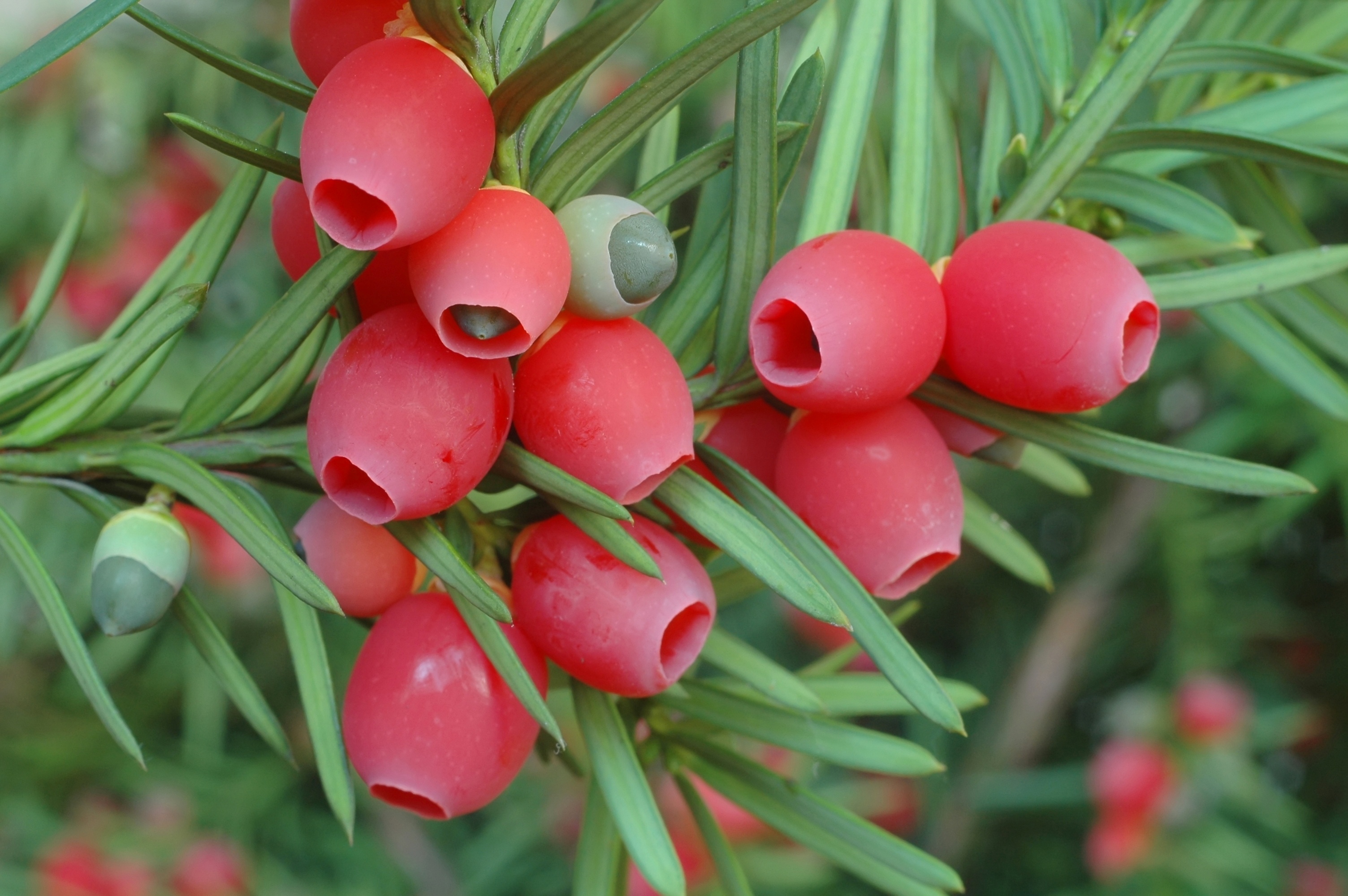
You may discover an old Hetz yew somewhere in a landscape that is very large. These were originally a kind of dense columnar tree let go and now its compacta nature is now more like a bad hair day. These once pyramidal trees make excellent seed sources. I know of three trees in a row in an open grass field next to an apartment complex. I am guessing they are 60 years old or more. The seedlings grown from these trees can be densely branched or sometimes not at all. They have strong central leaders usually because of the pyramidal genetics. In general, the mature Hetz yews I have visited always have had low yields of fruits. I am not sure why that is. The Japanese yews on the other hand can be prolific. One such group was near a strip mall parking lot. I have never seen so much fruit on a yew. Again, I am not sure why that is. Each of these selections hints at the possibilities of yew cultivation for fruit and wood. The seed sources are in front of us all the time. We just don’t notice them and view it as worthless other than their ornamental appeal. If you mention to a nursery person that you are growing a yew from seed, this is a hobby as well as a futile occupation. Nurseries only know the varietal selections from rooted cuttings. We do not understand their value to the health of the human family and the environment at large. The ornamental in our mind is stuck permanently in the planting beds near our homes in a comforting and controlled lifestyle where everything is kept snug and safe. This is a problem. Yew realizes it and plans a resurection and revival.
When yew breaks out, there is going to be beauty to be paid in health and well-being for the human family. These are the divendends of yew. Yew and I will watch from the side lines. It is all about yew after all.

Discover a tree by raising it from seed. From there you will see everything. Enjoy.
Kennneth Asmus


 biologicalenrichment
You must be logged in to post a comment.