Crop Diversity: Perennial Greens-Violets
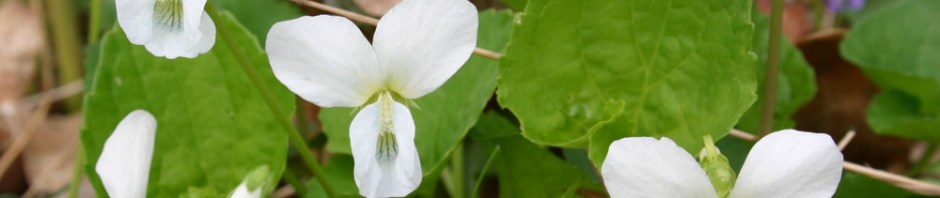
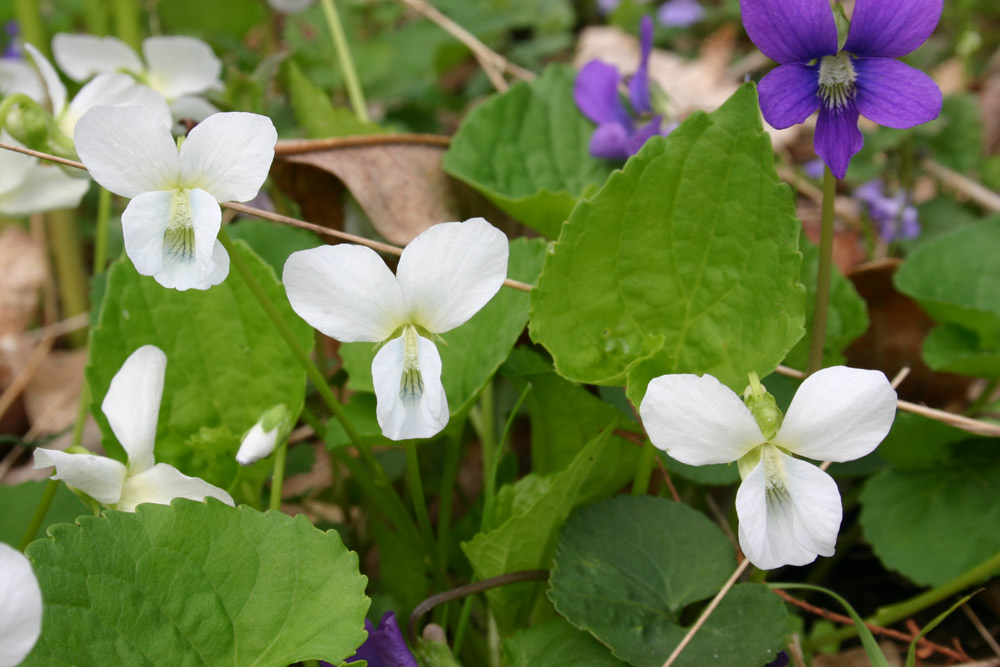
Growing edible perennial greens is part of the edible landscape movement. It was born with the idea that an ornamental plant can provide food. The edible greens created by a violet can be harvested as a source for salads while doing double duty as a groundcover. The violet can be planted in part shade under and around other plants and its perennial producing greens year after year. To further refine this Viola ideal, I began a search for wild species of violets in Michigan as well as the named selections from flower seed companies. I was most interested in the flavor and amount of foliage that could be harvested. This meant taste testing a lot of violets. Flavor is never mentioned in the plant descriptions, and it was not in the radar of the floral industry where Violets are produced by the millions in the bedding plant industry. That was a strictly look-but-do-not eat universe.
After the final chomping, it was the Manchurian violet, Viola mandshurica with its long leaves that had the best flavor and most succulent texture of the dozens I tested in the raw state. This species is more biennial than perennial and faded quickly in the woodland garden we planted it within surrounded by hybrid oaks, ginseng and ginger. The potential exists for all violets to be used on a larger scale yet no one is rushing to grow it as an edible green adding it to salad mixes or dried down for the powdered green drinks. Many violets are high in mucilaginous compounds. The texture of a violet leaf makes it easy to consume moderate amounts compared to aloe vera, chia, psyllium or flax seeds. This polysaccharide is well known for its treatment for burns, inflammation and a digestive aid. People use a form of these seeds or the pure thing for improving digestion. I had a friend in college who was into this purification diet of which flax and psyllium seed was on top of the list. The drink was like a clear viscous gel rich in mucilaginous compounds. I used to tell him it was suitable for fixing the cracks in the sidewalk out in front of our rented house. On Fridays, he would treat himself to one beer as a reward to the torture he experienced the days before. He thought it paid off for him in spiritual dollars. He even found a book about this diet which I started to read. It was filled with all sorts of majestic cosmic experiences once your body was aligned properly. I had my doubts until one evening late at night I saw ethereal lights above our septic system. As I lit some incense, the explosion could be seen …… Okay, just kidding on that. Luckily violet leaves are not as brutal. The violet creates this same path to enlightenment with the added benefit of it being a delicious salad green rich in vitamin C. In this whole process of discovery of violets to produce at my nursery, I became hyper-aware of violets wherever I went. This is a common experience where you begin to see a familiar sight as you focus on one thing. This was how my collection began and continued over a decade while growing them at my farm.
Violets are a common lawn weed pitching seeds and doing its underground reproductive strategies. It survives where grass cannot prevent its introduction. One lawn in particular I spotted was in Shields, Michigan. It had a dense carpet of violets where grass was missing entirely. No one was a-salading there but nothing else could grow in this location and the owner just let it go under the Norway spruce trees. To me that was the perfect lawn: one that didn’t require mowing.
Few know about edible violets. They are a small but powerful plant with a sense of urgency to colonize if the conditions are right. When I dumped them into a crevice created by a plow from the previous owner of my farm, they slowly but surely filled in as the grass died due to shade of my hybrid oak and chestnut trees. The violets had a plan. I did nothing. Today that violet planting measures over 100 ft. across and is pretty much all violets. The deer show up in summer and will eat the foliage prior to the plants going semi-dormant during the summer months. All of that was solved in one Viola swoop. The plants originated from a lawn I was working on in my early landscape business which was filled with moss and violets.
Here are a few of the species I discovered in the process of going a-salading both in the wild and under cultivation as species and selections. All of these provide an edible green worth cultivating as an edible landscape plant.
Kidney Leaf Violet
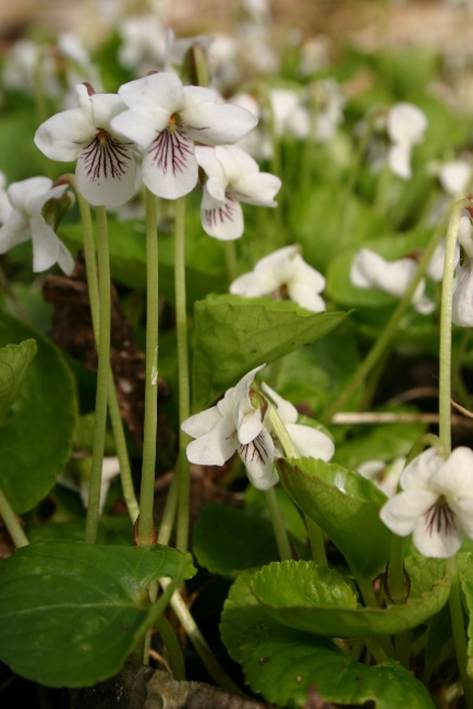
Although the leaf production was low, this little plant was a good rhizome producer and created clumps of dense foliage. This species was found on my families farm growing on an abandoned farm road in an oak woodland. The population was extremely small to the point it almost disappeared entirely. This was one of my favorite groundcover types.
Edible White Violet
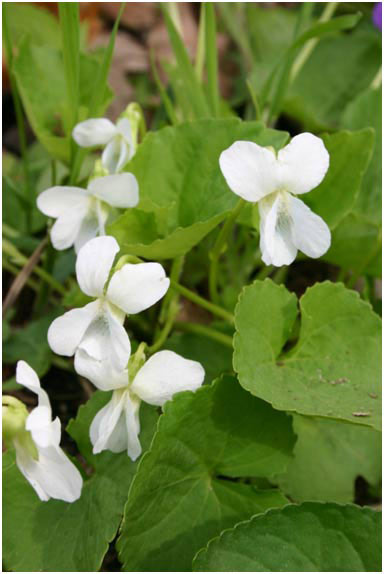
This was a form of the common blue violet discovered as a chance seedling under an oak tree at my farm. It has very mild flavor in the foliage department and a good yielder. It is easily digestible and not fibrous. It self seeds and comes out true from seed.
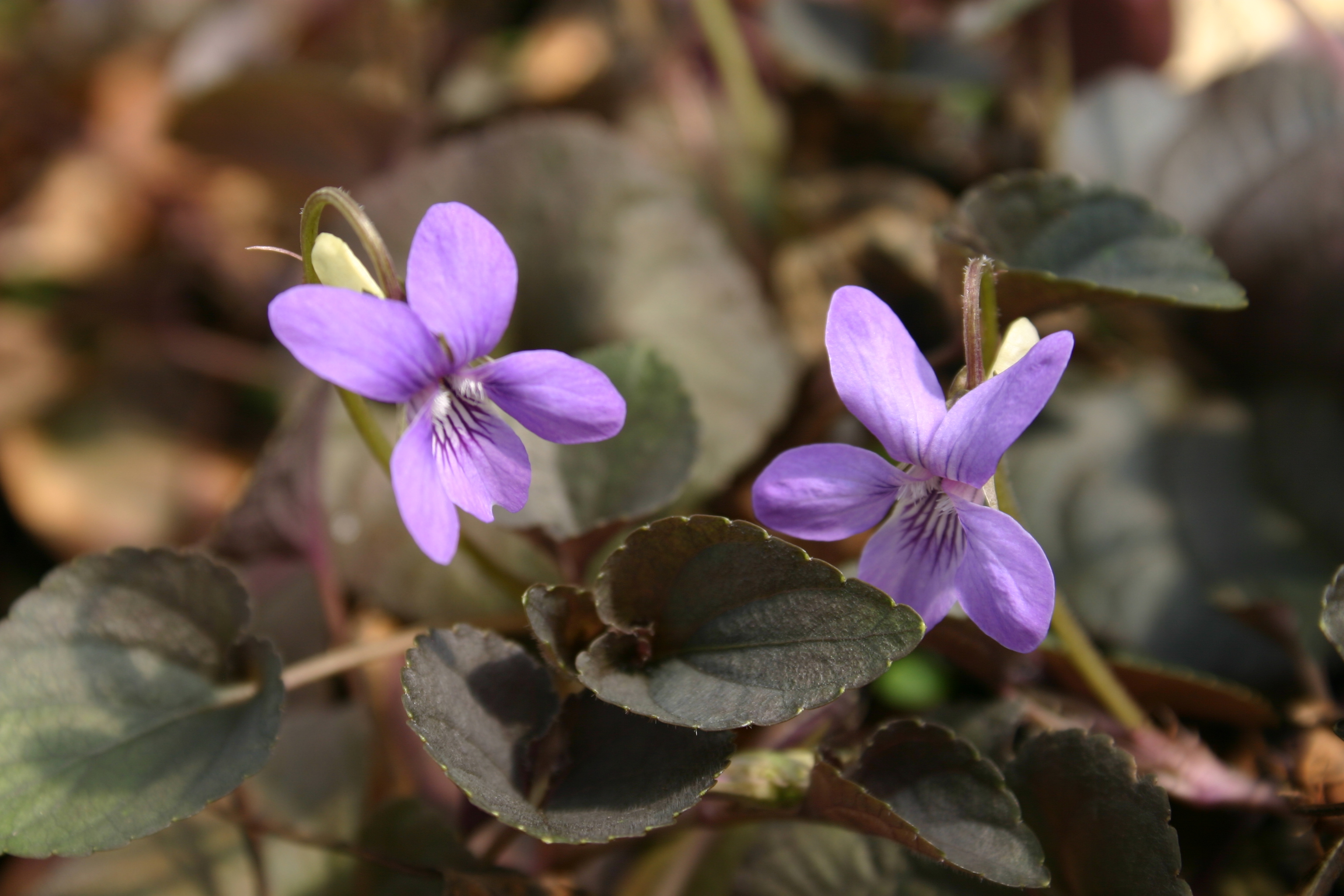
Purple Leaf Violet
This super northern arctic species is not a heavy yielder but looks spectacular in leaf. I did another planting of it last summer in a new location hoping for better results. It was very low yielding but has such bright foliage that it would be interesting to hybridize it for that alone. This is considered a North American species but it is circumpolar in real life like many plants and animals when we were all one giant supercontinent. Apparently there is some controversy of its identification within the botanical world.
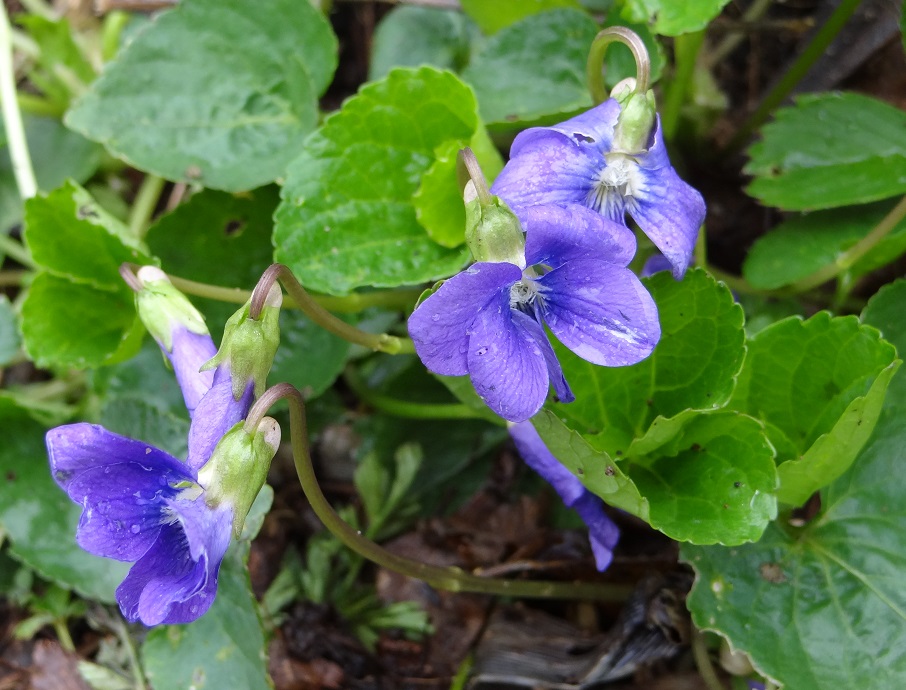
Huron Sand Violet
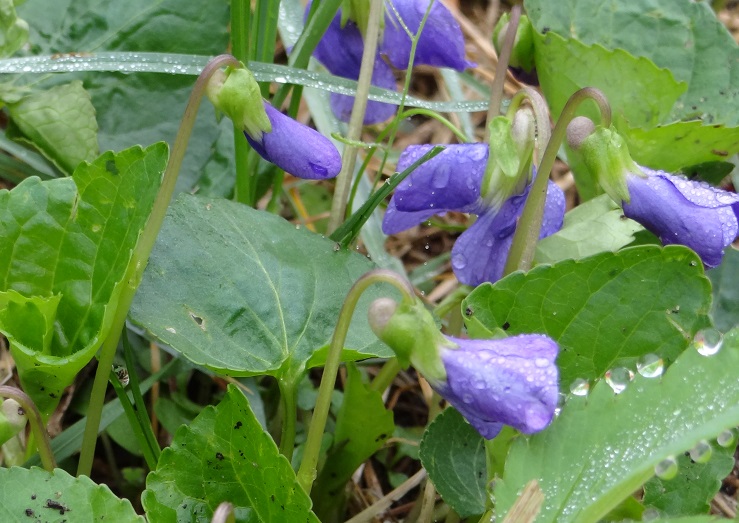
Huron Sand Violet
This discovery was on a giant flood plain on the shore of northern Lake Huron. Nothing but rocks, stones and sand, this species has spread voraciously over many acres in this beautiful location. There were millions of plants in this area like a dense green carpet. The next year the lake rose to the point this plain was completely underwater. I wondered if the seeds would remain dormant in the sand below the water only to sprout when the lake recedes again. The foliage was very succulent, vibrant green and delicious. It was very early in flower and produced good yields in the spring.
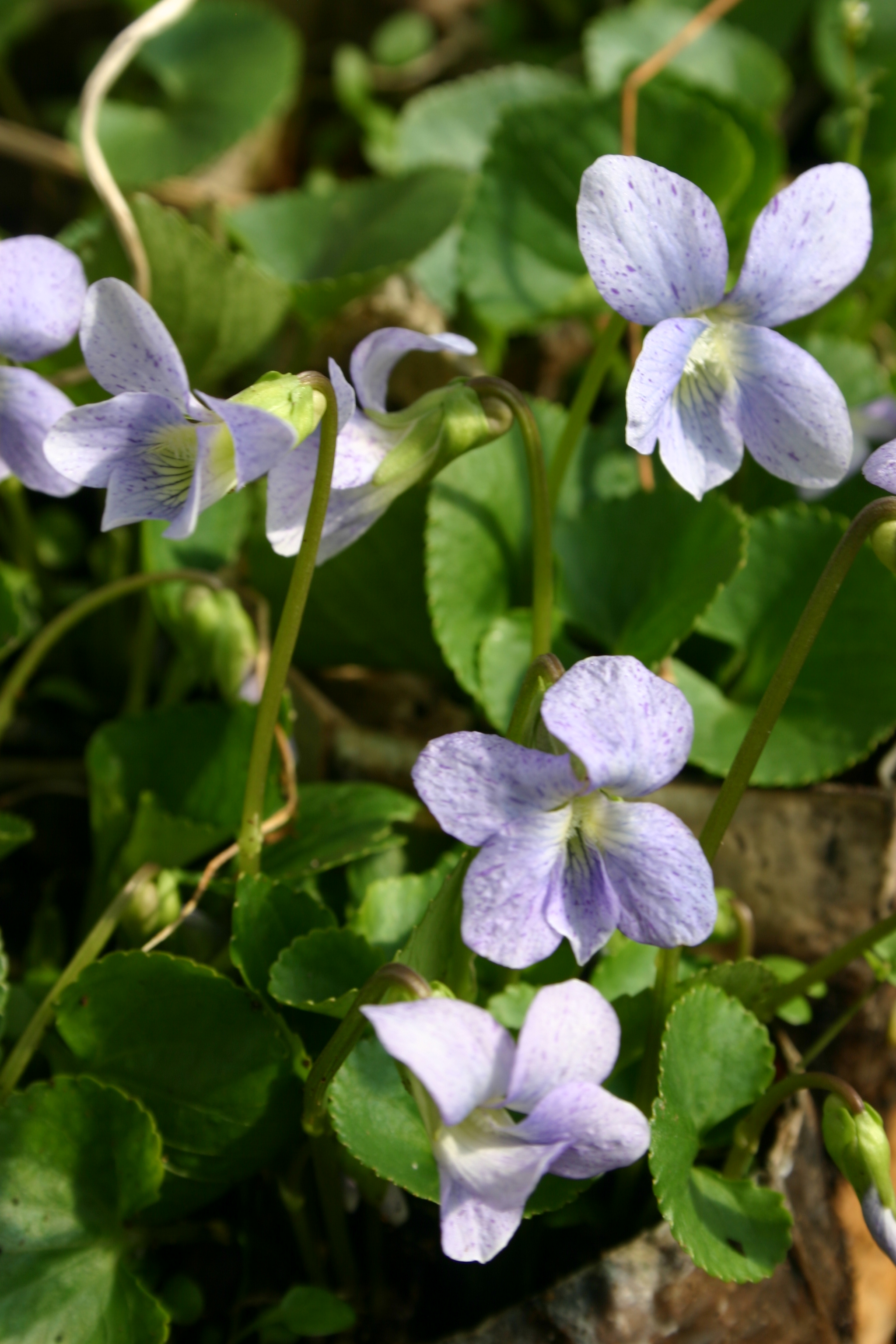
Freckles Violet
From Jellito seeds, this was a good one in terms of its clumpiness and yields. It wasn’t the most flavorable but it did remain in good condition late in the season. A lot of violets fade in the summer heat.
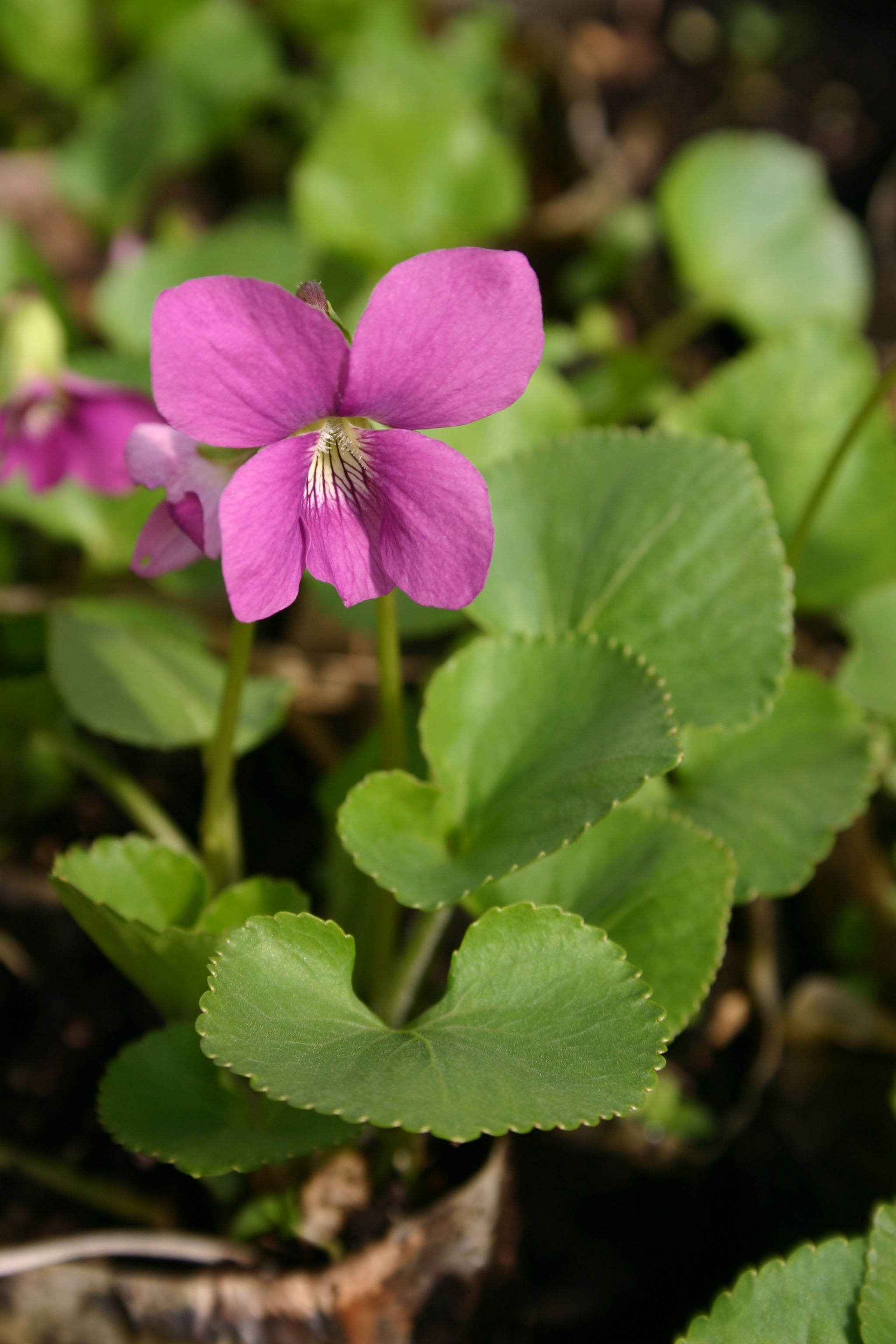
Magenta Violet
From Jellito seeds, this one was a great performer in terms of its yields out producing almost all the selections and species I have. Fairly drought tolerant, it continues to produce through the summer. The tall plant is dense in foliage and easily harvested. The flowers are a bonus as they stand out above the foliage.

Lawn Violet
Of all the violets people know, this is the most common. From my subjective experience, this species is high in mucilaginous compounds. It is a very durable species and the rhizomes are persistant in competition with other plants. This species and Magenta create the best groundcover types and could likely be the next green drink to enlightenment if you know what I mean.

Unknown Species Violets
Like the lawn violet in Shields, Michigan, there are many species I just cannot identify. I am winging it as scramble through those damn botanical texts with funky terminology. When my father began a project involving a lawn service, he gave them access to drop grass clippings in a ditch and around a road at our farm. Within this hodge podge mixture of celluose lied dormant seeds which sprouted and grew in the road way. This was one of them. What I liked about this species was its fast growth. I thought it could of been hook-spur violent. I could be wrong because I am not fluent in funky terminology.
Appalachian Violets
This was one of the most unusual violets and not edible as far as I know. It is odd in that it spreads vigorously but then disappears entirely only to be found elsewhere on my farm.I think it might be biennial in nature more than perennial and the seeds stick to my rototiller. The plant responds to soil disturbance. It is the tallest of the violets I grew and very beautiful in flower. But then it disappears only to reappear somewhere else without fanfare. I like that.
Yellow Violets: Like the yellow snow, don’t eat it. All the books say they are poisonous to consume. I am not sure of the details but I am going to pass.
SUMMING UP VIOLA: Dense Carpet of Perennial Green Violet-Omni-directional All Space Filling Violet-One Beer on Friday Violet-A-Salading We Shall Go Violet.
Enjoy. Kenneth Asmus


 biologicalenrichment
You must be logged in to post a comment.