
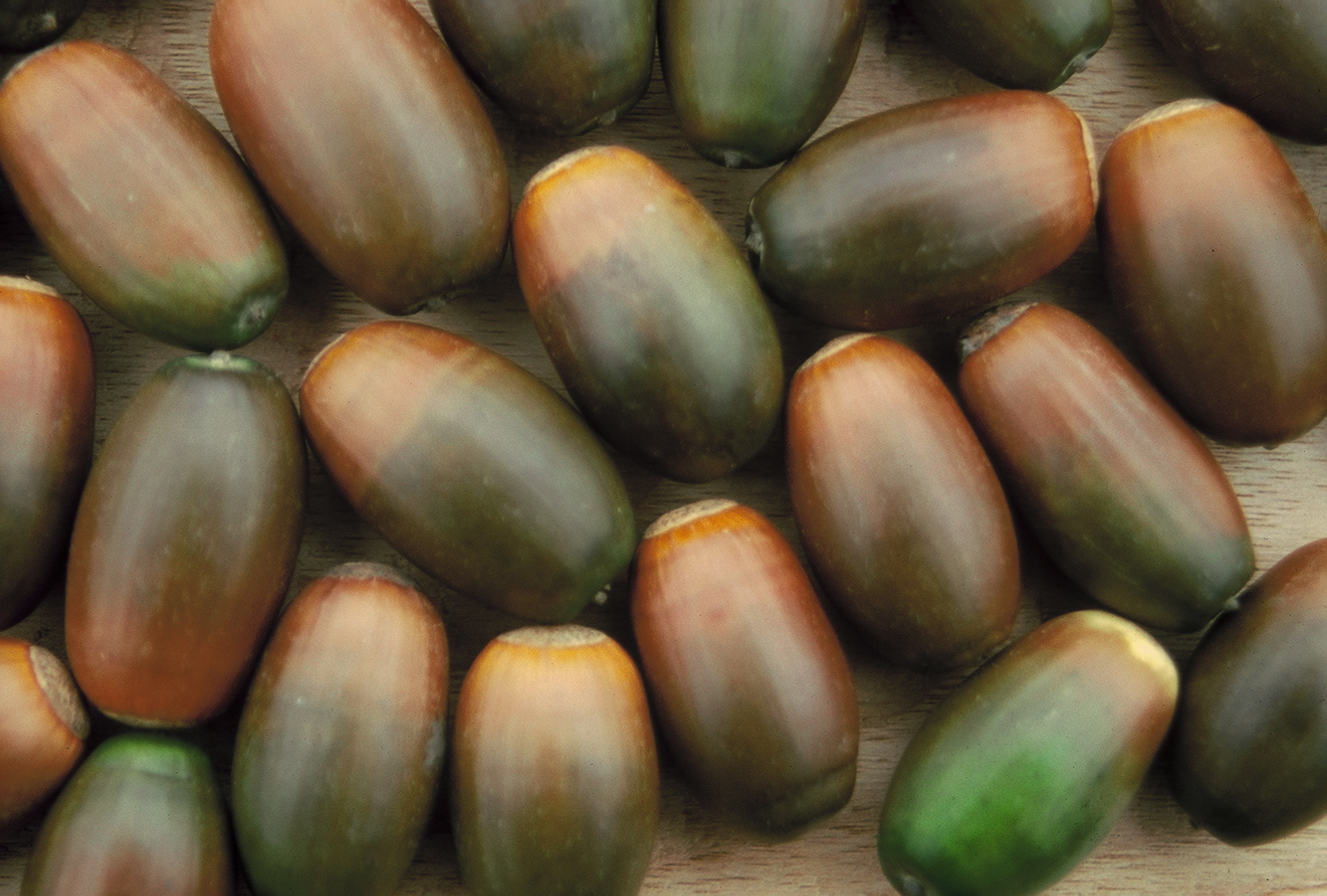
I was surprised to read this descriptive terminology of the oak genus and related families by a taxonomist many years ago. It really stuck and I have used it many times in writing about oaks in my catalogs. Usually cold and without life, plant descriptions are written only to fill the pages of the journals of botany. The “Young and Evolving” is not a soap opera on oak trees. Although it could be, it really tells the story of the great diversity of the oak genus AND its ability to change overtime very quickly. Here you have a sort of fluid plasticity to the species concept. Of course, there is sex involved including outside the norms of plant society but it is not in the human world. It is the wide crossing of the oak genus and species defying what is thought of as impossible or normal in the process of creating progeny unique in attributes carried through in succeeding generations. This was exactly what I found with all the thousands of oak seedlings I grew. They WERE young and evolving. We think of oak trees as slow growing and unable to change. We view oaks as stubborn, slow and unchanging over time. Thanks to the poets, they are the oh-so-slow immortal oak trees after all. Yet at my farm the changes could be seen within the first generation and continued unabated with zero boundaries of cross pollination. It was like a dam of diversity broke and huge rivers of infinite progeny opened into vast deep pools of genetic resources. Dramatic! This is at the end of the season show with the big reveal where the whole cast cries. Cue the woodwinds!
The big question becomes what is the value of this type of diversity and how can this be harnessed both as a population and to create cultivars from. More than ever we need the oak tree. It can do so much. The diversity was so large in my grow outs, it was ridiculous to think there was one plant better than another so common in the nursery trade. To top it off, I had supporters who helped me immensely with my acorn habit which was growing exponentially as I grew thousands of seedlings at my farm. I created a backlog of trees and soon I had to jump the hybrid oak ship. That’s right. Few people were buying them to keep up with my production and I had to get out the saws. Yet, I kept meeting people with a similar mind that the oak tree had huge potential for food from acorns as well as selections for lumber with unique colored sapwood and heartwood. Even today people show an interest in hybrid oaks. Unfortunately, it is mostly within the wildlife food-habitat hunting circles that have stuck. There is little about acorn bread for the most part other than the foraging movement and zero about increasing the timber production of oak trees. This could be a direct route for the young and evolving oak tree. Now you have an opportunity to harness the oak tree on a bigger scale which is needed to make it practical. Oak trees inspire us to go big anyway.
Here are two examples of me trying to go big in all things Quercus while discovering the small and subtle aspects of the oak and acorn agriculture.
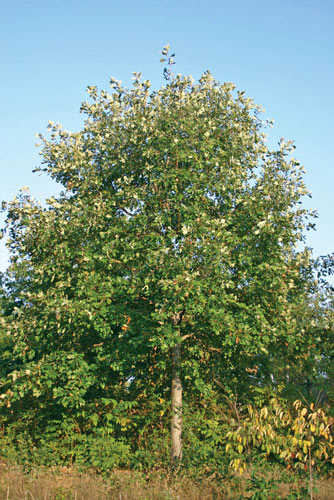
Burenglish Oak
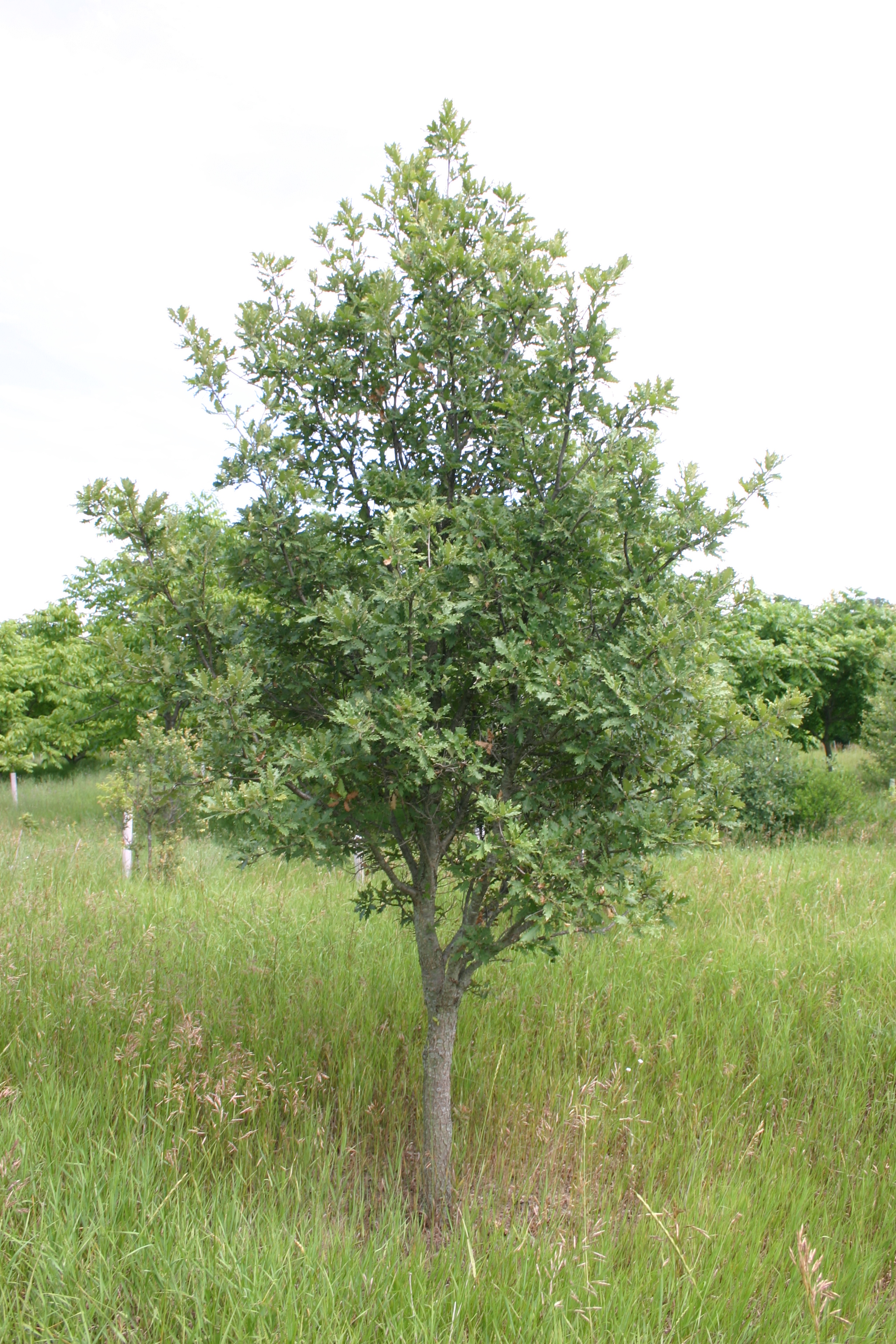
This particular hybrid was discovered in a cemetery in Illinois. It was not something you would find normally as a chance seedling let alone in a cemetery. It is rare as a natural hybrid. There were two very large trees cranking out huge volumes of acorns. Before the trees were cut down for unknown reasons, I purchased a few hundred pounds of them from a friend who discovered these trees by accident. One of the trees with the largest acorns I grafted at my farm. “Invincible” came from this place of rest for the weary. This particular hybrid produces very uniform vigorous seedlings. I planted some of the fastest growing trees in my outback selected from roughly four thousand trees. Selecting from this group was not simple because all the seedlings were fast growing with minimal differences. These same seedlings today are now have trunk diameters over 18 inches. They proved to be incredibly healthy with large leaves and moderate acorn production. Burenglish oak would be a good timber hybrid. The pieces I have cut from the trees have very distinct growth rings with dark brown heartwood. It combines the best of bur oak and English oak in terms of its wood quality. Its growth rate is twice that of white oak and could be further improved from my populations. Forty acres would be enough to create a seed repository of this cross while using all seedlings selected for speed of growth. Other hybrids from this same cross from Utah did equally as well but are much higher in acorn production. That particular group appears to have more of the English oak within it.
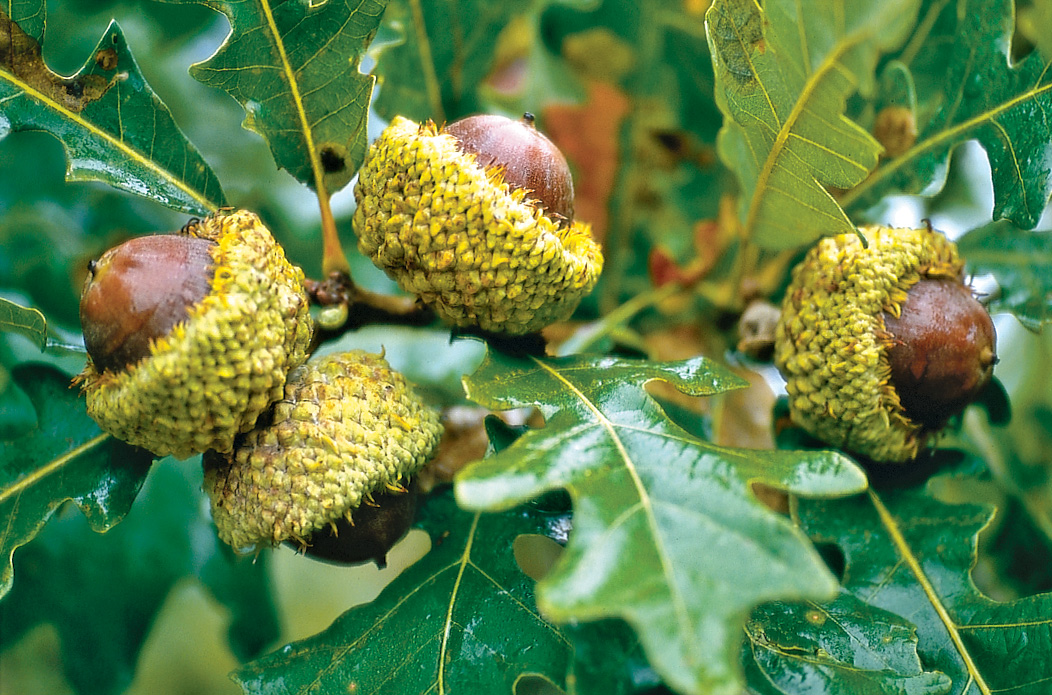
Heavy acorn production can lower growth rates. In the off years, vigor is increased to make up for the production of nuts. It is in the off years that applying fertilizer will bring it back into production much faster than doing nothing. I’m a big fan of layering fertilizer like manures as this slowly breaks down and little is lost in the process. My dad’s cure all was triple 12. “You need triple 12 Ken,”he would say. I would respond. I need poop dad. Pelletized chicken manure. These types of fertilizers are perfect for the oak only because they take time to release their nutrients and come with calcium which aids in nitrogen absorption.
The burenglish oak has a potential to be used along corn and soybean fields as a lumber tree while doing double duty as a shelter tree and acorn producer for animals. The acorns could be processed as well for flour. This type of area where it is free of shade and heavy in wind into zone 3 would be ideal to establish repositories of this particular hybrid. Because of the fast grow in a wide range of soils, it would not be disappointing to the farmer. The shade produced would be minimal into the field of crop plants which would not diminish the yields. It should not exceed 1 percent of the acreage to do this either because the greatest biomass is in the air not the ground like a prairie planting. It is much more efficient.
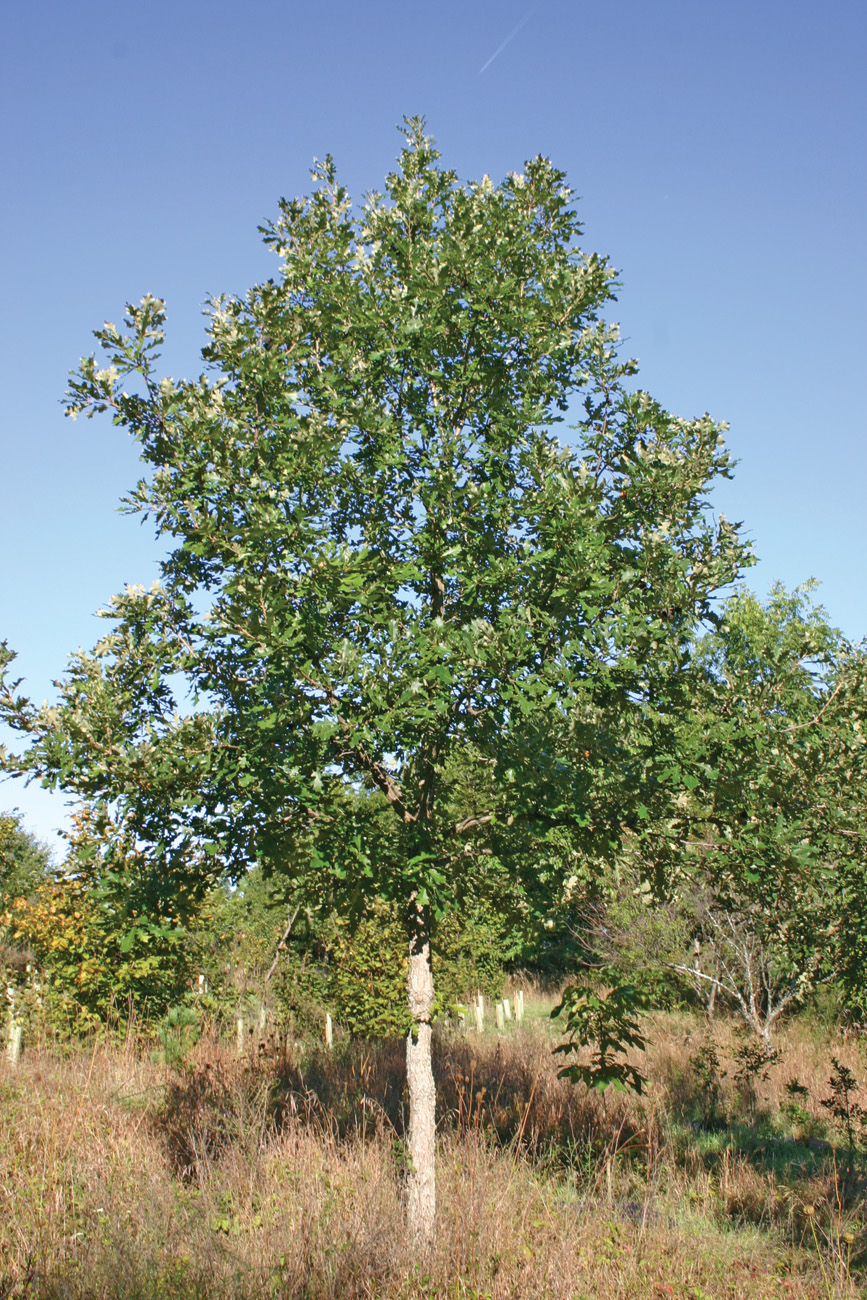
Burlive Oak
When I see the extremely dry and hot climate affecting the hills of southern California in the form of fire, I do wonder if an oak forest would help in some way. Could an oak tree slow or suppress fire in some way? Is there too much leaf litter? And would oak trees help retain soil moisture compared to other types of vegetation? What could you add to the existing ecology to mitigate the problem in a fast, economical and efficient way? Here is where this oak could step in. You take a few acorns like the fictional “Man Who Planted Trees” and begin reforesting the hillsides with oaks. You plant 20 acorns per acre and slowly but surely make oak trees within the rocky soils. It could easily be done with a stick and a small canvas bag attached to your belt. Harvest acorns from the University of California. Check. Hire a work force to reclothe the hills of California. Check. Give California life again and help those who need it most. Check. When these plants fruited, you would let the birds and small mammals distribute them to fill the valleys with oaks. You need vigor, thick waxy leaves and extremely deep roots to create a rock hard wood able to hold the soil and air humidity around the trees themselves. The desert oak hybrid bur and shrub live has these genetics which are perfect. The burlive oak would fit into an agroforestry scenario for hot dry climates yet retains a tree form which increases shade. Shade equals cooling. The great shrub live and bur oak cross with thick dark green leaves makes it happen. Most of my crosses came from Utah and California as the Cottam hybrids. A second batch came from selections from the late oak breeder Miguel Marquez in Texas. To this day, the heavy acorn production along with its durability over time could easily fit into these hot and dry times ahead.
Seed selections from the amazing Shrub Live oak Quercus turbinella include: Asmus Oak Quercus garryana x turbinella, Englishlive Oak Quercus robur x turbinella. These particular crosses thrive in heat and drought and work in areas with higher soil and air humidity compared to pure Shrub live oak which perished here in Michigan within 4 years. The reason for a hybrid oak is not because it is better in some magical way. It just has a vigor greater than the species alone has. This was not a cross done in a controlled laboratory setting. In fact, intentionally crossing species of oaks is difficult to do. Yet in nature, it happens effortlessly. It is an effect of two young and evolving species of oaks exploring and creating diversity in novel ways outside of what ‘normal’ biologists think of as the immutable species. That is dramatic.
Cue the strings.
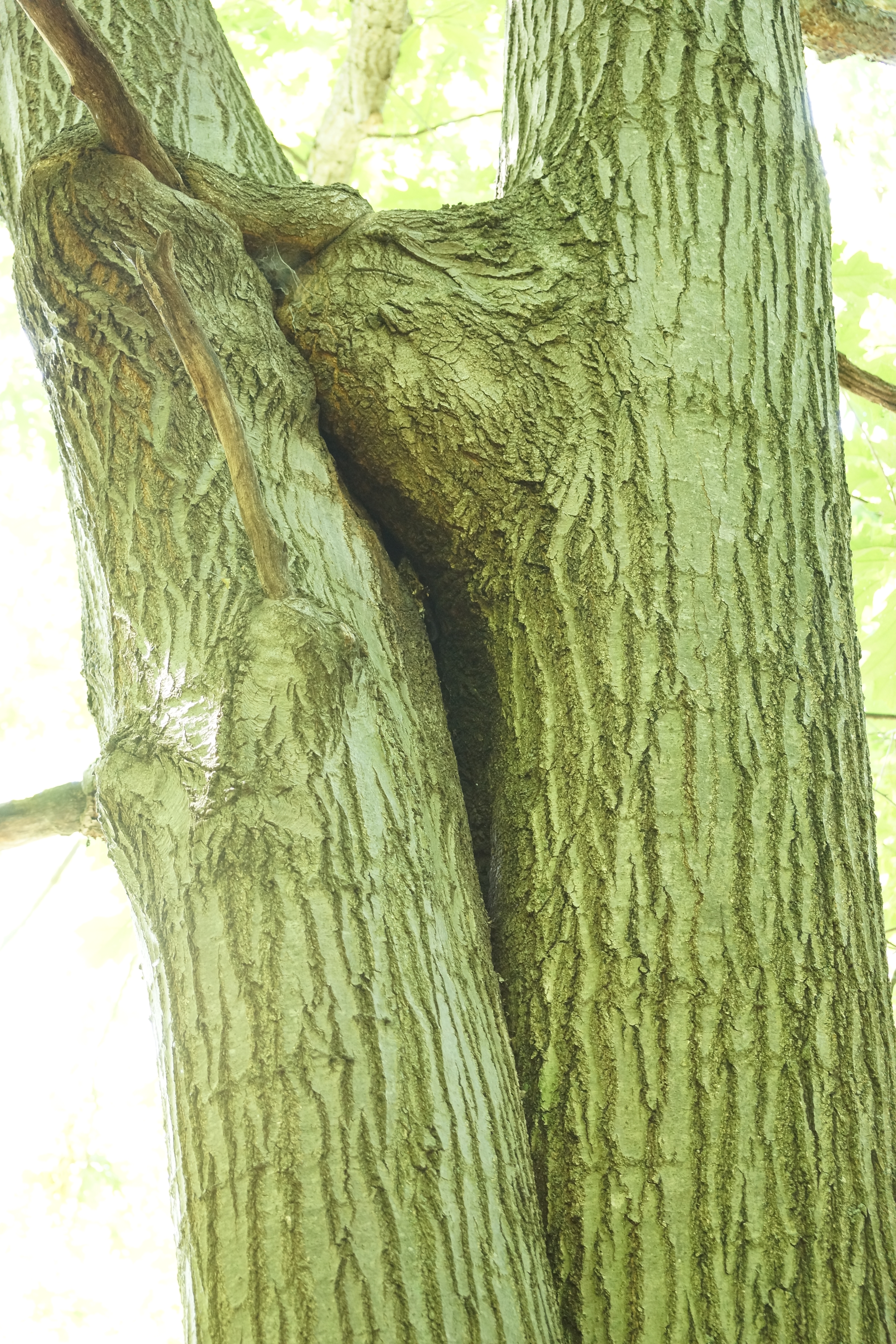
Oh-its-Natural grafting. Red oak at my families farm.
Enjoy. Kenneth Asmus


 biologicalenrichment
Ooh, I love oak trees! 😀 Great pictures.
Thank you. They are easy to fall in love with.