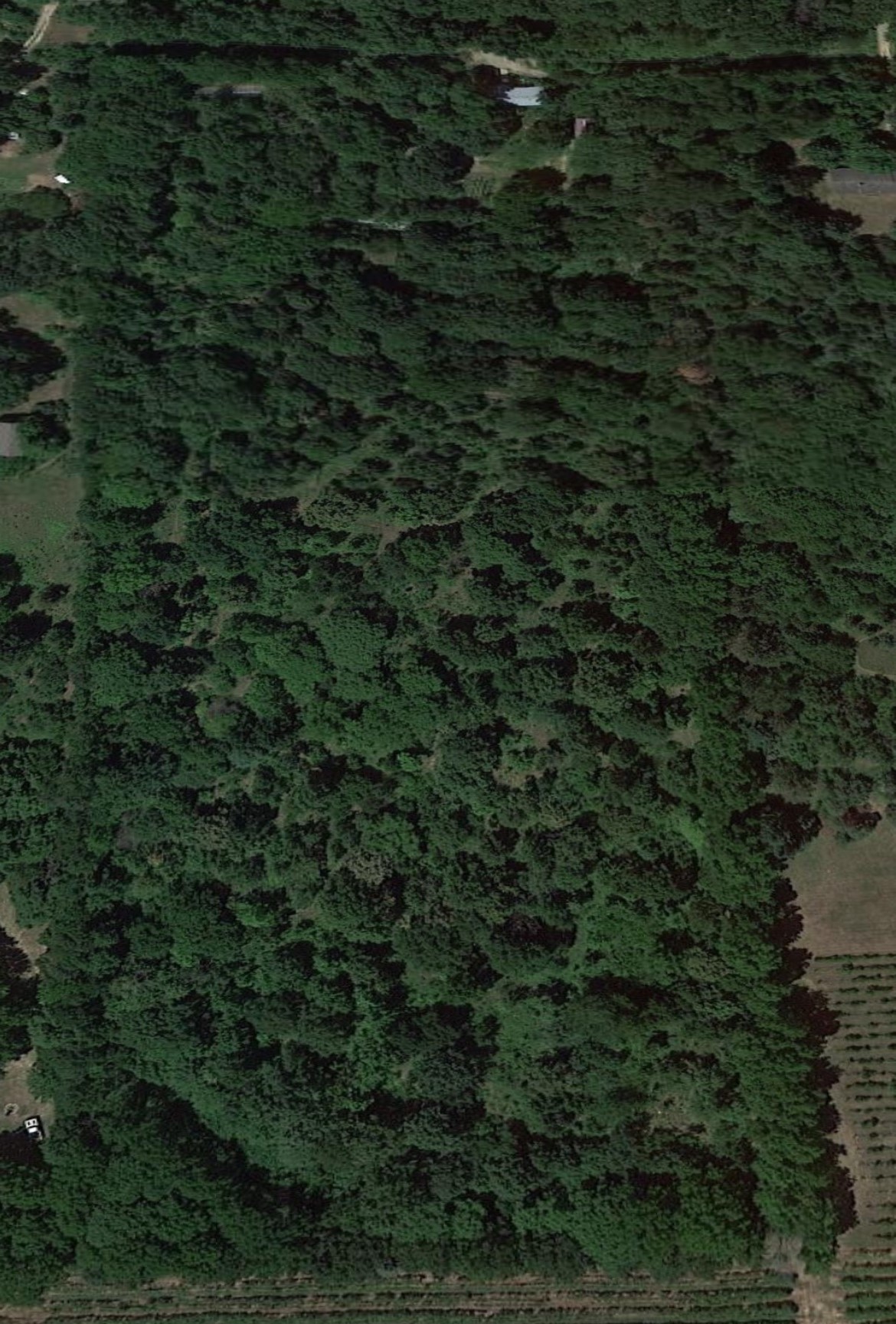
The Oikos Tree Crops Farm-My experimentation in my nursery led to a repository of species level food plants created by using seeds from around the world. I turned this pasture that was being used as a hay field into a global food repository. The apple genus is very diverse species wise yet few people grow apples from seeds. I needed to find as many species as possible and create an apple forest rich in species diversity. No grafts allowed. Clonal is not ideal in this application.
From the time I was a child, I loved to grow plants. I threw a pit of a prune near the back door of my home. A tree emerged and I quickly put it in a pot. How could this happen? The seed did not look alive yet it produced a living tree. This was a straight line to growing trees. I have a few hand tools. I have an open field. And soon, like my father before me, I will have a tree farm. My land was devoid of trees. It was too small to be a commercial operation of a single species or cultivars. I did not have the resources to create a fruit farm. My nursery idea began in college when I would go to the library and read the reference books of Hortus, USDA Woody Plant Seed Manual and Brooks and Olmo Register of Fruit and Nut Varieties. As reference manuals go with their black and white images, they brought to life the great variety in nature. Often this variety was lost over time to the point where only a tiny fraction was used in modern agriculture. It was a mind expanding experience for me because I wondered where did the other plants go. There were many ‘castaway’ food plants that fell in the minor camp. This meant they were insignificant in terms of use. I wondered about culturing a few of these plants and how they could make a positive influence in the world family of farmers.
My younger self didn’t realize that farming in general is highly segmented and specialized. It needed diversity yet didn’t want that in its production systems. There everything has to be the same plus it can’t be far outside the familiar tastes that people enjoy. Like my apple growing neighbor, you could have 30 varieties of apples, but the small tart green apples are not what people eat or desire. Having a collection of diverse species didn’t mean it would be put to use on a larger scale. Recently with the advent of small scale syrup and cider making for flavoring, the species apples have some great possibilities. Here was a way to harness these incredibly concentrated and complex flavors.
Woody plants take time and space to create a ‘grow-out’ to assimulate new genetic combinations. Ideally you would grow these non-clonal apple seedling collections and put them on public land to further test their capabilities in farmerless fields for long periods of time. There would be no spray or herbicide use. It would test the limits and explore the possibilities of no spray apples and the crabapple as well as create a means to developing timber form apples for wood quality. The public would then have access to new flavors of fruits and get inspired by the unlimited possibilities of the Malus genus and its variety. These public lands should be protected the same way a state park or federal land is. Instead of the native flora, these fields protect the global apple flora as a means to improve agriculture free of the breeding restraints put on the plants by humans who desire only the six genes that currently dominate the market. It is only by the cultivation of the species in a non cultivar way that these ideas will stay alive and integrate with our diets and lifestyle changes. This may sound like an apple pie in the sky but it is easily done. We have all the resources to make it happen and it’s inexpensive to do even on large acreages. We have the tools. We have the open fields. We even have the seeds. Toot my own horn here. Toot toot. This is the future of tree crops and research in agroforestry in general. It is using the world’s flora to solve the world’s problems.
Apple Stories Come to Life
Here is my brief run down of a few species apples grown at my farm the last four decades describing their traits and possibilities in cultivation. All were done from seeds. Each one has a story to tell in its population and individual progeny.
The Manchurian Malus baccata
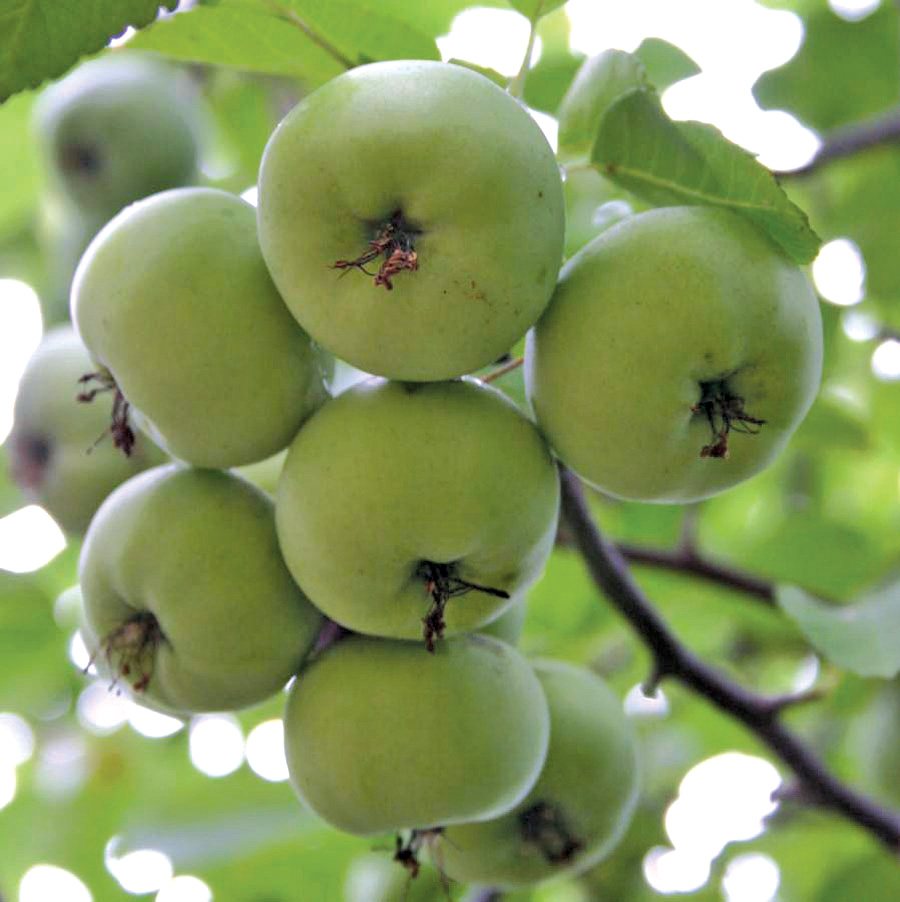
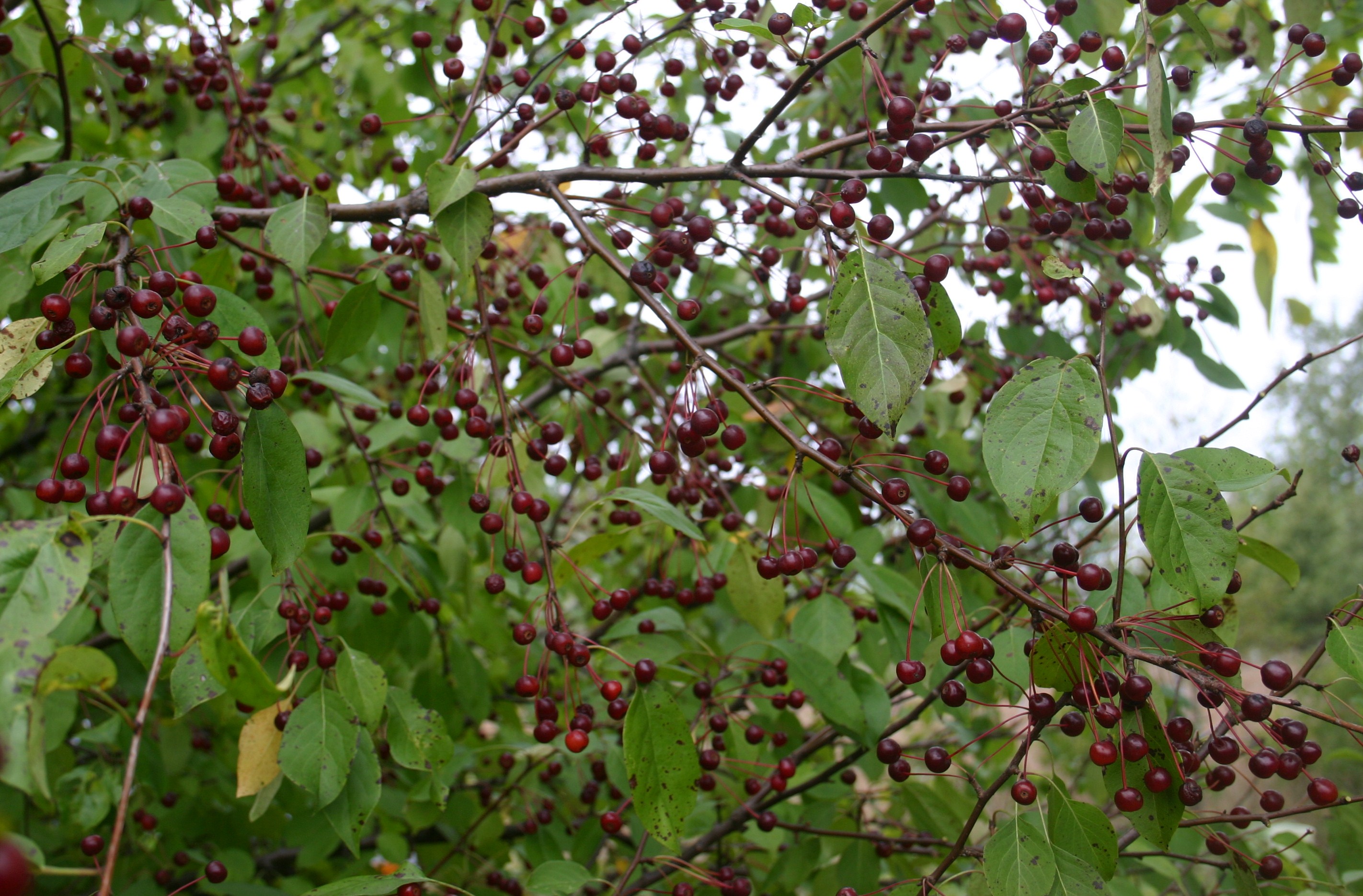
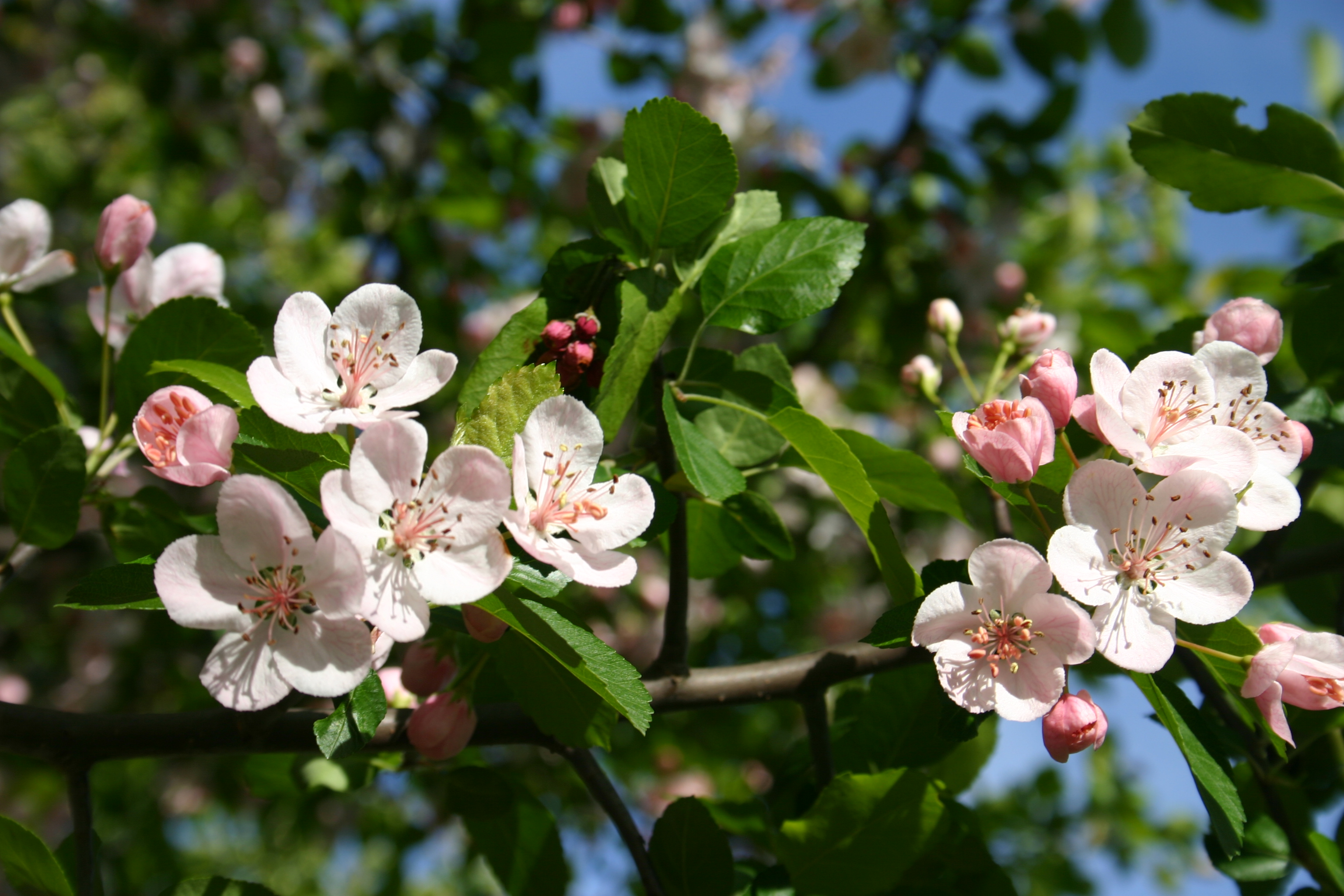
Normally, you would avoid pea sized apples filled with strong bitter compounds. It is considered the world’s hardiest apple able to take minus 60 F. Biting into the teeny apples and chewing them into a paste is too aggressive and best to call it ‘chunkage on deck’ as they are so repulsive. Waynes World reference in case your’re wondering. Yet a few years ago while collecting seeds of them late in the season while competing with the cedar waxwings, the flavor was much more mellow and less astringent. I would let the fruit float in my mouth one at a time as I hand harvested the fruit and let it dissolve slowly. This improved flavor is due to the successive frosts on the fruit. This is a common characteristic of many crabapples where long ripening times improves their edibility. The Siberian crabapples contain very high vitamin and mineral rich fruit as part of their chemical composition. This is the ultimate apple a day to keep the doctor away. My particular source came from South Korea on Mt. Kyebang where the apples were found growing in a very rugged, rocky environment. They are a very uniform non-hybrid population with some individual plants showing great vigor. They are free of fireblight, scab and rust. The species is very distinct with its bright clean light green foliage and large pure white blossoms. The fruits hang in the trees and rarely drop free on the gound on their own. The fruit quantity is usually high. This is the first apple species to blossom at my farm and does not hybridize easily because of that. Its compontent of the apple forest is for a vitamin rich fruit for supplements and health products.
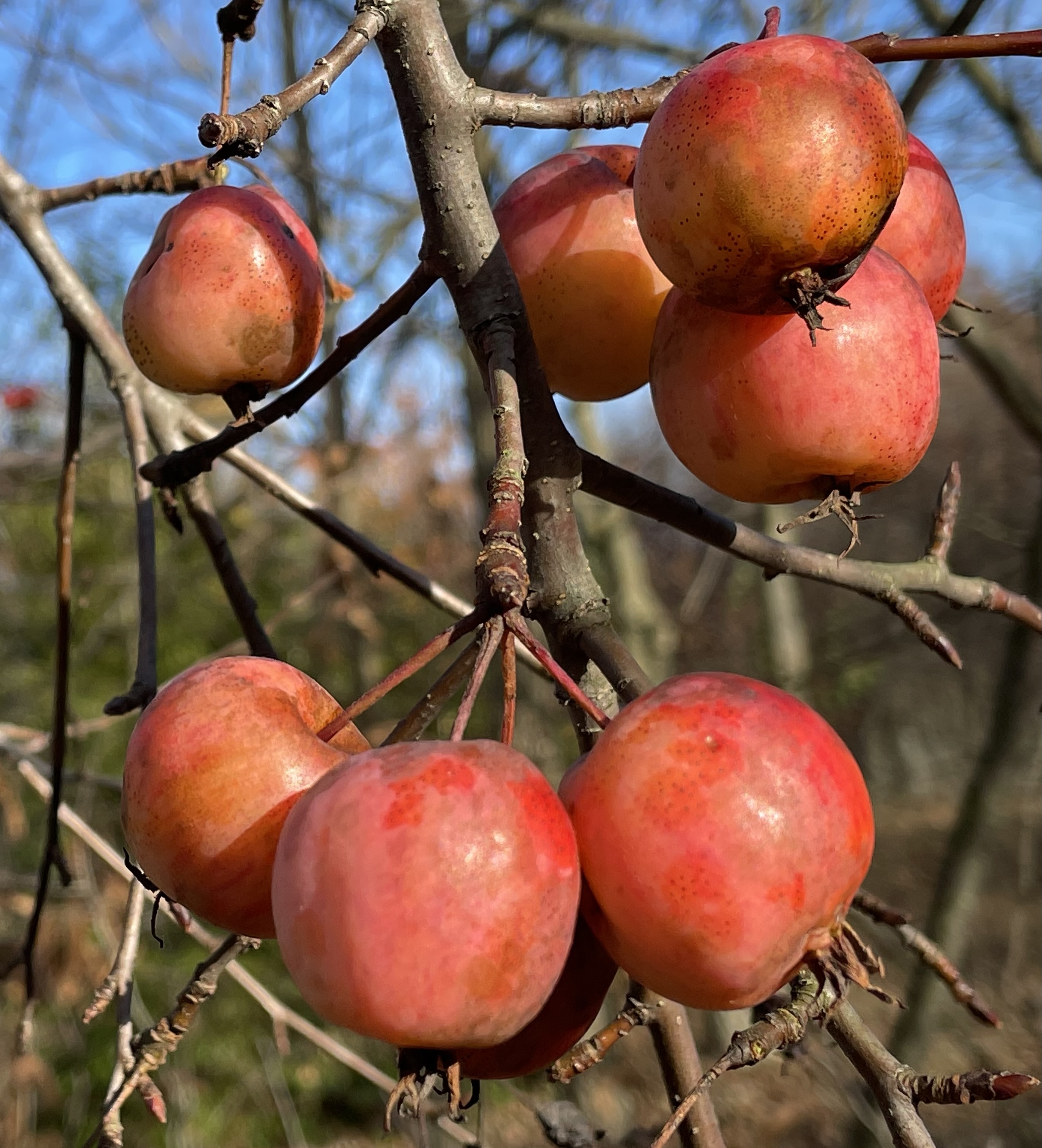
The Virginian Malus virginiana
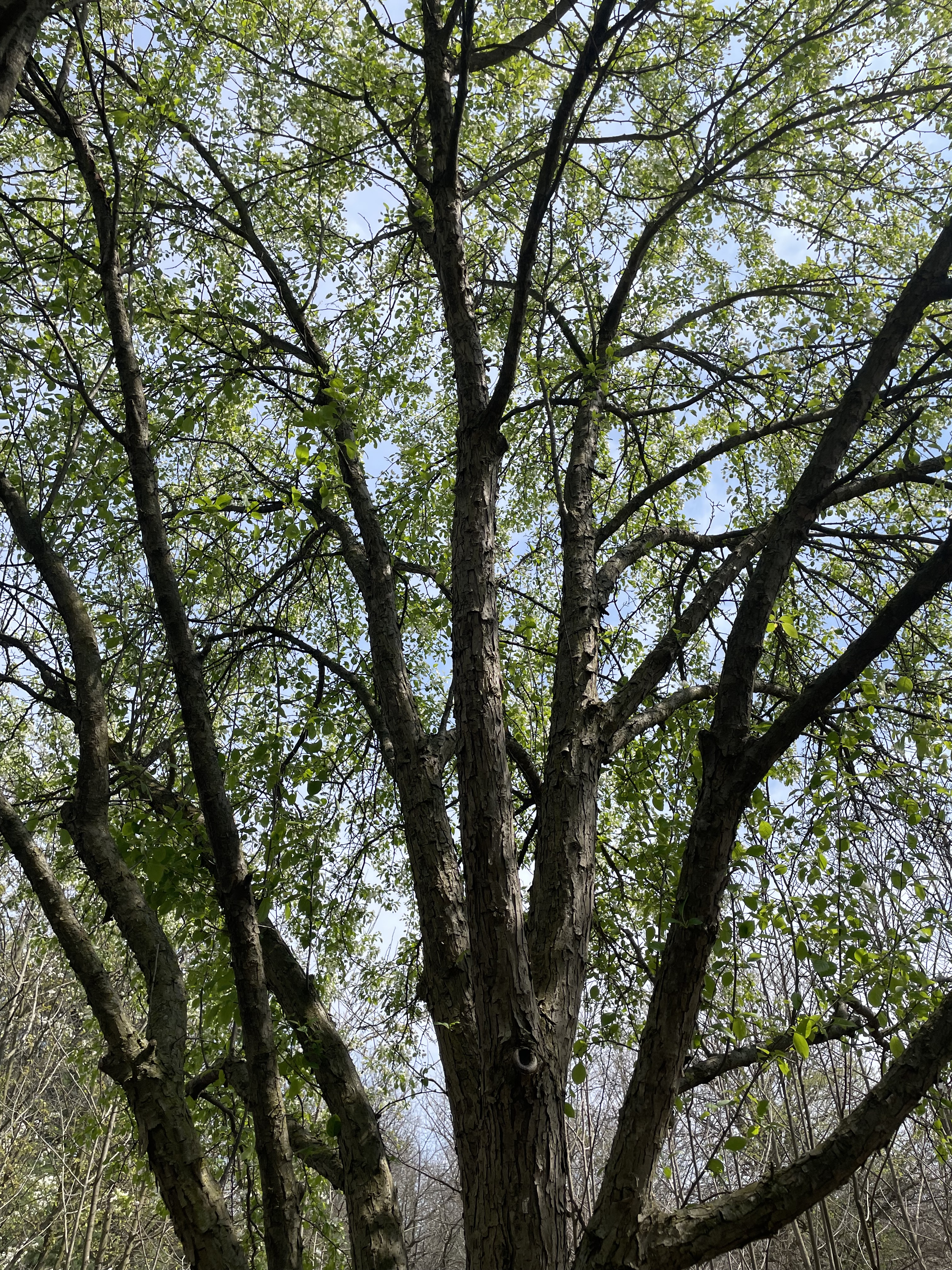
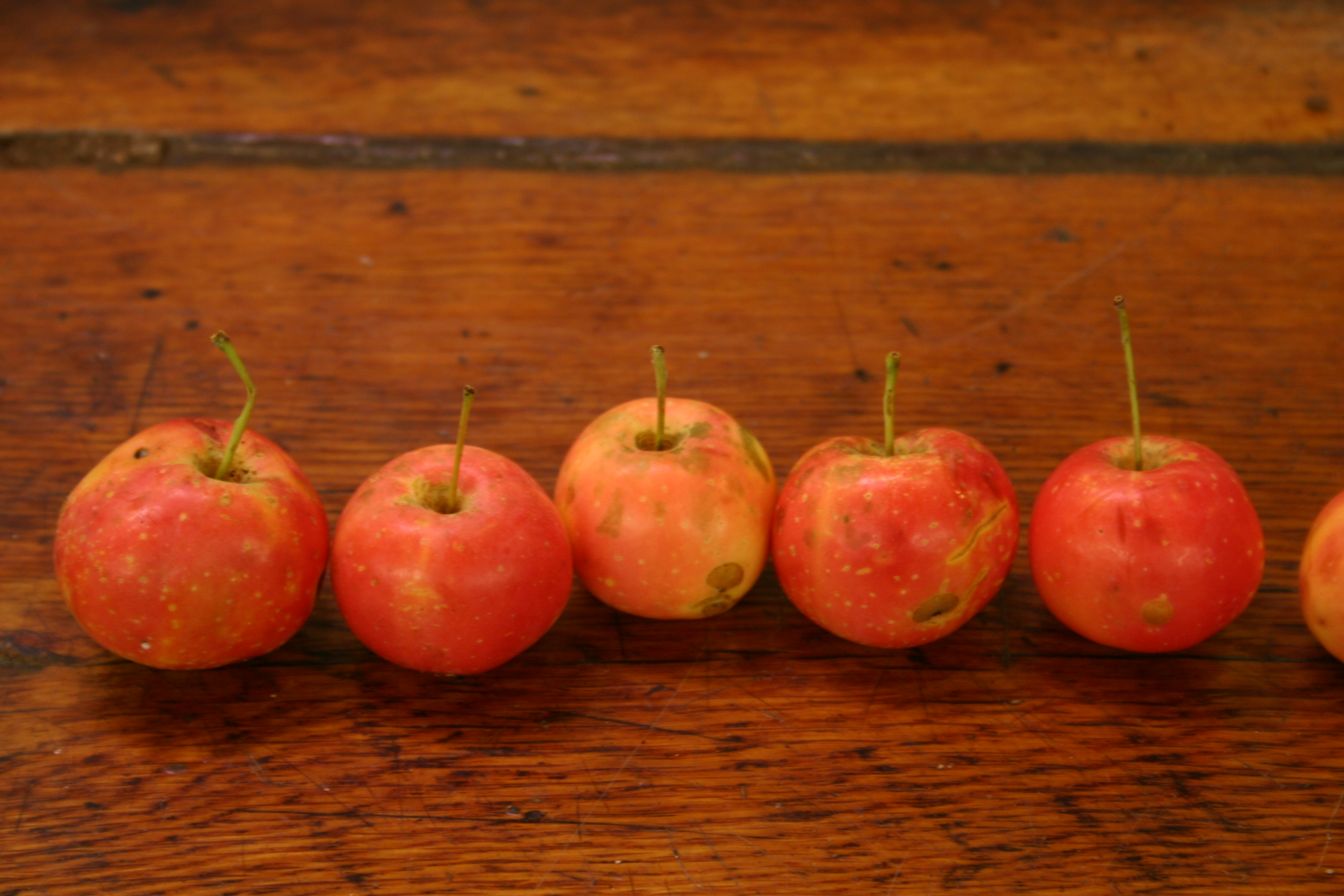
I took a short cut by buying a grafted tree from Edible Landscaping called Hughes. I planted the graft union below the ground to encourage it to self root. The Virginia apple is a loosely defined crabapple from the southeastern U.S. Over time I desconstructed the grafted form to its species level by growing out many seedlings and selecting those with the most vigor and clean foliage. This type of selection process created clean and heavy fruit production ten times more than the original grafted tree. The seedlings were much more uniform than I thought they would be with all of them producing a one inch red apple in dense clusters. The trade off was the fruit was smaller and much tarter. The seedlings took on a timber like growth habit with broad spreading branches and a height to 40 feet or more. I limbed them upwards near the hybrid oak plantings. It would be a good tree to root from cuttings to maintain this vigor in orchard settings. The fruits can be shaken out of the tree easily by early October and harvested by hand on tarps. The Virginia makes an excellent jam and jelly. Its compotent of the apple forest is that of heavy fruit production for syrup, jelly and cider for adding flavor to other sweet and bland apples.
The Russian Malus pumila var. niedzwiecka
This particular species apple is a small apple species coming from the Russian apple forests and other species mixed in over time as it traveled throughout the world. I received seed of it from an overseas collection which said it was one of the original crosses. The seedlings were quite uniform but with larger fruit than the original seedling. I only had one tree of it. What I noticed about growing this particular crabapple was its red flesh and heavy yields. After 30 years, it continues to crank out large volumes of small crabs that if nailed by a few frosts taste very good like a concentrated berry. It still needs the sugar molecule to calm it down, but the flavor is super apple. The red and pink pigments are very pleasant to see and you can see why this species is used for adding anthocyanins to other larger cultivated apples. People back cross the apple to get red fleshed apples. I started a secondary planting from this one tree. They are all very vigorous and clean. This compotent of the apple forest is that of a berry and its ability to produce large volumes of clean, small red apples high in anthocyanins useful for food supplements, creating new flavors while preventing human illness.
The Russet Malus domestica
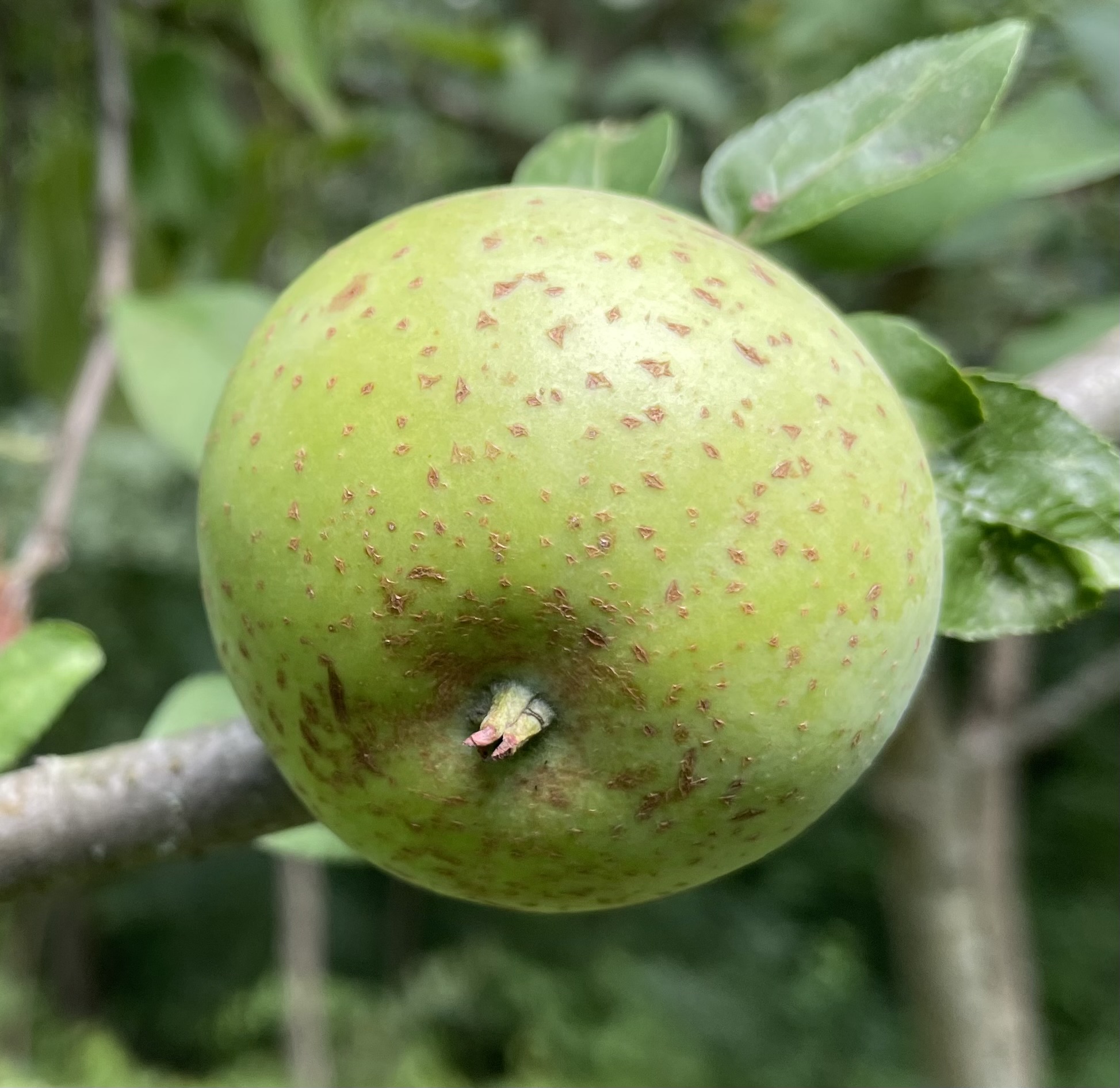
For a while I was buying apple gift boxes for Christmas to friends and relatives. This is when my dad quietly told me “We liked it…but don’t do it again.” Often these boxes are filled with russet apples like Grimes Golden that look like baked potatoes on a stem. My father was likely thinking this was not an apple and Ken is feeding us weird stuff again. I began chiseling out the seeds from these boxes and growing the seedlings. It happened that the thick skins on the russets comes through quite strongly in successive generations. These tend to repel insects from breaking through and destroying the fruit. Even codling moth seems to be blocked to some degree. Some of the apples are very funky in shape with weird protuberances looking like mini-volcanoes on the surface of the apple skin. The Russet became a means to discover completely no spray apples. Apples are sprayed 16 times a year. This is our way out of this apple nightmare for the apple and its human counterpart. This component of the apple forest delivers healthy fruit for fresh eating rich in nutrients and free of insects and free of all spray. Others have also discovered this work around in the search for developing unique cider apple varieties.

The Prairie Malus ioensis
This species created a heavily ladened stolon producing tree rich in bright yellow fruit with strong astringency impossible to eat fresh off the tree. Jam from it turned it into a superball condensed nuetron star like mass impossible to put on toast without shredding the bread into pieces. It was true from seed and few if any hybrids are found in the population. I was surprised at how the main trunk was short lived. Evidently, the species tends to use the stoloniferous root system as a means for regeneration much like Staghorn Shumac. The colony is extensive. When I lost the original tree I could see the sprouts in the shade of hybrid American chestnuts and hybrid oaks over 40 feet away. It’s a traveler. The density of the fruit along with its bitter and astringent compounds provide a challenge for taming it into a syrup. Like quince, it could be boiled in sugar. You have to view it more like an olive or quince plucked off the tree. I did make one selection from the seedlings of roughly 2000 individuals. It was free of cedar apple rust and black spot on the leaves. One winter the deer browsed down all of the trees in the original planting bed except this one. So I obviously had to plant out the one the deer left alone. This compotent of the apple forest provides is a quince like characteristic rich in pectin and dark matter like possibilities where even light does not escape. Is that an over the top description for the prairie apple? Not for the apple.
The Wildings Malus domestica
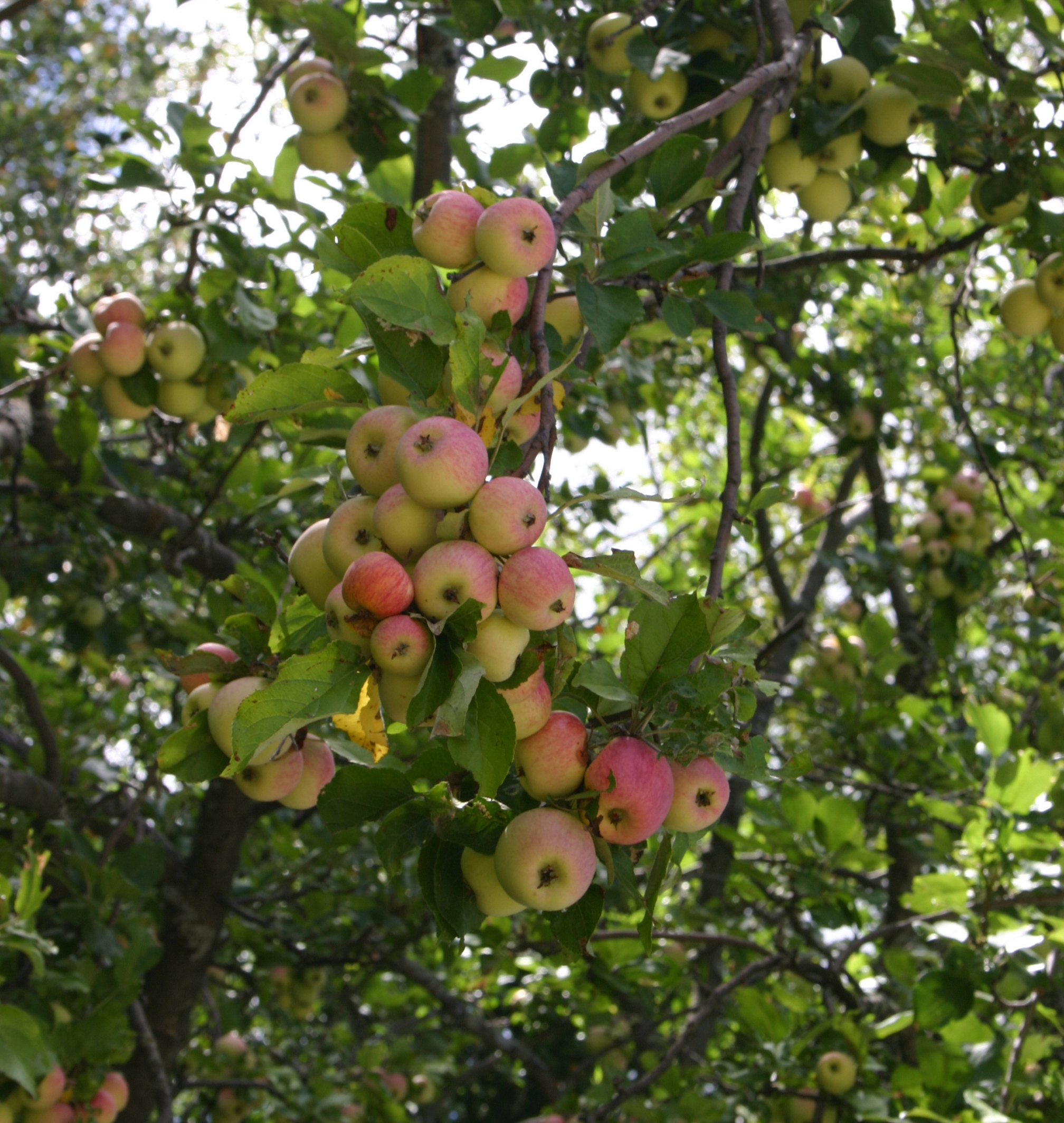
Pretty much any wild apple tree found as a seedling is useable for something. The problem arises if the fruit is filled with worms and other destructive diseases lowering the quality to the point of no return. But what if you had a field of similar seedlings each selected from other wild populations where fruit integrity is captured not as clones but as seedlings. All of a sudden your apple forest opens up into a wild population totally capturing the laws of nature in that region. It becomes local and native. And surprise, it does it through its exotic origins. This is integration ecology. I began noticing a few of these uniform populations in northern Michigan on vacation. People use them for deer food during hunting season. In a few of the locations, the apples even out over time and began producing apples very similar to the parent trees. It is not a common occurence but it does happen because of the limited genetic diversity to begin with. Today these apples represent some of the older storing apples that people grew for eating in the middle of winter. When I grew out a planting of the seedlings produced by a customer from the Upper Penninsula of Michigan who sent me seeds from their orchard, I was over joyed at the clean foliage and large leaves of the plants. Many were super vigorous growing to 3 ft. tall in one year from seed. This is always a good sign. I still have not fruited the selections yet but to see such healthy plants gives great inspiration to those of us who grow apples from seeds from a cultivated setting. This compontent of the apple forest draws from wild local apples which will go back to its orchard origins while focusing on ecological adaptibility, creating tall, healthy and long lived trees.
On My Way Home Apple
A few weeks ago, while driving on my way home from my daughters, I spotted a crab apple with the most immense crop I had every seen on a tree. The whole tree was coated with one inch dark red apples to the point you could not make out the individual branches. It looked like a dark red entrance to a cave with the branches hanging to the ground in great profusion. At first I did not even recognize it was a tree. It looked like one of those science fiction portals to another universe or time. Wow, man……When I came back about a month later to photograph it, the fruit was completely gone and consumed by birds and deer. I have seen this before where an apple grew next to a chain link fence. These types of seedling trees have their origin due to a small mammal or bird. They eventually work their way up into the canopy of nearby trees. Every now and then someone unaware of what the tree is or could do as a food plant, cut them down and herbicide the stumps and surrounding area. Lets face it, nothing says wire fence like abandoned herbicided parking lot. They seem to go together. This particular parking lot tree was used by truckers and let go when the business closed down. In the meantime, the cracks in the pavement became a means for seeds to germinate into the soil which in turn broke up the pavement further. These emerging forests contain the fruits of the animals that needed them the most to survive. Autumn olive, honeysuckle, multiflora rose and calllery pear are the first to arrive to create this new climax forest parking lot. The popular trees blow in to help with the whole project. It is such a joy and truly is a work of art created by the laws of nature near this off ramp of Interstate 94. Without any effort on the human front, this is a glimpse of a global apple forest respository via expansion of a plant community where nothing existed before.
This compontent of the apple forest starts and lies within our state of consciousness where it can freely grow before it expresses itself in novel ways shared by the Malus genus.
Enjoy. Kenneth Asmus


 biologicalenrichment
You must be logged in to post a comment.