Every plant that I grew whether it was in great profusion or just a few for experimental purposes had possibilities. If it died unexpectedly or had some horticultural issues of some sort, then I want to know what happened and why. That is why I kept replicating these more or less ‘failed’ plants over and over. I wanted to know the limits. It is a way to awaken a plants potential and find that open window of possibilties.

Mediterranean Asparagus: Asparagus acutifolius
Every now and then I would discover new species within a genus of a well know crop plant. Everyone knows the asparagus but few people realize worldwide there are several species used for medicine and food outside of Asparagus officinalis. My discovery process is normally based on finding information and seeds of it most of which was done prior to the internet. Many times people would contact me. All asparagus is clonally propagated and like everything done like that the view is extremely narrow in terms of selection and use. The Euell Gibbons book, “Stalking the Wild Asparagus” highlights a foraging philosophy that is alive today. Wherever asparagus is found, it is recognized and used. Here the view is wide and filled with flavors far outside of what is consumed today. This creates a certain mystique about many of them. The Meditteranean species was not entirely winter hardy at my farm in Michigan. Before I lost all of them, there were a few individuals that did survive which to me is a glimmer of hope. So it could be possible with a bigger population to find others and select it. It is the most drought tolerant asparagus species ever. The flavor is very pungent but is relished by consumers. Since my experiment, I found other species which I am growing which are hardier and have a similar flavor profile. It might be possible they are not edible in the fresh state as well but either through hybridization and selection you could find a delicious version. I have seen these species in other arboretums and wonder why they ended up as ornamentals instead of food or medicine. The density and yields of the stems-sprouts far outproduces commercial asparagus. But the big question is flavor. How would this taste and what is it like to use as a source of nutrition and vitamins? It might just flat out taste horrible. Does that make it medicine then?
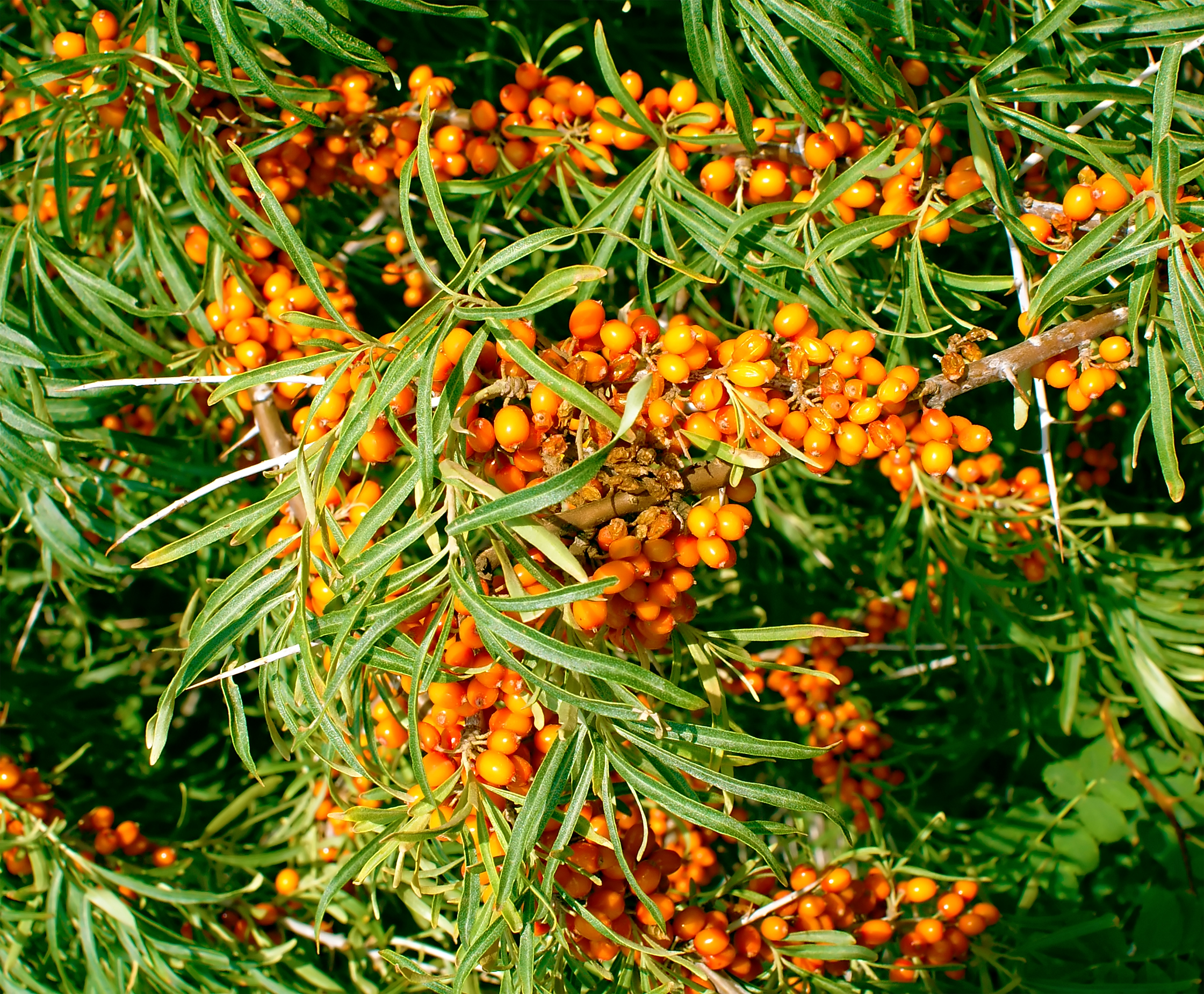
Seaberry: Hippophae rhamnoides
The seaberry represents some of the best ultra-hardy fruit plants of the northern plains of China and Russia. People have grown it in several countries and improved its yields, flavor and fruit size to the point it is now in the cultivar world of wonderment. However, no matter how I was able to produce it, it mysteriously disappeared every summer. I used the clonal selections, seeds from the clonal selections, seeds from wild unselected plants and Ebay seeds. I purchased seeds from the seed companies here in the U.S. All paths lead to failure. Eventually I gave up. For a while I sold plants grown at Burnt Ridge Nursery. After some research, it turned out that seaberry is latitude sensitive meaning the farther south you go, the ability to grow it decreases dramatically. Because of its health properties and possibilities for these ‘Adaptogen’ drinks you see on the market, the cultivation is highly sought after even more than Aronia. (My sidenote takeaway: Aronia has a bad name for marketing.) Here location plays a role in its success and eventual use. I am wondering if some of the most northern areas could attempt larger grow outs to see its possibilities. It does look inviting with its rich fruit and nitrogen fixing capabilities. For now I keep a small packet of seeds in my seed drawer waiting for the perfect spring weather. If you decide to grow it, you are in luck. The seeds do not require dormancy and can be planted just like beans. They usually grow quite vigorously that first year. Male and female flowers are on separate plants on this species. It is a good one to experiment with because of its widely available inexpensive seeds, ease of growing and selecting clones of it. Ideally you would want three hundred plants of it but even a little is good. If I were to do it again, I would start with ‘plants that do not die’ first and go from there.

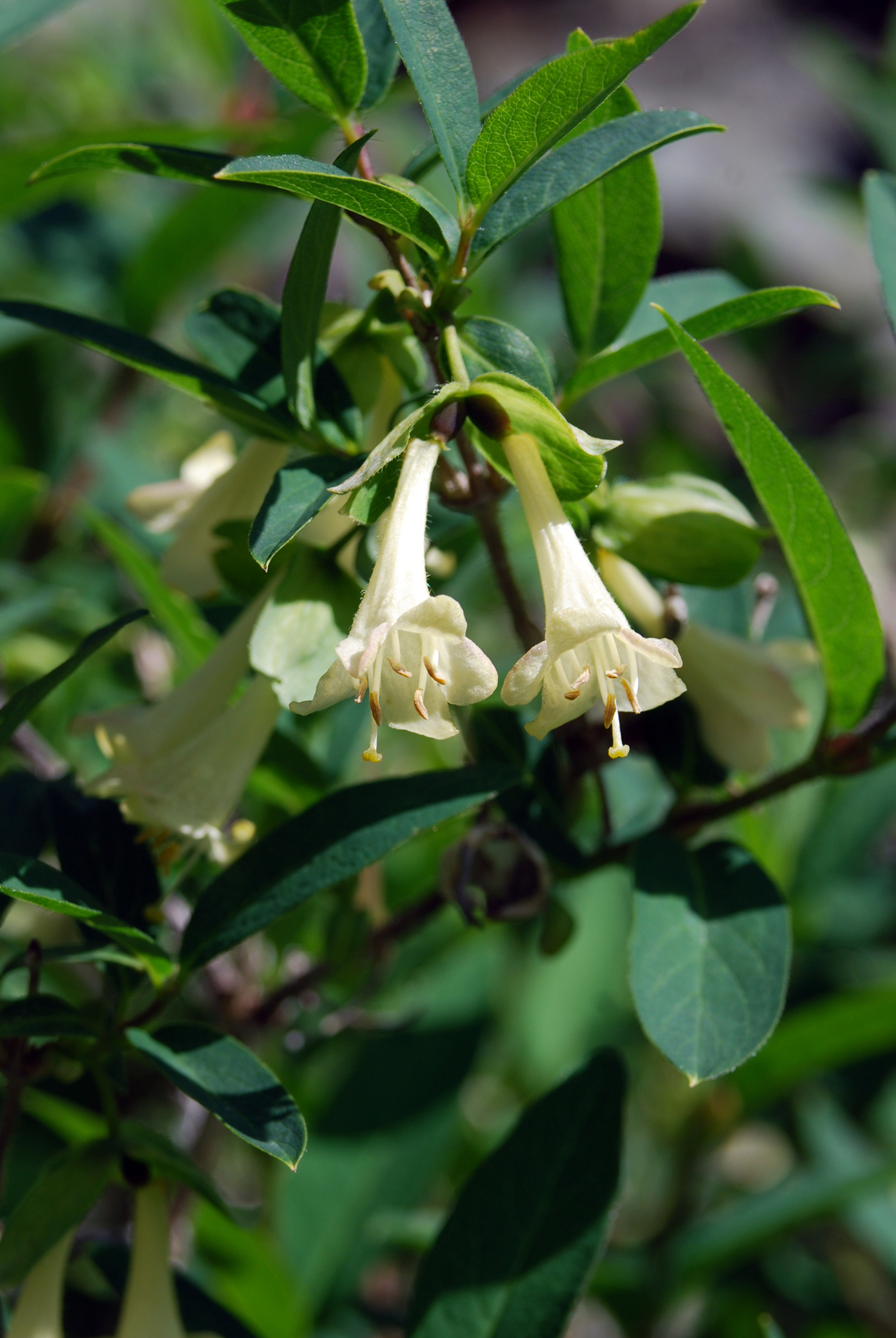
The Blue Honeysuckle Called Honeyberry
This took a robust plant breeding industry to bring this into production using several seed sources and a penchant for winnowing out the best. I was happy with the name they chose to market it because Mountain Fly Honeysuckle is not useable. There are many varieties of it now with huge fruits and potential for commercial production. Since its a circumpolar plant native to several continents, it has a broad array of seed sources. When I first grew the plants, I used commercially purchased seed from Russia and finally plants from northern Wisconsin. Each of these seed sources were slightly different. They were all very weak growing and not adaptable to my Zone 5-6 farm. It was too warm. I first purchased a couple of varieties from Russia from Hidden Springs Nursery in Tennessee and then slowly grew other seed sources. I had the vision since it was a honeysuckle, Lonicera, I would be swimming in berries, seeds and plants. Nothing could be further from the truth. It just was not adapted to my latitude. Since I have recently seen them at my local Lowes, I realize someone else is swimming in them. Just before I gave up producing them, I had heard the Japanese had selections of them that were robust and super productive in warmer and longer growing season climates. Followed by the Holland breeders, huge small plum sized fruits were dropped into the mix. Everyone was diving into this huge pool of genetic diversity. I still walk by my row of 50 plants of Russian heritage seedlings and a few of my Wisconsin plants all of which are the same planting height from 25 years ago. Every now and then one flowers and produces a fruit. That’s enough for now they tell me.

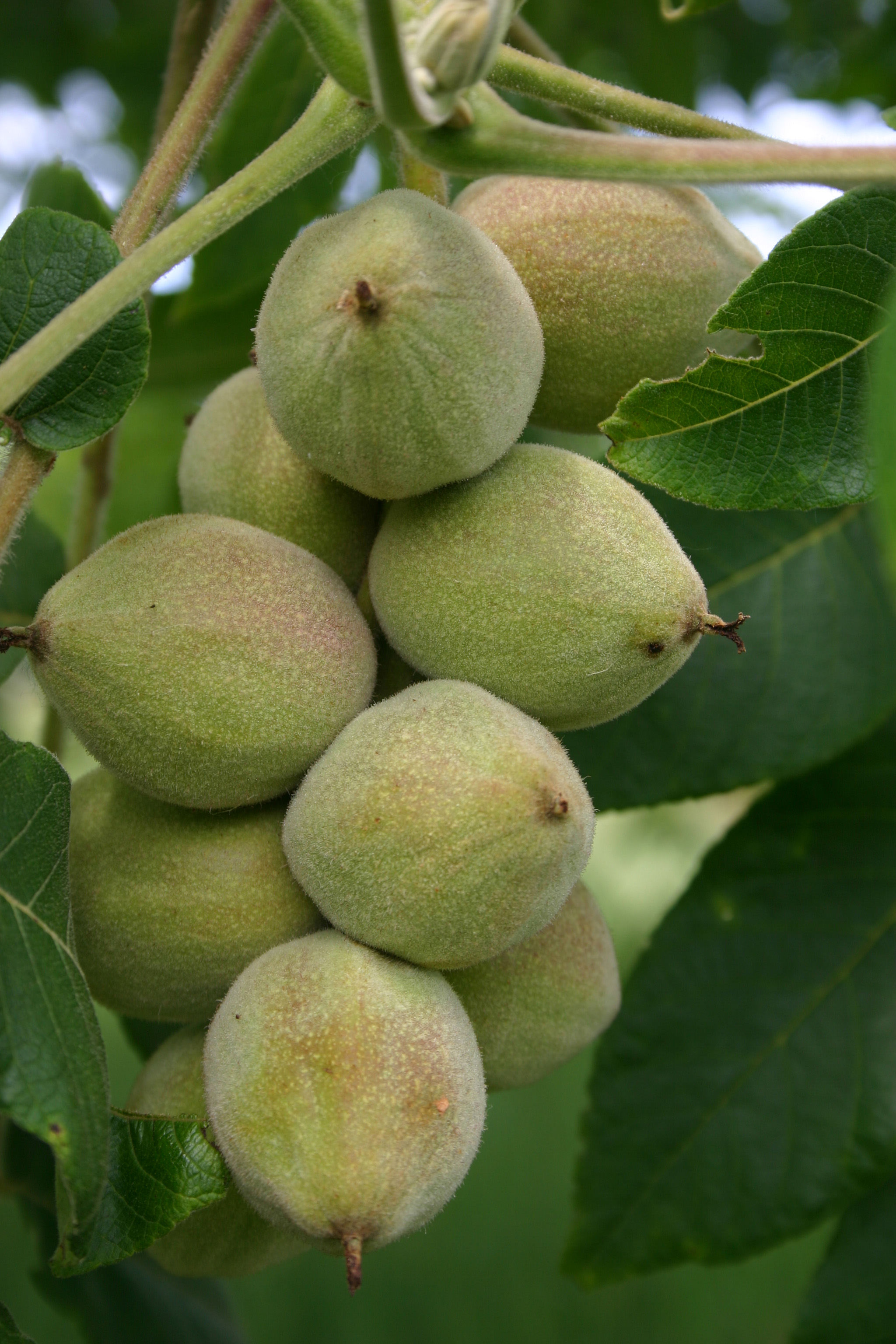
Heartnuts Juglans ailantifolia var. cordiformis
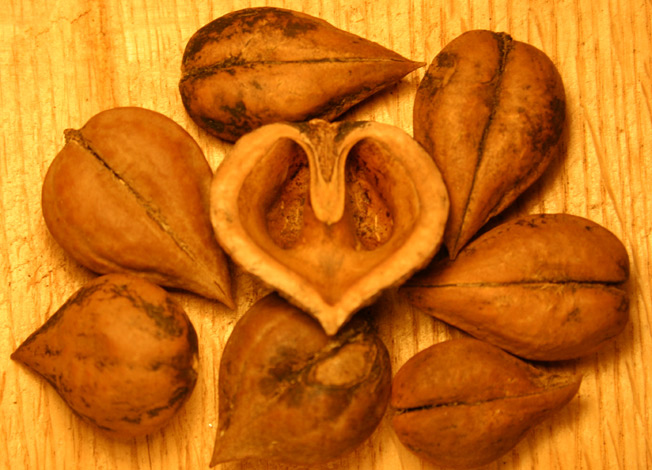
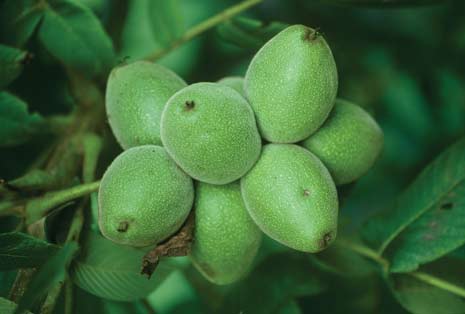
There is nothing not to love about the heartnut and its cultivation. It has large clean leaves and immunity to all the diseases that inflicts black walnut. It has a very vigorous growth and great winter hardiness to at least -25F. I have seen three old trees with nuts on them. There are some seedlings that grow like a forest giant straight as an arrow and other trees with look like giant mushrooms. Even the hybrids of it with butternut are magnificent in form and vigor. Yet here again, few people cultivate it to any degree and rarely gets mentioned as a tree crop in agroforestry circles. It tends to miss frosts that nail the English walnut because it leafs later than most. The shells can be thick but there no internal sutures to impede the nut from dropping out in wholes and halves. People have made selections of it too with thinner shells and high yields. I have several nice selections I made that were insanely productive. It appeared to come true from seed at least the ones I purchased seeds from. One of my farming friends had a small plantation of seedlings and their hybrids. Before he left his farm, it was an amazing experience for me to visit. I just loved seeing that variation in action. What I did not know was that his love of cleanliness in his orchard and his spray regime eliminated the one pest I was experiencing like no tommorrow. It was the butternut curculio. That little bugger was pernicious, egregious and outrageous. A little Jackie Chiles energy. This particular larvae drills into the stems of the plant eliminating the female flowers. Every stem can have several drill holes. This completely eliminates the crop. My farming friend with his love of Malathion 3-4 times a year eliminated that little bugger along with the husk maggots which is another common insect associated with black walnuts. To create a tree crop, you need to flush out the details of growing these plants in numbers to really make it past certain disease and insect barriers. This one had a simple solution. You need to put the balm on. No one knows exactly what the yields are yet, but it is likely Grimo Nut Nursery and a few others have tweaked the ideal that others may follow in their footsteps. The crops became less and less at my farm until today there are none. But the trees look spectacular still and healthy minus the bb shot holes in the stems. For now, I am working on an organic solution that is simpler and more cost effective. I started last year doing the same with English walnut which also suffers from the same fate. There is a Rosemary extract that is considered effective against boring insects and may prove useful in prevention of this type of insect that drills into the soft succulent heartnut stems as they grow in early spring. In the meantime, the heartnut does open up your heart to all things walnut. The nuts are delicious like a buttery cashew. What is not to love?
Enjoy.
Kenneth Asmus


 biologicalenrichment
You must be logged in to post a comment.