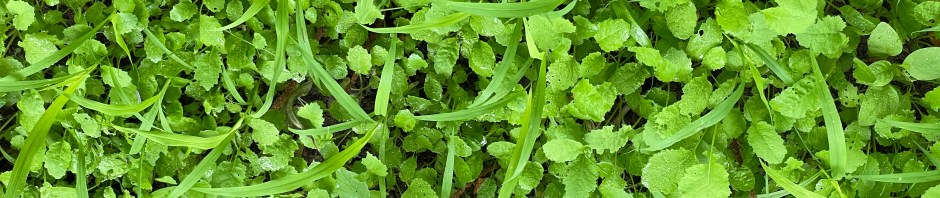

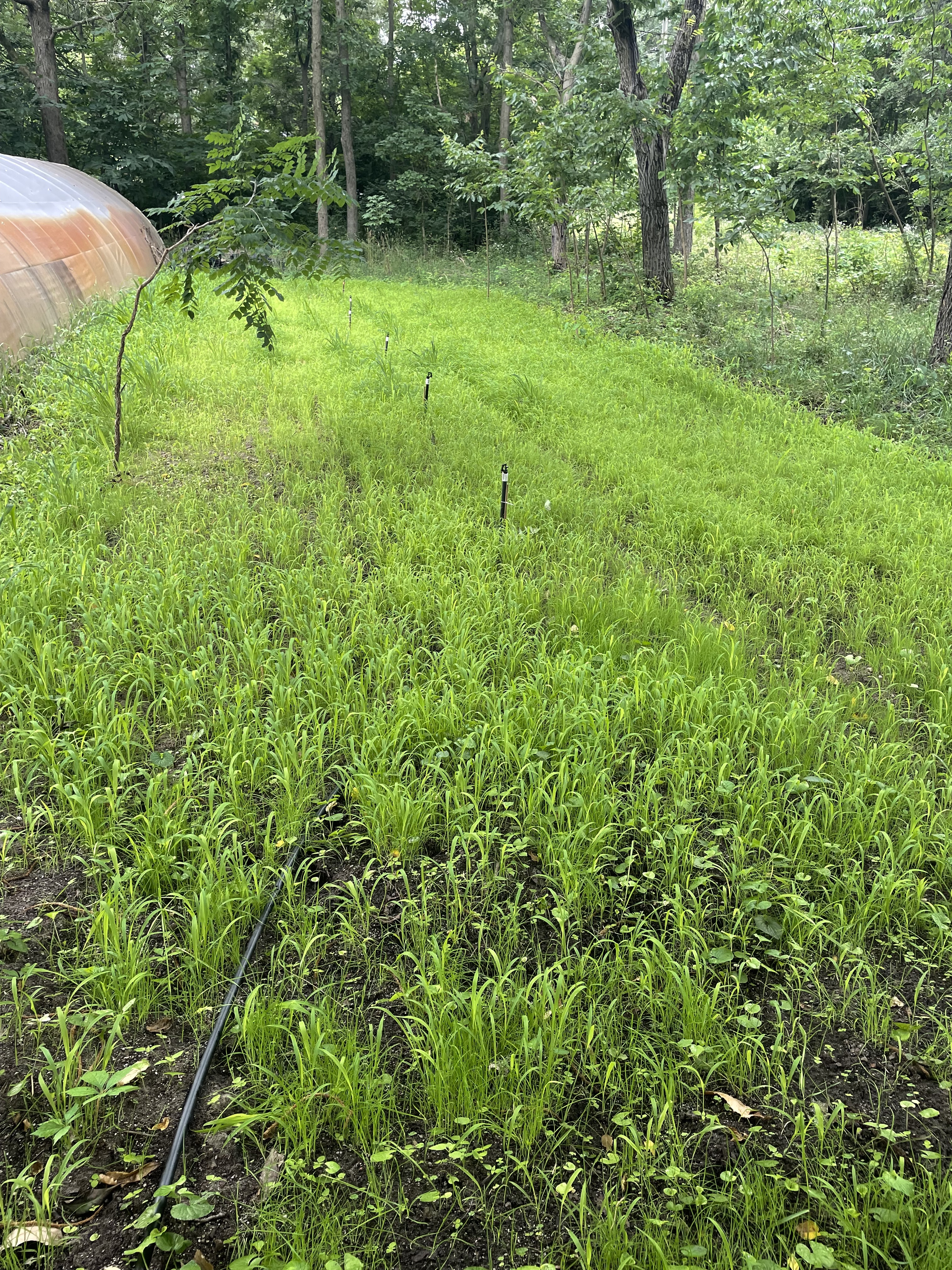
Having an open field is a rare event at my farm so I had to come up with a cost effective means of covering the soil after the polyhouse removals. In total five houses are being taken down and used by other farmers in my area working in fruit production of some type. I like that there are going to be put to good use. Covered in plastic and two types of polypropylene ground cloth for more than two decades, the original native soil underneath was locked in place. Removal makes it possible to replenish the soil once again. What should I do? Prior to the polyhouses, the vegetation was mostly quackgrass and orchard grass. Over time the orchard grass became the dominant species under the walnuts I planted so it was natural to try that again. Orchard grass is a thick bunch grass and very succulent at its base. When you hit it with a weed whacker prepare to be bathed in rich green protoplasm. It tolerates mowing and the grass florishes despite truck traffic and the massive crops of black walnuts. From the company Green Cover, I purchased the variety Devour which is more drought tolerant and disease free. It comes up very fine at first and is difficult to spot. I planted it late spring and kept watering it via the old irrigation system. It took roughly two weeks to pop. I added German Foxtail millet also from Green Cover and then ran to my old seed drawer and threw out via hand Dietrichs Broccoli raab from Experimental Farm Network. It’s a biennial and God willing the deer will not hammer it to death next year. I should get some yields of green goodness to eat and seed later on. I threw out a couple of batches of strawberry, sorrels, Chenopodium, Mountain mint and then snuck in some teosinte of a more primitive nature. Not everything came up but some may pop next year after winter dormancy. On the left there is a small stand of Johnson grass with the giant heads. This species at my farm comes and goes depending on the damage I do over tilling. Once I stop, it too retreats and disappears. It is interesting to me that some of the best soil builders and ground cover seeds are found in the Green Cover catalog. This particular area of farming has really improved over the last decade making selections far more likely to be employed on larger scales. For woody agriculture to survive, you need good ground covers going deep into the soils below. It doesn’t matter if it’s native or not. You need a good cover and the diversity will show over time. Ideally it would something you would harvest as well to use and make available to other farmers making yourself a mini-seed company. How I got blue eyed grass in my orchard grass planting is confusing to me. I am not sure how this happened but apparently the two go hand in hand as it expanded down the hillside. No matter how I tried to propagate it, it failed in the greenhouse. I threw it out not too far from where this Farmall sits. It arrived home! Today the population ebbs and flows within the thick bunch grasses and everything else.
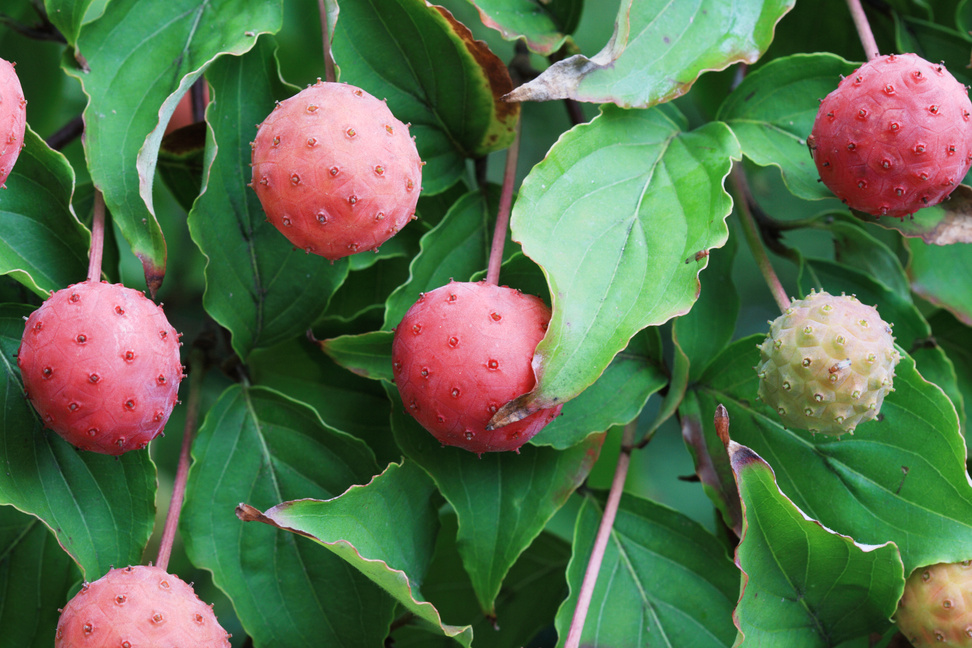
I have three other locations where the soil has been under poly all these years. It is interesting in that even though there are nearby trees very few feeder roots from these trees are found under the ground cloth when I yanked it up. With the exception of a few American persimmon, there appeared to be nothing. I think this environment was not conducive to root growth only because of the system I set up to propagate plants was on top of the ground cloth. It must of thrown off the oxygen levels in the soil quite a bit. All rain was deflected to the sides so it is possible the roots are thicker there yet we watered 2-3 times a week in the houses. Now that is all over, I think the soil must feel relieved. One house footprint surrounded by mature hybrid oaks will contain mostly woodland plants dominated by ginseng, ginger and goldenseal. Another surrounded by Ecos hybrid timber pears, persimmons and pecan will contain a row of edible large fruited Kousa dogwood right in the middle selected just for its fruit production to eat where there is enough light. It is probably one of the most shade tolerant dogwoods and has a really delicious tropical taste to it.
Another one will contain a trellis system for beans and other vine crops along with Cornelian cherry and Lemony quince seedlings. Each of the polyhouse removals created an opportunity to harvest the wood of weak and dying trees nearby, plant new types of crops as well as evaluate the future fruiting plants in greater abundance. To me this is the greatest joy in my farming quest. Everything can be done in a direct way with minimal cost of time and money. There was one exception. The abandoned pots filled with soil and plastic tags since 2021 are giving me a new appreciation of clean up at the nursery. As the hoops disappear into the distance, it’s a relief for me too.

Enjoy. Kenneth Asmus


 biologicalenrichment
You must be logged in to post a comment.