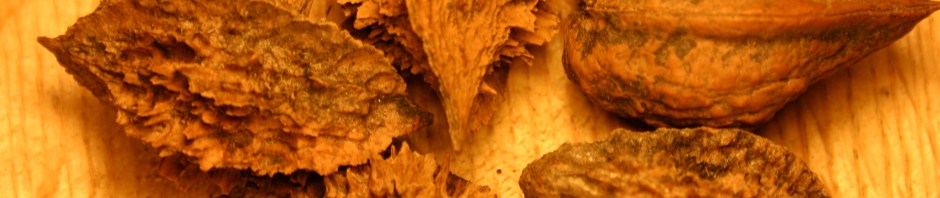
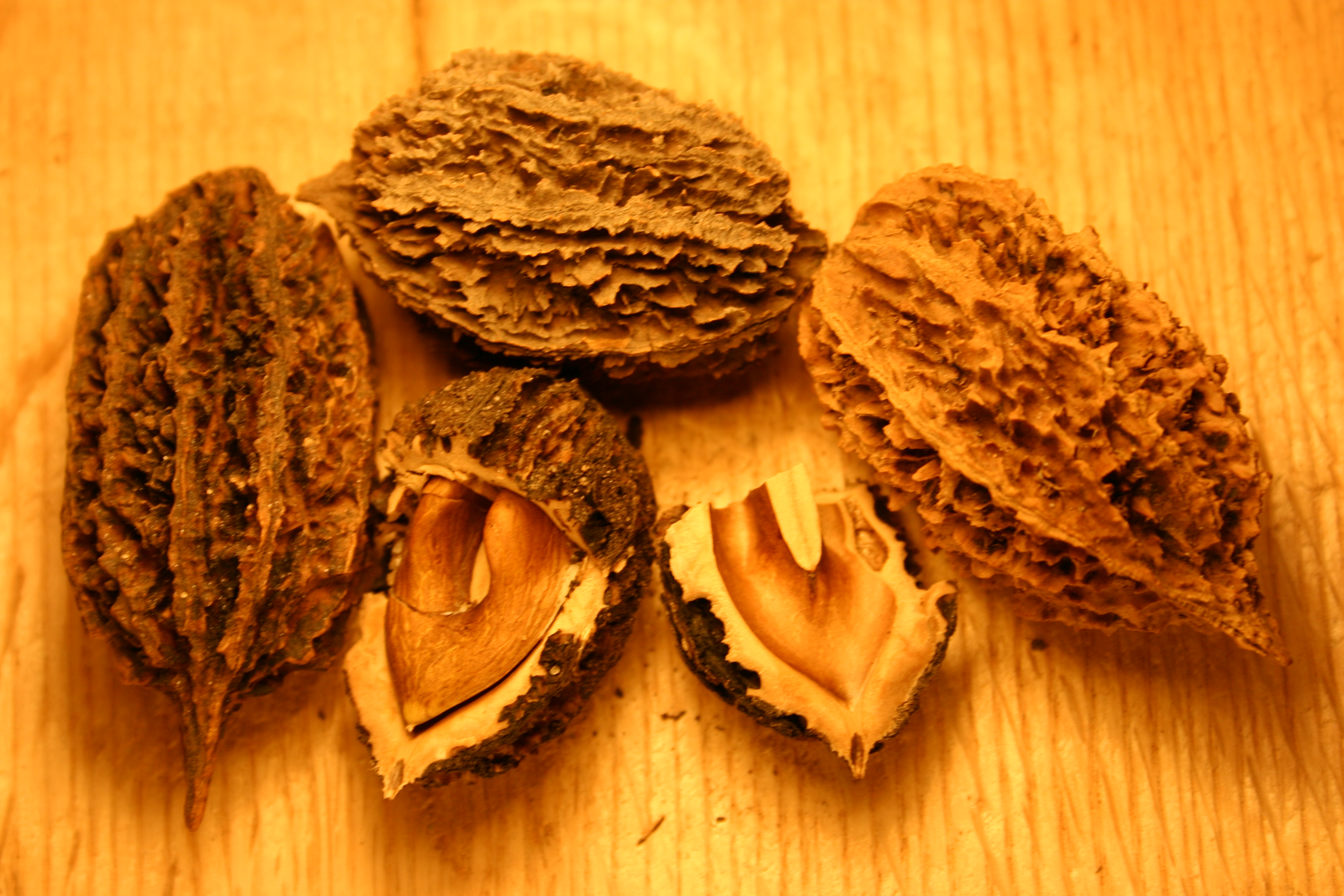
The butternut trees I collected nuts from for my nursery were difficult to find. Every now and then I would spot one from my truck as I drove through a rural area. I would contact the owner and make plans to harvest the nuts. I met a lot of interesting people doing this. Everyone without exception had no idea what the butternut was. I loved to explain it like a long lost treasure rich in history and flavor. Sometimes I do go long. It’s like butter. It was rare in the public domain as well. My guess was there was less than one tree per square mile in my county in southwestern Michigan. The yields fluctuated and it was a crop occurring every 3-4 years. Butternut also exists in hybrid plants with the Japanese walnut. I would find these too but they were often in people’s yards or gardens. They tended to be much higher yielding. One immense tree had over 25 bushels one year. That was a record. I purchased the seeds from this tree over the course of two decades. Called ‘buartnut’, Juglans x bixbyii, they tended to be longer lived trees immune to butternut canker to some degree as well as show hybrid vigor in the progeny. It was the hybrid corn of walnuts for me. It was easy to grow a six foot tree in two years from seed. I ramped up production of the species and hybrids because of the catalog mail order industry at the time. They were selling them and I was one of only a few producers of the trees. Because I had so many of them, I began going through the seedlings and selecting plants based on foliage characteristics. I found several with the typical shiney English walnut leaves. There was an English walnut tree nearby and it would cross pollinate with only a small window of overlapping flowering. It was roughly a one plant per 300 seedlings. I would then plant these out back and wait to see what would happen. I was guessing in many ways. I even remember finding one tree that flowered in 3 years from seed. Here is an image of one with English walnut below.

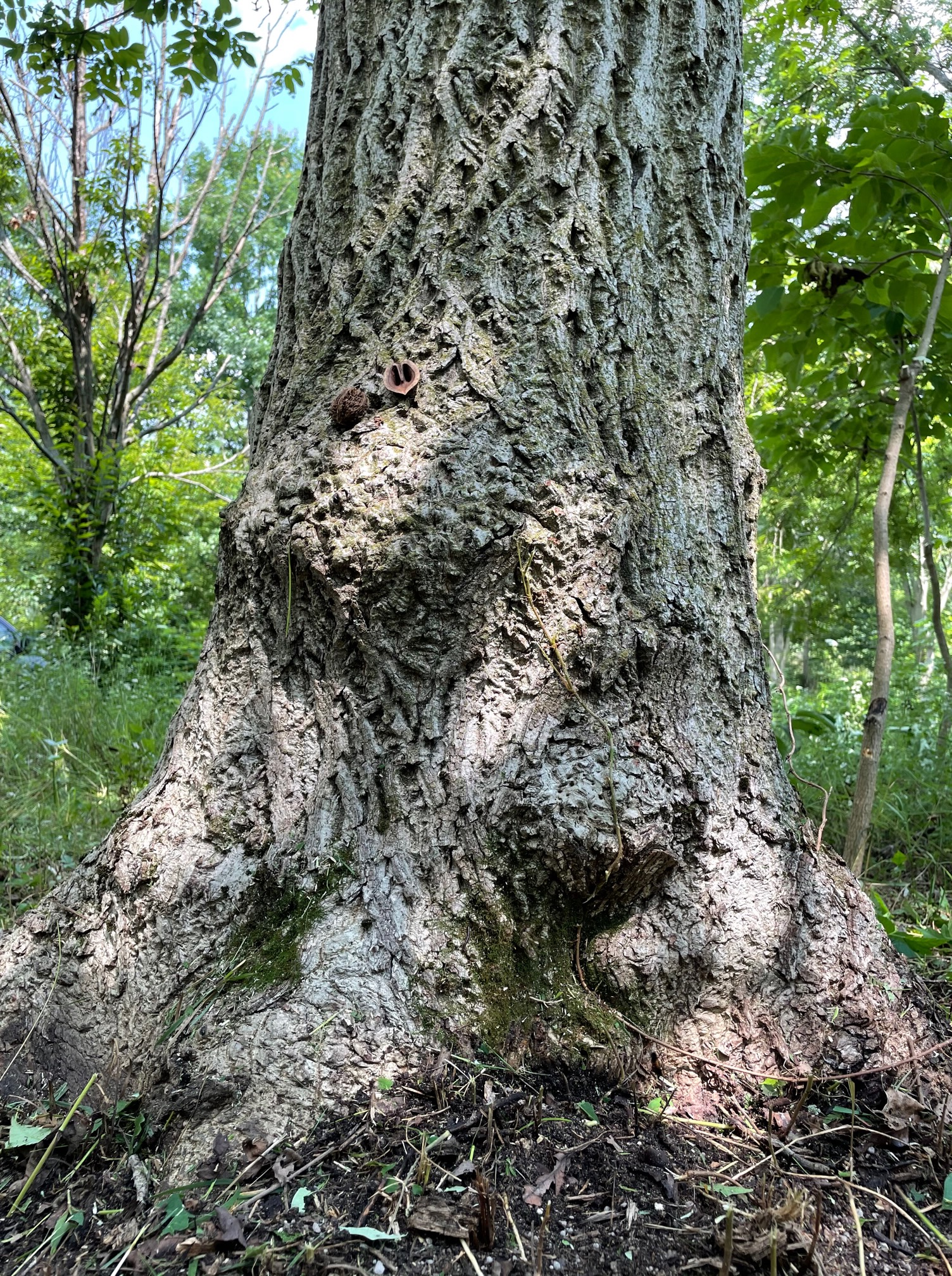
You can see the blend of the tree within the nut. The actual yield of meat to shell ratio is low. The yield of this tree is also low due to damage done by the stem drilling butternut curculio. Curculio also lowers the vigor to a lesser degree. Overall the growth rate is off the charts in my dry low organic soil. This is very good for the butternut tree which usually does best in loam and higher organic soils. It is also immune to butternut canker. The tree shows interesting bark protusions which look like small burls forming. That could be a plus if the tree has interesting wood characteristics like swirling patterns or curly grain. I kept growing them while chiseling holes in my out planting for them one by one over the course of two decades. Eventually the mail order nurseries no longer needed that tree in its line up and once again I was stuck with a few thousand buartnuts with nowhere to go. This tree along with other potential crosses with black walnut were added to my plantings over time until I had no more room. Ideally I would of needed 40 acres to get a better idea of what I would find. But even a few trees can point you in great directions to follow while taking the road of minimum effort and maximum gain. After 40 years of growing them, a few appear to be fading and others are still growing strong. This is the beginning to create a new seed source by harvesting the nuts from the most vigorous trees to expand the seed strain and then turn the weak trees into lumber to use and evaluate. This in turn creates the ideal tree farm. You produce both seeds and a finished product all in one location. The seeds can be futher distributed and grown with other people throughout the world interested in the butternut tree, its wood and nuts. The wood can be made into furniture or anything requiring a light wood easy to work and finish. Everything about the tree is perfect in its species and hybrids.
Many years ago I met a research scientist had done genetic studies on existing butternut trees in North America. She found some of the most isolated trees in this process going far into Canada as well as south into Kentucky. It turned out butternut has a much more northern distribution than many people realized. She rarely found hybrid trees but when she did she felt they had great value because of their immunity to disease and hybrid vigor. She told me that her colleagues thought it would be better to focus on only ‘pure’ trees. She found that odd. Both are of great value. What is ‘pure’ anything? No one knows and the opinions bring arguments on plants in social media as well as the scientific community. Everyone has a different nature they want to call nature. Good for you I say. In the meantime, I’m making furniture and harvesting nuts. Care to join me? It’s a butternut.
Enjoy. Kenneth Asmus


 biologicalenrichment
You must be logged in to post a comment.