In the beginning, I had a pasture. It was a good pasture used for hay to feed livestock. It consisted of steep hills with flat parts which was almost barren of trees. All I had to do was add trees. I had twelve trees of black cherry, green ash and black oak on thirteen acres. As time went on and I continued my sneak-it-in-when-I-had-time plantings, I soon found myself surrounded by trees and fruits of all types from many different continents. I would like to think that I had expansive knowledge of what I was doing while creating an affect I was fully aware of. In reality, it was far more complex than I thought it would be and my rather carefree attitude was a good state of mind. When I continued one of my apricot plantings on the farm’s steepest slope, I noticed walnut roots over 50 feet away from the parent tree dipping into the mulch resevoirs around the trees. One very vigorous hybrid black and english walnut tree seemed particularly good at finding these mulch and fertilizer repositories.This would in turn increase the walnut root mass around the apricot trees I was planting. You would see lots of root hairs in these areas with a main structural root intersecting the mulch. When I would cut them off and plant new apricots in this area, it was only a matter of time that both walnut roots and as well as nearby persimmon roots would encase the downward slope of this area. Eventually the apricot trees took hold and grew around the other roots tapping into the sand and rock filled soil. In the middle of the farm over two hundred feet away, I began finding the jet black roots of American persimmon. My farm was being encased by persimmon roots. This network took only 25 years. I am pretty sure my farm is now the root highway of cosmic proportions. You just don’t see it unless you dig a hole and notice the jet black roots.
Today when I dig, there is woody plant roots everywhere. I still have the wild asparagus, orchard grass and alfalfa roots but now there is a larger community of plants spreading out in all directions. The roots of these trees and shrubs have transformed the vegetation to the point, I am now discovering many new species of plants never seen before on my farm and a few not found in Michigan. This type of biodiversity is a mixture of native and non-native plants each benefiting the other. Without one, the other would not be there. I could not do a better job. You can ‘set the stage’ of ecology but the ‘actors’ come on their own. Their performance will only add to the next layer to arrive in successive order far greater than you anticipated. Ecological integration is the key to biodiversity. The American persimmon is a good example. Once established it brings in a huge array of animals all searching primarily for its sugary treat. Here come the squirrels, chipmunks, birds, deer, skunks, racoons, neighbors pig, coyotes, cats, groundhogs, weasel and garter snakes. Everyone is welcome in the shade of the persimmon. It can only give. It’s only natural that other plants want to live in it’s shade.
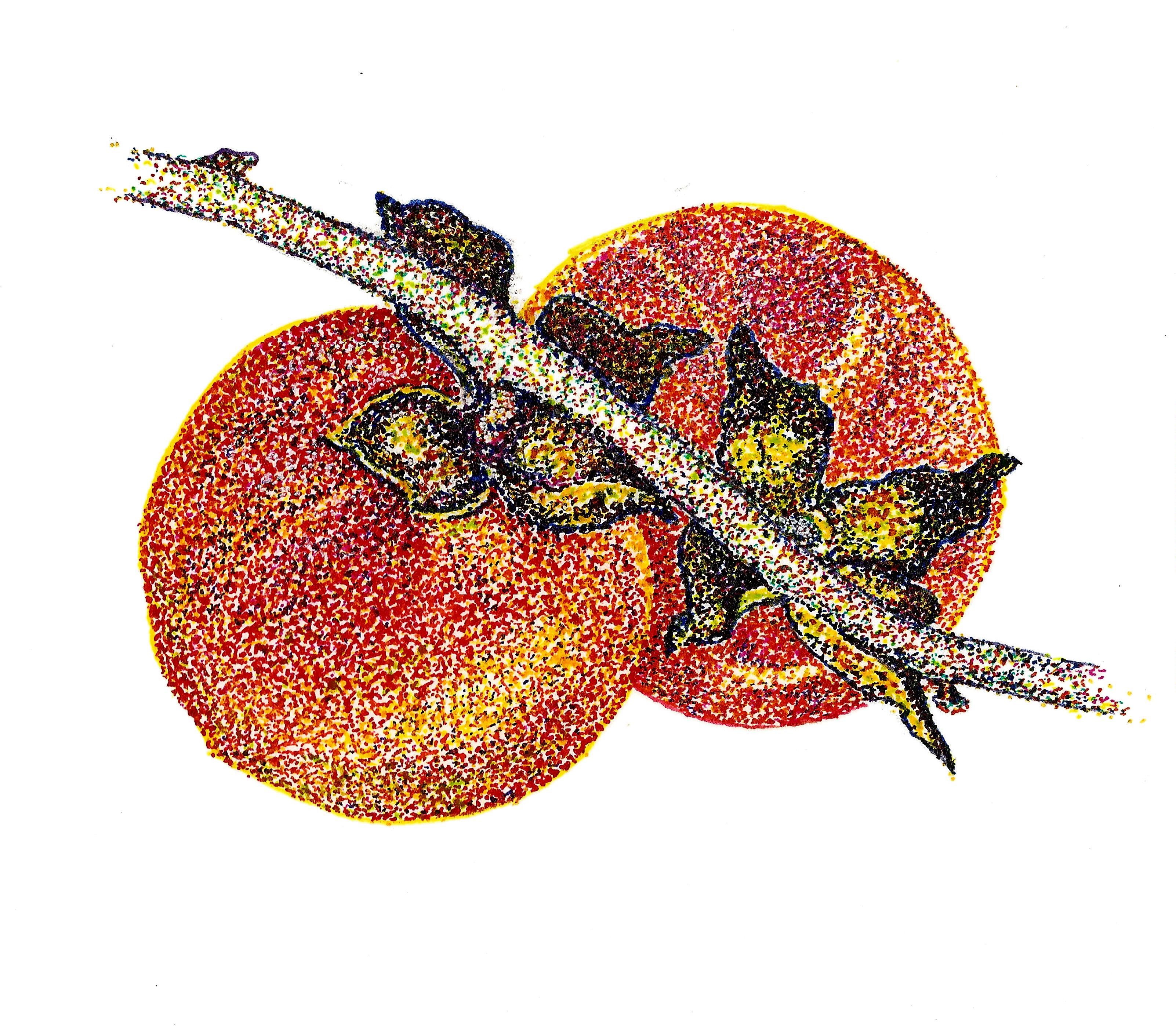
Magnifico American Persimmon
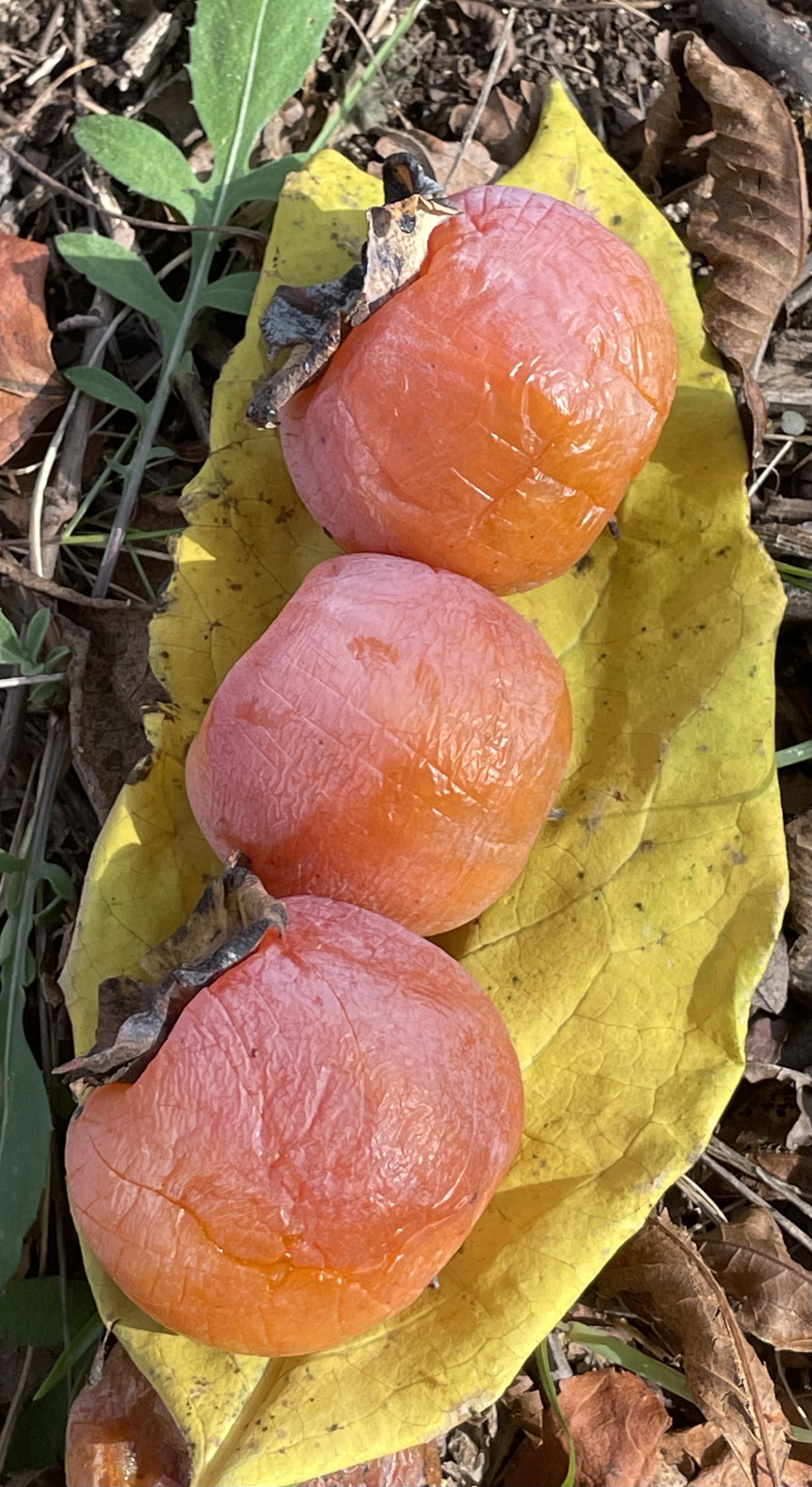
One of the methods I use for selecting seedling trees is to look at the leaf of a plant. For American persimmons, I would choose seedling plants with large leaves that remained free of any foliar diseases. One seed source good at generating this type of tree was the Pipher tree in Illinois. (A special thanks to Ralph Krieder, Jr. for collecting and selling them to me for many years.) Magnifco was from this seed source. The large fruits start dropping in mid-October and are down by the first week in November. The fruits are clean and firm when fully ripe and free of astringency. It has a nice mild flavor and is of course sweet. It averages 5-6 seeds per fruit. The fruit is produced in great abundance and drops when leaf fall occurs. A few fruit will remain in the tree in November.

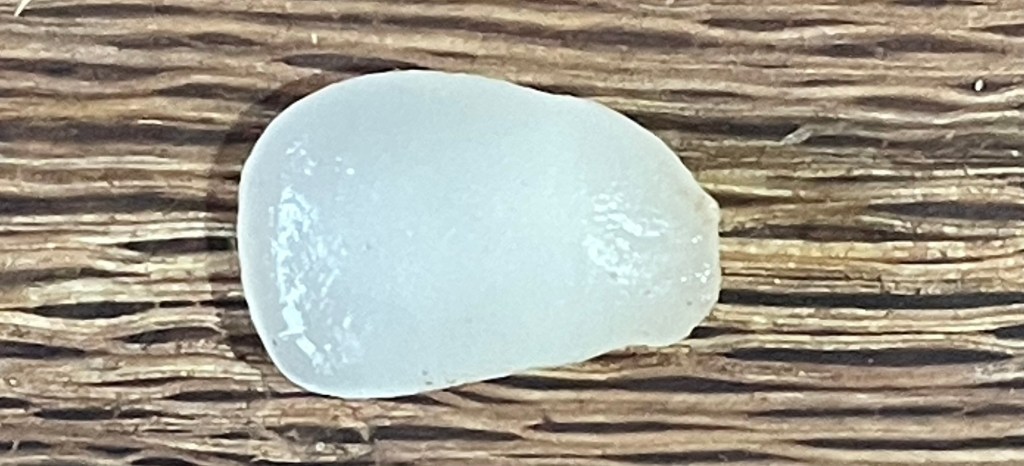
Persimmons rarely self seed. Once the fruit falls, it begins fermenting. Unlike apples or pears there is no cellulose outer casing to protect it against alcohol and excessive moisture and soon the alcohol passes through the seed coat and the embryo is destroyed. Seeds consumed by deer seem to pass through their digestive tract and those too are destroyed. The only ‘natural’ seed dispersal may be by squirrels moving the fruit and partially eating them and deer stepping on the fruit crushing and smashing it in the ground removing a few seeds outside of its pulpy enclosure. One way to random plant of kindness would be to throw the crushed fruit into leaf litter. The seed itself is not eaten by most mammals making it an ideal plant to direct seed. Just cover the fruit with 1/2 inch of soil in the fall. Specific individual plants seem to have a greater propensity to spread by runners. This is more apparent on a hillside with thin topsoil or there is damage due to herbicide or loss of topsoil where the roots are exposed to light in some way.
Enjoy.
Kenneth Asmus



 biologicalenrichment
You must be logged in to post a comment.