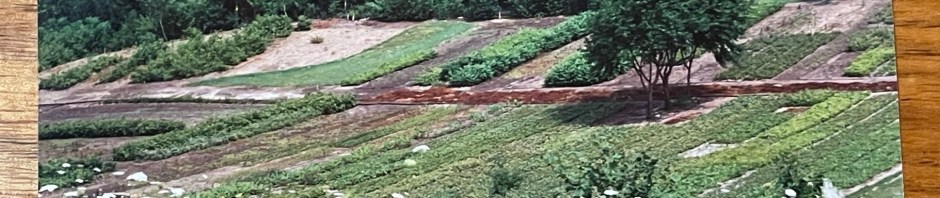
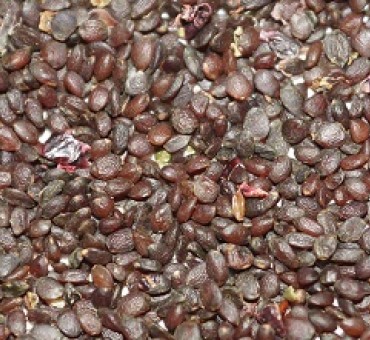
The wild Missouri black gooseberry was a plant I discovered under the powerlines near my farm when I first started my nursery. I reproduced it from seeds and found unique high yielding individuals in the populations. This was one way to not transmit virus and rust by always starting disease free with the seed. Usually Ribes are produced by cuttings. It was easy to grow and spread to other places on my farm. Under cultivation this species fruit excelled with high yields and delicious fruit on a long lived rather thorny plant. This is the Power of the species fruits free of breeding.

My farm is dedicated to creating small collections of species of fruits. Whether they came from the wild or a cultivated collection, they were of great interest and value to me. Species fruits can be more than just something to breed and create varieties from. The species can be used as it exists in nature with no selection whatsoever eliminating the need for clonal reproduction. This can provide a means to spread and reproduce via animals which in turn ecologically enrich your land. Each successive generation becomes more adapted than its previous incarnation. The plant is essentially ‘gaining knowledge’ and broadening its genetic base with increasing complexity as time goes on. This can be the part where a human can play a role to help shape and form the plants in an edible world of unique culinary possibilities. This is the tree crop agroforestry model of a food rich landscape redefined. Here is the breakdown on much of what occurs at my farm. It falls under the banner of ecological regeneration and crop development as one force of nature. It includes all the world’s food plants and was a key into the world of the Diospyros genus.
It begins with the seed and a vector of transportation.
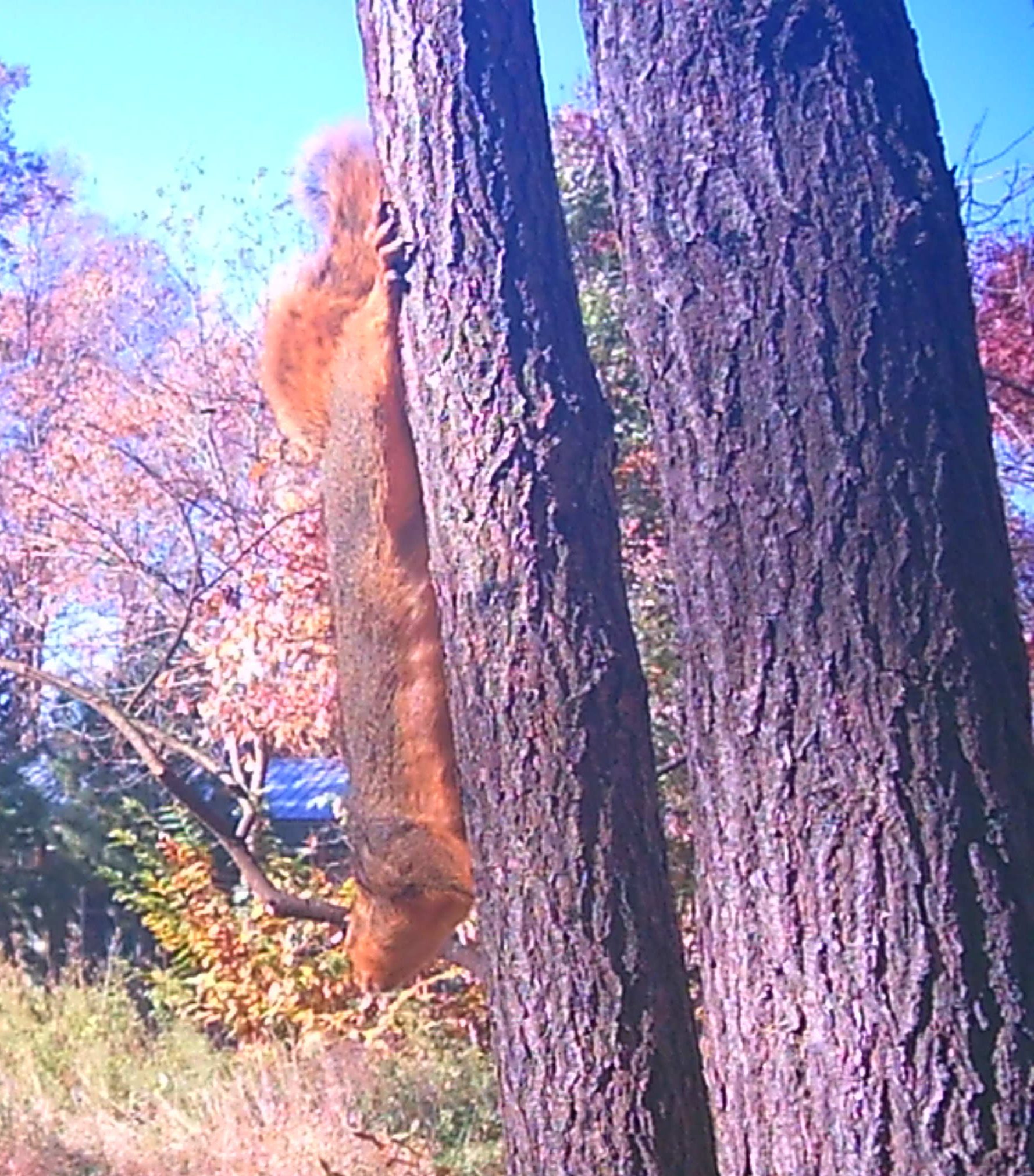
Birds do it all. From eating fruit to gaining health and then deposting the seeds with a bit of fertilizer I soon began seeing the benefits of the flocks of cedar waxwings at my farm. Gray squirrels were particularly good at expanding my shellbark hickory plantings. White footed mice hoard plum seeds away from the original plantings. Some are not consumed. Blue jays drop pecan nuts and they get covered in leaf litter. The whitetailed deer step on the seeds and bury them in mulch as they graze and fertilize their way across your land.
Plants begin to grow in increasing complexity as a community of opposite values.
Scarification occurring within of the birds intestinal track along with the cold and warm dormancies allow the plant to grow in its location. Think of mulberry. Mulberry trees are said to be all bird planted. Nuts and plum seeds go through dormancy sprouting a long tap root in the spring. Some seedlings fade with time. Others are protected by multiflora roses and honeysuckle which make a mini-nursery in their understory. This is the new community replacing my pasture.
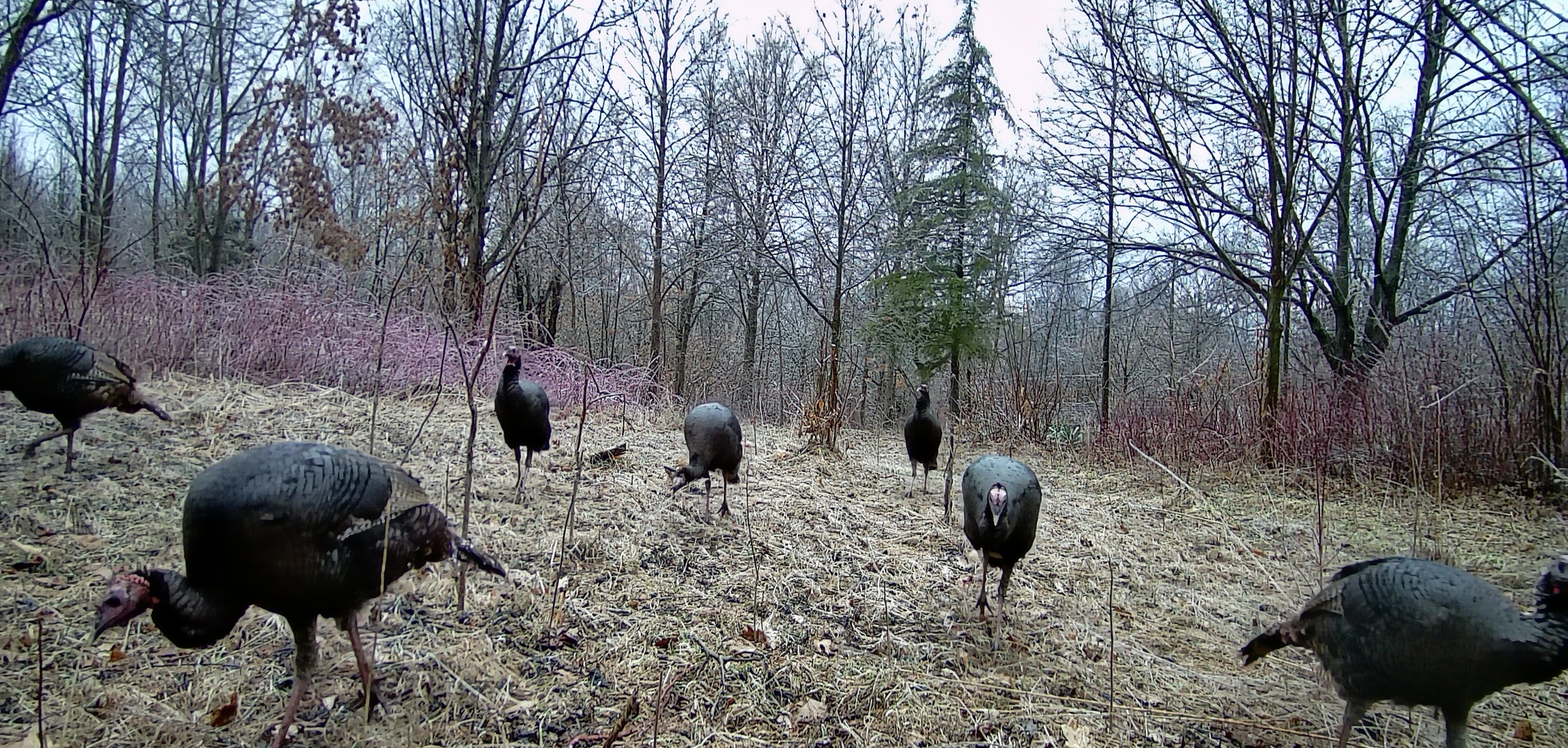
The plants begin to fruit even in the shade of other trees and the rather compressed foliage making best of what light is available. More ‘vectors’ move in to fulfill the transition to forest.
The tree creates more fruit to be further assisted by future generations of birds and mammals. Humans also may take an interest in making something delicious from it. They begin to care for it in some small way to make it more productive while creating new culinary possibilities. This is the new orchard scenario where humans gain strength and health as a by product of random plants in unusual locations. The apple will fruit in the shade of an oak tree. The species is not an orchard usually but could be used that way. It has far more flexibility than the clonal fruits we know. During pruning in the winter, I leave specific seedling trees and prune them skyward and cut to the ground other shrubs to enhance their fruiting capabilities.
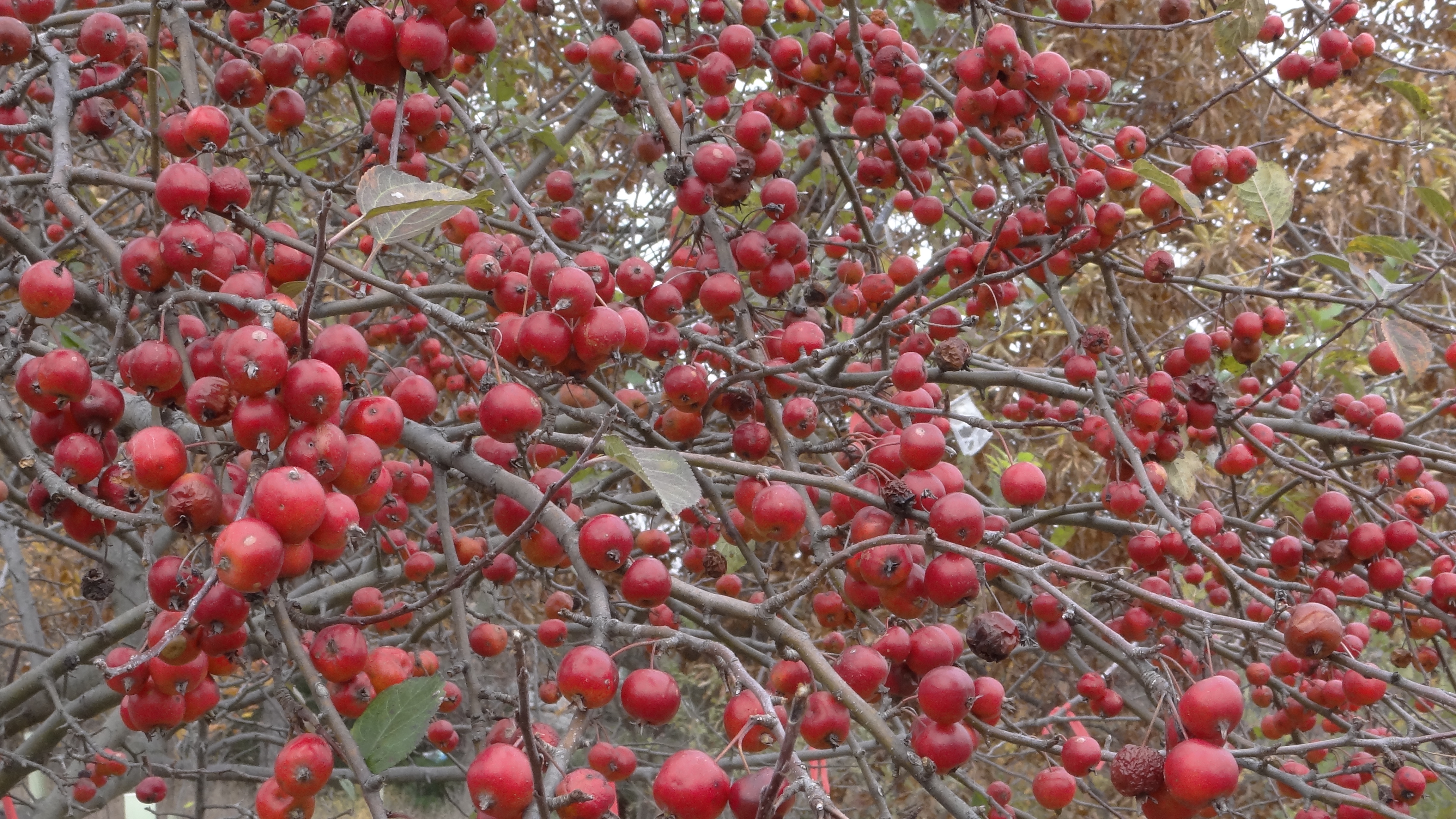
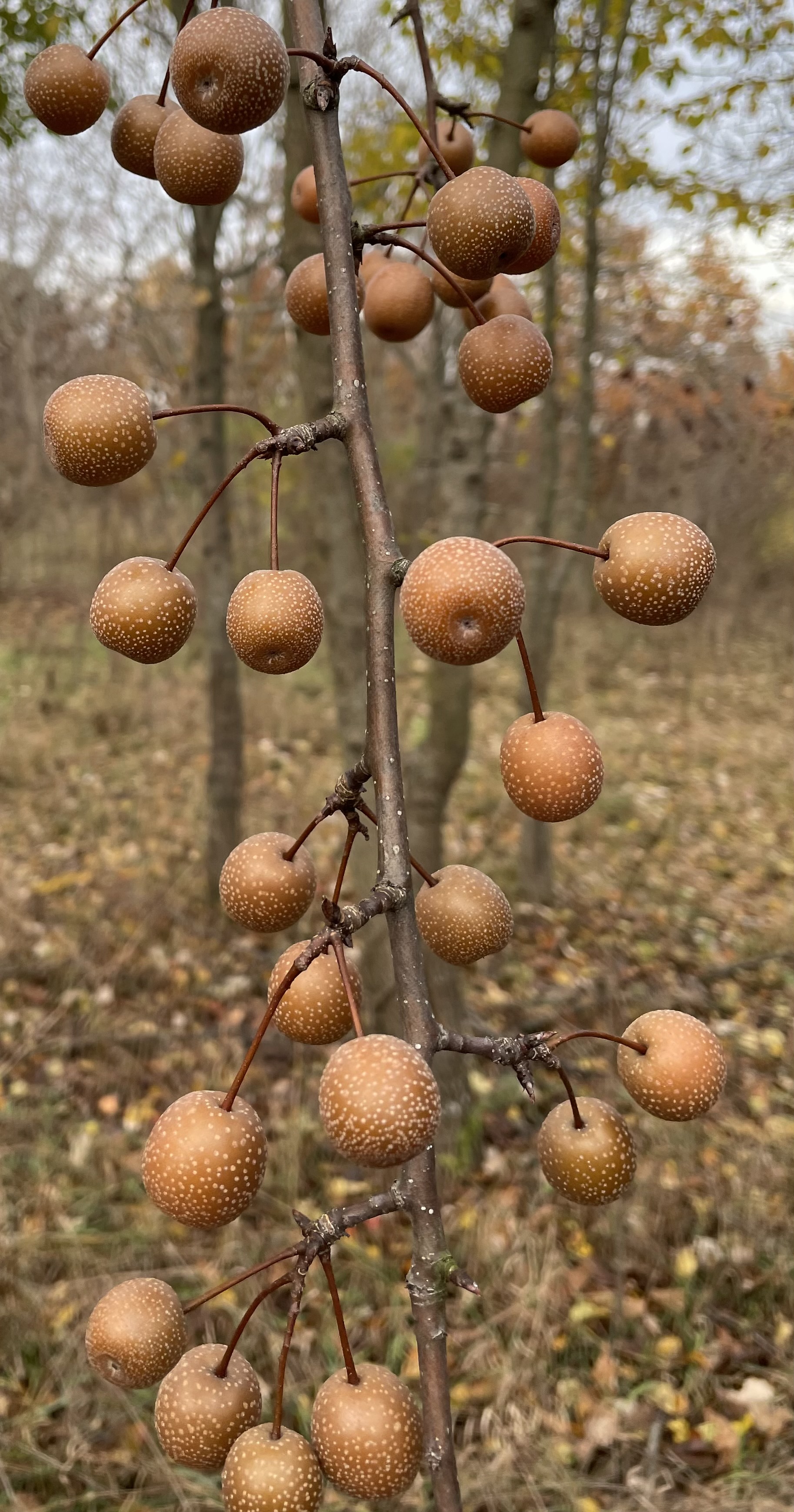
Biological novelty is the key to successful species fruit cultivation.
PERSIMMON IDEALS
I followed these same ideals with the persimmon genus. The persimmon genus has 500 plus species of tropical and evergreen trees and shrubs. There is a dozen hardy persimmon species but only one of commercial significance. I wondered why there was such a low number. Seeds of the other species outside of the American species virginiana were difficult to obtain.
My line up seedling species persimmons included:
Diospyros kaki, Diospyros kaki var. silvestris, Diospyros oleifera, Diospyros cathayensis, Diospyros duclouxii, Diospyros lotus, Diospyros texana, Diospyros rhombifolia
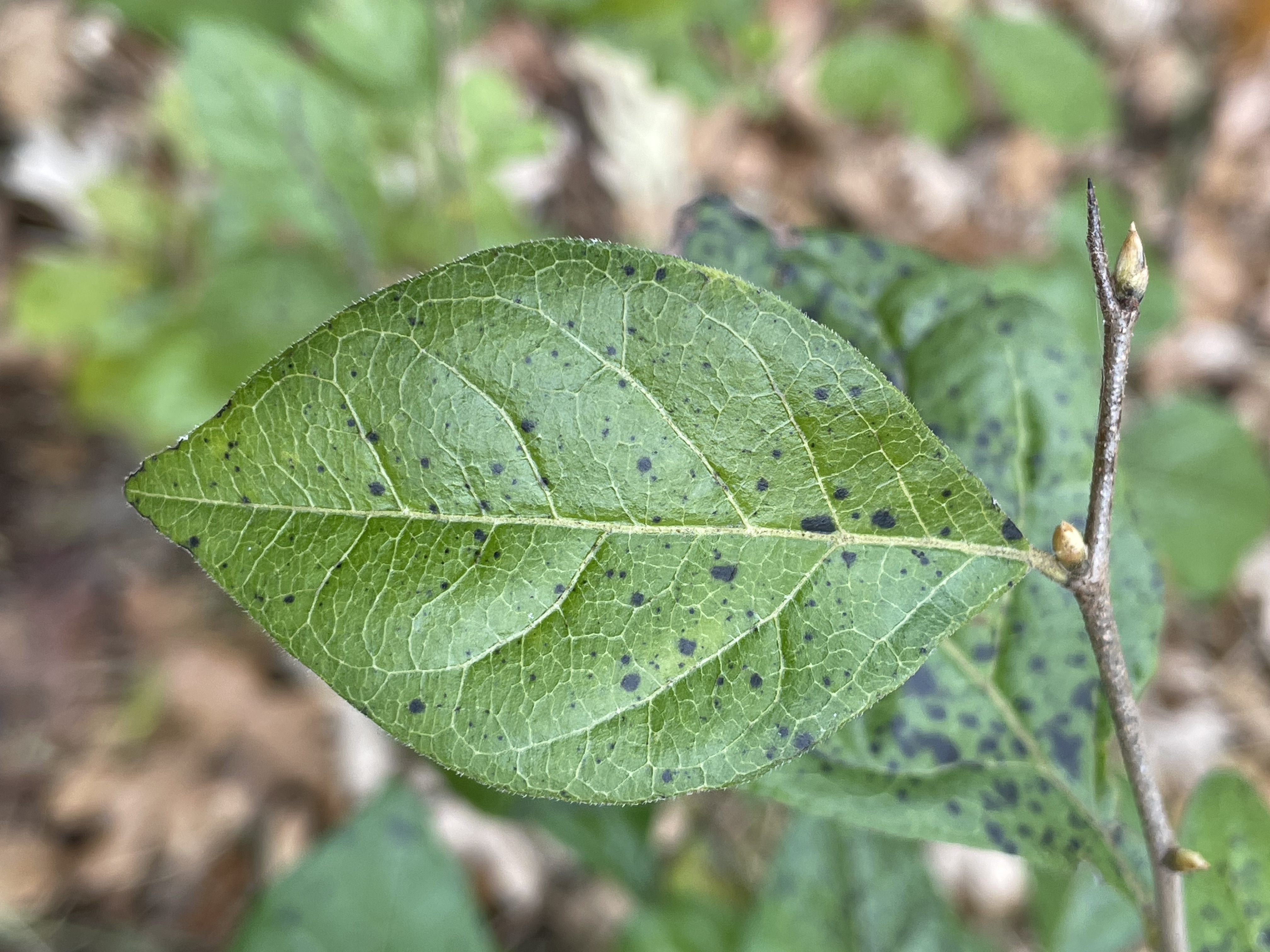
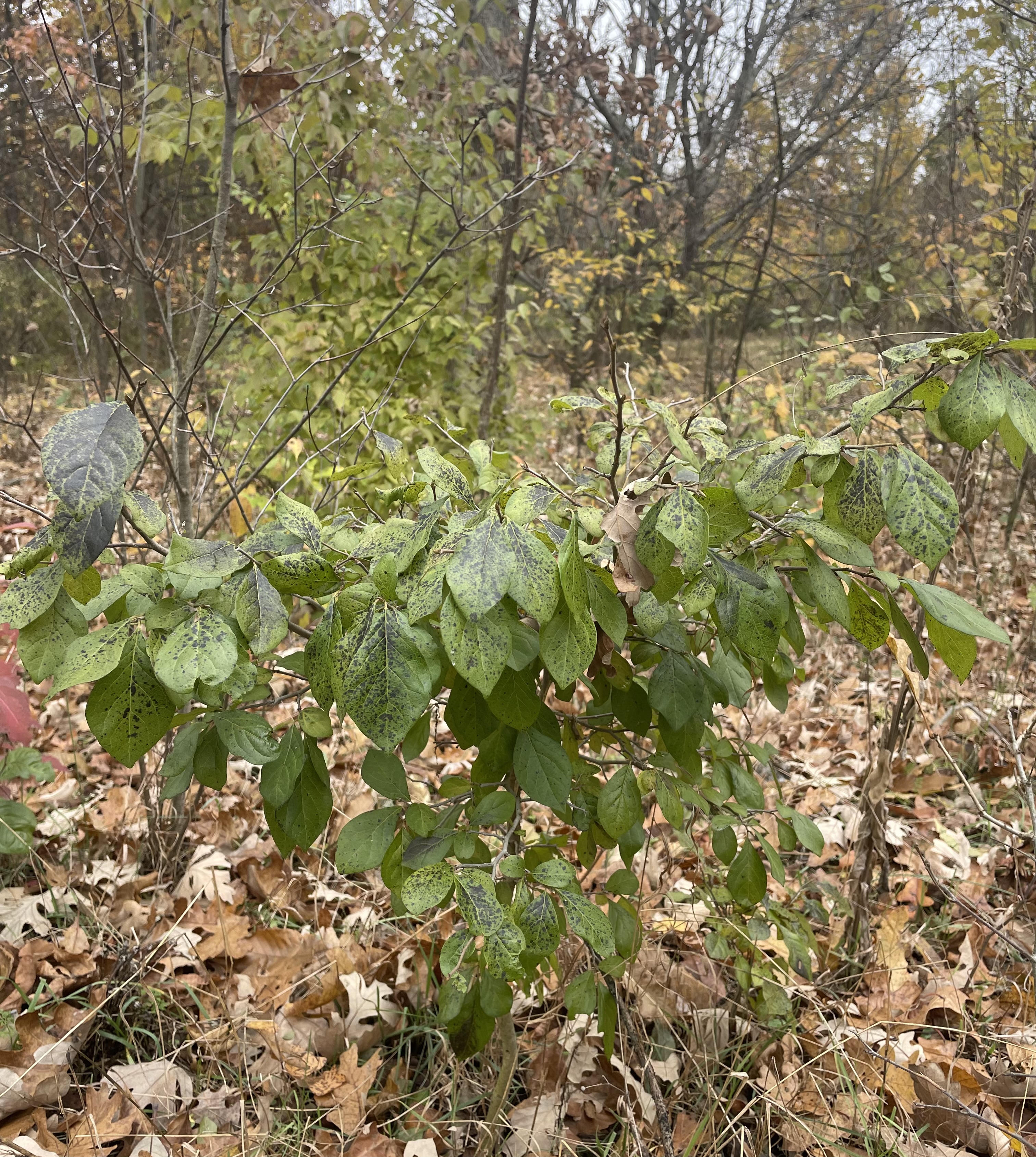
The seedlings of the above species were planted in my field in carefully tended spacings. Today only the Diamond-leaf or Princess persimmon, Diospyros rhombifolia exists. It is considered a zone 6-7ish plant but likely it can make a zone 5 once established. For years the plants grew slowly. Today they take up a small but growing row of stoloniferous shrubs up to two foot tall. No fruit yet but it does look like a few flower buds exist. I end up visiting the Trees and Shrubs Online every now and then to see what the fruiting possibilities may look like in the future. It gives me inspiration with the Princess persimmon. It is interesting that this species is thicket forming like the American plum. This species is rather new to North America and there are very few locations that have fruiting individuals. This species could be used as a persimmon berry.
Only a new seed will bring a new crop. It will not be clonal in nature until a new species fruit comes forward in unexpected directions of ecological proportions. It is from there a cultivated fruit can emerge. From that point, it can be a self sustaining wild population increasing in diversity and complexity. It will be shaped by the laws of nature of climate, plants and the animals surrounding its new and ever expanding domain wherever we decide to take it.
Enjoy.
Kenneth Asmus


 biologicalenrichment
You must be logged in to post a comment.