Everyone wants to create a forest. It’s a natural desire. How hard can it be?
You start with a blank canvas and add paint in the form of seeds or trees.
Like the book “The Man Who Planted Trees” by Jean Giono, your mission is to grow trees where there are none. You naturally want to align yourself with the fictional character, Elzéard Bouffier. You have a satchel filled with acorns and an iron planting bar and you drop acorns into your divots one at a time across the barren landscape. When Jean Giono was interviewed he said his goal was to “make trees likeable but more specifically make planting trees likeable.” Having an activity that is easy to do and refreshing is ideal for tree planting. In the end, your reward is a forest. The direct seed method he was describing is possible and real. You could do that with many species of plants by distributing seeds in a way that allows for regeneration without huge amounts of resources. This was something I was intimately familiar with only because I grew many genus of trees in my nursery from seeds. I soon discovered the secrets of dormancy and the means to release the seeds at the right time to gain the maximum tree percentage. Could this fictional story be applied to a larger scale model to make reforestation less expensive and more efficient? Absolutely. Get your satchel and iron divot.
Reliable, Consistent and Repeatable Is the Likeable Planting of Trees
American Persimmon Diospyros virginiana
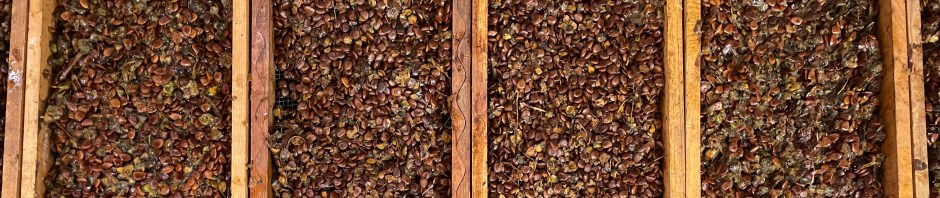
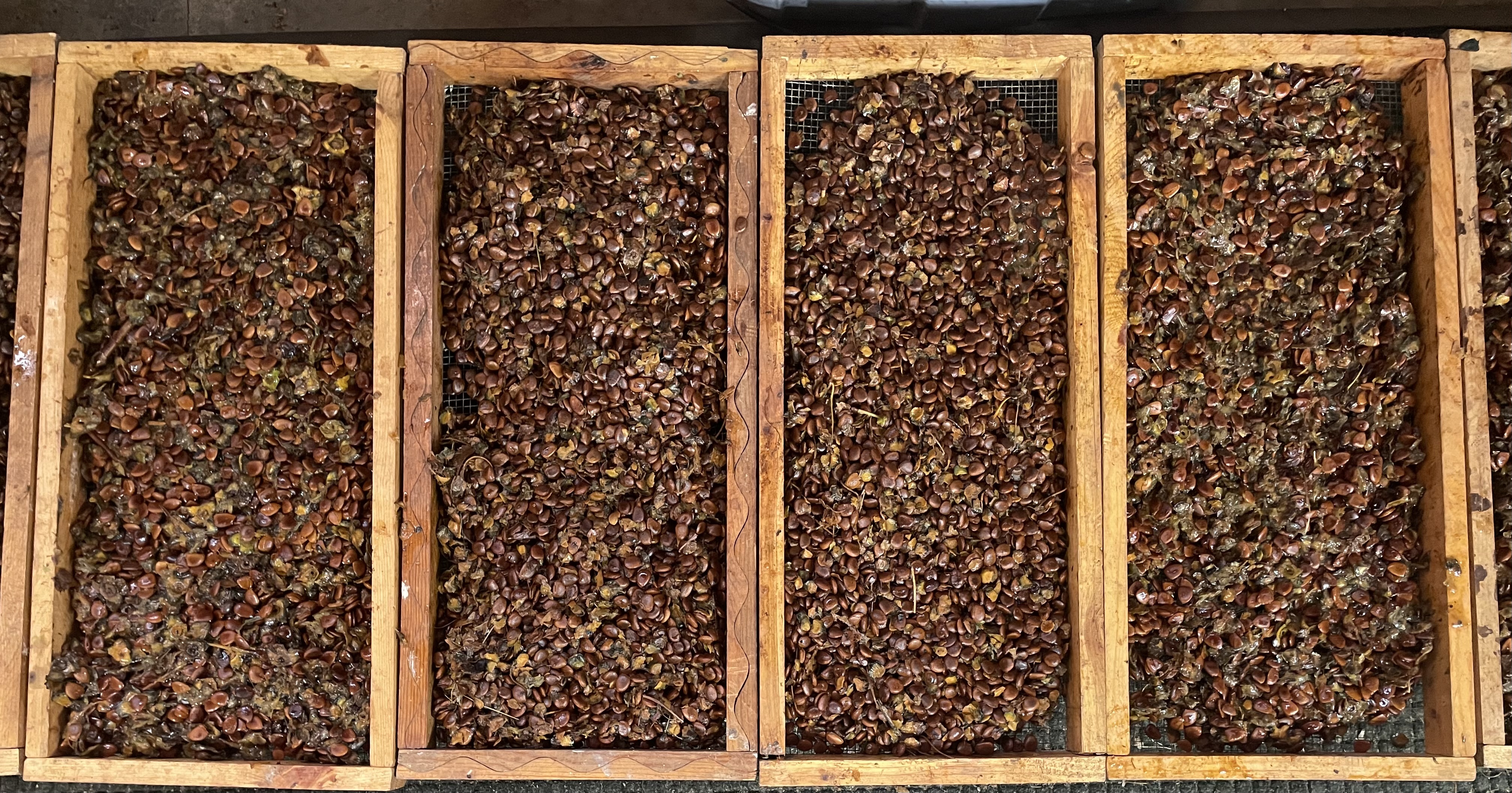
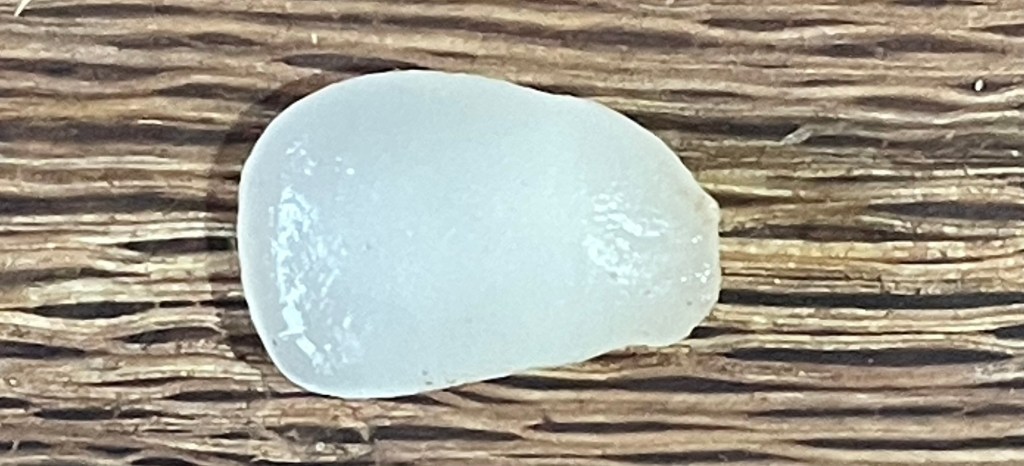
Of all the years I grew American persimmon from seed there was no mammal or bird that ate the seeds after they where planted in the ground. For this reason alone, it is a great species for direct seeding. With good seed you easily pass the 90 percent success rate. The seeds are inexpensive and if handled properly can be primed for dormancy for spring planting too. They are competitive enough to compete with other shrubs and grasses. The deer and rabbits avoid them. The foliage is poisonous to all mammals. The plant regenerates a strong response from the root crown should it be clipped off. Plant the seeds an inch or two deep in groups of four and soon your persimmon forest will come to life. It is an unstoppable seedling tree. You can plant them like beans. They all come up.
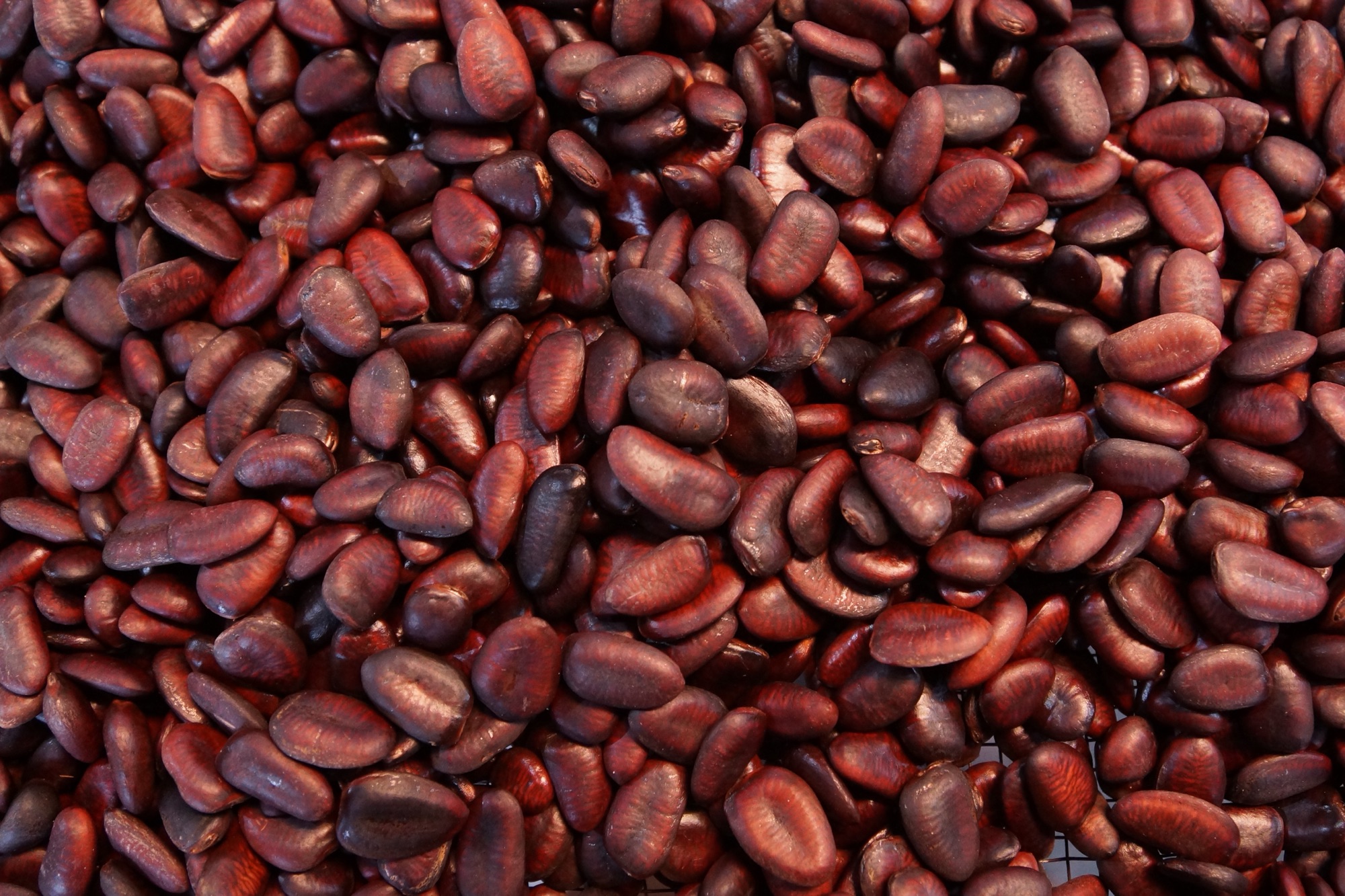
Pawpaw Asimina triloba
Pawpaws are incredibly easy to direct seed into shrubby areas or forested areas. The seed requires partial shade to get past that first year. After fall planting, the seeds will sprout very late into July. It is not possible to direct seed pawpaw in open sunny areas unless you haul brush or create artificial shade in some way. It is possible to direct seed into multiflora rose, autumn olive and buckthorn because all of these shrubs provide a great benefit to pawpaw. The benefits are living shade cover, large amounts of organic matter with minimal competition of grasses and the retention of soil moisture during the summer months. Pawpaws can easily be seeded in mature oak forests. Placing 3-4 seeds two inches deep in the fall is the best method. The seeds contain toxic alkaloids and are never consumed by small mammals. The trees are rarely browsed by deer or rabbits. It is a perfect tree for direct seeding into both forested and non-forested shrub filled areas.
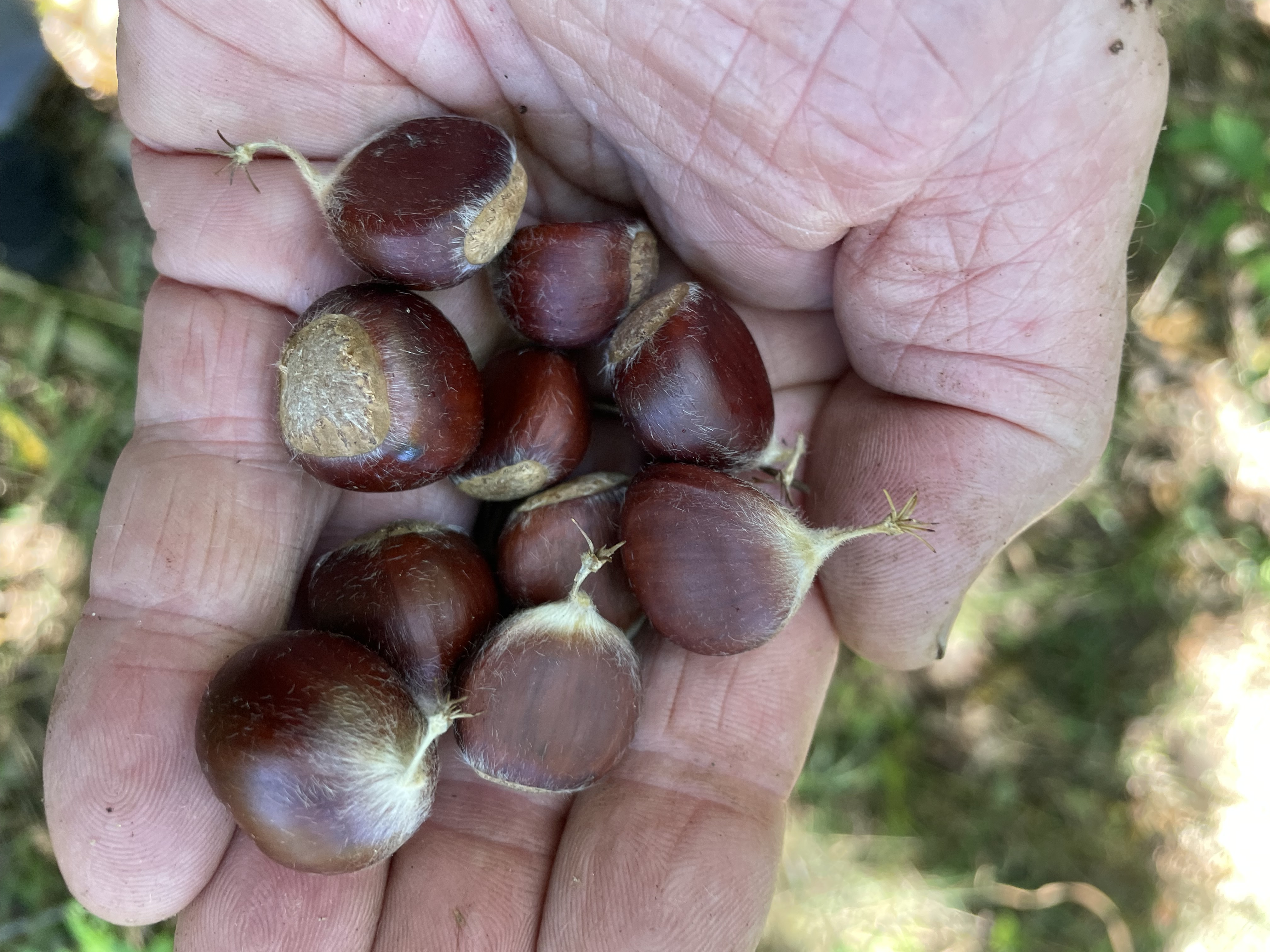
Chestnut Castanea x, mollisima, seguinii, dentata x, sativa x hybrids and species
Chestnut was the preferred nut in THE MAN WHO PLANTED TREES. Why not try? If you put this delicious nugget of goodness in an open field it soon becomes a magnet for chipmunks, thirteen-line ground squirrels as well as blue jays and brown thrashers as they sprout in the spring. It was a series of unfortunate events that I found a partial solution in terms of prevention. I coated the nuts prior to planting (they were not sprouted) with eucalyptus, neem and fish emulsion oils. This kept the nuts intact for the winter dormancy. For the life of me though, I couldn’t figure out how any chestnut tree could ever regenerate at all until I started digging up sprouted trees. It turned out that the leaf litter combined with the sharp spiny husks along with deer walking overtop of this combination creates the perfect seed bed. This combination of encapsulated seed in the husk means no animal is willing to risk lips, nose or tongue lacerations to yank out the nut out of a burr. They are incredibly sharp. My suggestion would be to carry one burr for one seed and like a puzzle put them together while planting and encapsulating the delicious nut in a coat of spiky armor. The seed will sprout in the husk and grow around it. Now you will need two satchels for the chestnut. One for burrs and one for seeds.
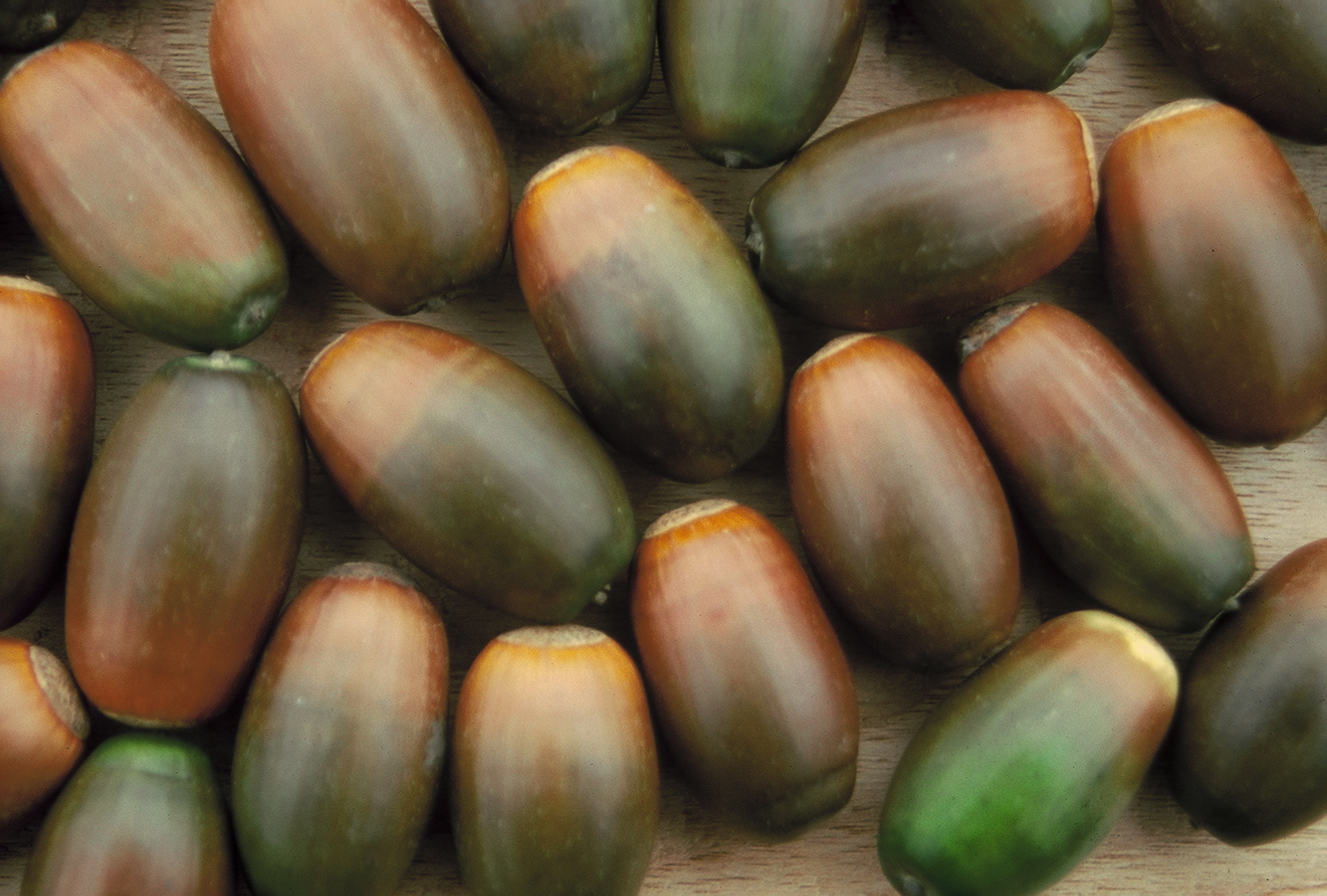
Oaks Quercus robur x, macrocarpa x, alba x , bicolor x. hybrids
Acorns are easy to direct seed. As my oak forest matured, I began to wonder if some oaks were better at self-seeding than others and why. My aha moment came twenty years later when I noticed that the natural hybrids of burr, white, English and swamp white oaks were really making the rounds. I found them everywhere in a wide variety of soils and locations. What was happening was that despite the normal predation and movement of the acorns by small mammals, it was the fastest sprouting selections that were creating the highest number of trees directly in the field. This has a simple explanation. The fast growing and fast sprouting white oak hybrids create a tap root within a few days of hitting the ground. If it is not disturbed and left long enough, the acorn creates a fully formed tree with an epicotyl capable of creating a seedling. It only needs dormancy in the winter to throw its top. At this point, it does not matter if the acorn is ripped off the root. By now it is too late and the tree is secure. The acorn has done its job. It’s created a new tree and can feed an animal as well as help the plant distribute itself throughout the landscape. Win, win, win. If a human like you and your satchel filled with acorns enters this equation, you will want to plant a little deeper going into the 4-inch “zone of least discovery”. This will give the acorn a little more time to create the sprouted root without disturbing the delicate procedure. The iron bar is not too heavy now and the oak forest is right behind you as an all space filling lumber and edible acorn heaven on earth.
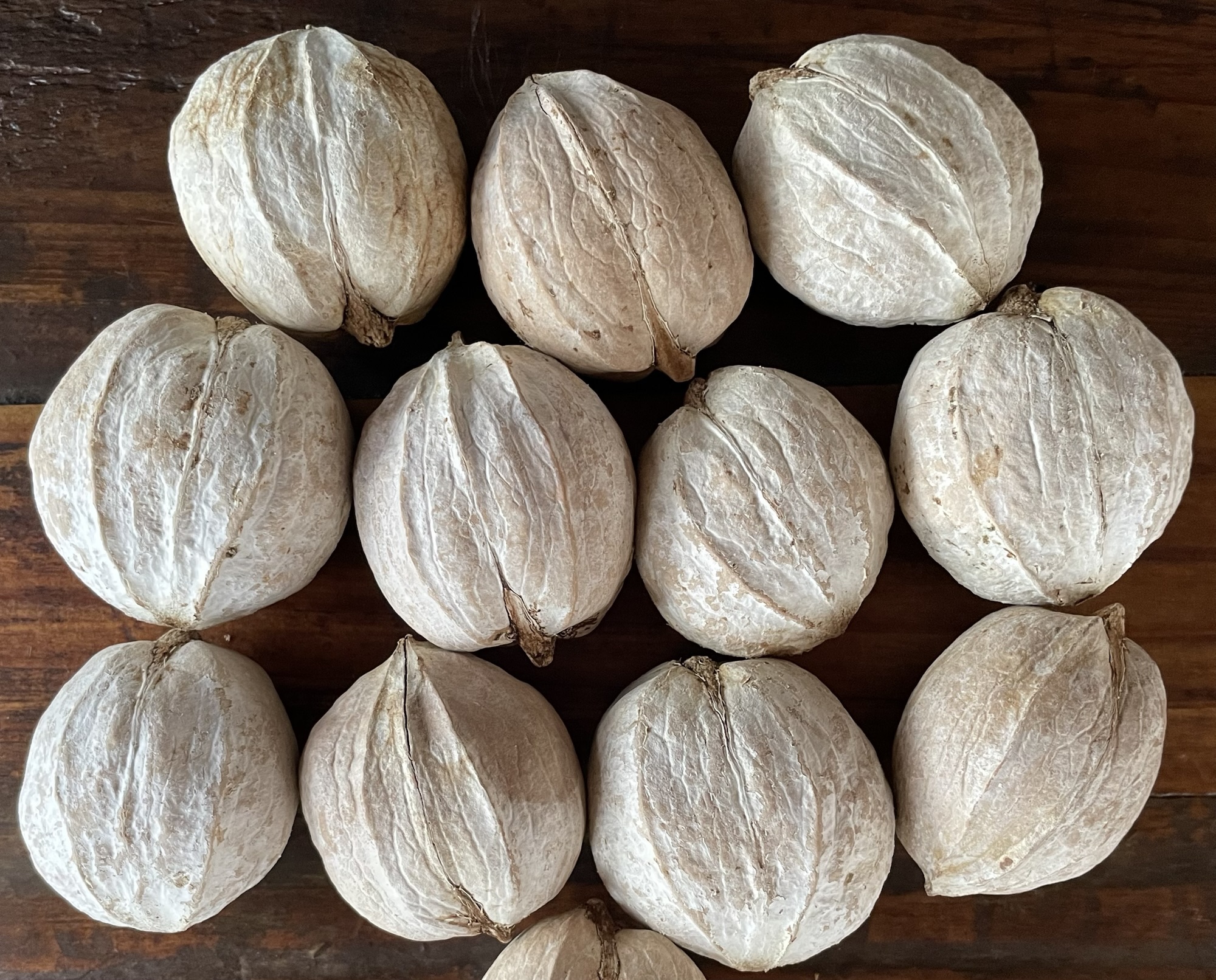
Shellbark Hickory Carya laciniosa
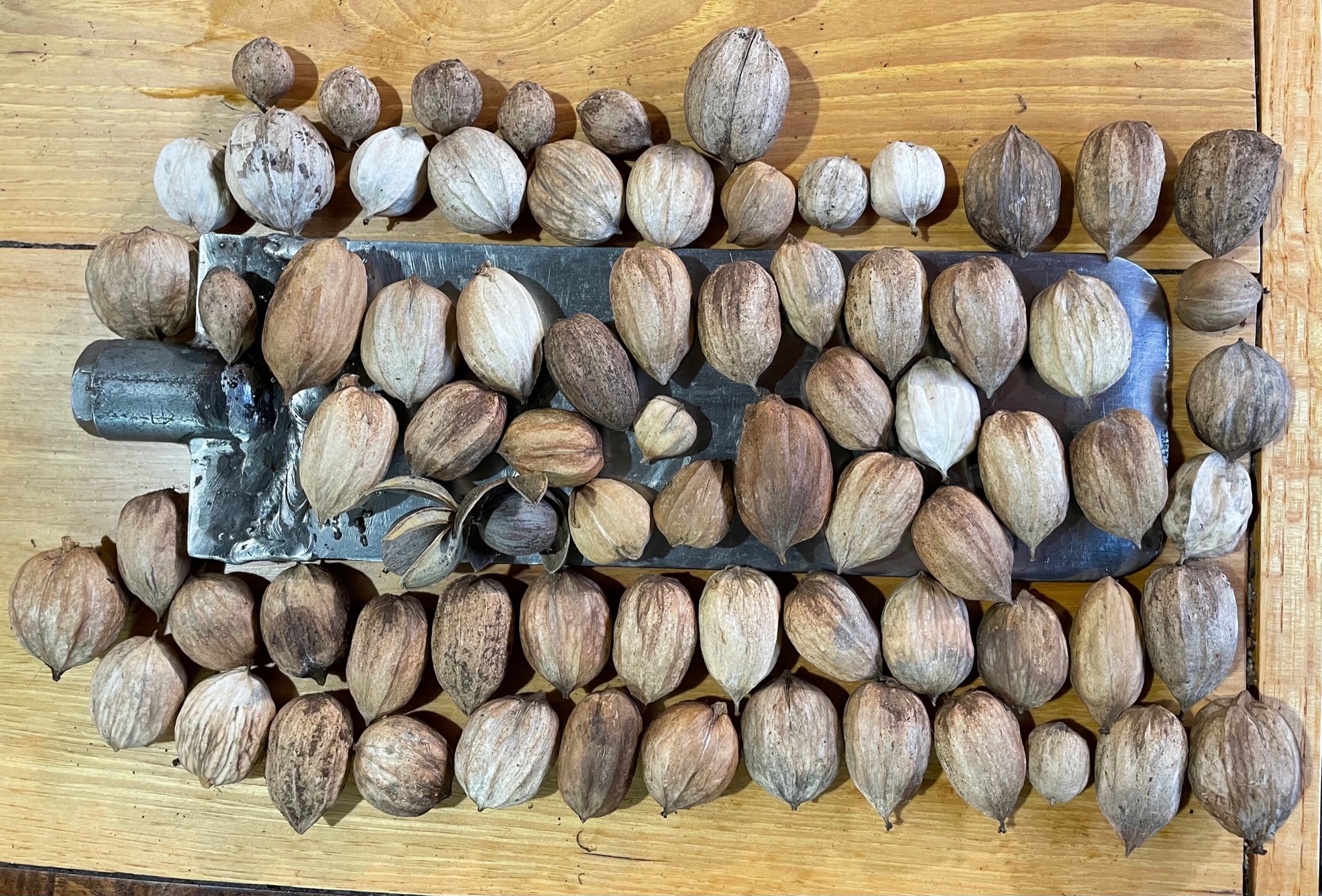
Every now and then when I was digging plant orders in the spring, I would find a random shellbark hickory nut in my plantings. Since I know these trees by the individual fruits they produce, I was surprised at the distance these nuts were carried by squirrels. Some were hauled over 400 feet away from the parent tree. I was also surprised at the ‘lost nuts’ not dug up during the winter or spring months. There was a lot of them compared to nearby black walnuts. After careful excavation of one year shellbark hickory trees in an old greenhouse space, it turned out that the lost hickory nuts were planted intentionally deep to avoid detection by other squirrels. This behavior equated to a higher tree percentage compared to black walnut. They specifically choose areas that were relatively free of tree and shrub competition and far from the parent trees. They were also taking a chance being in the open to birds of prey. Slipping into this natural regeneration of an ecological theater as a main actor is not too hard. You would fill your satchel with hickory nuts and use a wide spacing by planting shellbark hickory nuts every 100 feet or so. There is no need to protect the nuts. Plant them deep into the 6 inch zone. Shellbarks have a high tree percentage due to their large seed size which equates to a large germinative capacity. Going deep does nothing to slow down the tree from sprouting into a seedling. Your forest is taking shape and the shellbark hickory is rich in food and timber creating health for the world.
Your satchel planting is working as you traverse the barren landscape. Your forest is taking shape. The trees are at home wherever home is for you. You help define the forest and give it a use far beyond the botany of yesteryear. It is likeable to everyone and everything.
Enjoy, Kenneth Asmus
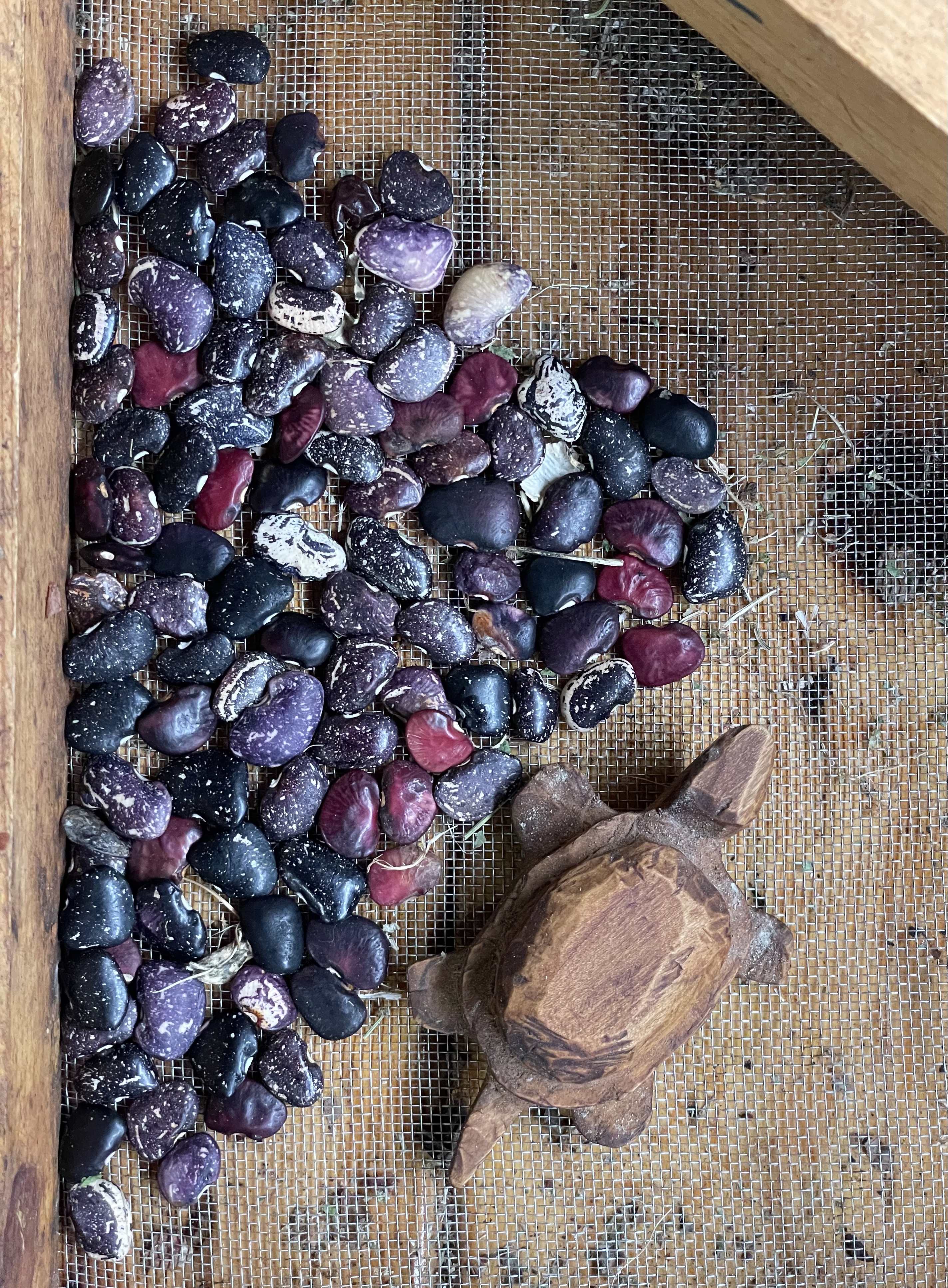
Turtle herding lima beans.


 biologicalenrichment
You must be logged in to post a comment.