Too Little Too Late

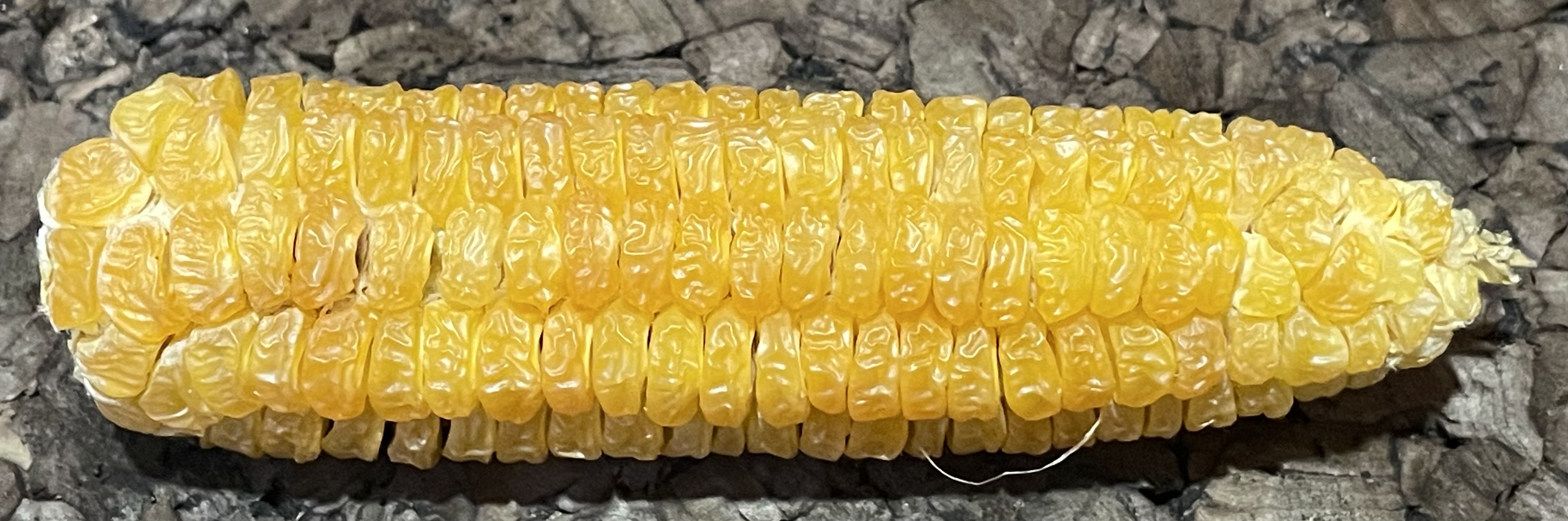
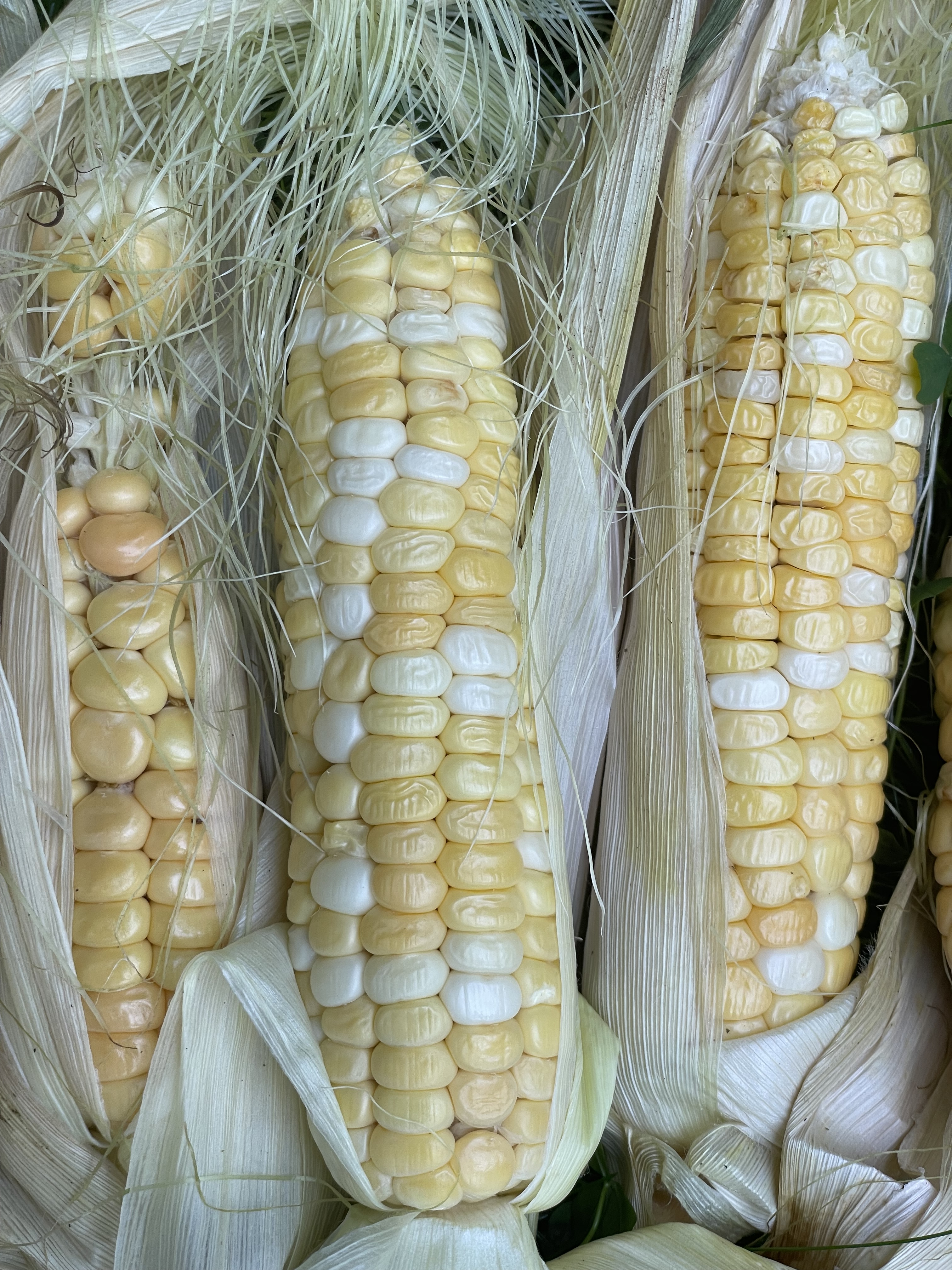
The crinkly gene sweet kernel is inherent within the Ashworth sweet corn. Small but early.

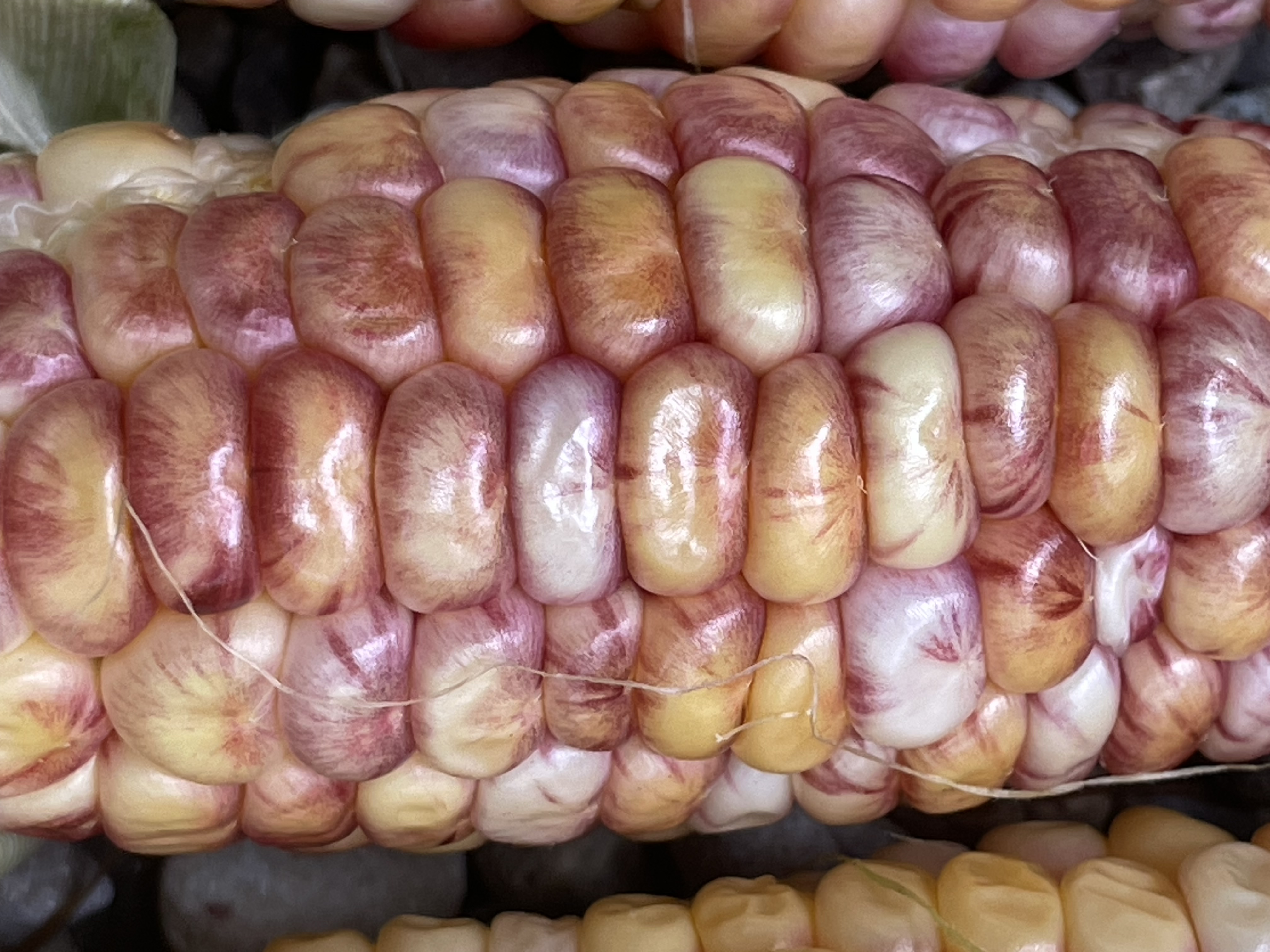
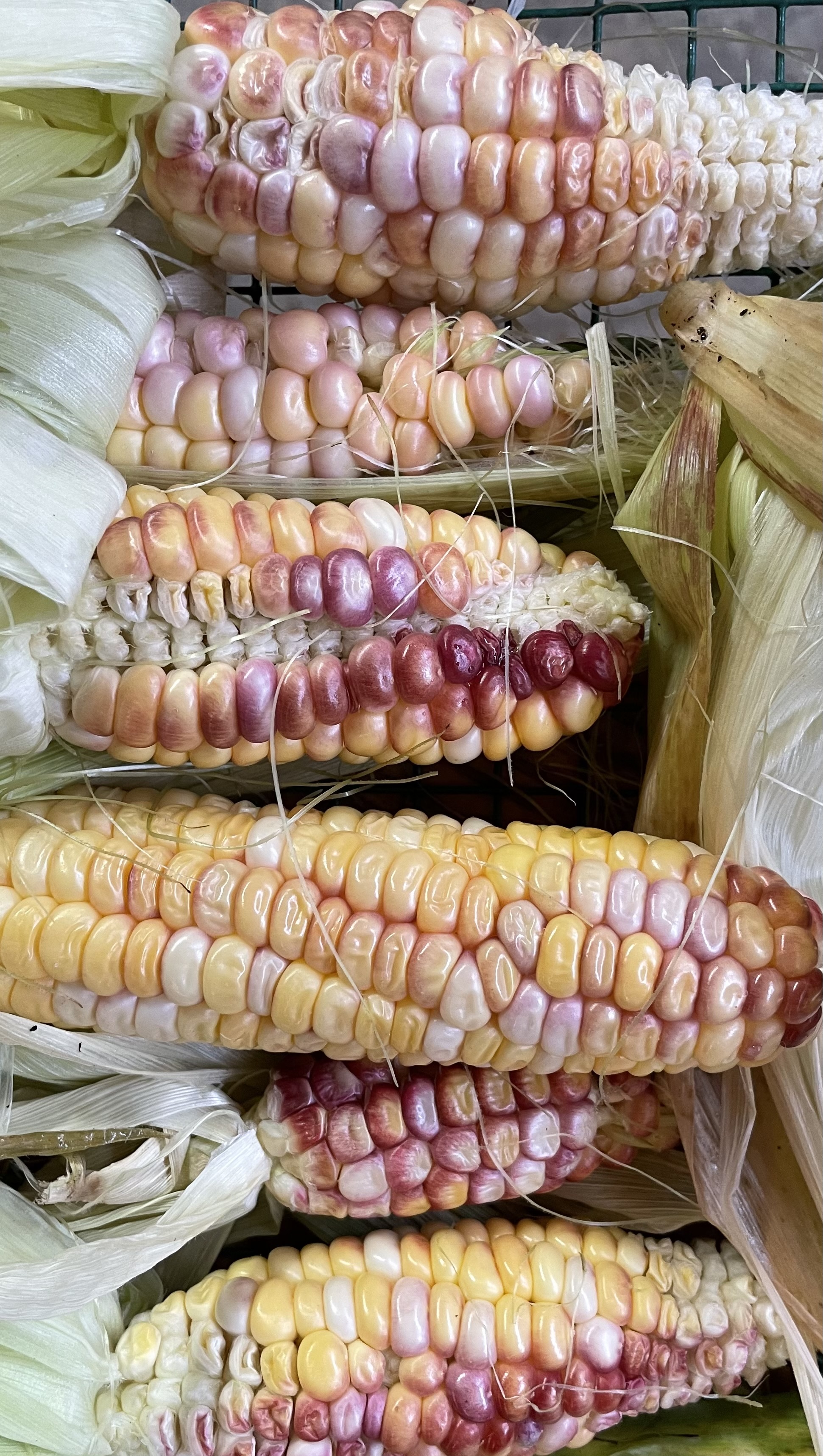
Extreme environmental changes will require a major shift on how and where we grow certain human edible crop plants. Although human edible corn makes up less than five percent of all corn, it is still important to think of it as an ally of nutrition, healthy and even a solution to climate change all wrapped up in one. The Ashworth sweet corn pictured above highlights this idea of a short season crop that requires less resources to grow while ripening its crop around 60 days. Despite its smaller size, it is a selection that could be used as a secondary crop for many applications. I purchased it on Ebay. All power to Ebay, the home of things you can’t find elsewhere. I heard about this corn from reading about the late Fred Ashworth, the founder of St. Lawrence Nursery. When I grew it out, I reselected it for both pure yellow and bicolor kernels while keeping the short season part of its heritage. It was very stunted when I first did it in the polyhouse years ago filling up one 30 gallon grow bag of soil and then moving it outdoors for a while and then back to the polyhouse to ripen free of racoons. I called it my traveling sweet corn.

Sweet corn could be used in beginning tree crop plantings as multiple use scenarios before the crops begin bearing. I view it as a nutrient collector able to create healthy food in a short season area. This is a type of integration of a well known annual crop able to meet these demands in the rough and tumble world of heat, drought and fluctuating temperatures. Although the yields of Ashworth sweet corn are very low compared to Peaches and Cream, it can be used as a green manure too building up precious organic matter at the same time. The philosophy, “Its not broken, why fix it” pertains to annual crops being implemented in mixed plantings. But certainly it could play a role in our re-creation of our tree crop and orchard systems. A few have ventured into the pollinator friendly native plants. But commercially that idea interferes in many ways with current orchard practices and it costs too much to implement with “no crop sold” in the end other than the environmental benefits which is good but not good enough. It would be better to combine the ideas to make a secondary crop even if it is just a seed crop of some type. The farmer needs to be paid for his ability to role out new ideas right away from the crops he is tending both perennial crops and annual crops.

This was the reason for my fascination for short season crops. At the same time, the annual crops seed production could be developed as seed production saving time and resources. So in some ways you end up with a population of plants being selected for this localized ecological conditions.

I once met a plant breeder who worked in short season crops in northern Canada. The goal of his work was to develop short season crops including sunflower, soybean and corn. He was to create other crops outside of the major canola industry for use as oil or animal feed crops all ripening in under 60 days. In fact some of them were 30 day crops. What happened to his crops? They were shelved and never used. This highlights the importance of developing connections to the farming industry with your new crop and joining forces with others who want to make changes on a broader scale. Just because you breed something, doesn’t mean it will be used. I got a feeling there are a lot of shelved crops. To solve a crisis we need all ideas on deck otherwise it will be too little too late.

Ashworth bicolor sweet corn
Ashworth mixed colors sweet corn
Developing sweet corn selections means looking at corn that may not be perfect when you first start out. Believe it or not, this was a vast improvement compared to the first time I did this. If sweet corn looked like this people would likely not eat it. But it was delicious despite its size and formation. What you going to do? Refuse sweet corn? Never.
Posted in Diversity Found, Ecology-Biodiversity-Integration | Tagged , , , , , , , , , | Comments Off on Too Little Too Late

Wild Tomatoes are Out of Control

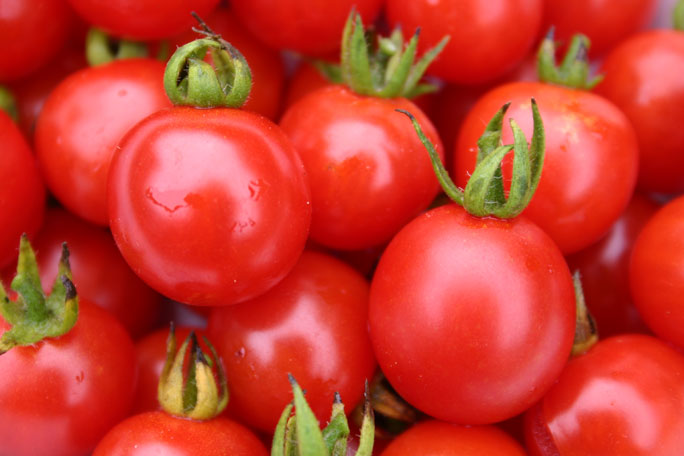
Every now and then people will discover wild colonies of domesticated food plants like tomatoes. Some are accidental pitches by motorists but some have been around for many generations and have adapted to their new homes self seeding and creating vibrant colonies of delicious fruit. There are several varieties of them I have found in the seed trade that I grew at my farm. It is a good representation of integration ecology and biological enrichment.

The first one was “Texas” as pictured above. What made it wild? Essentially this was a find where many generations of this cherry tomato were growing untended in a extremely hot and dry location in southern Texas. The vines were very long and had developed the ability to root as it grew along the ground. To further help itself in this endeavor, the plant had these larger than average joints on the stems to a degree where their weight would bring it down to ground contact. This would further strengthen the plant in its ability to capture water whether that was dew in the morning or a brief rain shower. The plant itself was quite hairy and it was not very full of foliage which aided in its ability to survive drought and still fruit. It did not have massive yields like most cherry tomatoes either. When we grew it at my farm, the plant was under some oak trees and did fairly well even in the shade. Each plant grew up to 20 feet long as it skipped along the ground. It also self seeded the following two years. It is critical for an annual plant to establish in the untended world of no till. I like this ability of the tomato to reproduce on its own and create new populations in other locations all of which are not hybrid plants. That is wild.

It turns out there are several types of wild tomatoes world wide and a few species that also grow throughout the world in some very isolated areas. One I experimented with a little bit in 2019 was the Galapagos tomato. The Galapagos produces a green or yellow tomato. I kept the seeds separate and hope to produce a population of them again. The groundhogs loved the foliage too much last year so there were no Galapagos tomatoes. Just using the name ‘Galapagos” is magical to me. That might be the only reason to grow it. “Oh, your tomatoes are from the Galapagos?,” people will ask. The tomatoes were rock solid roughly an inch or more in size. It has a certain fern like foliage and seemed quite vigorous at my farm. You can imagine some of these species types would be good to use as is and not hybridize them just to see what sort of nutrition they contain and what new flavor profiles are possible. It would be ideal if they could be established as a wild plant growing untended in North America.

A new one this year is the Everglades tomato. It is interesting in that the Everglades tomato has an industrial looking seed coat with all sorts of barbs over it. I am guessing it developed this as a survival mechanism but I have no idea why. I purchased both of these species from J.L. Hudson Seedsman. Joseph Lofthouse, a prominent land race plant breeder, also grows many of these wild tomatoes and is actively searching for the perfect tomato by crossing tomatoes of many species. That too is wild.

Creating populations of common food plants in untended or lightly tended areas could create a form of foraging where the cultivation is only dropping off a few seeds here and there to come back to harvest later. It’s a food opportunity waiting to be developed further. Will we take the first step of planting a seed of an idea and bring it to fruition? It’s totally Galapagos and part of our evolutionary nature.

Posted in Diversity Found, Ecology-Biodiversity-Integration | Tagged , , , , , , | Comments Off on Wild Tomatoes are Out of Control

The Making of a Forest

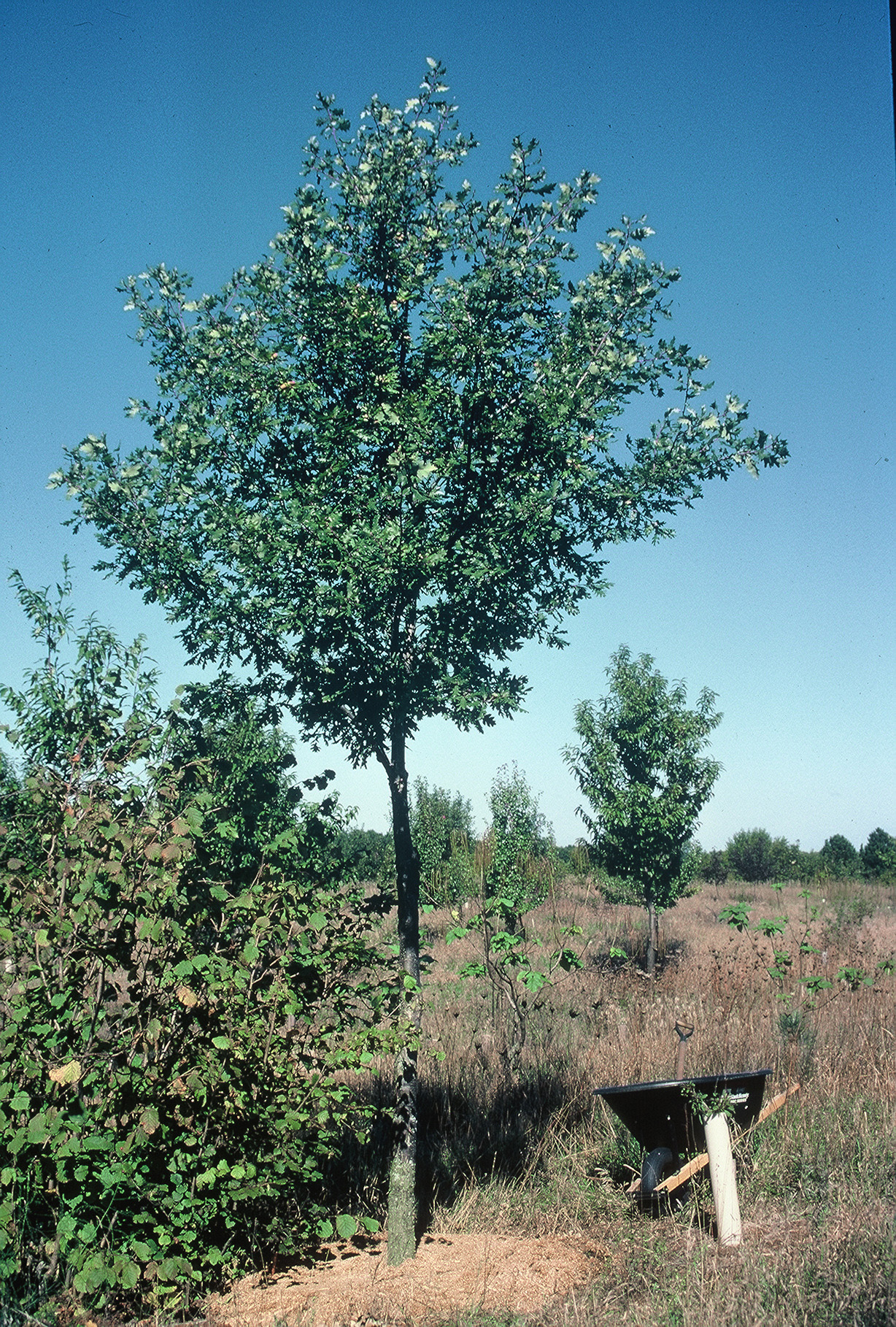
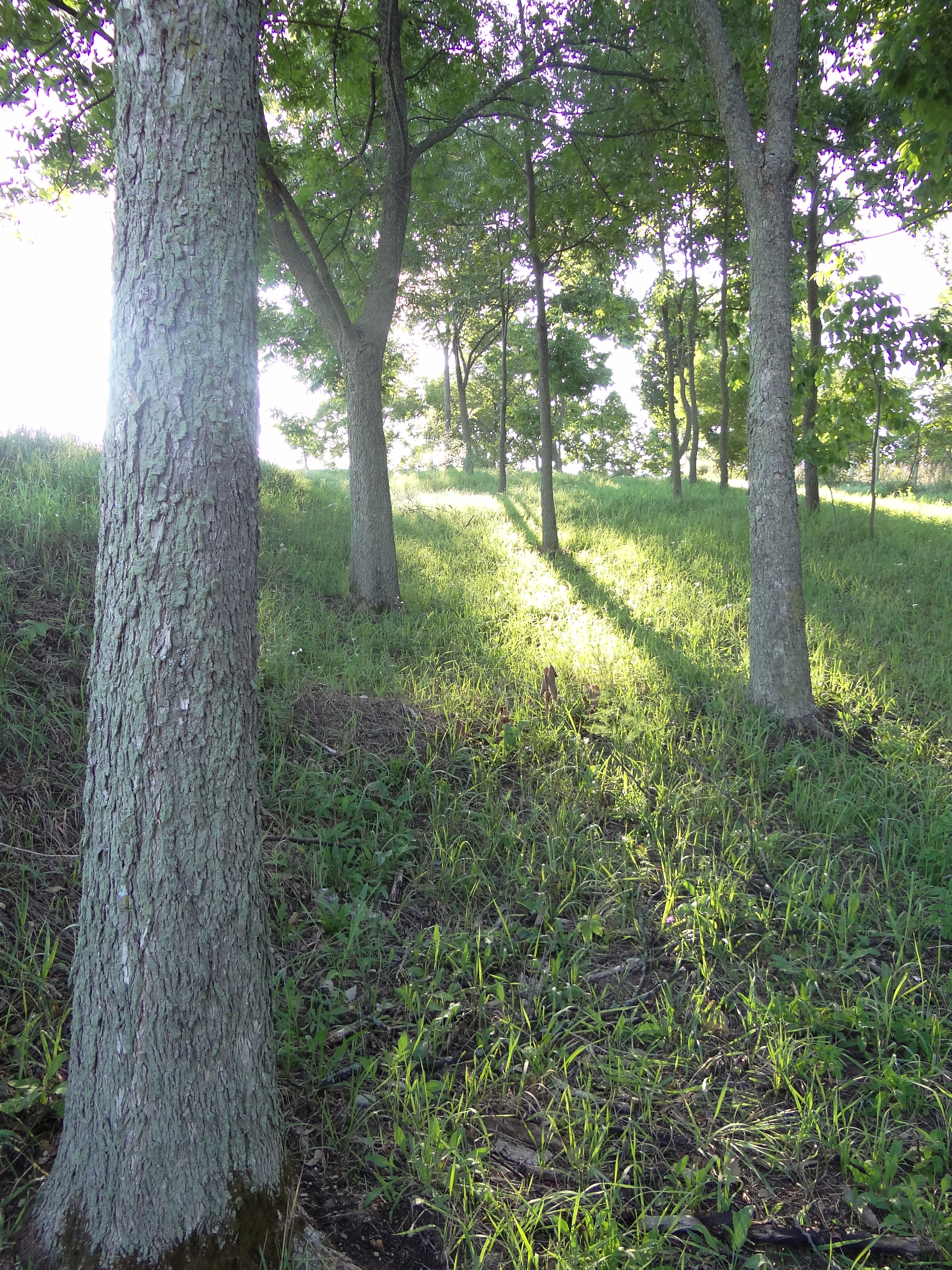
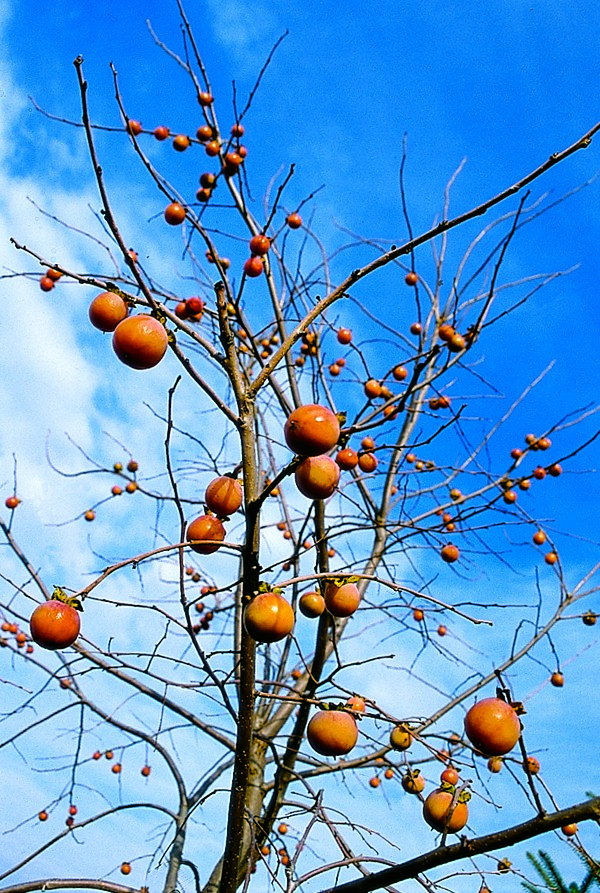
It’s a great joy to plant trees. It is a type of activity that is always rewarding. You need to bring with you a sense of wonder and patience and wait for the outcome. When I planted these northern pecans on my hillside, I was not very confident of the outcome only because there was no one who had done this before me. I had nothing to go on. There were northern pecans but there was no one that planted seedling northern pecans from specific early ripening trees far north in its range. Some were cultivated in an orchard and some were found in the wild. Either way, planting the trees on this sand dune type of hill with thin topsoil was tricky because of the wind and dryness. In the above right of this image is American persimmon. This particular seed source was selected from orchards where people had rich varieties of them full of early ripening fruit. Both the pecan and persimmon required a certain seed source to be successful in Michigan mainly because our season is much shorter and we have very cloudy weather. It turned out that these seedlings can make new crops possible in areas where they could not be grown before. Both the orchard and seedling forest can now be grown from these new seed sources. The future becomes land use and how to deploy these new crops on a broader scale so others can enjoy them as well. It could be creativity is at a premium too and this might be the real barrier to adoption of new crops on a broader scale. It could happen. I have confidence and patience along with a sense of wonder for the human race just like the trees at my farm.

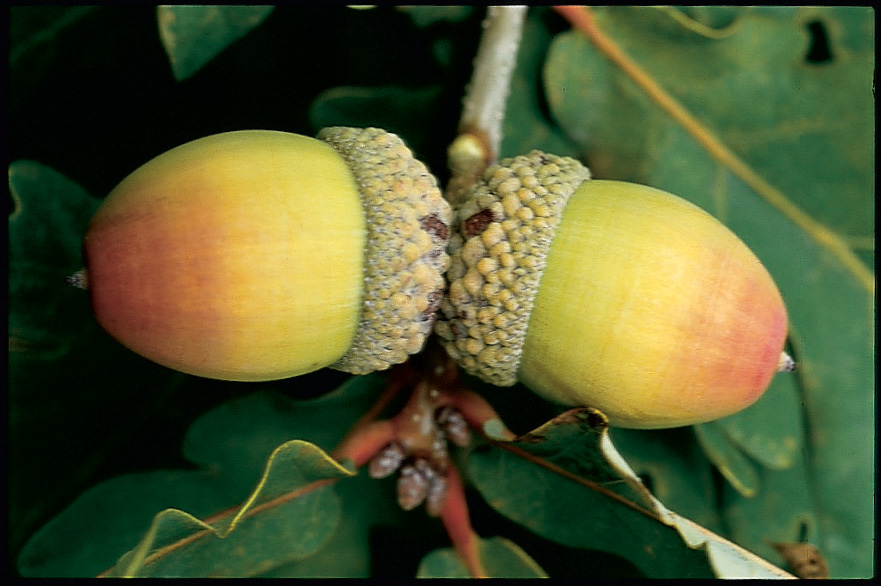
This persimmon was the first to fruit from seed at my farm.

Posted in Diversity Found, Ecology-Biodiversity-Integration | Tagged , , , | Comments Off on The Making of a Forest

The No Spray Apple

What would happen to the apple if we decide collectively not to spray anymore? Every good experience that we have with the apple would change for the worst. The flavors we know and appreciate would disappear. To create a new variety of a no-spray apple is the moon shot of fruit farming. The apple industry does not care. Everyone knows this. It is infatuated with itself focusing on narrow profiles of apple and apple flavors. It has a completely different trajectory. Apple enthusiasts including scientists have looked into this no spray or low spray in various ways. Personally, I have no idea what I am doing in this arena. Yet I did find a sort of cold fusion back door method that could play a role in weening us off the pesticides so luxuriantly used in apple production. At the very least, it would create many new apple flavors. The problem is I need 100 acres to make it happen in force. You need a large sample size of diverse genetics and a means to explore that diversity free of spray. No one would do that. The conservation industry is so mired in native only that it would never be applied on public land. A private land owner would need some serious cash to set aside that much land for thirty years. It’s a whacky idea to most. Meanwhile we continue to snack on apples sprayed sixteen times a year. That in itself I find very whacky. The goal would be find a way out of this complexity of environmental and ecological mess we are in and the ability to produce a clean fruit without insects and disease. This would be one giant apple forest in the end. You are creating something that would only exists in one place in the world. Russia. The home of the Eden apple forest. Certainly we can go organic and find varieties suited for organic production. That is one very good step in the right direction. But can we go one step further? That is the issue with this most wonderful tree crop and its importance to human health. We need apples more than ever. If we take a sneak peek of possibilities, it lies within the wild apples already in existence in North America. It already has been bred by nature for the most part and is in existence right now. It doesn’t have to be a moon shot in many ways.

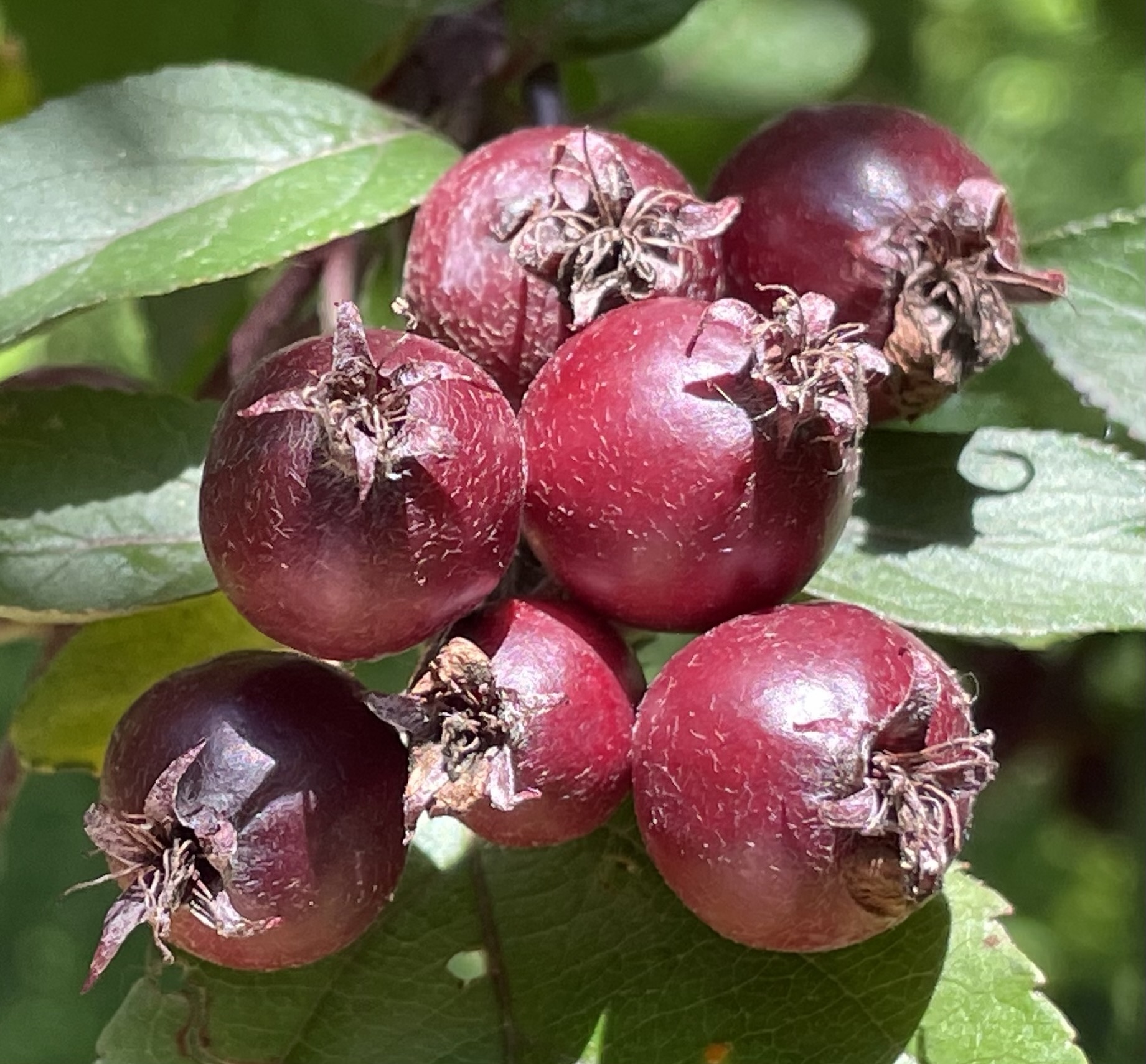
When I began collecting seed for my farm and nursery, I was always on the lookout for apples. I tried to find clean fruit from trees growing untended. One species type that was consistently good was Malus coronaria or Sweet Crab. It is a native North American species and is found here frequently in southwestern Michigan. It is inedible in the fresh state because of the high amounts of astringency and tartness. Yet here was an apple completely free of bugs and disease. The hard green one inch size apples were always pristine no matter where I found them. Small size aside, you have to admire its cleanliness. The foliage on the other hand was very prone to disease and usually by August the tree had lost a good portion of its leaves due to rust, scab and mildew. This was it’s normal condition and it always happened every year. Some years are worst than others. This species is biennial in bearing. Every now and then you will find a particularly good seedling with heavy yields. I found a couple of trees with massive yields in a park and another in a curb lawn near a parking lot. One was in a yard along a Michigan highway. The owner was happy I was cleaning up the fruit off his beautiful lawn. Sometimes this species is used as a rootstock. My guess is the crabapple production folks will use anything for rootstock.

At one point, I had to get to the bottom of the coronaria flavor department and decided to make jelly from it. When I went to the store to purchase massive amounts of organic sugar, I met up with a colleague who worked at a local nature center as a botanist-environmental science teacher. I told him I was making jam out of the Malus coronaria to see what it tasted like. He asked, “What’s that for?” while pointing to a bag of Almond Joy minis that I had in my hand. I said, “Back up.”

It turned out that even with massive amounts of sugar you end up with a green hard jelly you could easily bounce a bowling ball off of. I am not sure why I added Sure-Gel pectin to it. It still was tart and astringent. No one ate it at my house. Seeing a jar of green jelly light up when you open up the refrigerator is not particularly appealing either. Probably storing the apples in their green state for a month or two would have decreased this effect.

It was from this species level, I had the thought you could find a clean apple somewhere. I found larger fruited Malus coronaria and ioenensis as well as several hybrids called heterophylla apple. I found and grew one selection at my farm with relatively decent flavor and juiciness. People began sending me seed of certain selections of wild apples. I collected a few scions off trees here and there too and some people sent me what they thought was good. But the grafting was very limited. I mostly wanted to see what the seed would do and not the cultivar. In a certain twist of fate, Malus coronaria rarely overlaps its pollination with normal apples, Malus domestica. It is often two weeks later in flowering. That is a good thing in terms of frost avoidance. But unfortunate if you want hybrid seed. It is an uncommon cross.

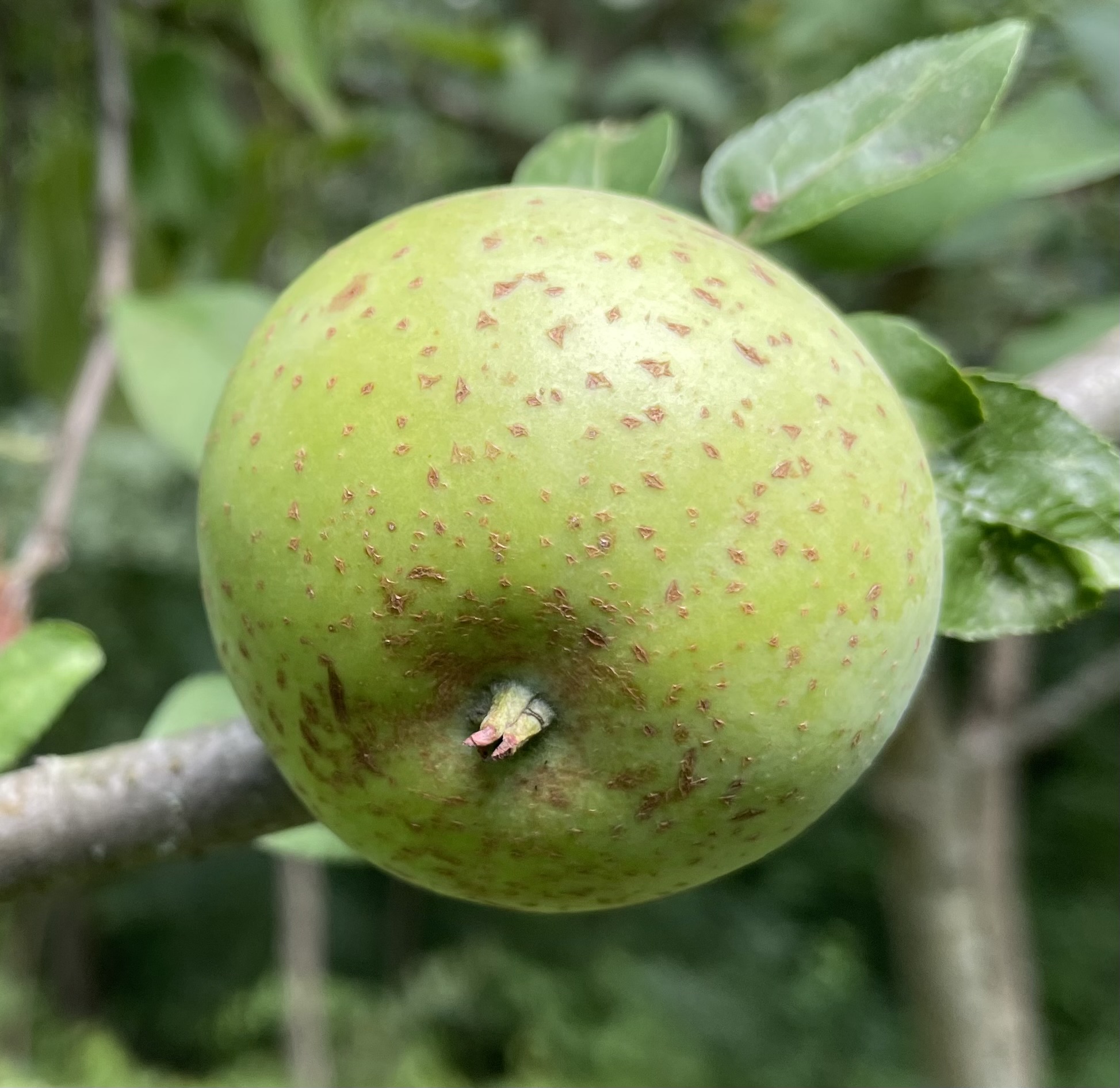
A seedling apple grown from seed at my farm originally from a russet apple found in northern Michigan at an abandoned homestead.

Wild apples show a huge array of variation from year to year with appearance changing radically depending on insect and disease pressure. There were many good crabapples but for some reason the size of the fruit was a road block. The cider folks have found that the russet apples (the ones that look like baked potatoes in a tree) produce seedlings that are valuable in terms of flavor and bug proofiness. They tend to have impermeable skins. I have found the seedling russet apples that I grew from the gift box of heirloom apples did produce fairly clean apples with minimal damage from insects and disease.

The Waterfall Moment

It was a December morning and I was having my catalog worked on by a designer. On my way to his studio, there out in an open grassy park was the tree I was searching for. I saw a huge volume of yellowish green apples that looked like they were dumped under a tree. I decided to go back later to harvest the fruit. It snowed the night before and I froze my fingers digging them out of the crusted snow and thick grass. I took them back to my farm, processed the seeds and grew out many seedlings from this batch but kept one tree that had clean foliage without rust spots on the leaves. This tree grew very fast and began fruiting so heavy that the weight of the branches made the tree bend over to the ground making it look like a waterfall of fruit. Nature has its little surprises. The fruits quality was very similar to coronaria being high in astringency and barely edible in the fresh state locking up all other flavors in your mouth making it impossible to taste anything else. It was a Eureka moment in my land of seedling apples. Today more seedling trees are waiting to fruit and new seed has arrived this last year. I think I am going cold fusion on the apple. I have to figure out this dynamic tree crop and force of energy we call the apple.

Malus x heterophylla apple found in a batch of Malus coronaria seedlings and pulled out and planted in my mini apple forest. Is this what the no spray apple would look like?

Much like the apple you need to cross pollinate your ideas to find the combinations of flavor while creating ways to use the fruit. We can get a clean apple full of wonder and health. We can continue spread that message of “one a day” and to keep the doctor away. And if we have to, we can call for back up and pick up a bag of Almond Joy minis.

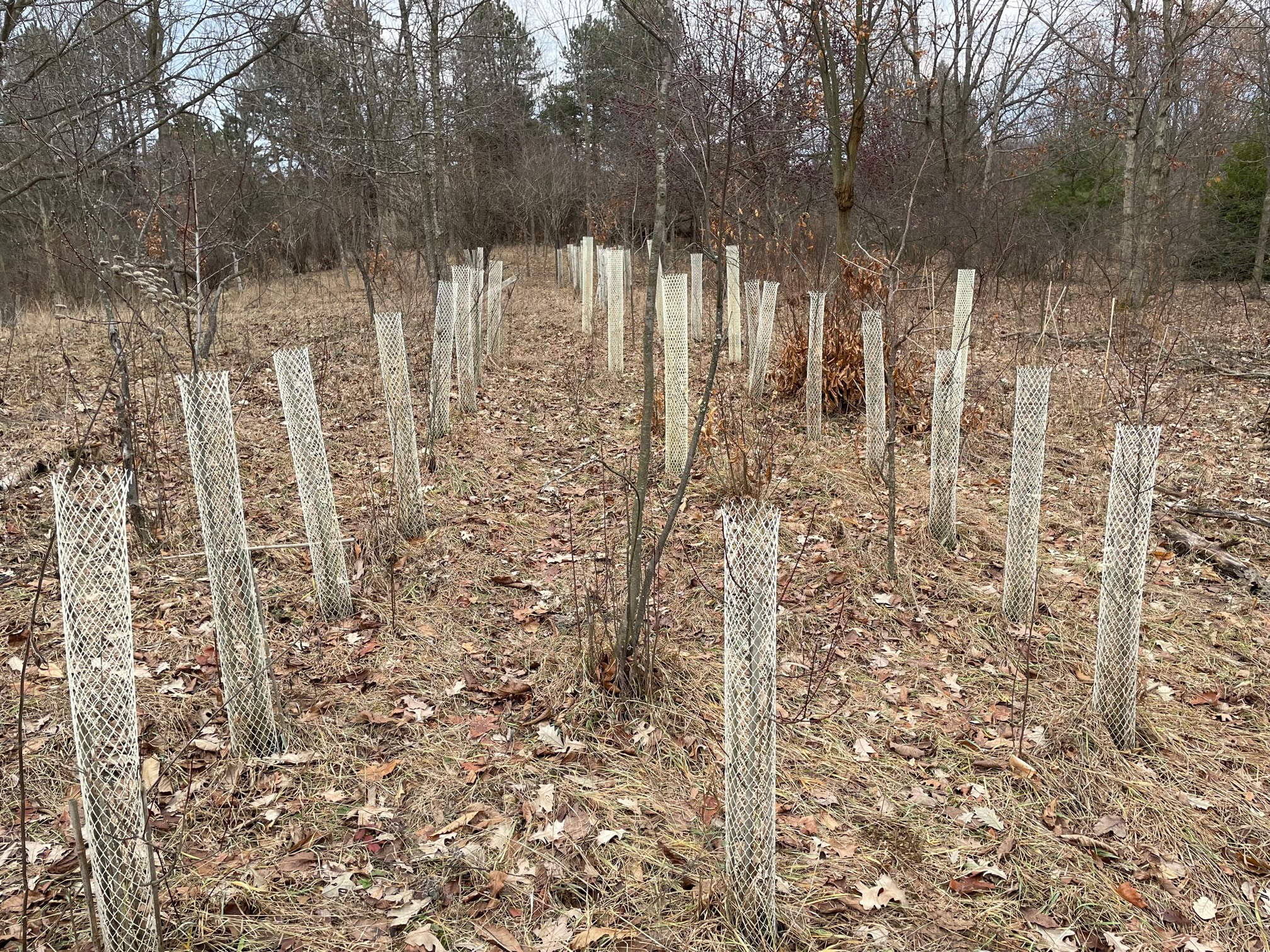
A seedling apple orchard in an open field untended is one way to grow apples from seeds. The nets provide a little browse protection from deer who also love the apple for both its foliage and fruit.

Posted in Ecology-Biodiversity-Integration | Tagged , , , , | Comments Off on The No Spray Apple

The Glorious, Exalted and Most Powerful Beans

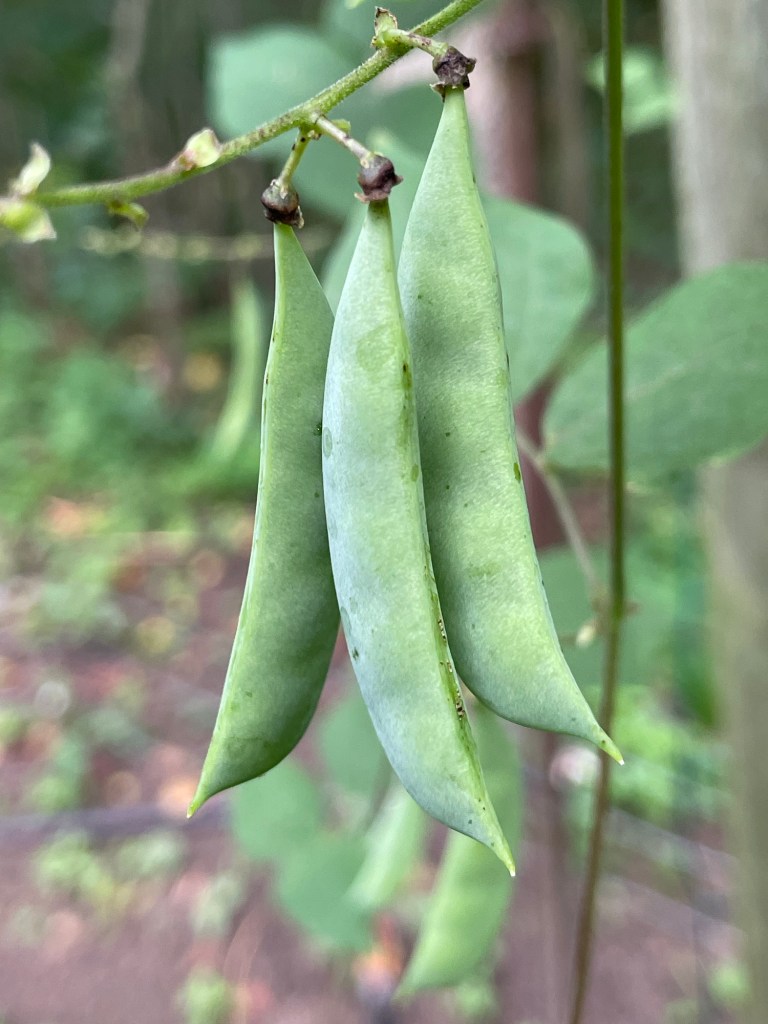
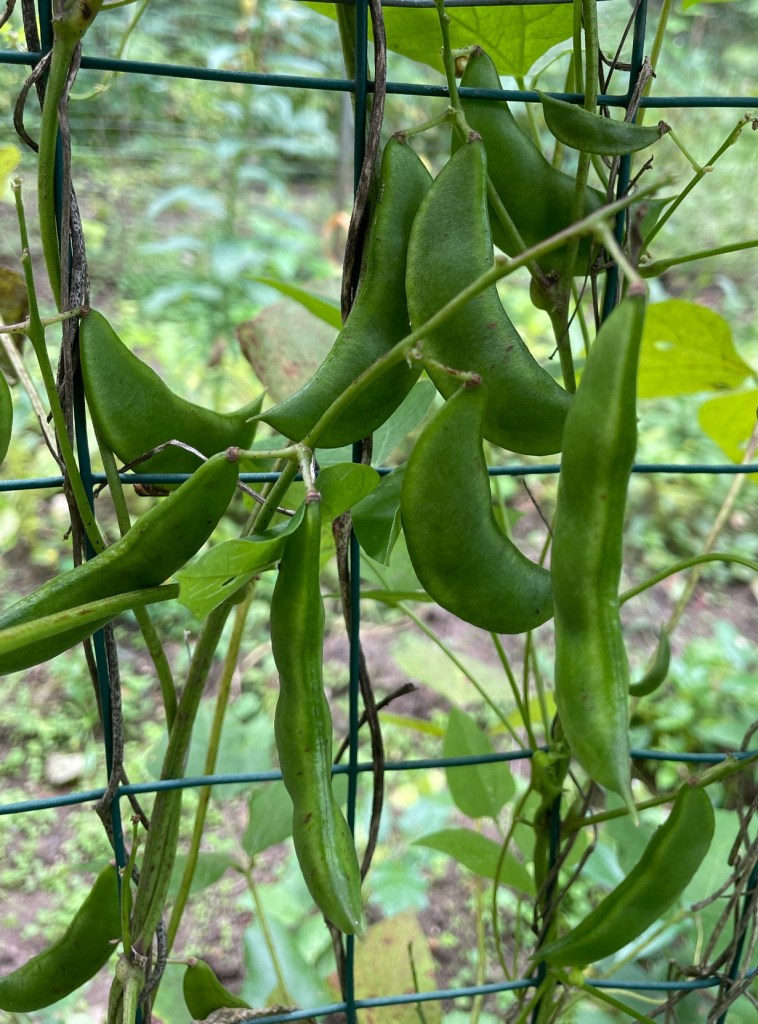
Thicket bean-perennial in nature.

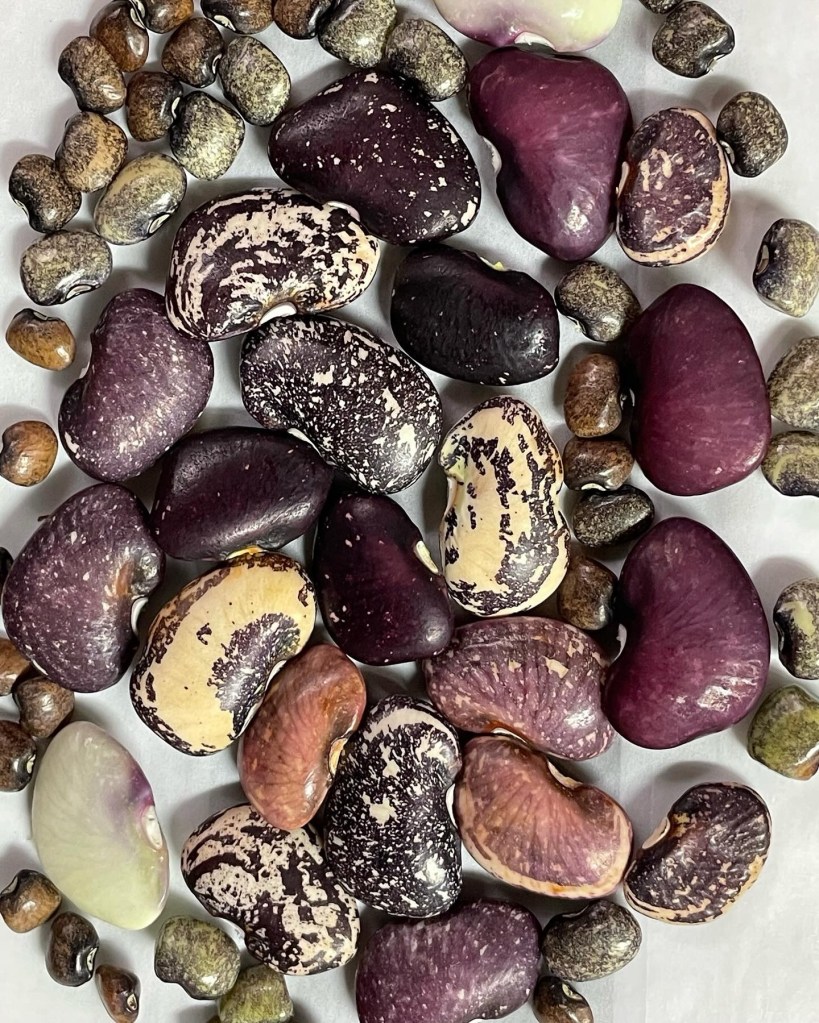
Every year in the spring I go through my small bins of seeds and figure out what I am going to plant. I have no plan so the choices are wide open. I like that idea. It reminds me of music. I could play anything but maybe I am not in the mood for that. Instead I will do this. I am not a fan of death metal, yet yesterday I heard a flugelhorn being used in a death metal song. Okay, that I like. The same with beans. Only one small thing will change my mind on what I feel about beans. I am not thinking about beans. But almost as soon as I approach my seed shelf and I crack the lid on the bean container, the ideas flood my mind like a flugelhorn. There are some good beans in there. Look out! The colors, shapes and the potentiality makes me immediately want to plant them all. This year was no exception.

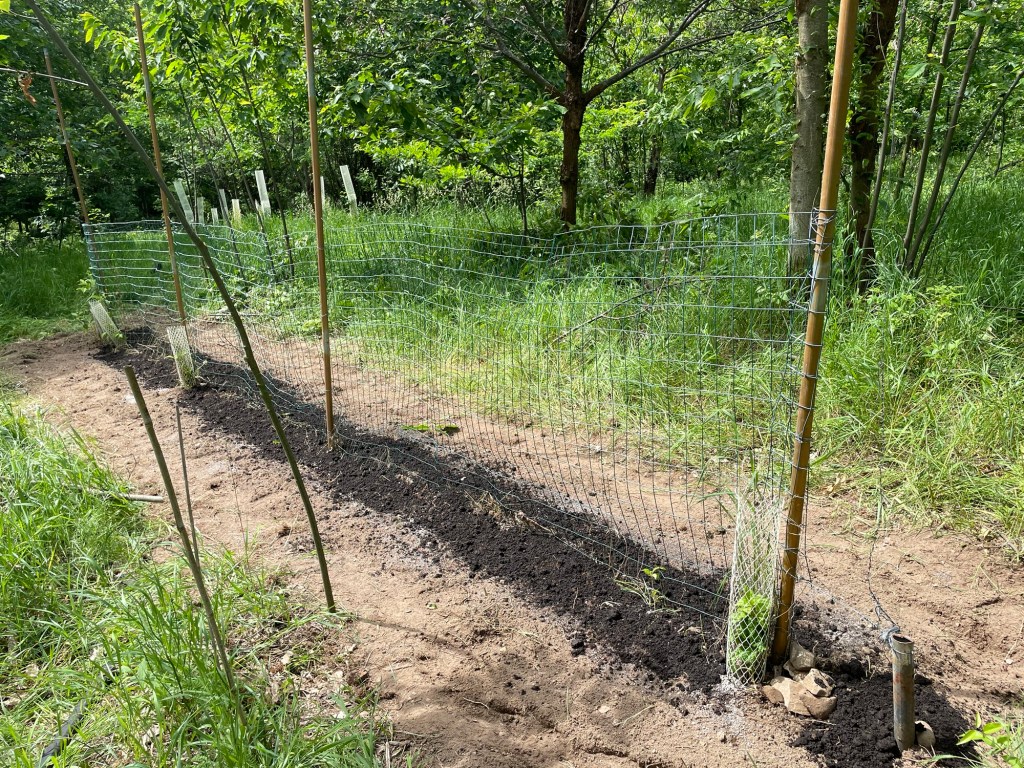
Bean trellis in the midst of hybrid chestnuts and a couple of Schisandra vines.

Over the years, I have spent a lot of time growing the perennial bean called thicket bean as well as its close cousin the lima bean. I have always been fascinated with the tepary bean too. I love the vine beans the most because you can put them up on a trellis and see the beans right in your face where you can watch them flower and develop pods. They make for good photographic subjects. Bees and butterflies love them which adds to the excitement. In this process of getting to know beans you soon realize a lot of people have huge knowledge of the bean universe. To think you can contribute in some way to the world of beans seems impossible. It was a “Nothing is new under the sun (bean)” moment.

Tepary beans on the rise.

While growing beans, I was brought to great humility because I could see the huge variation developing. It was a quiet bean revolution going on in front of me. I can add to the discussion. I will continue my bean quest. It’s much more enjoyable to grow beans just for enjoyment and not some long winded breeding project. It would be like planning fun. It never is quite fun. You need spontaneity in growing beans. True with many things in life.

The Tepary Bean-Fertilizer Plus Bean Equals Contribution To the Bean World

I really liked the tepary beans dense growth habit and healthy foliage. The tepary bean is considered the world’s most drought tolerant bean species. It can grow in desert like conditions and is incredibly vigorous. It has a good flavor and is a great dried bean produced in the southwestern U.S. where it is a native bean of both wild and cultivated varieties. In my plantings, almost all of them originate from Native Seeds. They offer both the wild forms and hybrids. When I grew the teeny wild forms in Michigan, the ripening period was too long and there was not enough heat units to ripen the beans fully. But I did squeeze out a few from the early flowers. You really need a long growing season or a sunny hot summer. I had two plants self seed and I kept that group eventually finding early ripening selections. The yields were very low so subsequent years I have found higher yielding selections. One plant in particular was off the charts yield wise last year. The whole purpose of this grow out was to develop both a nitrogen fixing crop much like blue vetch is used and an edible bean to harvest. Blue vetch is in the bean family too. It is one of the best nitrogen fixing plants ever. For me, if a plant can produce a large amount of foliage especially in drought soils like blue vetch, then tepary could play a dual role as both a nitrogen fixer and an edible bean crop that could be harvested. This year I am trying to build up my stock of what I have so far. From previous experience, it is likely to succeed in growing but flop as far as it being implemented anywhere. I need to be a better bean salesperson.

The Lima Bean and Thicket Bean Party Like its 1999

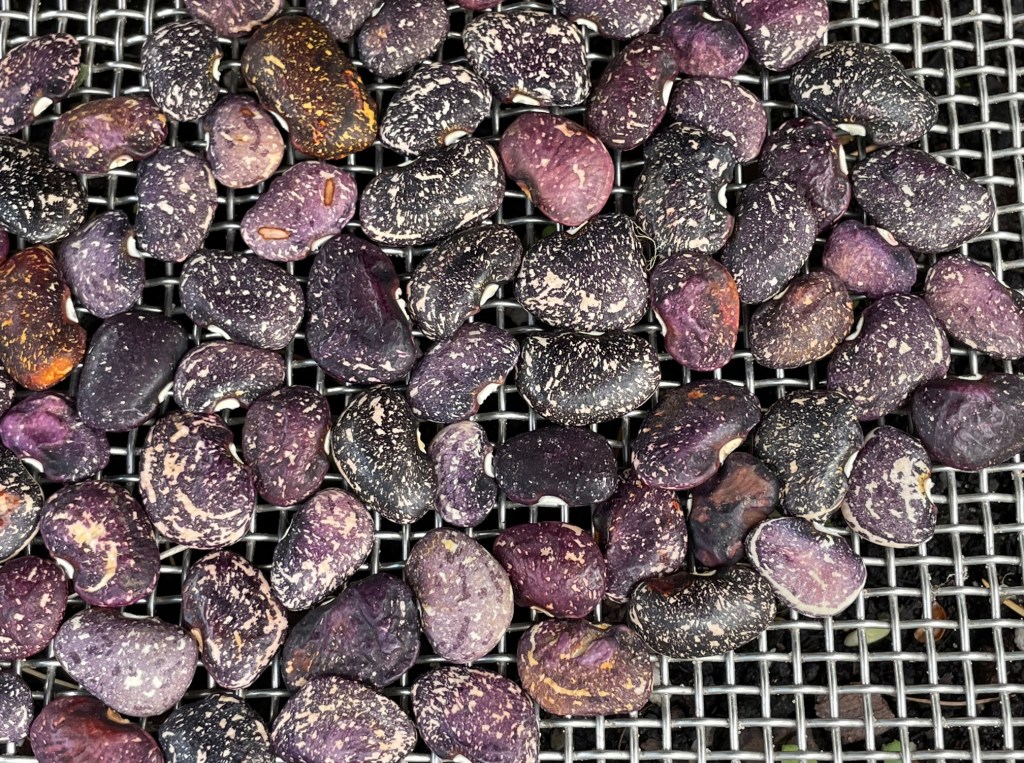
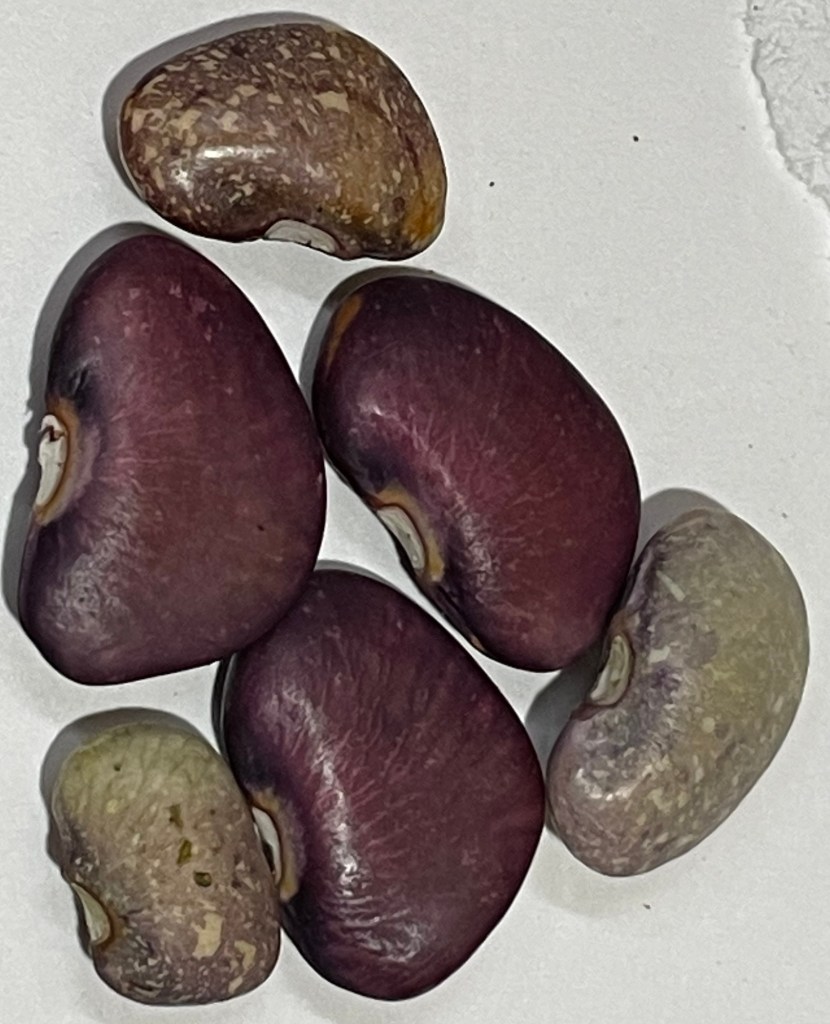
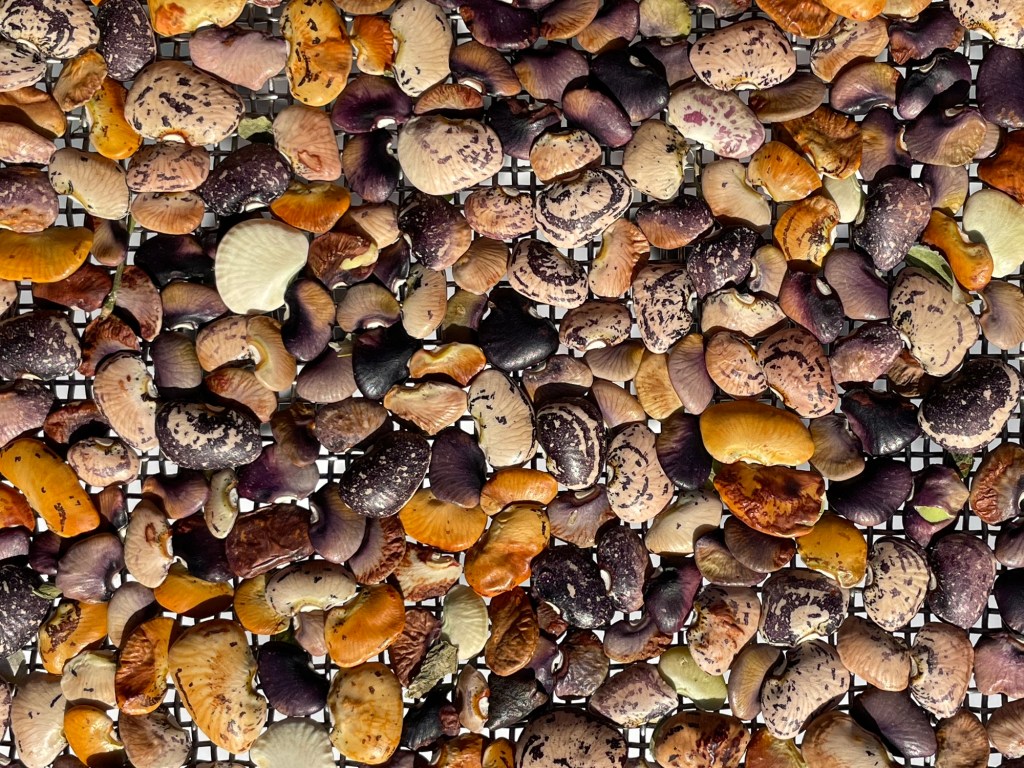
It turns out you can accidentally create many crosses with the lima bean. The question is why would you? Is there something deficient with the lima bean? Not really. The thicket bean is perennial with a super deep root. It tends to blend the colors of the Lima and shrink its size. That is a win-win. To me it does offer a way to tip toe out of the human consumption of the soybean market. I don’t mind the soy based products, but I think we can do a one up on soy. Flavor is not soys strong point. It is the reason why I have difficulty with the flavors and digestibility of soy products. Yet, I like tofu. Few will admit that in public. The lima could easily make a case for many edible bean products. First, shrink it. I have found many small types of lima beans in my so called breeding project. Second, improve the yields like no tommorrow. The yields per plant seem low to me. They too characteristically require a long growing season to mature all of the beans. This is a problem for those who have cloudy cool summers. The lima is not a fan of that. You could also select for perennial traits. This was a lot easier than I thought but you would need a more robust population to work with than I have. You could infuse it with purple limas or small lima beans that don’t take so long to cook. Flavor has to be number one in the Lima bean world otherwise there is no reason to change. We will continue to soy ourselves to sickness over the plant protein quest. Right now we have vat grown protein coming along the technological trail. So in some ways we are going backwards in knowledge. It’s not impossible to think of a butter bean Lima used for delicious flavored plant protein much more than soy. There is plenty of room at the top. It’s not impossible. Nor a burger. I think I hear a flugelhorn playing right now!

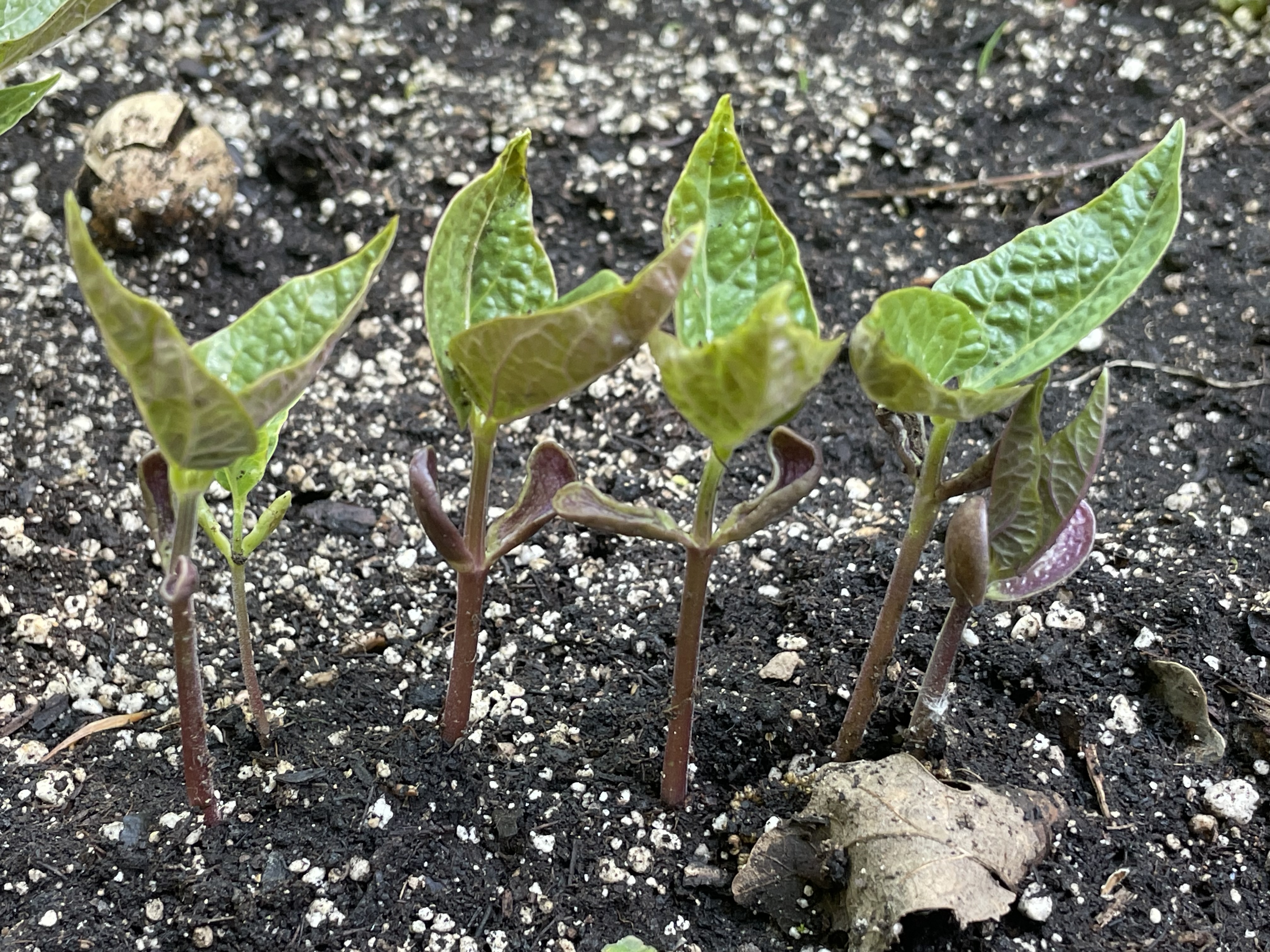
The variations are endless in the bean world.

Enjoy. Kenneth Asmus

Posted in Diversity Found, Ecology-Biodiversity-Integration | Tagged , , | Comments Off on The Glorious, Exalted and Most Powerful Beans

How Deep Do Your Roots Go

Bitternt hickory near my old high school

When I first started my nursery and began hand harvesting field grown trees, I knew I was going to need a variety of tools for the job. One of the shovels I purchased from Hawken Tools was manufactured by the Bulldog Company in the U.K. It was specifically designed for digging trees and cutting roots. It was a long, narrow and curved shovel with a D handle. It was the most expensive shovel I had ever purchased as well as the most durable. I still have it today. It was like a drain spade but much more robust in construction. I could put a razor sharp edge on it which would allow me to cut the roots easily when digging plus it was built to allow prying of the tree upwards. Once I was harvesting persimmon trees, I noticed a small pignut hickory had seeded in the nursery bed which was near the road about fifty feet away. I began to dig it up and found my shovel had hung up on it so I started to pull realizing I had loosened the long root to the point I was able to bring it all up. It was a three inch seedling tree with a six foot root. It was a one year old tree. Hickory is not produced by the nursery industry because of its tap root. Tap rooted trees are not considered desirable for most production systems and difficult and slow to produce. This is one of the main reasons you don’t see hickory grown as shade trees. If you prune the root, it produces another tap root or sometimes 2-3 tap roots from the cut area. In the meantime, I was beginning to think about my little tap rooted friend and realized the parent trees which were 50 ft. tall must have immense depth to them. How far down would the roots go and when would they stop? The straight math says 1200 feet. It was weird in that the lower portion of this taproot was rather succulent and almost translucent. As I pulled it up, you could feel the pressure created by the soil around it as if it was connected to the soil via a pressurized media. There was no side branching or hair roots. Just a tap root going straight down. The depth of hickory roots was always in the back of my mind and over the years I began to ask others about it. What is the depth of a mature hickory tree? When would the roots end? I found a tree company that moves large pecans which is in the Carya genus. The roots in this pecan case go down around twenty feet or so and then hit a clay subsoil so thick that they cannot penetrate it. This makes it possible to move larger pecans in an orchard environment to their permanent location. It thins the orchard in the process and there is less waste of trees too. It turns out this clay subsoil is really the cutting off point. When I was having my well drilled, it turned out I too had a clay subsoil at 30 feet down. However my subsoil was filled with rock and coarse sand and was a loose aggregate. So it would mean that likely the hickory tree could potentially go through that if it wanted to and keep going. From there at roughly 110 feet is more or less a sandy rich soil filled with water. At that point the well pump is installed because the water column is substantial. However, a hickory root could potentially pass through that too. As long there is some dissolved oxygen, the trees roots could keep going. But would they? There is no reason to stop really if there is no physical barrier. So I asked the well driller what is below the water table. He said that in this area he was not aware of bedrock or impermeable sandstone and wasn’t sure of the depth. He told me once someone was putting in an industrial well of some sort in the nearby town and went to 1000 feet before the drill bit got hung up on something. They could not pull up the drill. It turned out they had hit an underground river forcing the drill bit to the side from the force of the water movement. Once they got it up, they took samples and found them similar in profile to Lake Superior water. I found that very interesting. So now I think I found the end of my hickory root. It taps into the waters of Lake Superior feeding its leaves with the pure waters of the great lake several hundred miles away. Even to this day, I wonder if the story is true and if the roots would go that deep. Yet every time I dig a hickory tree I do have the thought, how deep do you go my little friend. The answer comes back immediately. “Farther than you know my little friend” said the hickory tree. “Farther than you know.”

Posted in Diversity Found, Ecology-Biodiversity-Integration | Comments Off on How Deep Do Your Roots Go

Oh, it’s vigorous

There is probably no other word used more freely than vigorous to describe a desirable attribute of a plant found in cultivation. Here are a few plants that show their vigorous nature no matter what nature throws at them. This vigorous nature translates to higher yields, faster growth as well as long term health.

Purple Ease Potato

Potatoes are not thought of as vigorous. How are your potatoes? Vigorous? What kind of question is that? Yet vigorous can happen. Purple Ease does that effortlessly. As of May 31, the plants are already three foot tall and have huge leaves. It is this vigorous growth that greatly increases the potato yields. Foliage health and strong square stems help this along to bring both fruit production for seed and heavy tuber production.

Ashe Magnolia

I was more than a little surprised this Florida native can grow in Michigan let alone be actually vigorous and healthy. I lost many of its macrophylla cousins over the last thirty years. The heat and wind and took them out completely. I found a forgotten plant recently surviving under an amur maackia honeysuckle colony out back where it is now slowly making its way to the bur oak canopy in that area. . Each leave is perfectly aligned with the sun to capture the maximum light which only adds to its vigor. The thick green leaves up to two foot long stay a rich green color even through a dry summer.

Big Hip Rose Almost all species roses are vigorous. They are grown from seed. There is no graft union and no issue with the innumerable species of insects that feed on the foliage which inevitably reduces vigor. Once the canes fruit for several years, they will begin to fail. Vigor kicks in and new sprouts can grow five feet in a season starting from the base of the plant. A small bud will quickly throw a sprout called a sucker. The sucker fruits in two years as the cane matures and produces branches and then flower buds.

Thicket Bean There are few beans that can grow forty feet in a single season. The thicket bean can easily do this. It is interesting to watch this vine produce so much foliage in a season. A wild species and crop relative can be cultivated. Under ideal conditions, its true potential is revealed with the production of huge volumes of foliage and flowers. People tend to fear vines. It is a force of nature that you cannot control. For some, it’s too much drama. But without it, there are few beans. Vigor equals beans.

I want to live in a world where beans fall from the sky. It would be a sign of a vigorous and healthy world.

Ashe magnolia flower
Vigorous chestnut sprout
Posted in Ecology-Biodiversity-Integration | Tagged , , , | Comments Off on Oh, it’s vigorous

A Gap in the Field

My father and his friend and business partner purchased a 400 acre Christmas tree farm in the early 70’s that needed a lot of work. One area that was previously harvested was filled with thick grass and dense woody shrubs that had seeded in around the previous Christmas trees. It contained a thousand tree stumps per acre that had to go. To prepare this area for new Christmas tree seedlings, the solution was to get out the plow. The field needed to be reduced to pure flat soil. The reality was the Christmas tree roots were shallow, dense and intertwined preventing penetration by the plow. When a rotovator was attempted, it too barely made a dent into the soft sandy soil eventually breaking and putting it in the shop for repairs. Finally a bulldozer was brought in and what was left was a type of moonscape filled with roots, ruts and crushed vegetation. Now the field will lie fallow until next spring when it will be planted again to start the ten year cycle.

Despite the tragic soil conditions, I had the thought of planting potatoes in these open gaps where the soil was mostly pure sand. In my mind, the field was just sitting there not doing anything. To me, that seemed like a crime but also a challenge. There were mounds of soil created in the destruction process. I had the thought they looked like potato hills that people create when growing potatoes. Armed with a sense of curiosity with zero knowledge of potatoes, I purchased seed potatoes from a local hardware store and drove my mom’s Schwinn bike out to the farm on a sunny Sunday afternoon fourteen miles away. The seats on those bicycles are very comfortable but the single speed was slow. The planting was more like ‘plopping-in’ than actual digging. I realized that the mix of soil and subsoil along with the damage done by the heavy equipment was even more severe than I thought. As most gardeners know, eternal optimism is everything. What could go wrong? Nothing.

This moonscape that we created at our farm was a gap of vegetation. It was surrounded by a lush ditch filled with cattails on one side and an oak forest on the other. It was a stark contrast of life and death. Here was an area filled with remnants of its previous life and exposed soil. I viewed it as a possibility of a new crop plant to try. It was a shout out to a new food possibility. What I didn’t realize was nitrogen draft from the existing vegetation, the previous use of herbicide sprays used to prevent weed growth and the effects of heavy equipment on the soil profile made this possibility or idea less likely to come to fruition. I only saw the possibility.

Today I look for these gaps and find many of them in my fields and beyond. Some are of more natural origin and some are found in manicured landscapes. I am tempted to plant tomatoes in some of these highly manicured commercial landscapes. Unfortunately, when I have done that, the companies that manage them yank them out. It doesn’t fit into that gap due to human intervention. Once in a while I am tempted to plant seeds into the land conservancy land. But this might create a cascade of negative consequences of which would defeat the purpose of doing it in the first place so I have never tried it. Now I focus on gaps in my open field conditions created by other plants or other unknown changes in the soil itself creating a certain blank spot amidst the vegetation. It is these blank spots that make it possible to grow potatoes and other fruiting plants. Not just any potato will grow. It has to be adapted to those conditions and still be productive over time like any wild plant. It was not that hard to accomplish because the gap was there ready to accept the plant. The gap is nothing yet provides the opportunity to make it happen. All you add is the seed. I find that reassuring that it can be done once you meet nature on that level where the plant thrives with little human intervention. Certainly the yields may be less or the crop itself will change in some way that is unpredictable. But that in itself is good because now the plant can reproduce in this new environmental scenario.

What happened to my potatoes in the Christmas tree field? They disappeared entirely. Only the small dead stems were left by the time I got there in August. They were hard to find. I harvested what I could. It was barely more than I planted. They were very small only an inch in diameter. I took them home and cooked them. They were delicious. I will try again. Now that I know the gap, I see gaps everywhere I go.

This particular potato has immunity to virus as well is able to survive outdoors and regenerate on its own without replanting. When I start a planting, I let it go for at least five years to test for persistence in field conditions.
There are seven different species of Veronica in Michigan. Called Speedwell, it is one of the few species of plants similar to the fern called Ebony spleenwort on the lower right to grow in areas where other plants begin to thin and die out over time.

This is the gap created by Speedwell. It tends to grow where everything else is pretty much gone. I am not sure if the plant produces a certain alleopathic effect or if it is just seeding in these areas with oak and apple leaves. This is one of the best groundcovers because it is so easy to harvest on it plus there is no need for mowing or weed whacking prior to harvest. The idea is to have level flat areas so when the nuts fall it is easy to find them and collect. This plant is also evergreen which is an ecological advantage if there is other competing grasses. Speedwell is the gap.

Posted in Ecology-Biodiversity-Integration | Tagged , , , , , | Comments Off on A Gap in the Field

There is No Substitute

Every now and then I find an article that tries to connect in some way a little known crop plant to a major crop in modern agriculture. I think it is only natural to do that. I see it more and more. The connections try to reel you in to the similarities of your love of potatoes or some other delicious food plant that has been cultivated thousands of years and a wild relative or native plant of some type. I’m pretty sure the authors have never eaten these and for sure they have never grown them. It’s obvious. The differences are great in flavor, composition, digestibility, nutrition as well as the horticultural implications. Almost always they gloss over those. Recently an article in Modern Farming highlights the use of native plants as a substitute for common food plants. What the authors don’t realize is they are driving a wedge into these crops separating them farther away from ‘normal’ crops. Nettles are not like spinach. Jerusalem artichokes are not potatoes. And nor will they ever be like them anymore than fiddlehead ferns are the new asparagus or ramps are the new onions.

Sometimes highlighting differences is the key to success in marketing new crops. There are certain characteristics you don’t want ‘dumb-downed’ as well as potential health benefits of the new crops and the unique flavor profiles found in these crops. If you decide to attach it to a category like native, you have put it in a niche market which I think of as the market of death. I know it seems strong but it is so true. It becomes isolated to the point few people see it and fewer people buy it. It takes some time, but it eventually dies out over time while you are feverishly trying to resuscitate it every year looking for new avenues of sales. The description itself becomes weaker over time as the definition becomes even more vague. Native today has attached to itself herbicide usage and burning increasing carbon dioxide into the atmosphere with the removable of invasive species. Do you want your new crop plant associated with these practices? It may not matter to you in the grand scheme of things but you have to think about the trends and why the organic market continues to out grow all other sectors of agriculture. To me, I don’t want herbicides dragged into natural areas where people are foraging for these wild crops. It is not healthy for the humans or the plants.
The use of native-indigenous North American plants as a new crop plant is not better than other crops. You are free to think of it any way you want. There is no crime in that even if you paint a fake picture of ecology and agriculture. It would be ideal to let the crop speak for itself in terms of its flavor and acceptability to the public at large and foster that connection. That native plant is a good crop plant just as the sunflower is. Over time the plants become native and integrate into the whole of agriculture. This too is normal and part of the 5000 year history of agriculture. Join now. Its both modern and farming.

Less sting stinging nettles. A selection found on my farm. No it doesn’t taste like spinach.

Posted in Ecology-Biodiversity-Integration | Tagged , , , , | Comments Off on There is No Substitute

Pine Nut Ecology and Economy

Pine nuts are expensive. You just can’t grab a handful to chow down without thinking there goes five dollars. I know they are saved for sprinkling on salads or making pesto. There they sit on the same shelf as the butter in a clear plastic snap tray like contraption. I see the price sticker on it clearly displayed. Frankly, I want a popcorn sized bowl of those rich oily smooth textured nuts. I want to roast them and eat them like peanuts while watching Ancient Aliens. Now we’re talking. Yet I realize I am forbidden from doing this. Never mind Ancient Aliens. I would need a second job to pay off my pine nut obsession. It has passed the macadamia nut level.

When I first started growing nut trees, I immediately began my pine nut quest. I wanted to solve that problem quickly. I grew many species over the course of three decades. Pine seeds are readily available as species from seed companies as well as within the confines of the arboretums who had mini-pinetums within them. One of my sources was Dean Swift Seed Company where you could order fresh out of the cone pine nuts, Pinus edulis, from as far north as Colorado. If you come to my farm today, you may ask where are your pine nut trees? You don’t see the trees or the carnage. The answer was simple. The alpine environment is not in southern Michigan. It is not the same ecology as the mountain ranges of Afghanistan, Italy or the arboreal regions of Siberia where many nut pines exist in the wild. This is the same reason you see Douglas fir trees fail barely getting to fruiting size. It is too humid here in southern Michigan in both soil and atmosphere. How many thousands of pinyon pines have to die before I give up trying to create a pine nut forest? The answer was over ten thousand. I did get one to flower though before finally saying farewell. It made a cone with no nuts. Even direct seeding into an area of my farm into pure sand did not work. That is not alpine. That was fake alpine. They knew. It only took three years.

Scherwin Pine Cones – Himalayan x Eastern White Pine Cross

Today I have numerous mature Korean pine trees scattered around my farm. This has become my pine nut forest. This tree is adapted to Michigan and produces pine nuts. I have several surrounding my barn too. Many are just starting to flower and fruit after twenty five years. I have several in my outback area where I limbed them upwards and wait for the cones to form. Some of my seedlings came from the legendary Grant Mudge planting in northern Michigan. This was the largest planting of Korean pine nuts in the United States for a while. It was a small row of trees on a bluff overlooking Lake Michigan. It takes about two years to sprout the seeds. A lot of other things love pine nuts too and you have to protect them in screened propagation trays as you await their sprouting.

Korean Pine Nut Cones and Seeds

What I find interesting in the breeding and selection of pine nuts are the hybrids of white pine, Pinus strobus. The Himalayan white pine, Pinus griffithi is only marginally hardy here yet despite its propensity to disease and winter burn on the needles I did find a few seedling types that show promise as a nut pine. It appears the hybrids produce large amounts of cones. They hybridize with the white pine and potentially could cross with the Korean pine nut. This could help in creating a diverse progeny to make selections from as well as create a population of fruitful and highly productive orchard type trees all with thin shells. One in particular from Germany has huge crops of cones some of which are almost a foot long. I collected a couple of bushels last year and ran them in my seed processor thinking they were rich in progeny and genetic variation. Unfortunately, all the seeds were blanks. If you look under the parent tree, you do see some seedlings popping up here and there. I am moving some of these closer to the Korean nut pines in an attempt to set cones of a hybrid origin. Its a dream I will keep alive but only because I love pine nuts and nothing else.

It would take a little breeding or selection but it could be done. It turns out that others have found the Korean pine nut easily cultivated but the shells are quite thick. There are some varieties with thinner shells as well as larger seeds too. This might not matter in terms of cracking and processing technology but if you combine it with a high yielding cone as well as a larger seed then it is possible to move that forward much faster. It would be the pistachio of nut pines in many ways with a paper thin shell of Pinus edulis but the ability to grow in a variety of climates outside of the world of mountains and minus fifty on the fringe of the artic world of permafrost.

I kind of get the feeling that pine nuts need to be employed at a large scale to make it worthwhile. You need abandoned land that even jack pine has worn out its welcome. You need quantities of seedlings produced from its native Korean range. Having a means to establish the trees and monitor their growth would be helpful. A thousand acres would be enough. This would create a repository large enough to judge the nut pine as a nut producer in the world dominated by jack and red pine. It would be tough to get your foot in the door but it is possible. A pine forest is not something new. Those the world has known for hundreds of years. A pine nut forest is something new. It would be a calorie full rich forest filled with delicious goodness. That is a forest we would all want to live in. I would move there if I could. There I would eat bowls of pine nuts and watch Ancient Mysteries of the Unknown Aliens while snacking my way to pine nut nirvana.

Schwerin pine bark
Schwerin pine trunk and limbs

Schwerin Pine Pinus strobus x wallichiana The origin of this pine traces back to the estate of Dr. Graf von Schwerin in 1905 just outside of Berlin. He was a resistance fighter against the Nazis in Germany. He was put to death after implications of his involvement to assassinate Hitler. The pine discovery was a seedling found in his garden as an accidental cross of the Himalayan white pine and the Eastern white pine. I was fortunate to get seed of the original tree and have only one tree of it today. I have grown many other white pines from Mexico, southwestern U.S., Austria and unknown seedlings here in Michigan. Some of these have done very well here but cone production is low so far.

Schwerin pine is a cross with the Himalayan white and the North American white pine usually produced by grafting. It will back cross with other five needled white pines but no one knows the extent of this. The tree is fertile and does produce some seedlings but most of the seeds are blanks. Last year I collected a couple bushels of cones only to find there appear to no viable seeds in the lot. I am not throwing out the seeds because it appears there is a one percent chance of fertile seed in the lot. One seedling I grew made it to four feet in three years despite being hammered on by deer. That is a good sign for hybrid vigor as well as fruiting at a young age. The Schwerin pine would be a good bridge for producing this nut pine with thin shells and heavy production. One seed is enough. I will move some of these hybrids near my mature Korean nut pines in an attempt to naturally cross them.

Schwerin pine-Here you notice the broad lateral branches which is more typical of species pines with good cone production. This area is filled with hybrid bur oaks, hicans, Caragana and Iowa blackhaw viburnum. I’m not sure how the yuccas got there but roughly about 200 feet away is my yucca stand.
Posted in Ecology-Biodiversity-Integration | Tagged , | Comments Off on Pine Nut Ecology and Economy