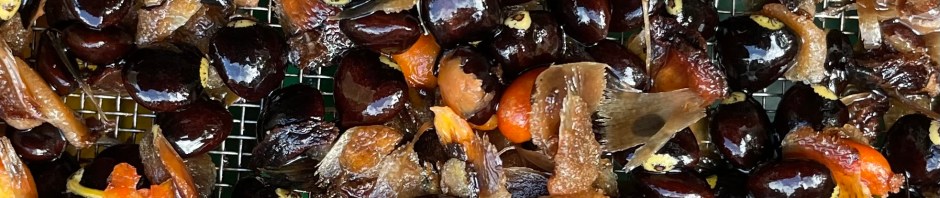
Trying to get seed of certain species of trees can be very time consuming. The Cucumber magnolia, Magnolia acuminata was one of them. It was very perishable. All the commercial seed companies treated them like lentils. You can’t soak them overnight and expect them to come alive. From harvest to shelf stable is possible but no short cuts are allowed. The seed needs to be cleaned immediately after harvest. The fruit pulp surrounding the seed is a fragrant and sticky latex like juice. For me I used a lot of Dr. Bronners soap as well as several rubs on a hardware screen with just the right pressure without cracking the thin seed coat. It was a joy to see the black shiny coats after washing in my stainless steel wash pan. It was like gold because it could not be attained any other way.
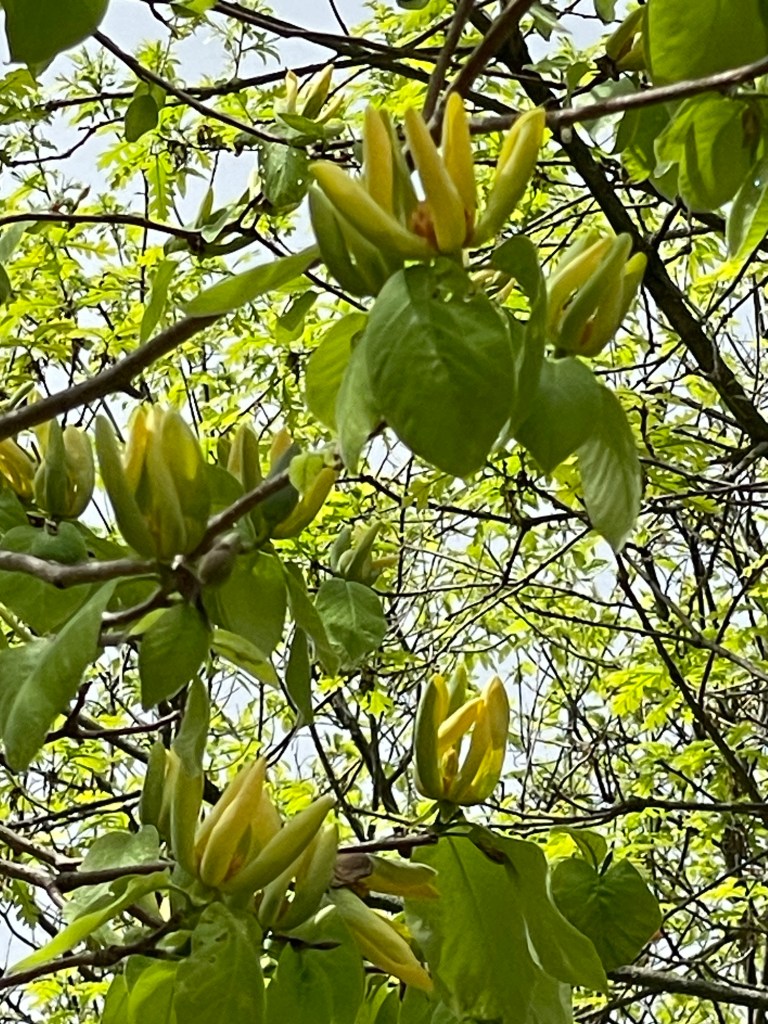
To add to the value of it was that the trees are not common in southern Michigan. Only cultivated trees are found and they are few and far between. It is not an ornamental tree produced by the nursery industry. Just by luck I spotted a monster of a tree in a yard near Pawpaw, Michigan on a lake front home. When I would drive by I would always think “so it is possible”. I kept this image in my mind as I looked for other sources of seeds. I really wanted to get it established at my farm and use the trees as a seed source for my nursery. This was what I called my ‘wind swept’ period. I would plant trees in my open field and hills and wait for the results after wind and drought reduced most to dried sticks. Some would survive. This was the case for the cucumber magnolia. It was drought sensitive and needed a rich dark black organic loam not the sand rock combo that I had. Even tree tubes and mulch were not much of an advantage.
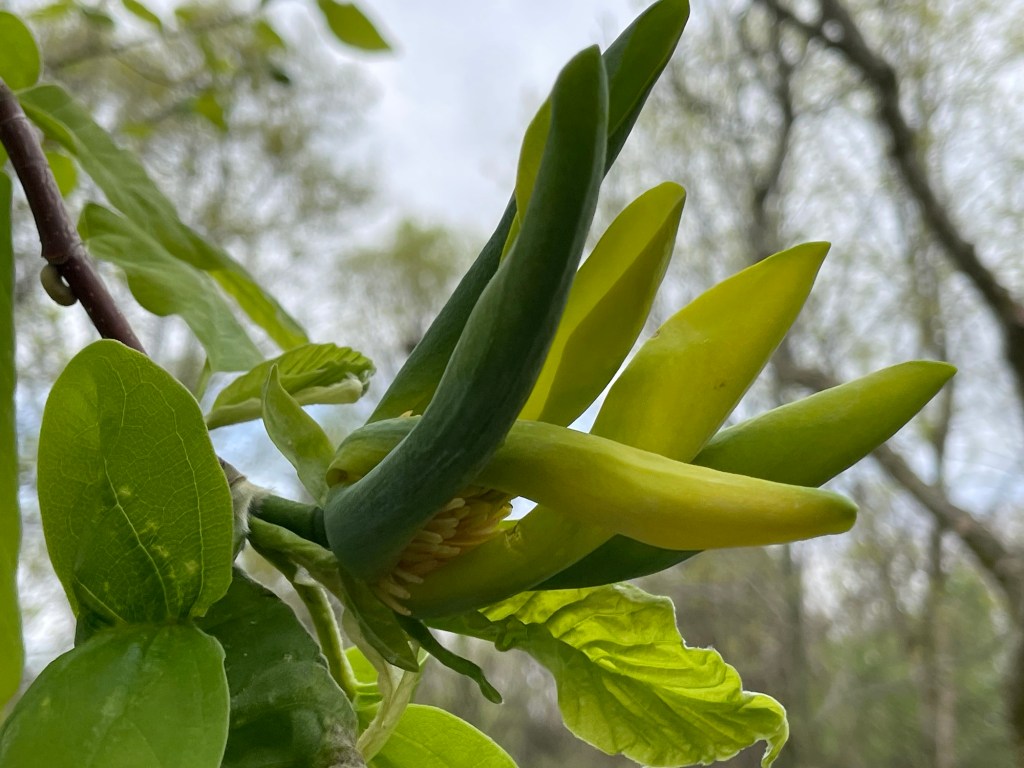
It was fortunate there was a small tree in an arboretum near me that someone had stuck out in a field. This arboretum was not managed other than mowing once in a while. It turned out that someone on the board had a landscape company and would from time to time plant trees. The specimen was about 30 feet tall but weak growing with dead limbs. It produced the cucumber shaped cones with a few seeds in each cone. It was rarely fertile but enough to get me started. Eventually I was led to the Michigan champion tree near the Indiana border. I was able to collect seeds one by one off the lawn. The owner smiled as two of us sat down and spent several hours picking seeds. There was no way to climb it. They were very nice to let us do that. I sent them trees back hoping they would plant them.

Now I had a robust population all from one three foot diameter tree hardy in Michigan. In the meantime, I could sell the trees and begin a more robust collection. I joined the Magnolia Society and found that several other individuals had located trees of this forest giant and its cousin subspecies subcordata. Subcordata or Yellow Cucumber magnolia was considered smaller and more compact in shape. I grew them all. As my forest took shape so did the Cucumber magnolia. Now there was a wind reduction aspect to my oaks, walnuts and hickories. Each tree was surviving and growing nicely. The roots of the trees were going deeper and some of the trees began to fruit. This process took twenty five years to fully realize. This was one of the longest tree crops in terms of years to fruiting. The juvenile age to maturity is long passing even hickory. Even today after thirty years, I still have a few very healthy trees that flower but do not set seeds. They are waiting for the right time. Any time, it will happen.
The gold in the pan is now cucumber magnolia seed. With its bright orange seeds looking back at me, it represents a wonderful forest giant that holds a place in my mind as a tree to sit in its shade and quietly think, ‘so it is possible’.


 biologicalenrichment
You must be logged in to post a comment.