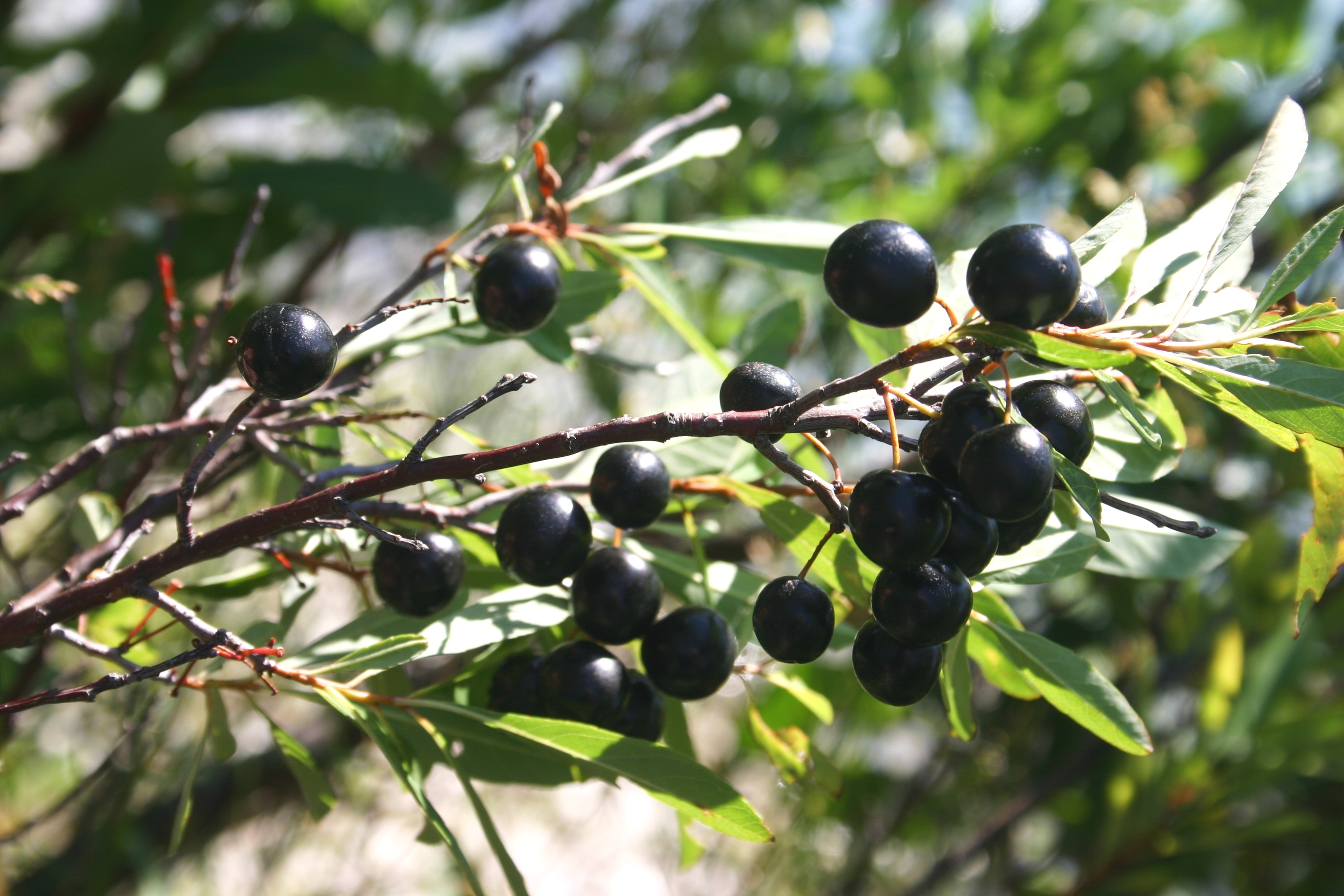
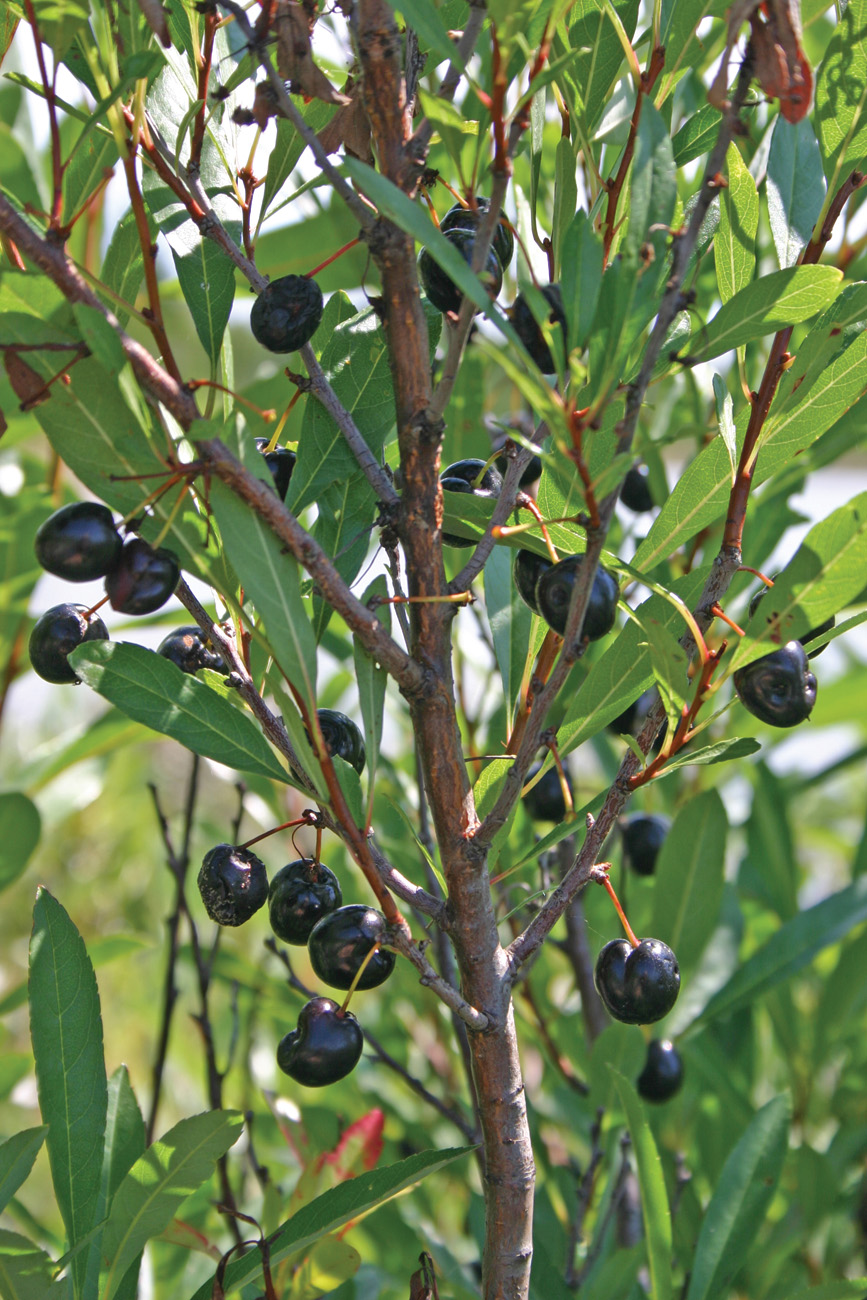
Have you ever gone for a hike and discovered some interesting fruit along a trail somewhere? Many people have seen or know this fruit along the shores of the Great Lakes. The trails that wind their way through the dunes often have small colonies of this plant along the way to the lake. Most people do not eat the sandcherry and when they do, they find it is rather astringent and difficult to snack on like a normal cherry. There are a few selections of it today found within the landscape trade used as a native groundcover. Fruit production is not considered priority in landscaping. It never is. Over the years my mission was to find other colors of fruit within this species. That has not happened yet, however I did several grow outs of the plant at my farm and found it was easy to cultivate despite it’s naturally short life. One had over thousand plants in a bed. Another was various larger upright shrub forms I found along Lake Superior which had solid fruit set and good quality fruit. The two species pumila and susquehanae are the species in the botanical literature. To me they are very difficult to separate and look identical in many more ways than separate.
When I first ran into the plant in abundance, I began to notice the forms as well as the fruit quality. The fruit flavor improves as the fruit ripens. It has to very very ripe if you want the best flavor. What really surprised me was how fast the plant grew and the heavy production of fruit on one year old seedlings. There was real no need to make selections as the species was so heavy in production. All the fruit was of good quality although quite astringent but less so than their wild cousins. The astringency dimished under cultivation with water and fertilizer. That in itself is a huge relief and really paves the way for cultivation as a species as is.
The plants were short lived overall and done by year three or four. The fruiting canes last a couple of years before needing replacement. It is a one and done type of survival on the dunes. You need fruits and lots of them. Then step aside. Certainly it is possible to find new types or even longer lived plants, but this production has been influenced by conditions set in stone on an ecological stage within an evolutionary play on the shores of giant freshwater oceans. Your’re not going to breed that. But you can harness that power. I am sure the yields are in the tons per acre at the highest point in the life of the sandcherry. And some jam companies in Michigan could use this easy to grow fruit plant. There is no need for some massive breeding program. Instead use the resources for direct to farm production and focus on how to grow a short lived fruit plant in a profitable way that allows for its use with existing mechanical harvesters. In many ways, it mirrors raspberries. All you would need is a few hundred feet of planting and treat it like a vineyard with keeping the canes upright and off the ground. This would even the ripening and make it possible to harvest easily.
I like the sand cherry. A nursery I started at early in my carreer had a huge field of its cousin the Western sand cherry. It suffered from mildew. The plants were almost always defoliated by August yet had a huge crop of fruit. Within that gene pool were yellow, red and orange fruited plants too. And they tended to be longer lived than their lake shore cousins. The owner of the nursery bought several thousand plants. I am not sure why we had them at the nursery however it is used as a rootstock for other commercial fruits. They were produced by huge wholesalers as Hansens bush cherry often. Often this was the soup to nuts plant promoted for almost every cure imaginable. People thought they were kind of cool too. I see them in the conservation lists too now. I know of one plant near a trail near my house. I am not sure if it was planted or always been there or if indeed it is the sandcherry of the dunes along a sandy ridge chillin for the last fifty years.
It will take you and a small empire of sandcherry lovers to establish this Michigan plant for a future fruit grower. No dune required.

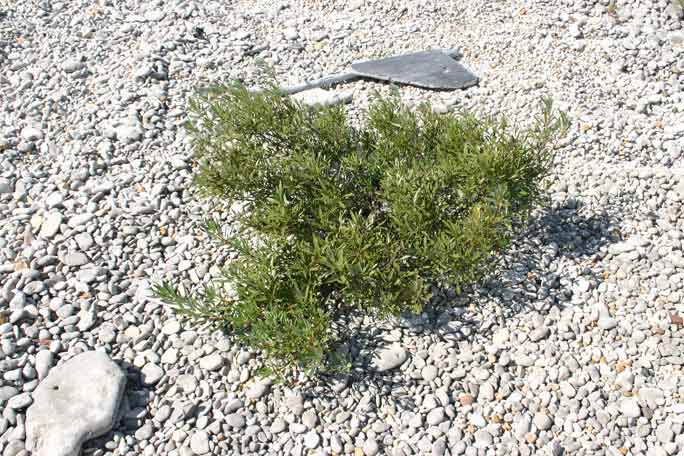
There are several forms of the sandcherry. Most are shaped by their surroundings. This particular shrub was found on a large plain of rock and gravel. The water was very shallow in this bay. The area around was completely free of vegetation. Here the sandcherry thrives. Time to stretch out.

The astrigency within this fruit makes it essentially impossible to eat fresh. Like the chokecherry, it could be cultivated for jam or jelly. Because the plants are short lived, it will take a different type of mangement system to grow it commercially. What would be interesting is if it could be crossed with other types of cherries especially the sour cherry. It has a similar relative that is eerily similar to sand cherry. Even the leaves look similar. The fruit is very small, tart and barely edible. I grew it at my farm and it too was short lived. I wonder if the fruit has unique nutritional properties. I wonder if it is more related to the plum and if it could be crossed with a plum like beach plum or Ussuri plum.There are so many possible outcomes for this unique fruit creeping along the dunes of North America ripening in the August sun.


 biologicalenrichment
You must be logged in to post a comment.