In each individual tree, the pictures can tell the story of that individual and its family upbringing too. It is a narrative meant to enlighten those who will listen, tell us a scenario in a moment of time and what potentially will be in the future both individually and collectively. For me I was only planting chestnut trees. I had access to a small sample of seed sources each with its background of American, Chinese and European lineage. It was a good start. They are all seedling trees grown at my farm starting in the early 1980’s. Each tree tells a story of its strength, its weakness and eventual survival in the real world shaped mostly by the disease of chestnut blight. To me it was a huge success. To others of a more strict botanical sense or from a cultivar based view, it might be considered a flop depending on what color glasses the viewer is wearing. For me these trees were a joy to grow and learn from. I know they have much more to give as well as much more to tell me. I’m listening. I hope you do too.
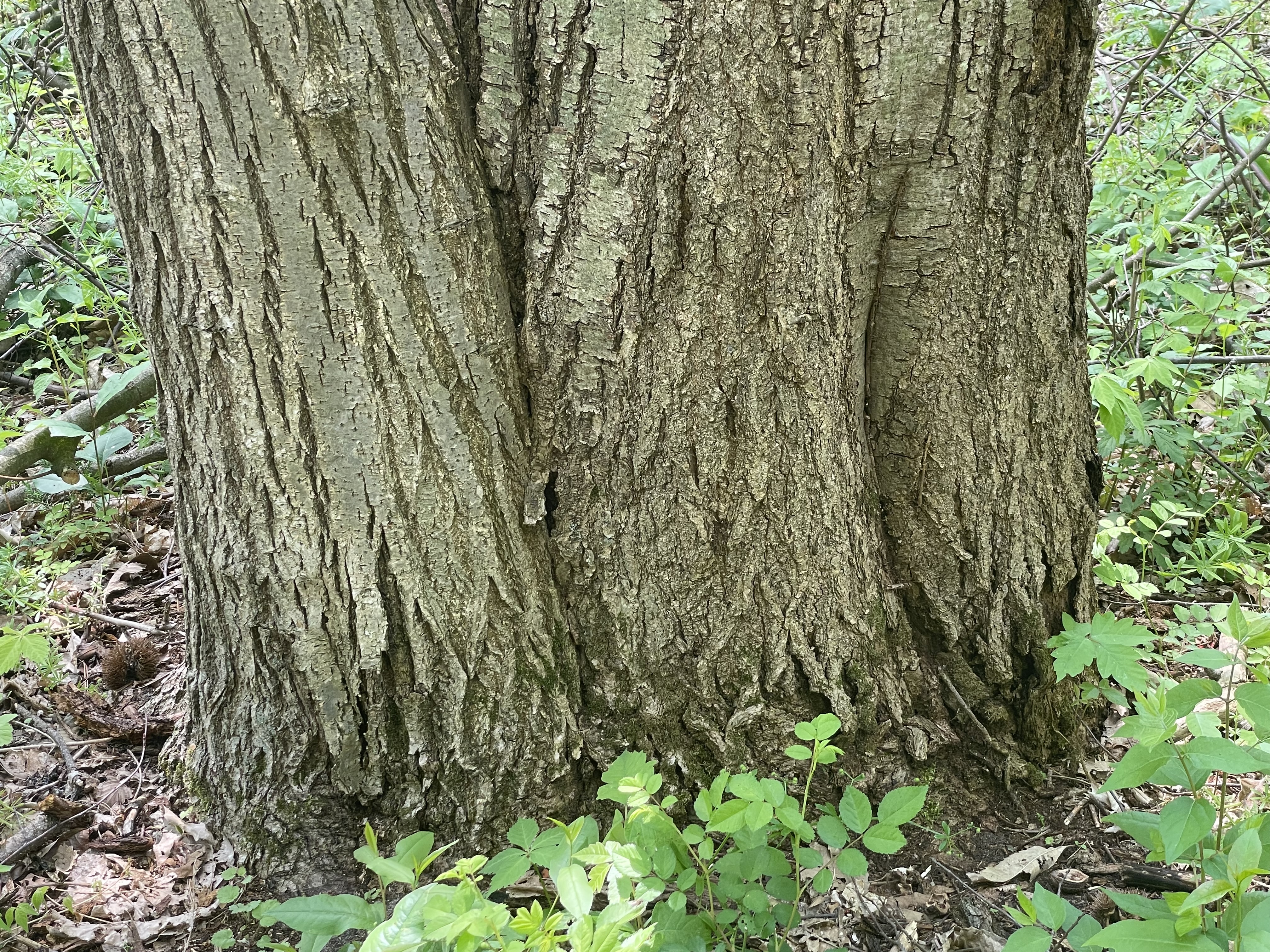
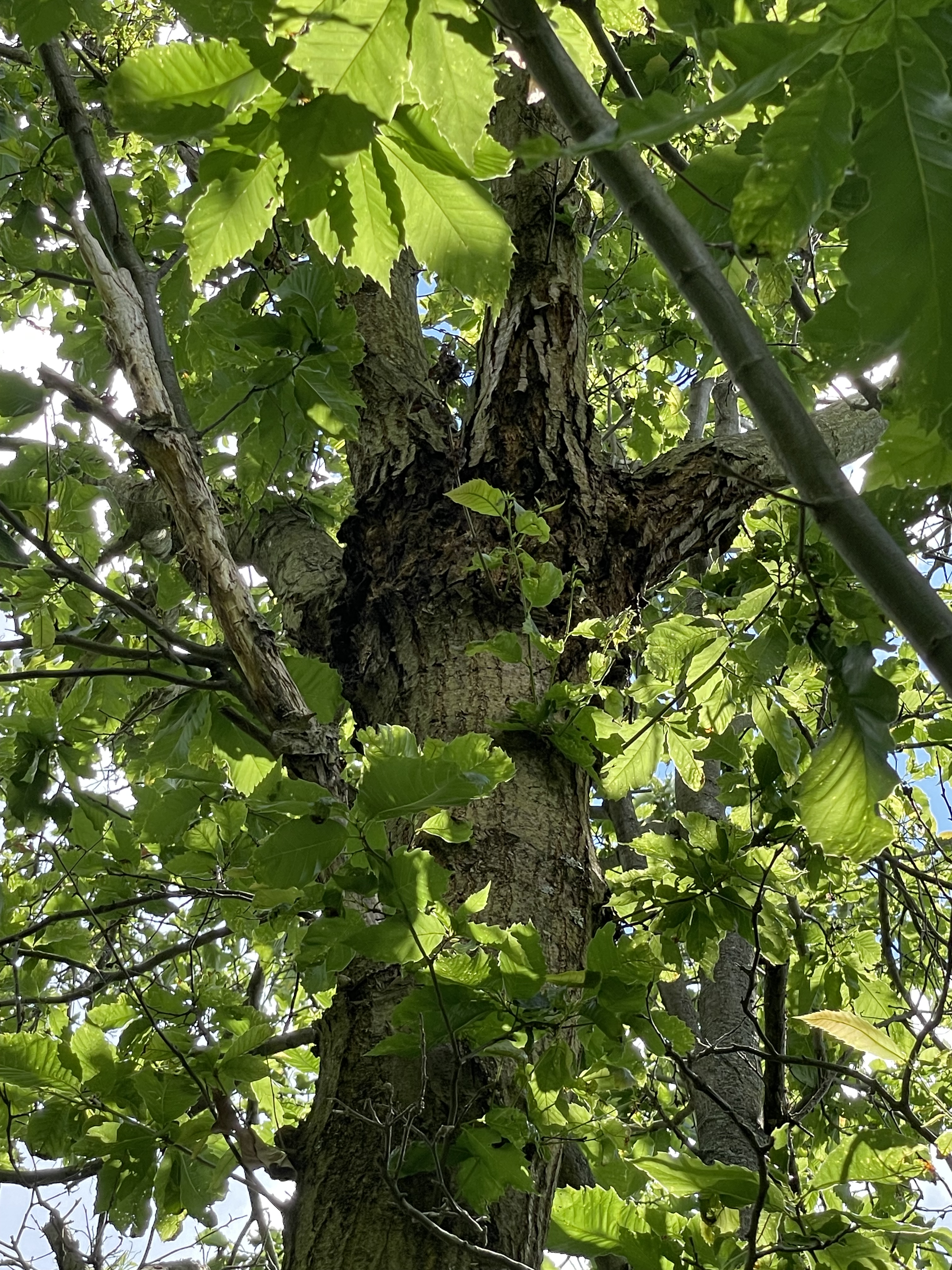
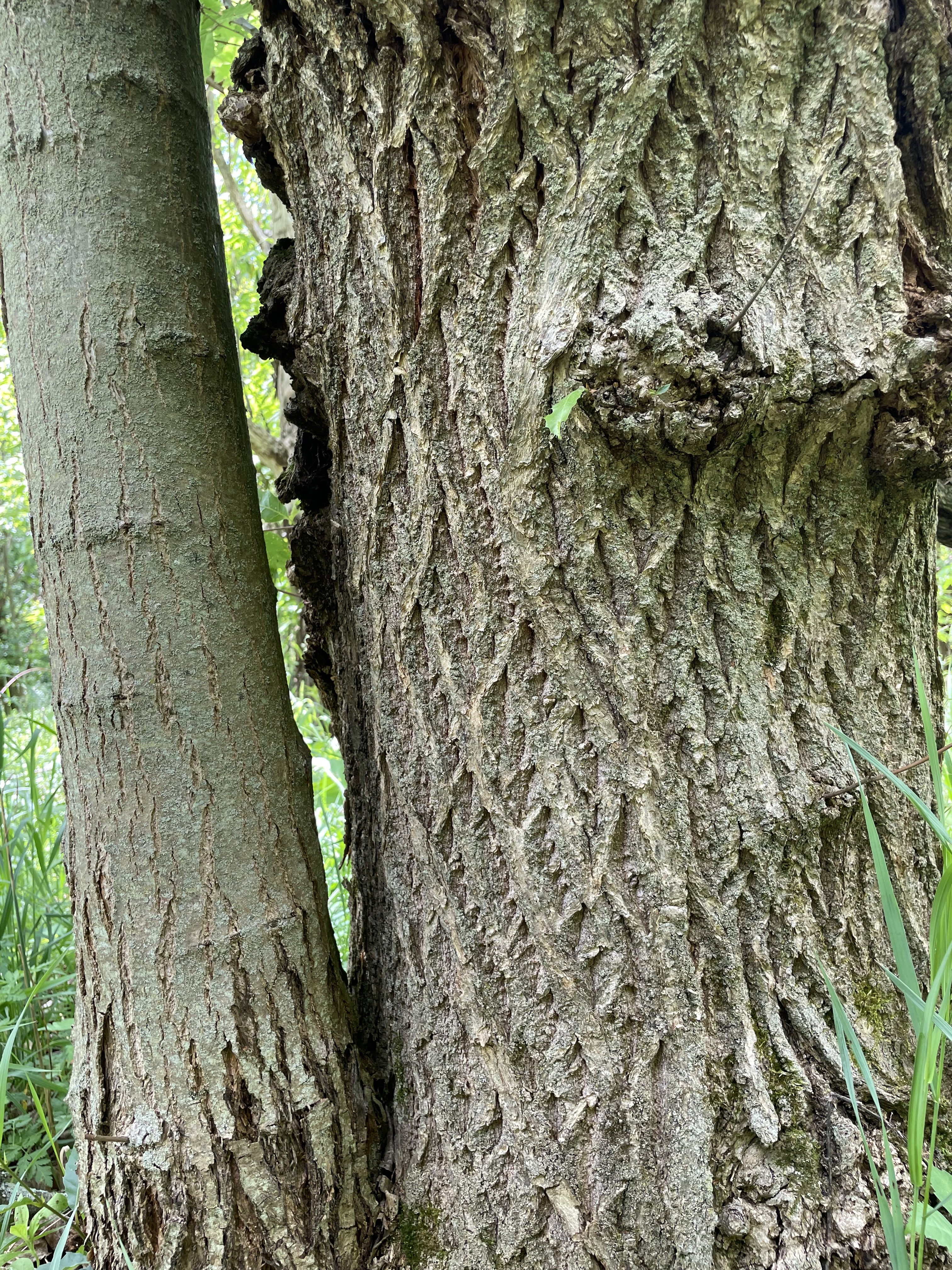
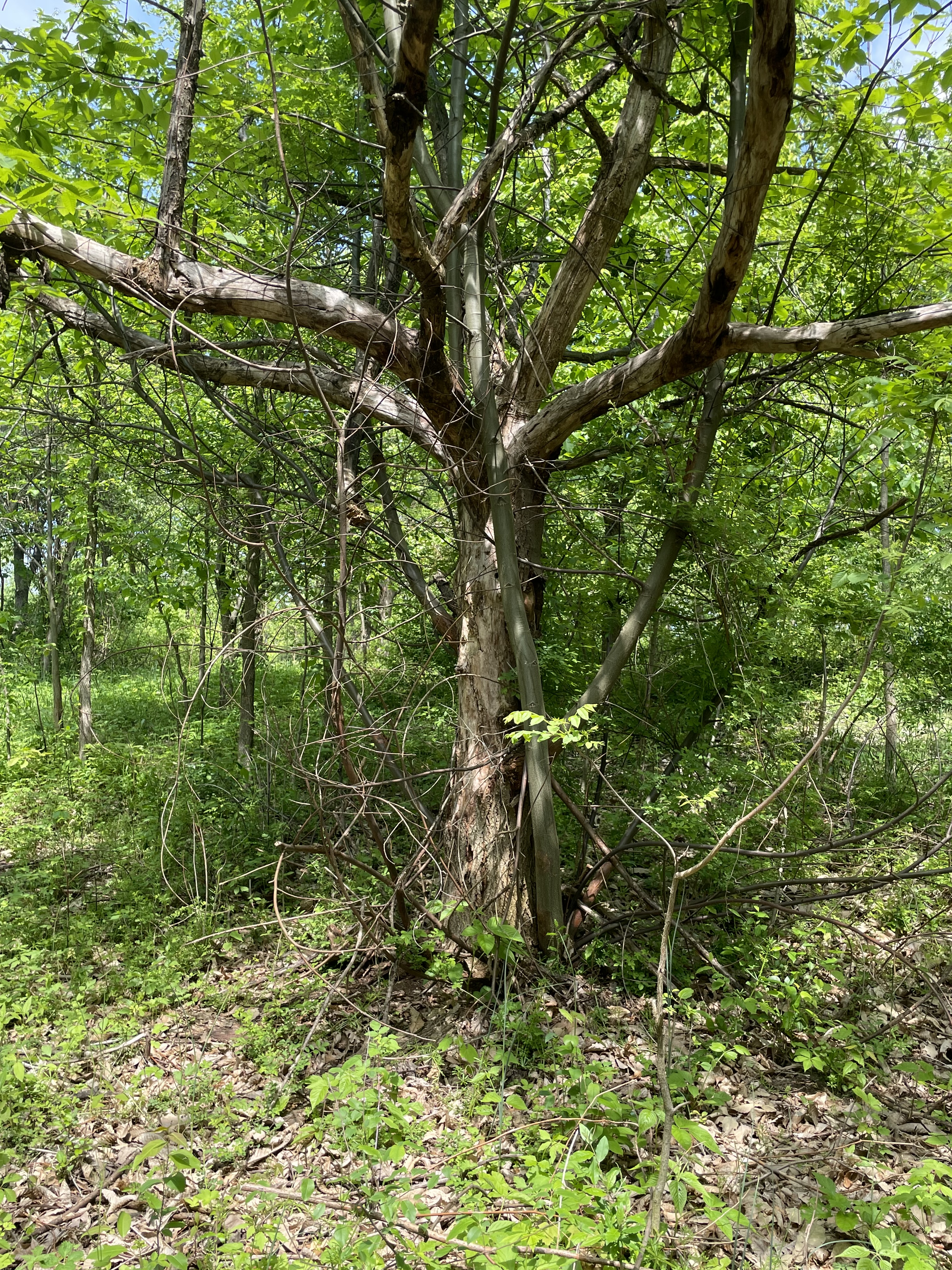
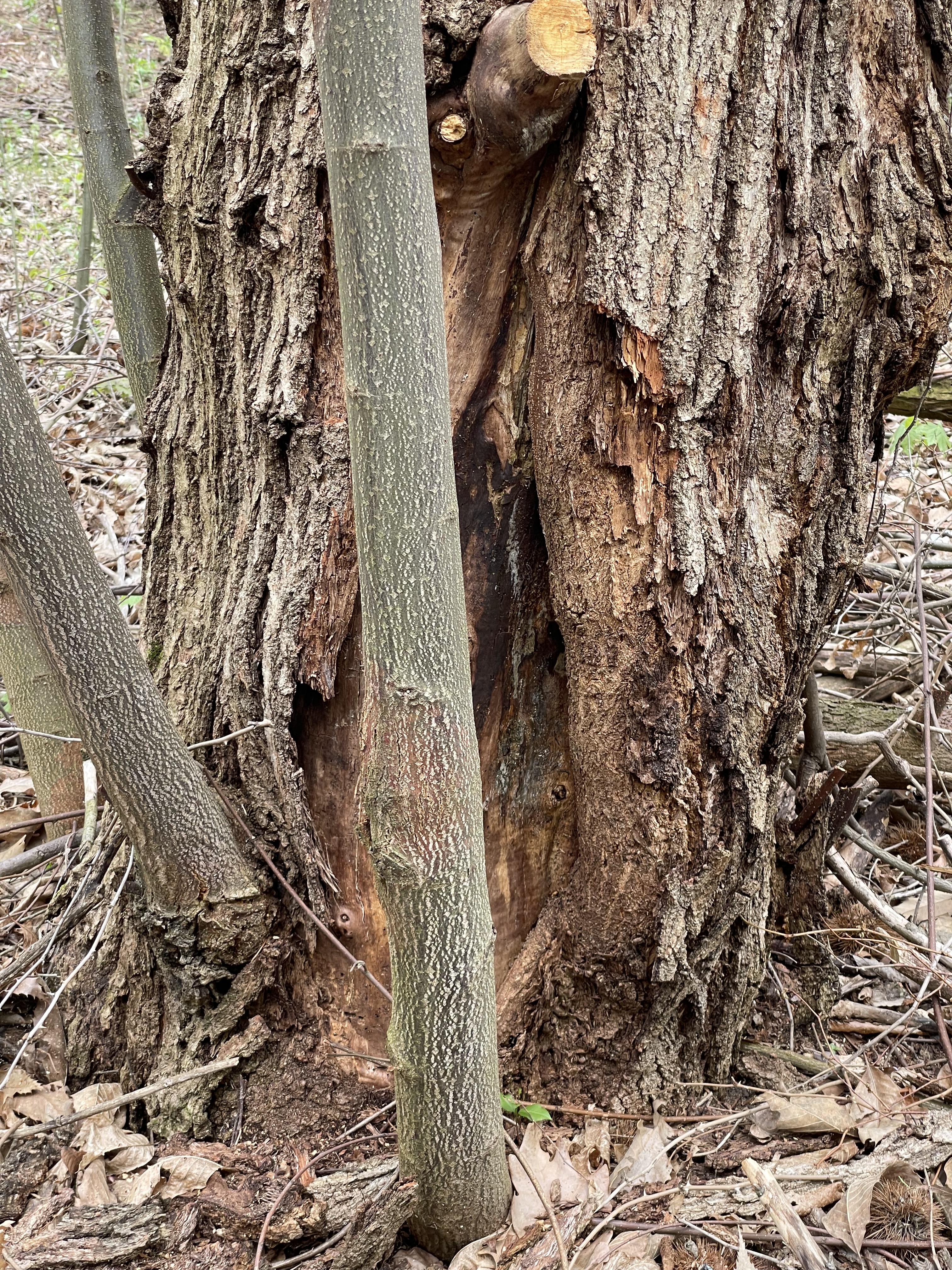
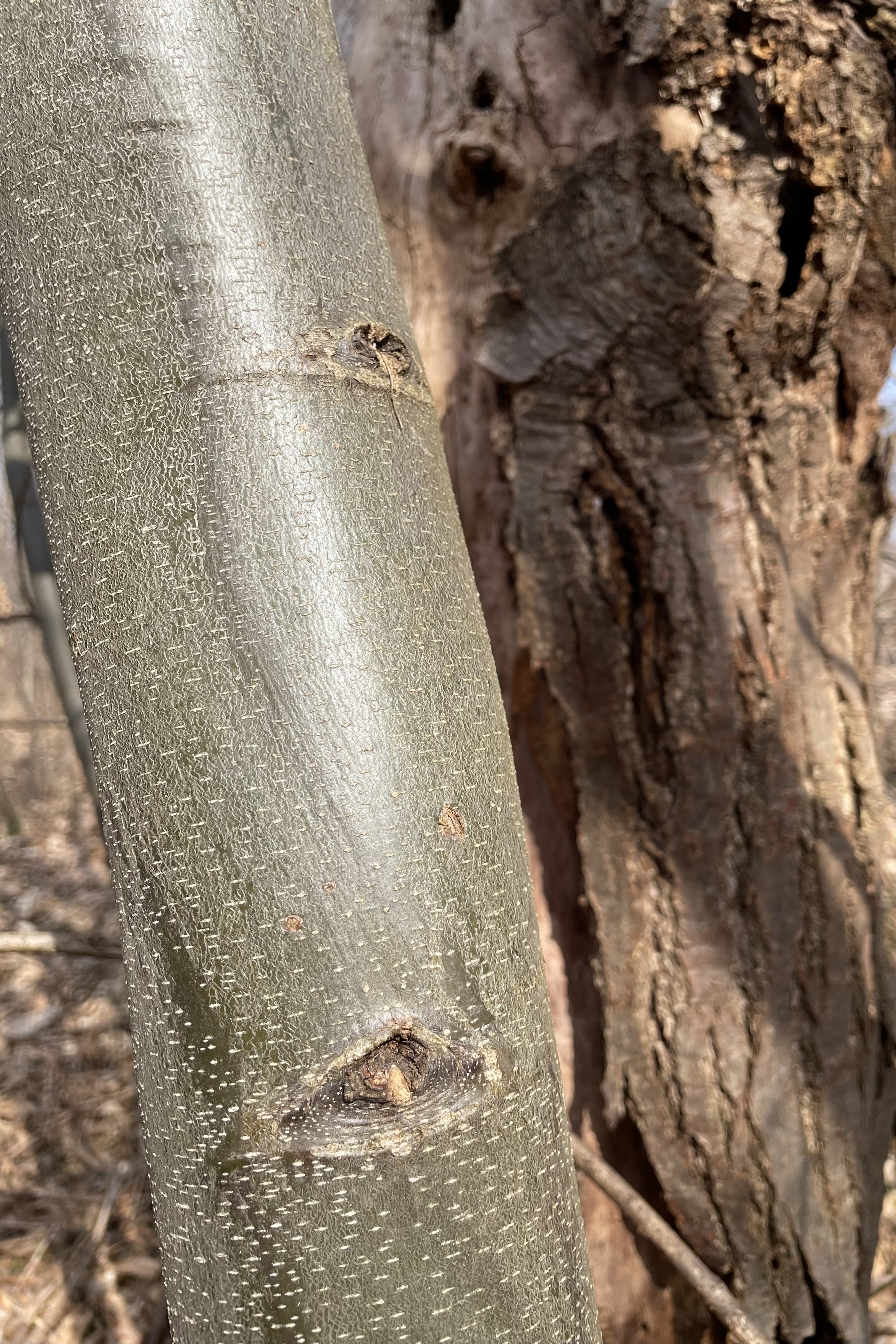
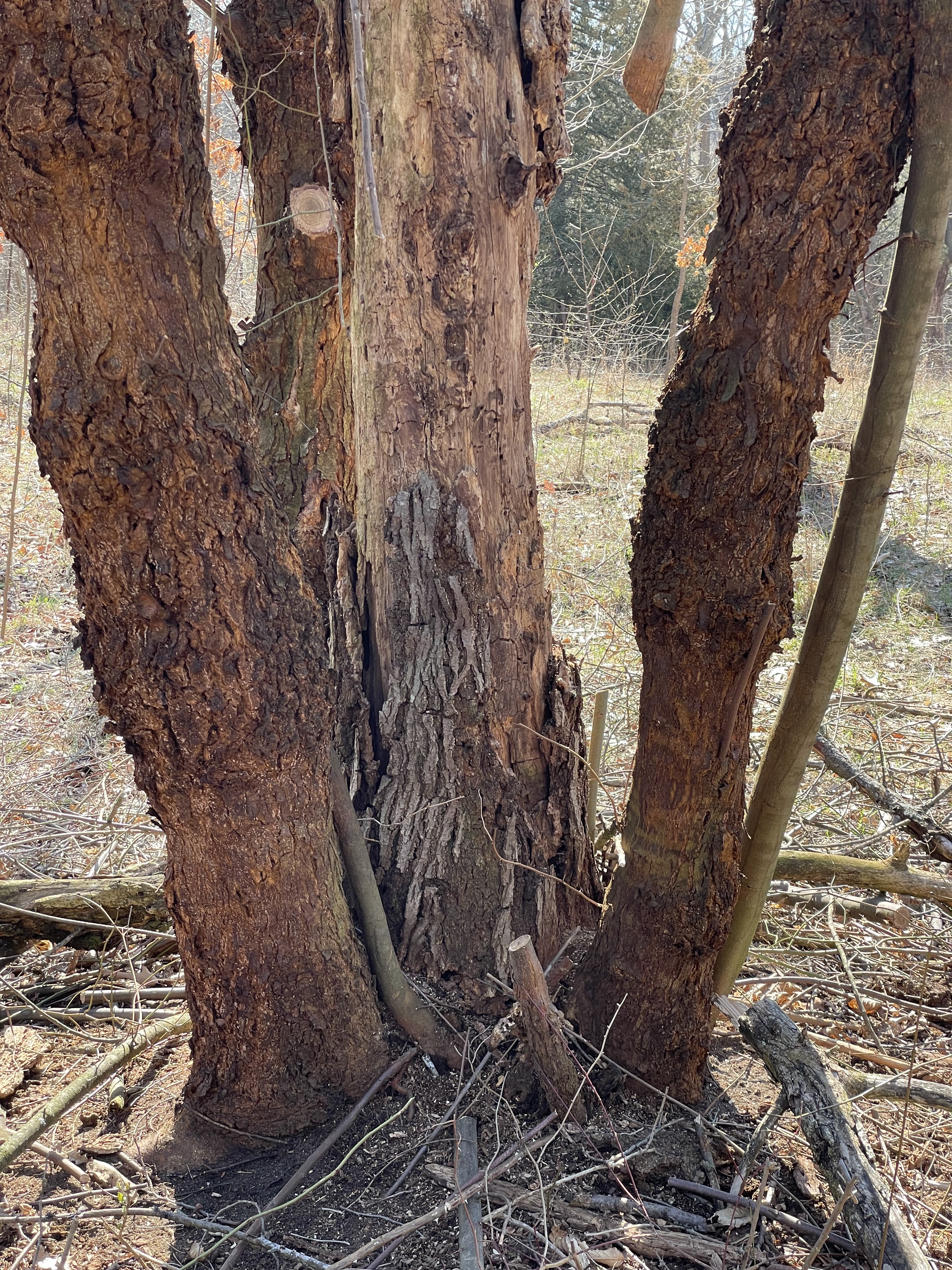
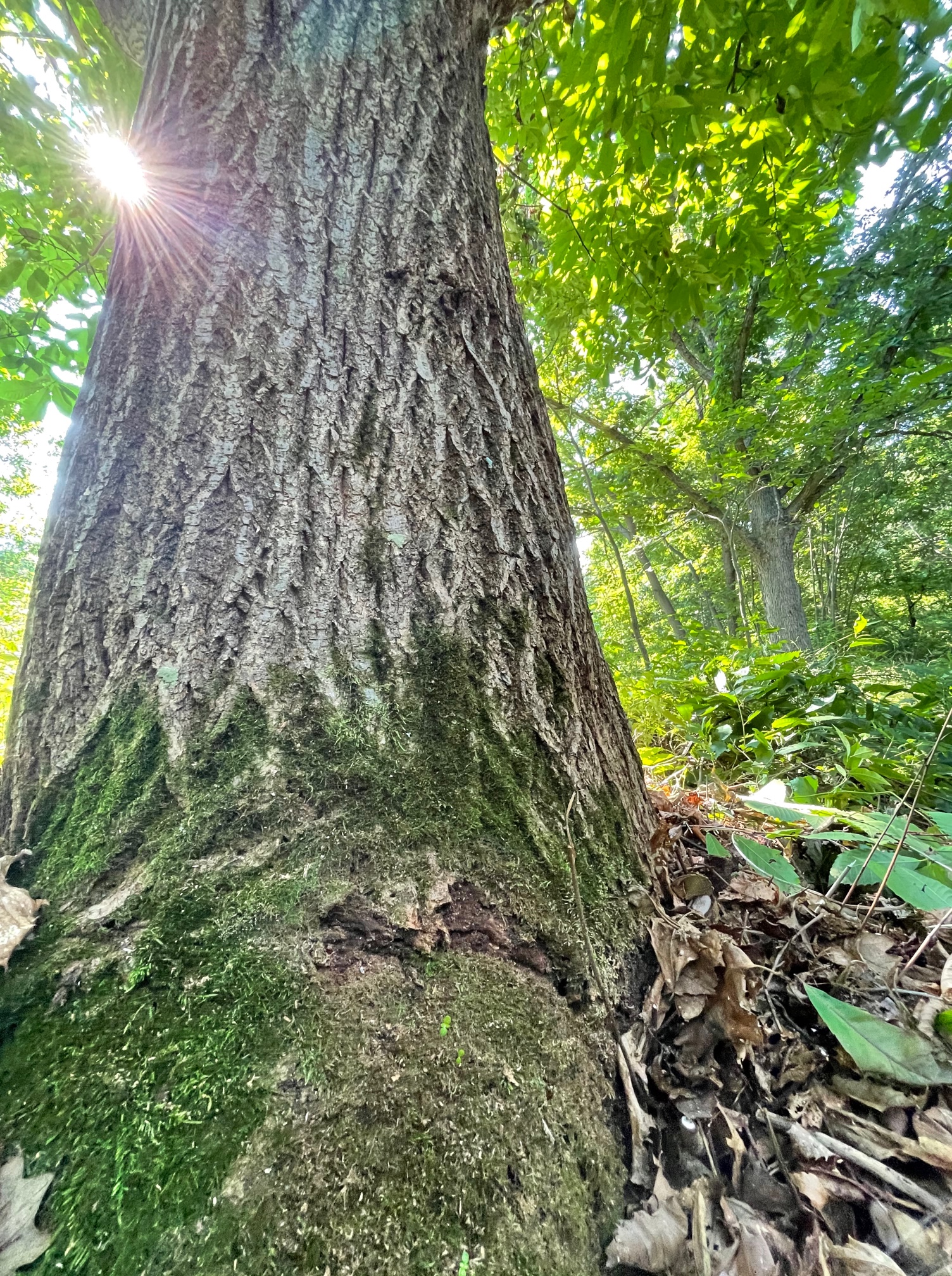
There are two individual trees here fused. The large tree on the right is “Viva” and on the left is a seedling cross of European origin. It was planted much later. I had the thought the Viva tree would die much sooner so I stuck in another seedling in a 2 foot Tubex shelter. It did not. Viva produced very few nuts but had phenomonal progeny many of which have grown around it. Some are even more resislent to blight than the parent plus way more vigorous than the parent. That one responded remarkably well but today needs pruning. Chestnut blight like this on a wonderful seedling is just too much for the tree to withstand. I cut this tree down flat once before. The sprouts did fine for a while but the disease engulfs the tree to the point it quits producing nuts. I kept three sprouts. They look spectacular for a while. I save the trunk for woodworking projects. A chestnut tree can regenerate from its base. It started as a sucker which I pruned upward and trained to grown into the crown. The crown on this tree was suffering a bit with blight but did produce nuts. I kept this sprout only because I know the trunk is beginning to break down a little and I thought it could add to the canopy in terms of its yield potential. Some trees are so infected that you cannot do anything really. This was a very nice tree near the Viva tree. It took a good twenty years to really get hammered by blight. I don’t remember collecting nuts under it, however there is some nice walnuts, pears and a few other chestnut growing under it. There is one sprout that is just fantastic. I will take the tree down, harvest what wood I can and try not to touch that pristine sprout. I will create a certain pattern with the dead wood as a form of mulch for the living trees underneath as I bring them into the light. I definitely will keep that walnut which is from my farm of improved selections. Sometimes I dig up the shells under them to see which parent tree it came from. Every now and then I do a clean up in that I remove what I feel are limbs that are engulfed with blight but have cleaner branches to take the excess vigor. Here is one of them. It was sprout under a tree and I would just remove the top of this sprout which obviously looks like it is on fire. Not much you can do except prune and wait. This one will likely callus over quickly as the whole tree is quite strong.There comes a point where a few sprouts is enough to save a tree from extinction. Here you can see the thick callus on the parent trunk. Yet looking over everything, I am not sure this is saveable other than wood for turning or woodworking of any form. The top is a mess and the sprouts are weak overall. The seedlings nearby have also died and there appears to be no future progeny from it. I have other trees in the area now that are filling the canopy. Removing this tree entirely is probably best. I will keep those sprouts just to see what will happen. It will not likely survive long as you can see some blight settling in on the sprouts already. This particular tree was a heavy fruiter and likely a Layeroka seedling or other European cross. Th. Recently a callused over large branch fell in a wind storm. It was weak and the majority of the tree just droppped off. This is just another normal day in chestnut land. Callus will not be enough here to make the tree successful long term. It is interesting in how long it took for the sprouts to form. Part of that was due to the major trunk still providing nourishment to the top of the tree. As long as that exists sprouts were very slow to develop.This shows you the new replacing the old. This image alone is my challenge with removal along with what is going to be the future chestnut orchard. For that I hedge my bets on new seedlings at a four to one replacement ratio as well as new plants that naturally seed in from my surrounding tree crops. Each area is different. By and large the new generation is fantastic.Here is something I did early on. In one larger seedling Douglas hybrid American planting I looked for chestnuts that looked a lot like the American chestnut unhyridized. I did that because I had thousands growing for the mail order industry. These selections died quickly. This is one of those that did survive but barely.This scenario has played itself out in a surprising way. The blight itself caught the blight and was weakened. It is still there but this time the trees callus engulf it to the point it can regrow around it and it can reproduce from seed. This tree is quite productive. The blight has disfugured the tree but this is not much of a concern of the tree as it squeaks along. Here I am going to prune down the main dead tree and maybe one of its sprouts. There was a lot of understory sprouted from birds dropping seeds and squirrels carrying nuts under the tree. I will save those. We did a planting nearby of which most also did not survive but a few have insane amount of vigor and apparent immunity to blight. This type of tree is on the edge of survival and the callus is impressive. It would not be a tree someone would desire as a blight resistant tree and probably most people would give up and cut it down entirely. The nearby seedling trees look very bad however there is one tree we planted next to it that looks absolutely spectacular and highly vigorous. I guess it all creates a sort of inspiration in the genus of Castanea for me. The “Grant” tree represents a European and American cross. It has huge amounts of dead limbs in it. I will hire a climber to clean it up. It is quite a mess really on top but the main trunk is off the charts in terms of size and health. From northern Michigan, ‘Grant” produces few nuts. I did keep a few of its progeny nearby and they are looking very healthy and vigorous. After wading into this disease prone genus, I wish the Grant tree on everyone. This has the largest caliper and is over 30 inches in diameter. It sprouts like mad which I removed to take this picture. I plan to keep the tree alive, prune it and try to harvest the nuts again. The progeny would be very good in this area. Wait. I think hear the chain saw. More woodworking projects and of course health to the chestnut genus at my farm. I know there are other trees that have crashed and burned nearby and this tree is a survivor. One advantage of real life existence is that the disease is a motivator of sorts moving the whole population away from sickness to health. Even the disease weakens over time. This shows how complex and effective a population of any given plant can be. It will do it faster than you know.
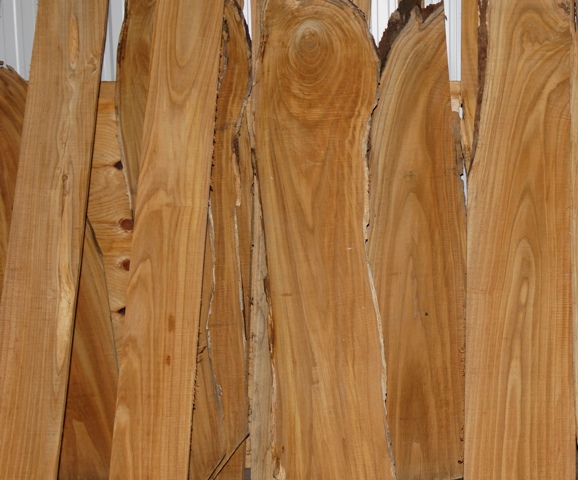
Hybrid American chestnut wood from my farm. It’s light, easy to work and will help me create beautiful furniture. Nothing is wasted. Everything is of value in nature even if it is not in our vision or understanding.
I started a farm in the early 1980’s called Oikos Tree Crops. It was once a 13 acre pasture and with the help of many worldwide plants became a forest. Today I am dedicated more than ever to finding, preserving, creating and disseminating a wide variety of food plants via seeds that I harvest at my farm. I explore new plants and healthy ways to raise them. I currently focus my attention on my seed repository while providing seeds and bring these new discoveries to the public at large. My farm is one of the oldest and most diverse maintained tree crop plantings in the U.S. using many plants from around the world as a form of global agroforestry applied at a local level. Every plant grown on my farm is grown from seeds. I use the tree crop philosophy as a means to expand the use of perennial, woody tree and shrub crops raised from seed without the use of chemical and high energy inputs.The two story agriculture is alive and well at Oikos Tree Crops. This blog highlights ecological enrichment as a means to improve human health and raise awareness of the possibilities of creating a healthy earth and a wealthy farmer. My story is told by describing my 50 years of farming and life experiences surrounding agriculture filled with my love of nature and my constant search for a greater diversity beyond the cultivar on a global stage.



 biologicalenrichment
You must be logged in to post a comment.