Diversity Expands In Novel Ecological Ways
If you look at all the different systems of growing food, the plants used in human designed systems cannot regenerate on their own and go in what could be called creative directions outside what the original human intentions were. There is no improvisation allowed. You stick to the script of rows and uniformity. Unfortunately, the “you just can’t let everything go roughshod over your land” philosophy is alive and well. Once in a while I’ll tell people to run away from this. Few listen and collisions occur as people follow the ecologically misguided. I’m here to say that not only can you let everything go roughshod, you can help let everything go roughshod in a way that also benefits your objectives. You do this by being a facilitator not a destroyer while improving the agricultural crops you feel most passionate about. Let me show you an example at my farm. I promise to improvise.
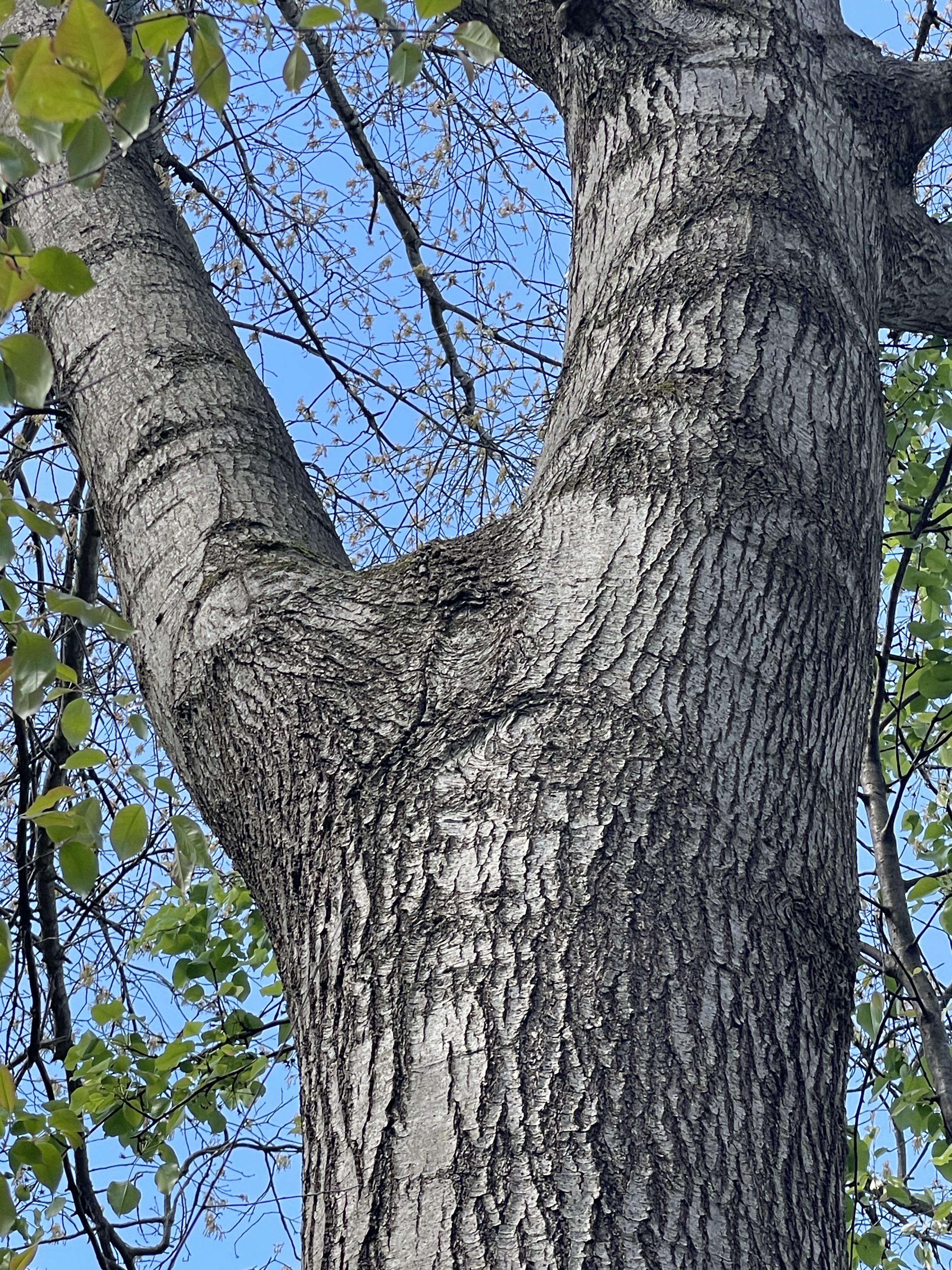
When I first started my farm, there were several established ten-foot-tall black oak trees surrounded by a thick grass pasture. As time went on, I removed the lower limbs of the pasture oaks to allow more light to penetrate the canopy and make the tree grow taller and have a clean branch free trunk for the first 24 feet of height. Eventually I added a screech owl box attached to the first branch. Below is the crotch I had the box attached to.
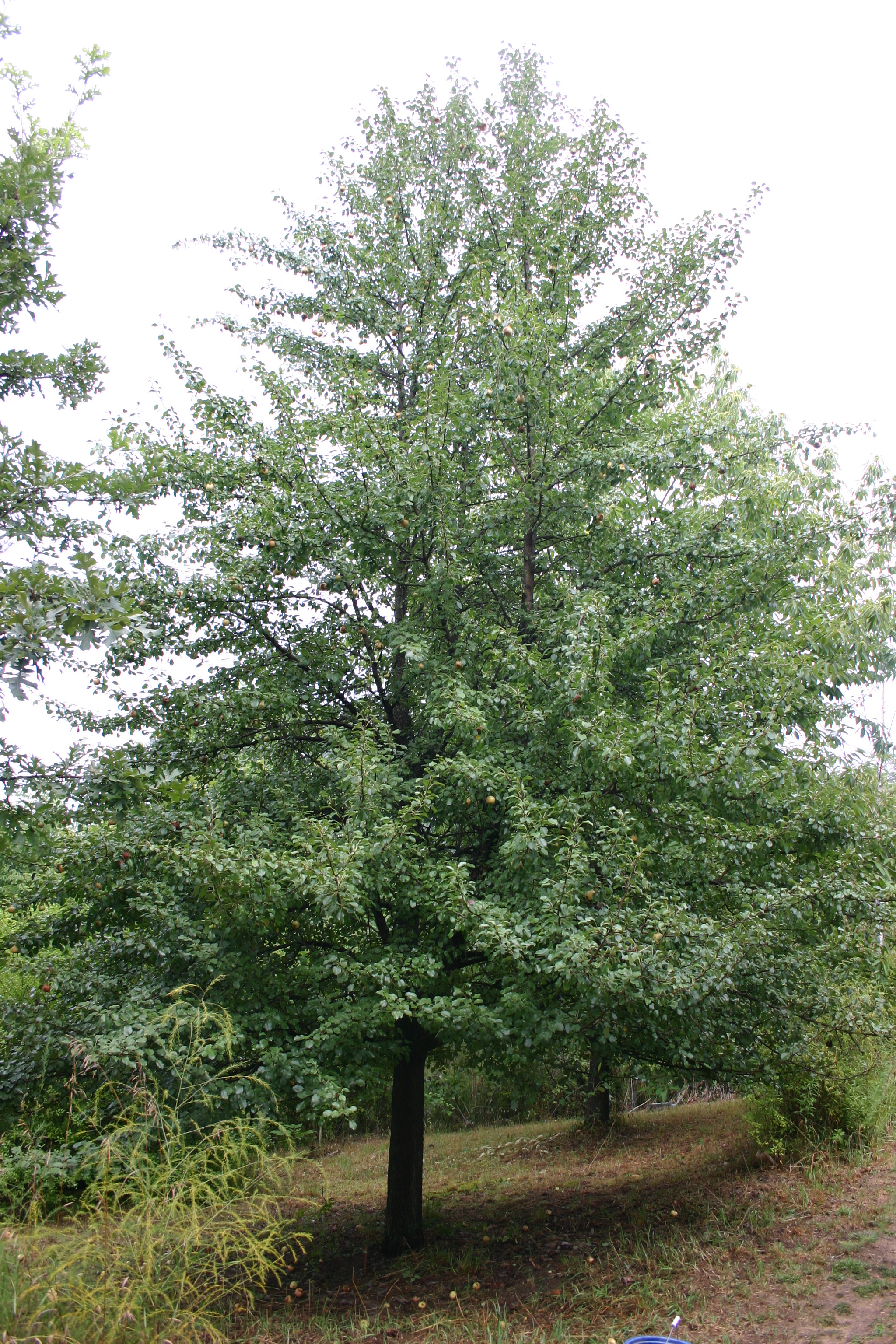
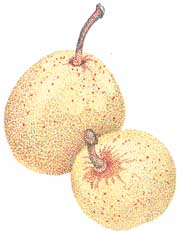
In the early 90’s, I planted a grafted pear cultivar called Stacy pear about 60 feet away from this tree. This pear selection from Stacyville, Maine was a 250-year-old tree known for its fruit quality and hardiness. It was a mammoth pear tree reaching 60 foot tall in a full zone 3 hardiness. It had been through some tough winters which is not far from Mt. Katahdin. I purchased it from St. Lawrence Nursery. Today it is available from Fedco Seeds in Maine called the Stacyville European pear. The tree grew well and fruited lightly a few times before several blistering days over 100 F made fire blight very active. More than half of the crown was destroyed. Apparently this is a common weakness with this selection as well many other European pears.
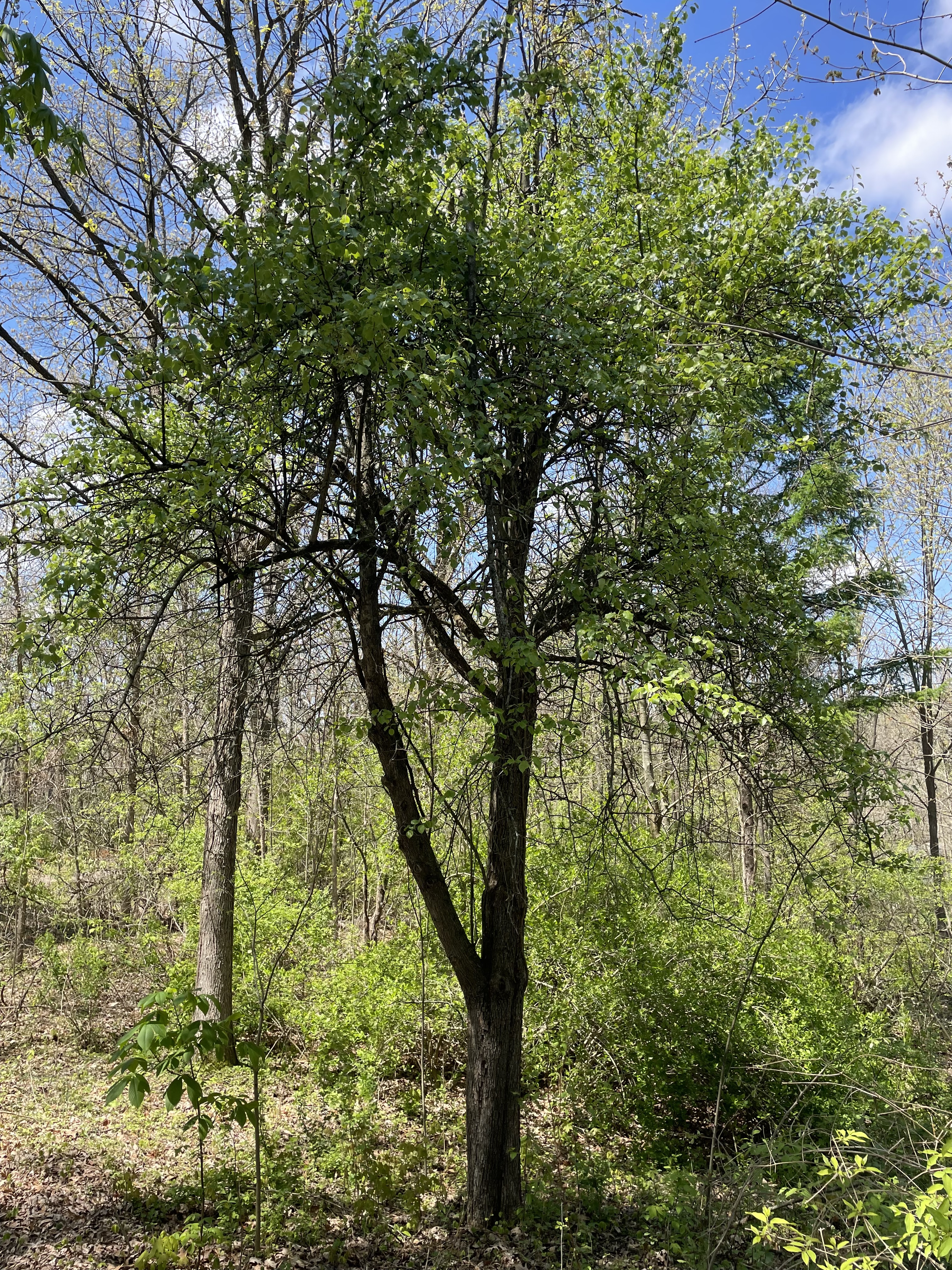
I really liked the history of this tree and felt it was important to continue the legacy but this time through its diverse germplasm from seed. I began the process of collecting the seeds and growing their seedlings. Funnily enough, this same ‘idea’ was happening without my knowledge under the black oak tree. It became a favorite place for squirrels to haul pears up the trunk and consume the seeds of the fruit. They occasionally eject full seeds with the fruit which then gets covered by deer stepping on them pushing them into the soil and covered by leaf litter. It also appeared the fruit was getting moved by raccoons. Everyone loved Stacy pear! Eventually, I was able to produce a couple of dozen seedling trees in my greenhouse and selected the most vigorous trees for my planting. During the winter months while doing pruning I limbed the black oak pears upwards to prevent deer browsing. Today they all exist as 30-40 foot tall timber like trees as a component in a mixture of pawpaw, bitternut hickory, Montana yellow fruited American cranberrybush and hybrid chinkapin and swamp white oaks. The pears’ characteristics combine immunity to fireblight, fast growth rate and heavy fruit production. There is no practical way you can spray them as the fruit crop is high in the canopy. The idea was they could also double as specialty wood producing trees for musical instruments if the planting is thinned or when the trees die as well as delicious fruit. Grafted cultivars could exist for timber and fruit production. This wavy line of fruit versus wood is more apparent in some seedlings and has yet to be evaluated and selected. I’m just happy I was able to take part in the Stacyville legacy which took me only 30 years. Things went roughshod very nicely.
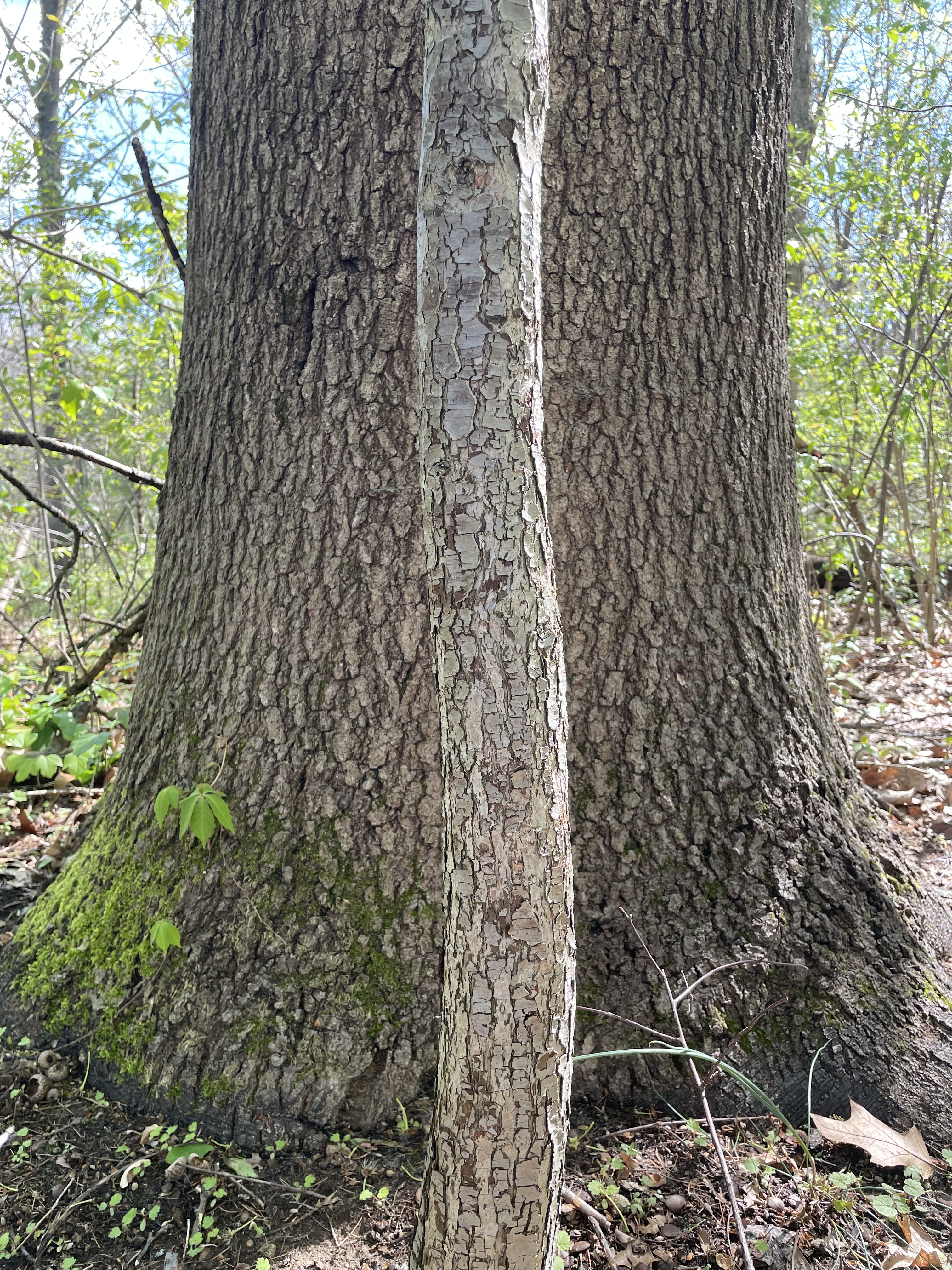
The last step of this tree crop biodiversity equation is preservation through dissemination. It does no good to be locked into a collection or a botanical garden where it is “look but do not eat”. After 250 years, it is time to move on outside of todays orchard environments. Stacy leads the way. I’m a big follower. Join me.
Enjoy. Ken Asmus


You must be logged in to post a comment.