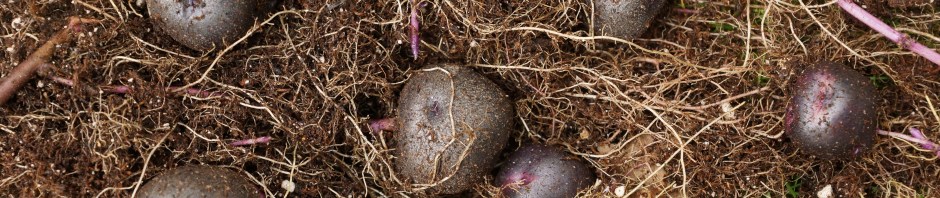
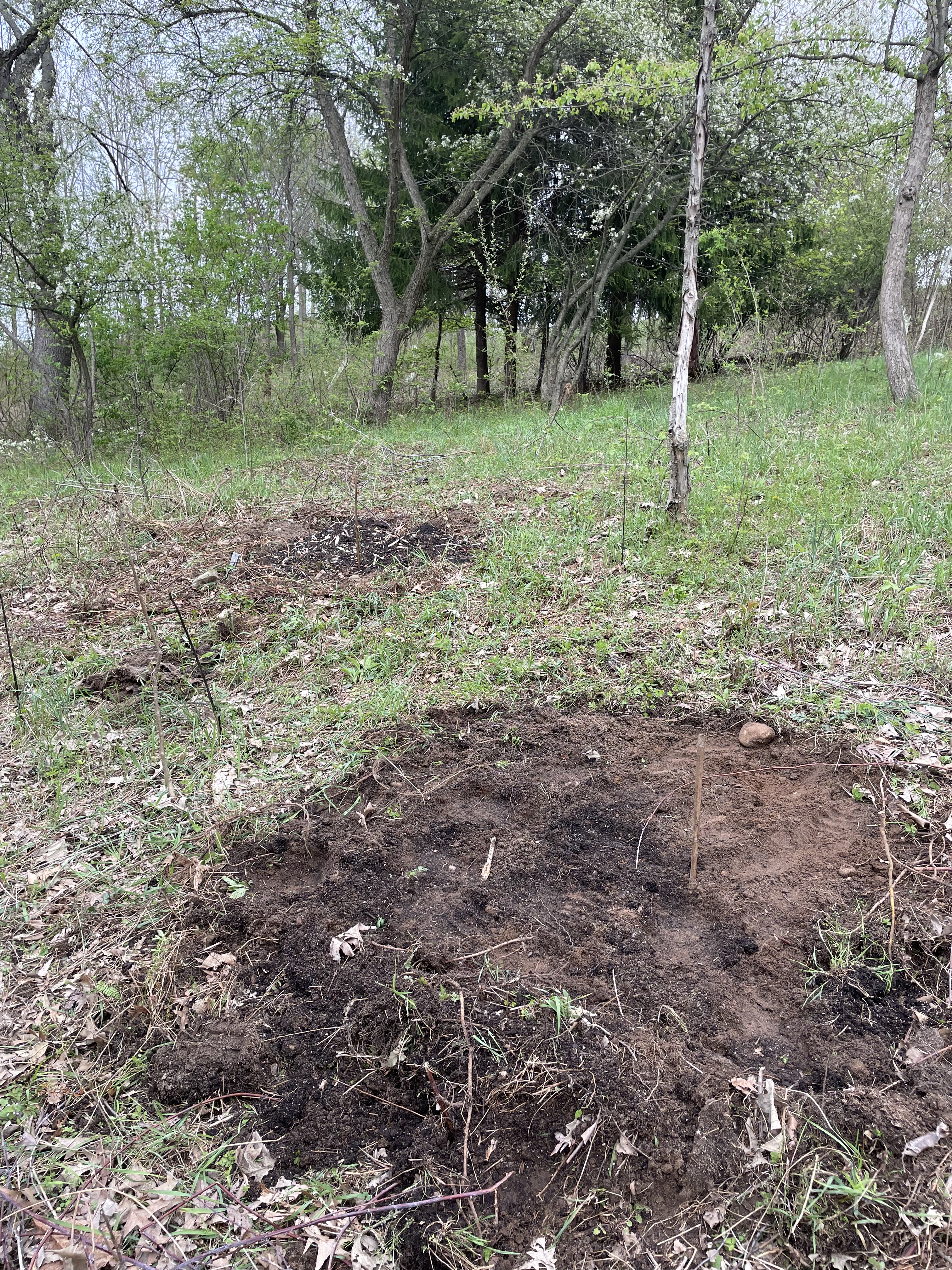
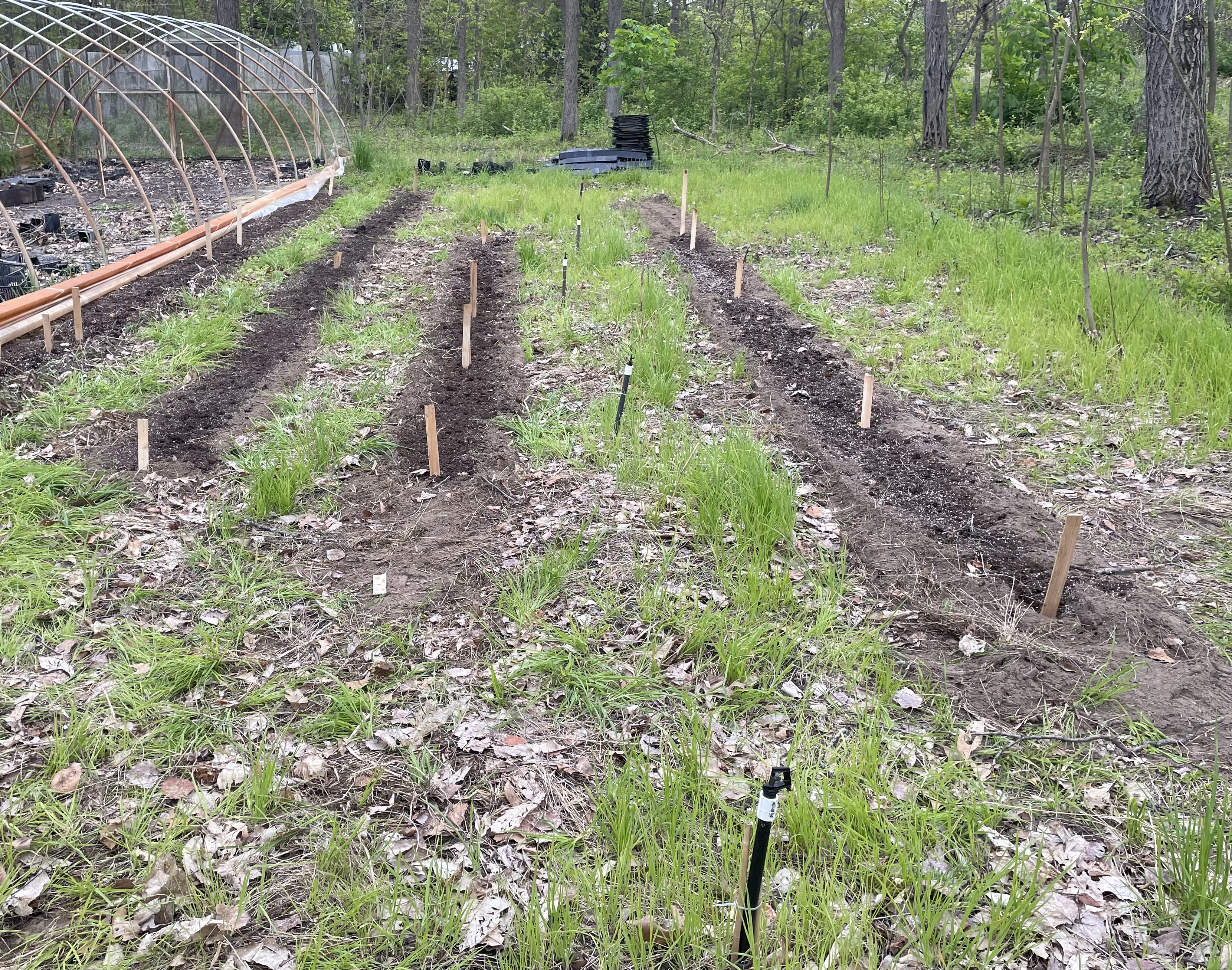
The above image is my ongoing wild potato release program for the feral potato. I’m trying to create a mini-potato oasis in the middle of a field. Eventually you have to let them go back to the wild. As you know having potatoes around the house can be dangerous if you keep them too long. I’ve done this type of planting many times before over the last couple of decades. Every now and then I proclaim I have figured it out and landed in the potato fields of gold. Yet I no longer give the individual selections proper names because I don’t know long they will stick around. Now I use the impersonal alphabetic method and call them all “Quantum” borrowed out of a physics 101 textbook. That way I don’t feel so bad if “Bob” or his potato friends die. (Which by the way they frequently do.) I just tell them they are returning to infinity where nothing is lost. We go along with it for now. The alphabet like a neutron star will likely be around for a while. Bob… not so much. This year I went from A to M each of which was grown from true seed, produced by a fruit and is genetically different. “Bob” comes from a long line of healthy potatoes completely cut off from commercialization. He is super productive, yet I hear he is searching for new real estate to reestablish his roots. This is what he told me so far.
“The definition humans use as wild is not that wild. My home is were you plant me. This is my nativeness.”
There is no breeding back or back-breeding to wild. There is no back door to creating wild through extreme domestication by crossing wild potatoes. This already exists in the potato. It keeps its genetic background “quietly active” until new conditions present themselves. This is where you will see things that have remained dormant for centuries. That is a super power besides feeding billions of people as it quietly rests as we all move along this evolutionary trajectory we are on together.
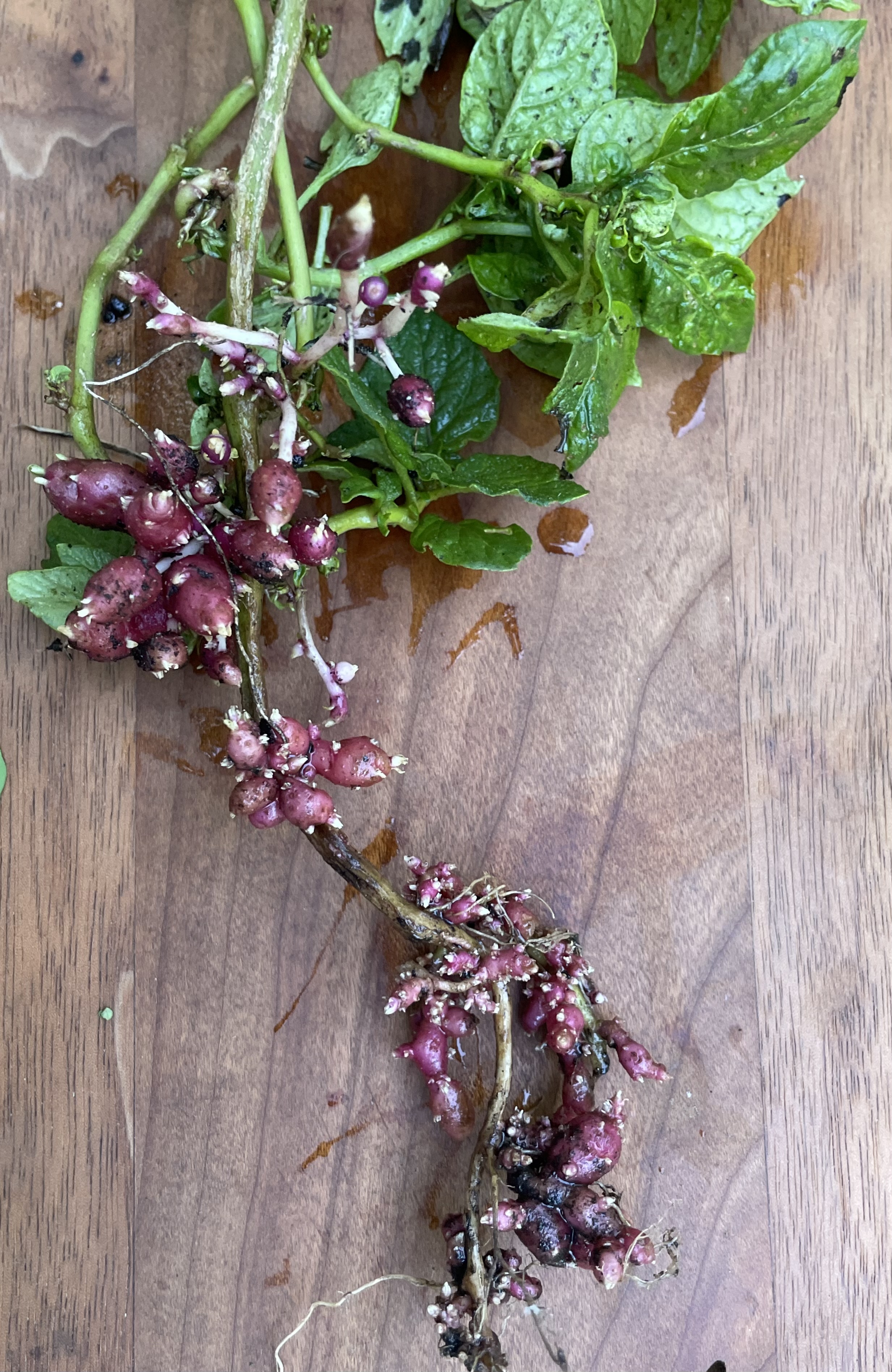
It finally dawned on me that I needed to expand the range of the species in different soils and locations throughout my farm to allow the plants to flex their genome. I create my cute little mini-potato oasis in the midst of grass, dewberry and trees. The colony is now 15 selections all genetically different growing under oaks, walnuts, hickories. This is the wild today. It’s not that wild yet wild enough to be called wild defined by once planted, it is left alone for at least two years. There is no weeding or spray but I have been known to pitch chicken manure on them in the early spring the second year. The idea is to create conditions favorable to the plants yet not too luxurious. You want to see what selections will fruit and what selections will remain alive and thriving as a perennial potato in a cold climate similar to the Jerusalem artichoke. The goal is to have self-reproducing colonies able to grow amidst other plants and left to go as a source of future potatoes. Some could join the greater commercial potato industry but that is not a priority. This time the potatoes much like the feral honeybees resistant to varroa mites found in southern California are able to fend off insects and virus in a way no domestication program would ever work. It is effortless and does it without the plant breeder. Home free. It’s wild out there.
Enjoy. Kenneth Asmus


You must be logged in to post a comment.