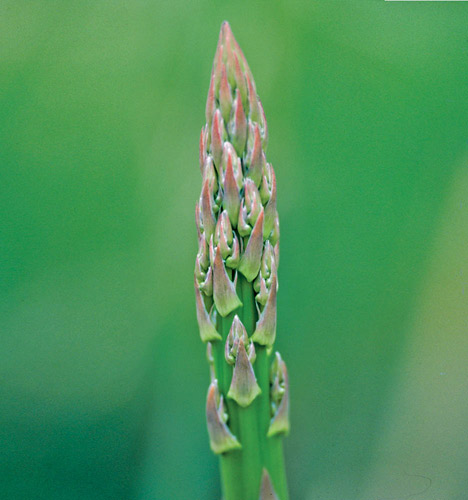
For many years I was on the hunt for wild asparagus seeds for my nursery. I needed asparagii but only from seed. Not far from my nursery was a real life asparagus nursery which was 100 percent clonal. The asparagus industry is very specific in its varietal selections. Seed production is the opposite as only male plants are cloned. My idea was completely out of the loop. I was on the horn making calls and writing letters that required stamps. Asparagus seeds were hard to come by. In the meantime, I went Euell Gibbons “Stalking the Wild Asparagus” and collected wild seed in my area. I didn’t have to look far because I live in an area that produces commercial quantities of asparagus Because of this you will find wild asparagus along the roadsides the same way you would find wild sweet cherries. I had several very nice bird plantings of it at my farm. I grew the plants from seed and sold them as the ‘Very Wild’ asparagus. One of my farmer friends down the road brought me some beautiful five foot tall stalks filled with the bright red berries. The plants are either male or female and finding female plants with heavy berry set was not as easy as you might think. There was a fairly large bird dropped repository near a highway off ramp that I was eyeing but the plants were mowed and sprayed several times so I gave up that location. I heard a story of a truck driver getting a ticket for stopping along this same highway to pick wild asparagus. He too went Euell Gibbons and paid a price for his love of asparagus. Picking asparagus is not an emergency on a major highway and you can’t just stop because you found free vegetables. It was a sad day for stalking the wild asparagus.
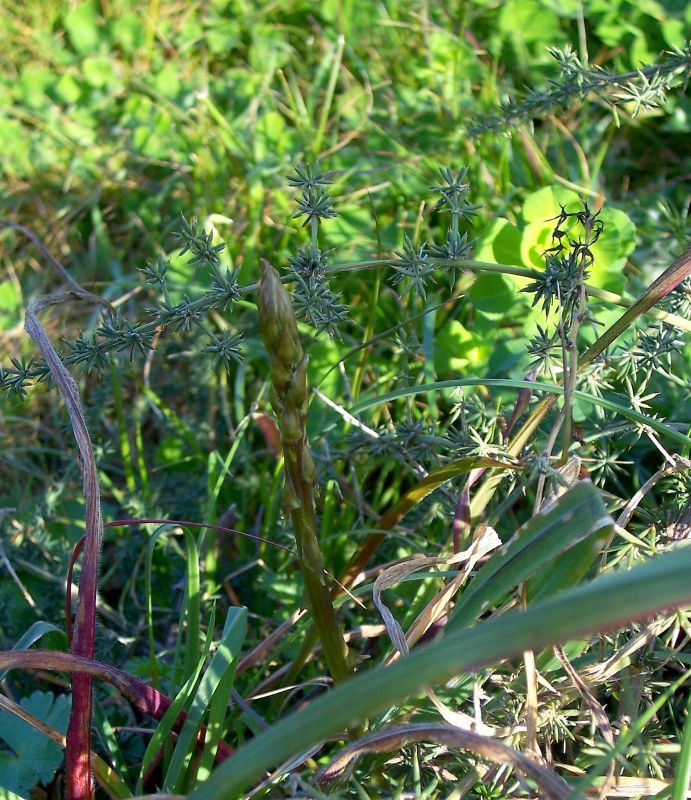
What I did find was that people around the world harvest wild asparagus. The exact species may vary a little depending on the location. It is widely appreciated and used for both medicine and food. It was the international global usage that attracted me to the plant as I began to investigate many other species and wild strains of the common asparagus. Here were a few:
Meditteranean Asparagus – Asparagus acutifolius
This evergreen species is one of the original wild selections known for its strong and desirable flavor. In Michigan it was not quite hardy enough to make it past a minus 20F winter. The Bulgarian seed source appeared to be the best. It needs a dry location and the polyhouse was not good for me despite being one zone warmer. A few plants did make it through the winter though. If I had a bigger population, I might try again. The problem lies in regulatory of which asparagus seed is forbidden to import. (It might of changed since I last checked into this 20 years ago.)
Asparageyser Asparagus – U.C. Hybrids Asparagus officinalis
These are numbered California selections and now widely available. They are grown from seed said to be disease and drought resistant. To me they were no more vigorous than my Michigan seed sources however I did not get them past fruiting age. I am currently replanting two of the numbered selections to try again. I am also planting it with other asparagus to try to make more vigorous crosses.
Death Valley Asparagus– Asparagus officinalis
This was a seed lot from J.L. Hudson, Seedsman found as wild plants in old homesteads in and around Death Valley, California. These wild populations were essentially let go to reproduce and spread. Some are over 100 years old. This type of population contains huge genetic resources for farmers today who grow asparagus commercially. I see nothing but good from these wild plants which are in the same camp as the I-94 truck driver plants in Michigan. This is a means of using valuable resources right in front of our faces where the weed becomes our salvation.
Vining Asparagus- Asparagus verticullatus
This particular species from Siberia did not like the heat in Michigan and kept going dormany early. This eventually weakened the plant to the point of no return. It was short lived at my farm. It is said to grow 15 feet tall. It too prefers a dry soil and would likely thrive in cold dry climates. I would try this again partly because of its immense size. I would love a 20 foot asparagus plant. Who wouldn’t?
Purple Dutch Asparagus officinalis
Overall this particular seed strain was very good. However, eventually some viral infection reduced it to rubble dramatically making it look like it was hit with herbicide. I’ve seen this before. Asparagus can be tricky to grow. One year you are swimming in spears and next year it is time to replant. This strain was not entirely purple. It has purple stripes in the lower portion of the cutting. It was a seed strain with potential due to its vigor and dark green healthy foliage.
Like any wild plant under cultivation, it takes several seed sources to really narrow the focus on what works best. The best way to accomplish this is to have larger volumes of seeds to create the future populations of this delicious and well known food plant. You could also create new varieties in the process but it takes a long time to find the sweet spot of cultivation, heavy yields, flavor and persistence in the field despite all the other insect and viral problems.
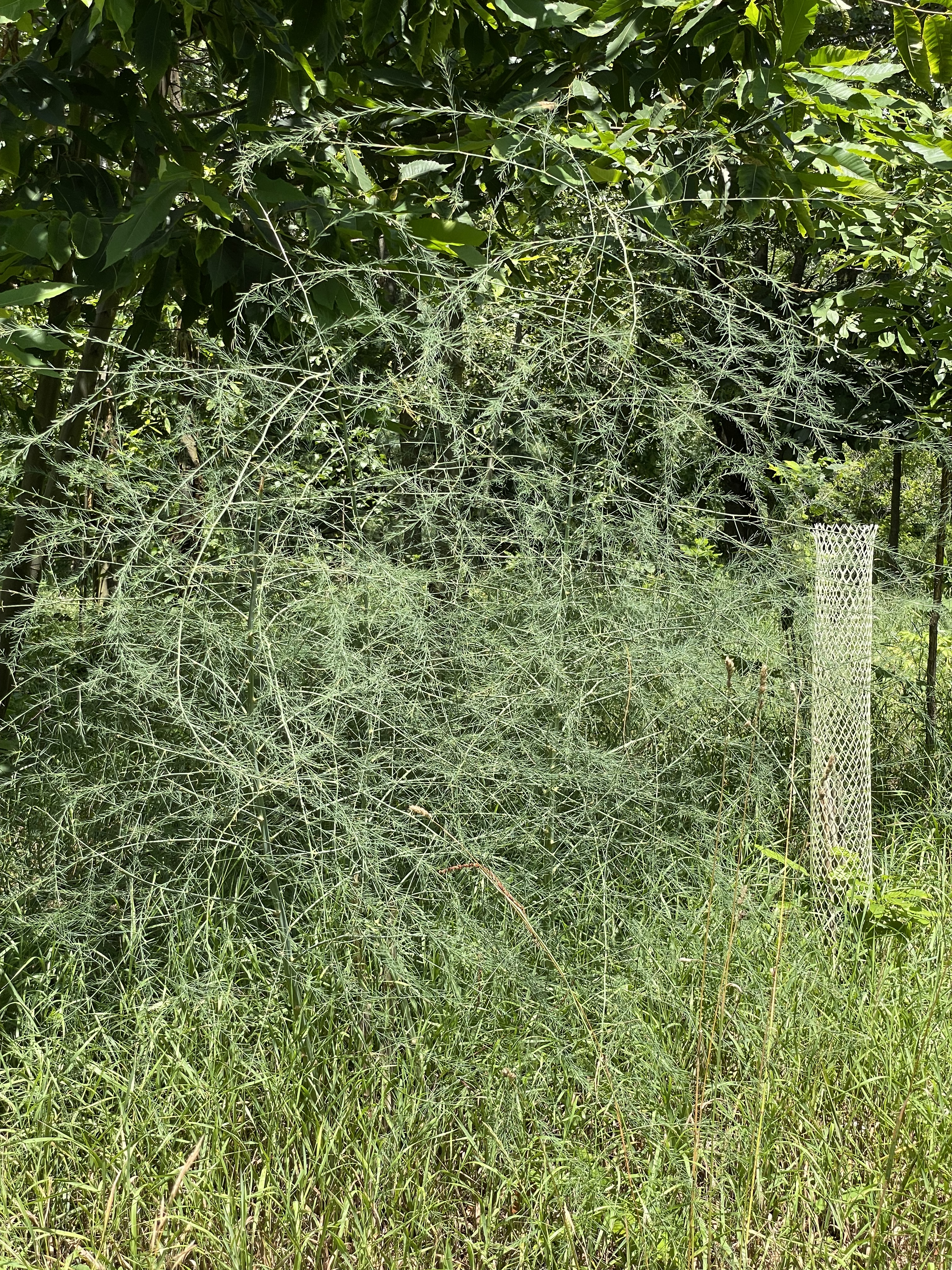
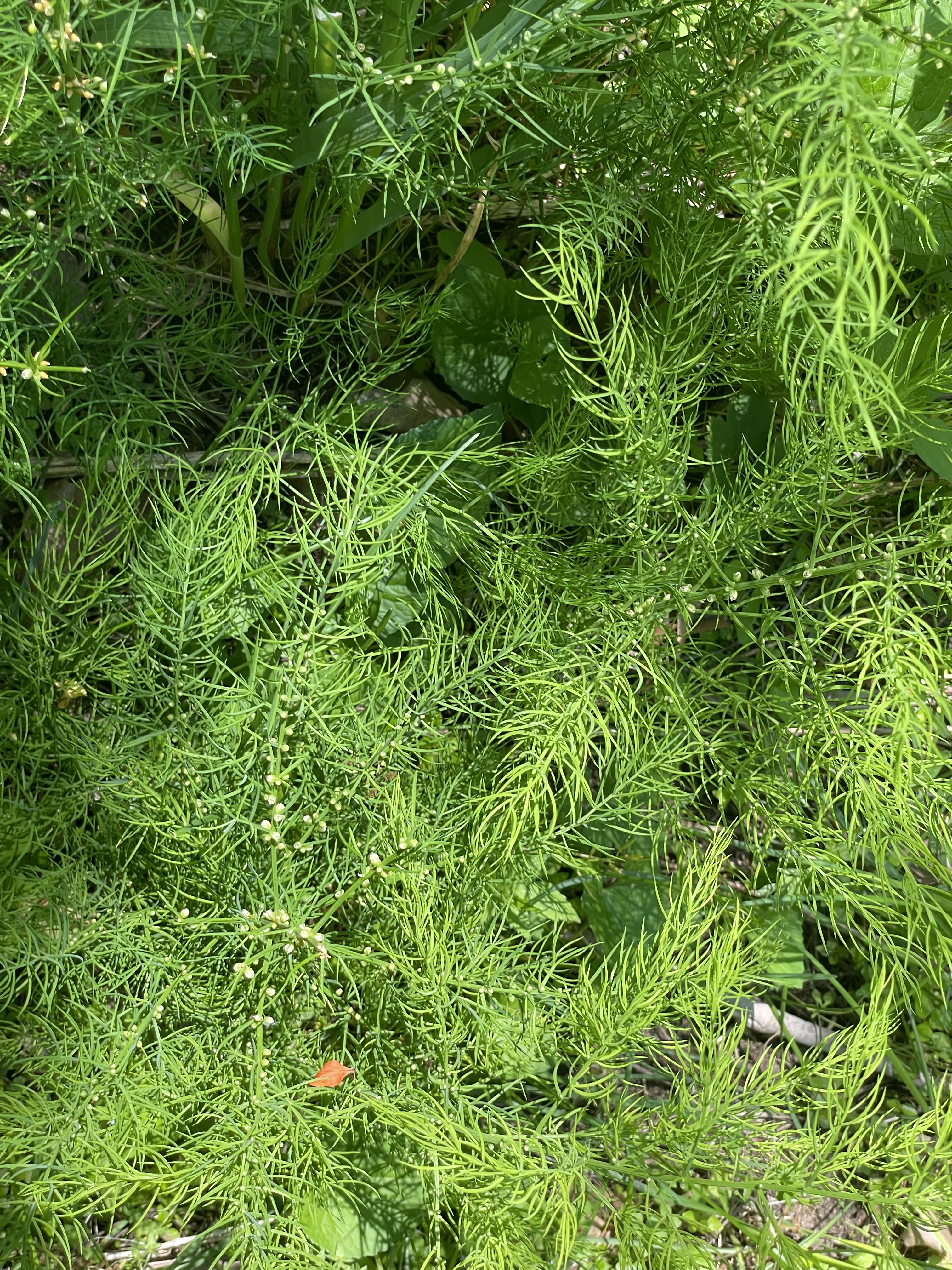
Asparagus schoberioides or Siberian asparagus is found in Japan and Korea. There it is harvested as a wild perennial green and used pretty much like all of the asparagus kingdom. It the clumpiest plant I have ever grown. I hit it a few times with my tiller. The tiller went air born like I had hit a long forgotten oak stump. It only produced seeds once. Since growing it, I have attempted to grow out seedlings in a way that would allow me to harvest and eat the plant as well as look at all the natural variation found in its population. I also plant seeds of Mary Washington and Seed Savers Ott selection within the planting clusters I am doing this spring. The big surprise of this species is the beauty of its dark green stems. The density of the thick dark green foliage indicate a nutritious vegetable rich in nutrition. We need to tap into this wild food as a wild food under cultivation too.
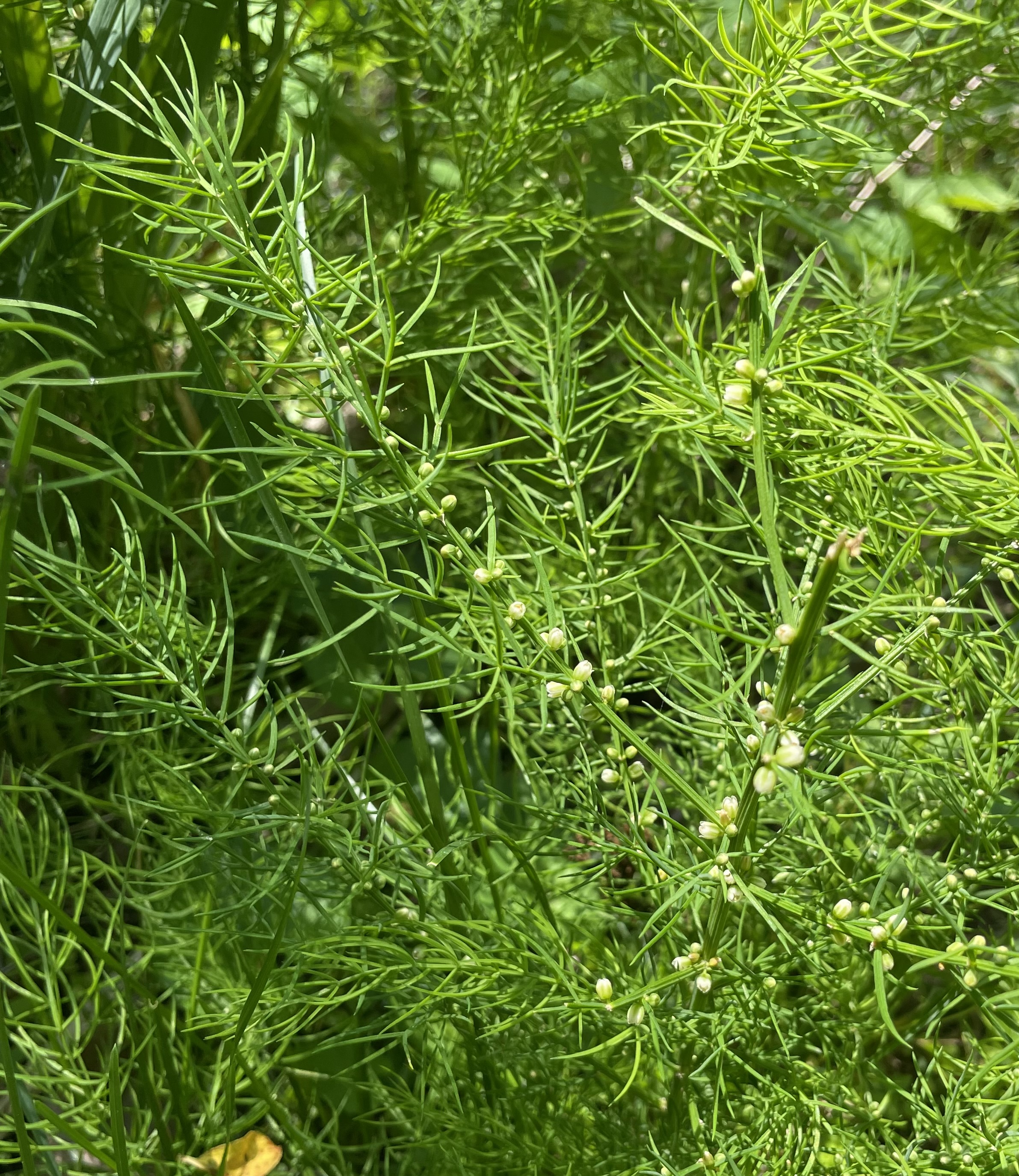
The smaller stems of the many wild selections and the variability is an asset. We could expand the asparagus as a perennial pasture green. Like sorrel, you would grow it in dense beds in a way that it could be cut or mowed like salad greens. It would be a fresh green used the same way as arugula. This would increase its usage and reduce the labor force needed to hand harvest it. Siberian asparagus is resistant to all insects, virus and disease compared to the cultivated asparagus. It also is highly competitive in the soil and could easily create a long lived perennial vegetable. I wonder if it would make a nutritious green drink as well. I will know until I have larger amounts to worth with in some culinary way.
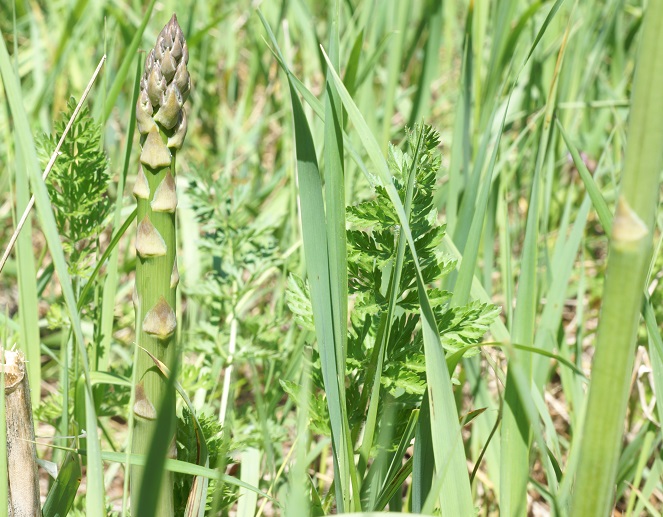
To find, create and develop the asparagus plant, we need to look in places of unknown origins and reproduce those wild populations in mass as a self sustaining wild food in a cultivated setting. Then we could create the medicinal and the nutritious perennial green we see hiding in the grass.
Asparagii is good.
Enjoy. Kenneth Asmus


You must be logged in to post a comment.